When you imagine a bodyguard, the Hollywood image of an imposing figure in a dark suit often comes to mind. While this makes for great cinema, the reality of modern close personal protection is far more strategic, discreet, and intelligent.
A professional private security bodyguard is less about brute force and more about proactive risk management. Think of them as a personal security expert whose primary role is to prevent problems before they have a chance to begin.
The Real Role of a Private Security Bodyguard
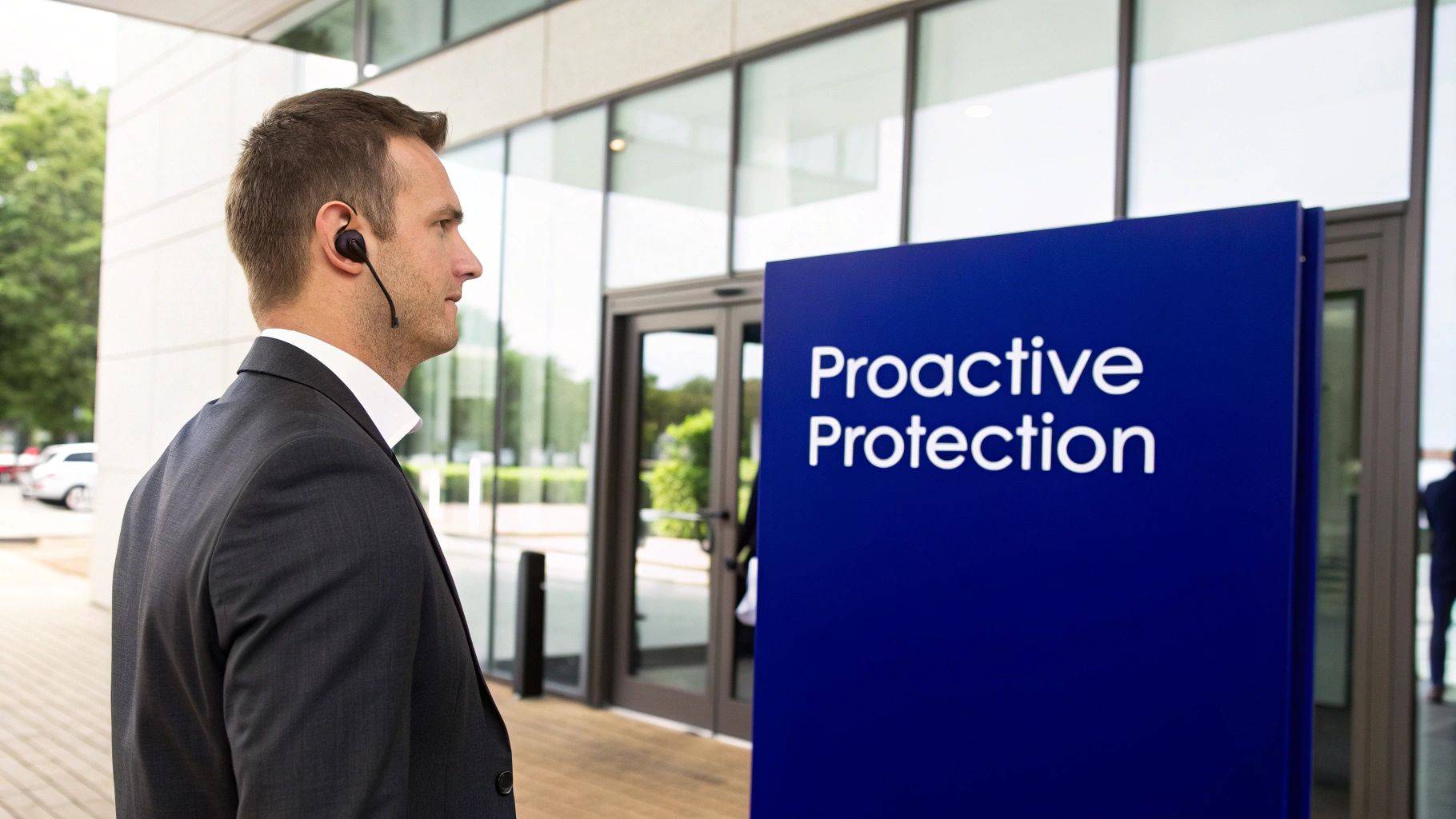
The work of a top-tier close protection officer in Australia is defined by anticipation, intelligence, and flawless execution. It is a highly skilled profession that goes well beyond physical presence, aiming to create a secure environment for a client.
This is not achieved through intimidation but through meticulous, often invisible, organisation. Every route, venue, and interaction is carefully analysed as part of a comprehensive security strategy, ensuring a client’s safety and peace of mind.
Proactive Threat Prevention: The Core of Protection
The most critical skill a bodyguard possesses is identifying and neutralising potential threats long before they escalate. This preventative mindset is the foundation of professional personal protection and a key focus for any reputable Security Company Melbourne.
This involves concrete, practical actions:
- Advance Route Planning: Scrutinising travel routes for the safest path, identifying potential bottlenecks, and preparing contingency plans. For example, knowing alternative routes during peak Melbourne traffic to avoid predictable delays.
- Venue Security Sweeps: Methodically checking event spaces, offices, or hotels before the client arrives to ensure the location is secure.
- Ongoing Threat Assessment: Continuously evaluating the client’s risk profile, staying informed on potential threats, and adjusting security measures accordingly.
This behind-the-scenes preparation defines elite security. It is about managing risks so effectively that the client is often unaware they ever existed.
Strategic and Tactical Responsibilities
Prevention is one side of the coin; tactical readiness is the other. A private security bodyguard is trained for a range of duties to handle immediate safety concerns, blending in to offer discreet protection that doesn’t disrupt a client’s routine.
The essence of effective close protection is not reacting to a crisis, but creating an environment where a crisis is unlikely to happen. It’s all about control, awareness, and foresight.
These operational duties are complex. For a deeper look at how these tasks integrate into a broader safety plan, you can explore our detailed approach to risk and security management.
A highly trained close protection officer coordinates with their team, liaises with local law enforcement when necessary, and maintains constant situational awareness. Their training focuses on de-escalation, using calm communication to defuse tense situations. Physical force is always a last resort, used only when necessary and in strict accordance with Australian law.
Personalised Protection Planning
There is no one-size-fits-all solution in personal security. The risks facing a high-profile CEO differ from those facing a family concerned about privacy. A professional security firm understands this and builds a custom plan from the ground up.
At Abco Security, we begin by understanding your lifestyle, routines, and specific vulnerabilities. From there, we design a protection strategy that is a perfect fit, ensuring every measure is deliberate, purposeful, and effective.
Ready to discuss your specific security needs? Book a confidential consultation with our security experts today.
Who Needs a Private Security Bodyguard?
Hiring a bodyguard is a practical decision driven by identifiable risks, not a status symbol. It is a calculated investment for any person or organisation facing a credible threat to their safety, privacy, or business continuity.
Think of it as proactive risk management. A professional bodyguard’s job is to create a secure bubble, allowing you to conduct your life and business without constant concern. It is a strategic choice when a risk assessment reveals vulnerabilities that require specialist handling.
High-Profile Individuals and Families
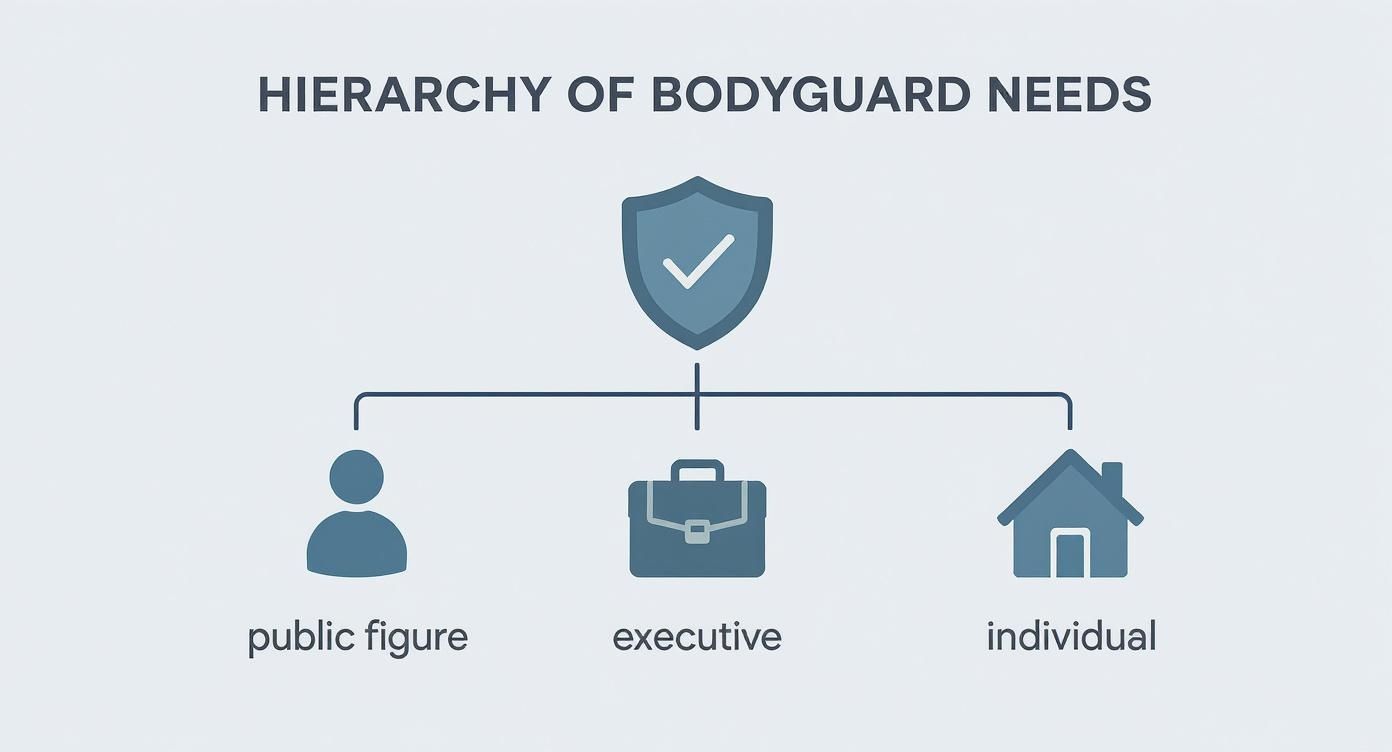
For high-net-worth individuals, CEOs, or public figures, risks from their professional life often spill into their personal one. Their visibility can attract unwanted attention, from stalkers to more serious threats like assault.
Their families can also become targets. A skilled close protection officer provides peace of mind by:
- Securing the Home: Implementing protocols at private residences to prevent unauthorised access.
- Managing Public Outings: Creating a secure perimeter at public events to manage crowds and deter aggressors.
- Providing Safe Transport: Ensuring travel is secure with pre-planned and vetted routes.
Corporate Executives and Business Operations
In the corporate world, executives travelling to unstable regions or navigating difficult negotiations can face significant risks. Threats can range from corporate espionage to harassment from disgruntled former employees.
A corporate bodyguard adds a layer of security that allows business leaders to focus on their work. Their role involves detailed planning and quiet observation to ensure meetings and operations run smoothly. A comprehensive event risk assessment template is often the first step in building these security plans.
A bodyguard’s value is not measured in the incidents they handle, but in the countless incidents that never happen because of their foresight and planning.
This need is global. In South Africa, the private security industry is the largest in the world, with over 2.5 million registered guards, far outnumbering the police. This demonstrates a worldwide trend of private security filling crucial safety gaps. Read more at Security Africa Magazine.
Individuals Facing Unique Threats
Professional protection is also essential for individuals in vulnerable situations.
These scenarios include:
- Sensitive Legal Cases: Witnesses or participants in high-stakes lawsuits can face intimidation or retaliation.
- Domestic Dangers: Victims of stalking or domestic violence often require dedicated protection to ensure their safety.
- Risky Terminations: Business owners may need temporary security when terminating a volatile employee to protect the workplace.
In these situations, hiring a close protection officer is a sensible, proactive step. If you believe you or your organisation could benefit from a professional security assessment, our team is here to help. Book a confidential consultation to discuss your unique security needs.
Understanding Australian Bodyguard Licensing and Laws
https://www.youtube.com/embed/dLHqCwCBOfA
In Australia, the private security industry is tightly regulated by state and territory governments. A private security bodyguard must meet stringent requirements, ensuring a high level of professionalism, certified training, and ethical conduct.
These legal frameworks separate professional protection officers from untrained liabilities. Hiring an unlicensed individual is a significant risk to your safety and a legal minefield. Compliance is the bedrock of trust in the Australian security industry.
State and Territory Licensing Bodies
Australia does not have a single national security licence. Each state and territory has its own regulatory body that handles licensing and sets training benchmarks.
For example, the Security Licensing & Enforcement Directorate (SLED) governs NSW, while Victoria Police’s Licensing & Regulation Division oversees Victoria. These organisations ensure only qualified individuals can work as a close protection officer.
A national organisation like Abco Security must master multiple regulatory environments. We ensure every team member holds the correct, up-to-date licence for the state they operate in, providing clients with seamless and fully compliant protection.
Core Requirements for a Licensed Bodyguard
While specifics vary between states, a common set of non-negotiable prerequisites exists to protect the public.
To operate legally, an individual generally needs:
- Comprehensive Background Checks: Rigorous police checks to disqualify applicants with a criminal history that makes them unsuitable for a position of trust.
- Certified Training: Completion of nationally recognised courses covering conflict de-escalation, defensive tactics, and legal responsibilities.
- First Aid Certification: A current first aid certificate is essential for providing immediate medical assistance.
- Citizenship or Visa Rights: Applicants must be an Australian citizen, permanent resident, or hold a visa permitting work in the security industry.
The infographic below highlights the types of individuals who often require professional protection due to their public profile or circumstances.
Navigating these legal requirements is the first step for anyone considering a career in this field. For more details, read our comprehensive guide on how to get a security licence in Australia.
Key Licensing Requirements for Bodyguards in Australia
| Requirement | Description | Why It’s Important |
|---|---|---|
| National Police Check | A thorough background check to identify any criminal history. | Ensures individuals in positions of trust are vetted for honesty and integrity. |
| Certificate II in Security Operations | A nationally recognised qualification covering core security competencies. | Provides foundational knowledge in law, risk assessment, and conflict management. |
| First Aid Certificate | A current qualification like HLTAID011 Provide First Aid. | Equips bodyguards to provide immediate medical assistance in emergencies. |
| Proof of Identity | A minimum of 100 points of identification is usually required. | Verifies the applicant’s identity and prevents fraudulent applications. |
| Age Requirement | Applicants must typically be at least 18 years old. | Ensures a minimum level of maturity and responsibility for the role. |
| Work Rights | Must be an Australian citizen, permanent resident, or hold a valid work visa. | Confirms the legal right to work in the security industry in Australia. |
Meeting these standards builds a foundation of skill, accountability, and public trust.
The licensing process is your guarantee that the professional you hire is not only highly skilled but also legally accountable and ethically bound to protect you.
Industry bodies like the Australian Security Industry Association Ltd (ASIAL) are crucial in upholding these high standards and promoting professionalism across the sector. Abco Security exceeds these minimums, ensuring every operator is fully licensed, insured, and has passed our demanding internal vetting process.
The Skills That Define an Elite Protection Officer
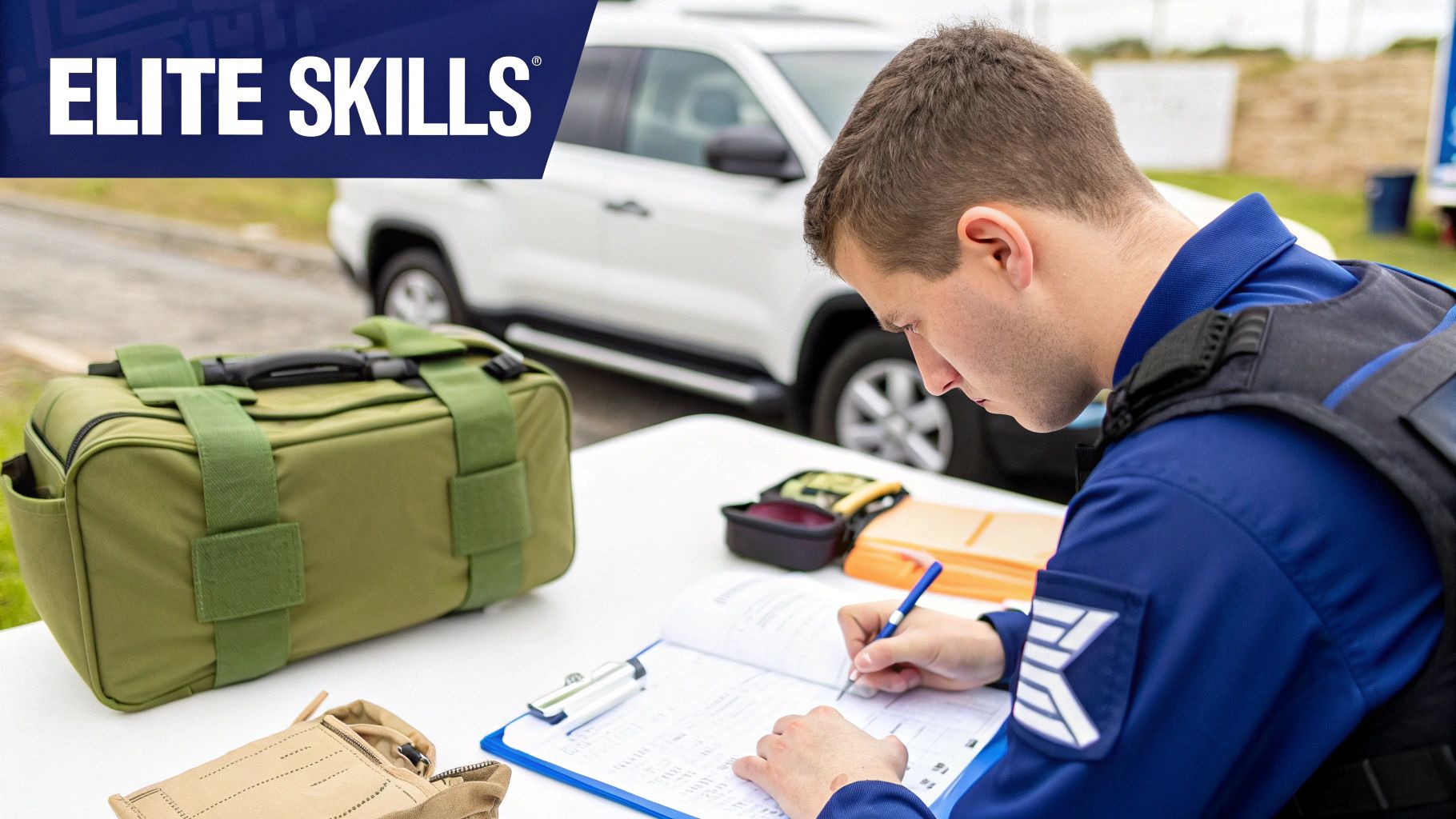
What separates a top-tier private security bodyguard from an average guard is a combination of advanced technical training and innate personal qualities. This blend transforms a security presence into a seamless shield of protection.
The best operators master both “hard” and “soft” skills. An officer might be physically capable but lack the communication skills to de-escalate a tense situation. At Abco Security, our selection and training focus on developing both skillsets.
Essential Hard Skills for Close Protection
Hard skills are the tangible, teachable abilities an officer relies on under pressure, proven through certifications and practice.
Every elite officer brings:
- Advanced Defensive Driving: Mastery of evasive manoeuvres and route planning to sidestep potential ambushes.
- Emergency First Aid: Current advanced first aid and CPR qualifications to provide life-saving care.
- Physical Intervention Tactics: Training centred on lawful control and restraint techniques to neutralise threats with minimal harm.
- Surveillance Detection: The art of counter-surveillance to identify when being watched and move a client to a secure location.
The Power of Sophisticated Soft Skills
While hard skills handle physical threats, soft skills prevent most problems from starting. These interpersonal abilities are often more important in the day-to-day reality of personal protection.
The true measure of an elite bodyguard is not their ability to win a fight, but their skill in ensuring a fight never begins. Discretion, de-escalation, and foresight are their most powerful tools.
Impeccable communication, unwavering discretion, and adaptive problem-solving are vital. An exceptional officer thinks on their feet as situations change.
Integrating Skills with Risk Assessment
A truly exceptional officer conducts thorough risk assessments and advises clients on robust strategies to increase home security. This strategic thinking sets professionals apart.
The demand for this skill level is growing. Globally, certified private security personnel jumped by over 15% between 2023 and 2024, with a 12% increase in spending on high-tech security gear. This highlights a clear shift towards more sophisticated protection, a trend we also see in Australia.
How Technology Is Changing the Game for Modern Bodyguards
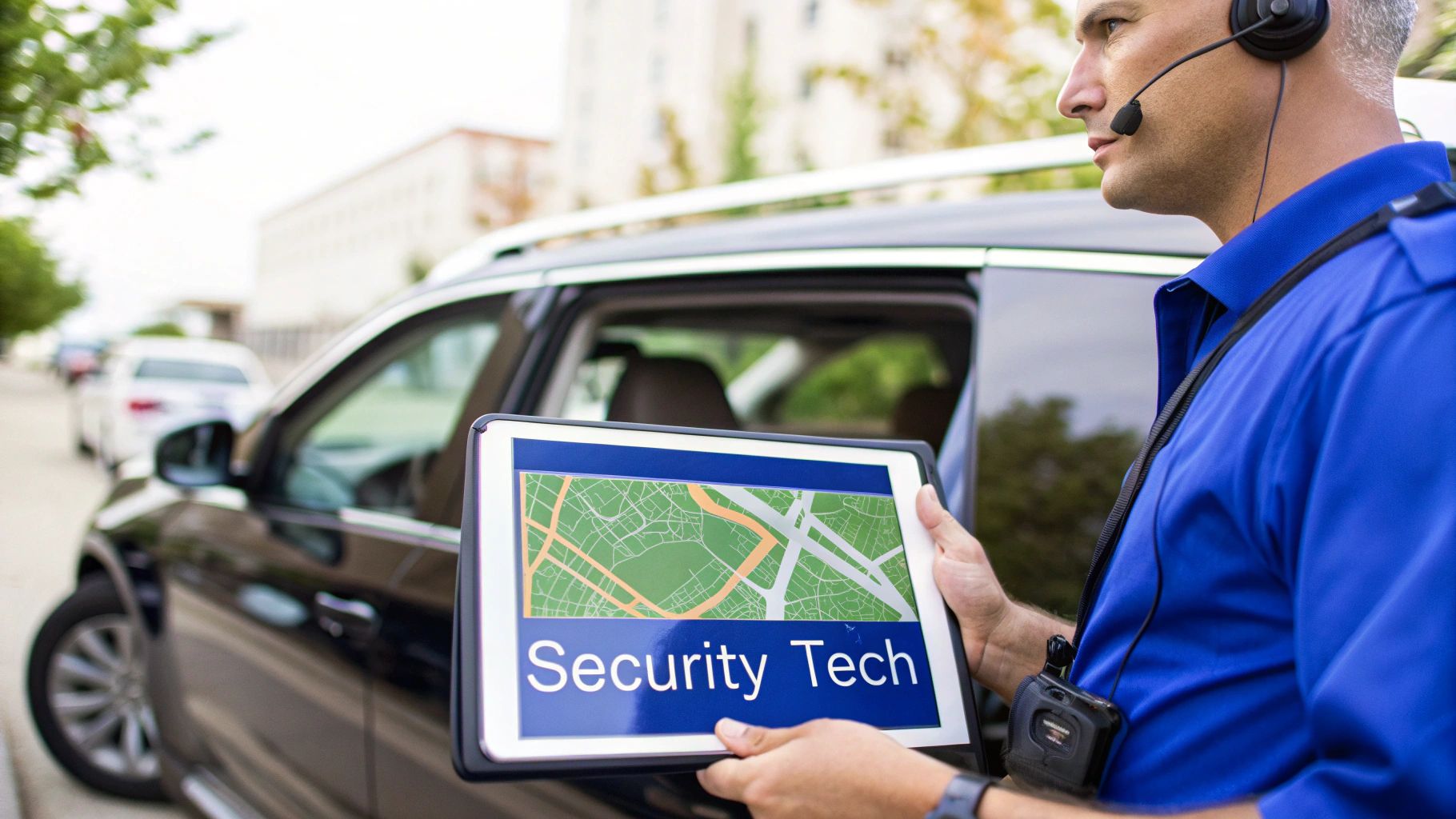
Today’s elite private security bodyguard is an intelligence specialist, using modern technology to enhance their instincts and experience. These tools provide better foresight and quicker reaction times.
Advanced technology shifts personal security from being purely reactive to a proactive strategy driven by real-time data. It is about being better informed and staying one step ahead of potential threats.
Real-Time Intelligence and Communication
Seamless communication and instant access to information are critical. The right tech ensures a security team works as a single, smart unit.
Key technologies we use include:
- Encrypted Communication Devices: Encrypted radios and specialised apps ensure client communications remain private and cannot be intercepted.
- GPS Tracking and Geofencing: Live GPS allows for pinpoint coordination and sends immediate alerts if a vehicle strays from a planned route.
- Open-Source Intelligence (OSINT): Analysing social media and public data to identify potential threats before an event and adjust security plans accordingly.
Enhanced Situational Awareness
Technology acts as a force multiplier, giving officers eyes and ears far beyond their immediate vicinity. This is vital for managing security at large venues or during complex travel. Knowing the different types of best home security systems available can also add another layer to personal safety.
Technology doesn’t replace a bodyguard’s instincts; it sharpens them. It provides the data needed to turn a gut feeling into a decisive, evidence-backed action.
Integrated surveillance systems offer a bird’s-eye view, helping us position personnel strategically. Our professional security camera monitoring services can feed live intelligence directly to the team on the ground.
This investment in technology is a global trend. In South Africa, where over 600,000 active security personnel operate, technology is essential. High demand has spurred investment in CCTV, vehicle tracking, and AI to enhance security effectiveness.
Choosing the Right Security Partner in Australia
Selecting a personal security provider is a decision built on trust and proven experience. In Australia’s regulated security industry, your choice should be based on clear criteria that separate reliable operators from the rest.
A professional private security bodyguard is the result of a company that obsesses over high standards, from recruitment to ongoing training. You are not just hiring an individual; you are engaging an entire security infrastructure.
Verifying Credentials and Compliance
First, you must verify the legitimacy and compliance of any security company. A reputable provider will be transparent with their credentials.
Always ask to see proof of:
- Corporate Licence: The company must hold a valid Master Licence for the state they operate in.
- Comprehensive Insurance: Current certificates for Public Liability and Professional Indemnity insurance.
- Individual Officer Licensing: Proof that every close protection officer holds the correct, up-to-date individual security licence.
If a company hesitates to provide these documents, consider it a major red flag.
Assessing Experience and Operational Standards
Next, investigate the company’s operational standards. Their internal processes define the quality of protection you will receive. A top-tier security company will have extensive local knowledge and a solid track record.
A security plan is only as strong as the people executing it. Rigorous recruitment, continuous training, and a culture of accountability are the hallmarks of a security partner you can depend on.
Ask direct questions about their hiring and training protocols. An elite firm will have stringent processes that go beyond simple licence checks, including psychometric testing and in-depth interviews.
Request anonymised case studies of their work with clients in similar situations to gauge their practical experience. For a better understanding, read our overview of private security contractors in Australia.
A professional organisation will adhere to industry best practices from peak bodies like the Australian Security Industry Association Ltd (ASIAL), showing a commitment to excellence. Abco Security is built on these principles of transparency, compliance, and local expertise.
Book a confidential consultation to design your security plan.
Frequently Asked Questions About Bodyguard Services
It is natural to have questions when considering personal protection. Getting clear answers helps you make a confident choice built on trust. Here are straightforward answers to common questions about hiring a private security bodyguard.
How Much Do Bodyguard Services Cost?
There is no standard price list for bodyguard services, as every situation is unique. The cost is determined after a detailed risk assessment.
Key factors include:
- Your Risk Level: Higher threat levels require more resources and personnel.
- Number of Bodyguards: The team is scaled to your schedule and environment.
- Duration of Service: A one-off event is priced differently from ongoing protection.
- Special Requirements: Secure transport or international travel are factored in.
We provide a clear, itemised quote only after a confidential risk assessment.
Are Bodyguards in Australia Armed?
The laws around armed security in Australia are extremely strict. The vast majority of close protection officer roles are handled effectively without firearms.
A modern bodyguard’s main job is to stop threats before they happen. It’s all about smart planning and de-escalation, not using force. Physical intervention is always the absolute last resort.
The real tools are skills in threat prevention, conflict resolution, and defensive tactics. Armed services are rare and reserved for specific high-risk situations, requiring extensive licensing beyond a standard security qualification. Industry bodies like the Australian Security Industry Association Ltd (ASIAL) advocate for strict compliance with these rules.
What Is the First Step in the Hiring Process?
The process begins with a confidential consultation. This initial conversation is the foundation of your security plan and is handled with complete discretion.
The first step is a thorough risk assessment where our experts understand your environment, identify vulnerabilities, and map out a strategy. This ensures the protection we design is a perfect fit for your life.
At ABCO Security Services Australia, your safety is our focus, driven by careful planning and professional execution. To talk about your security needs and get a confidential assessment, book a consultation with one of our experts.
about
avada factory
Sempery ultricies nibh at dolor cras urna eleifend nec. Atiam efficitur tempor.