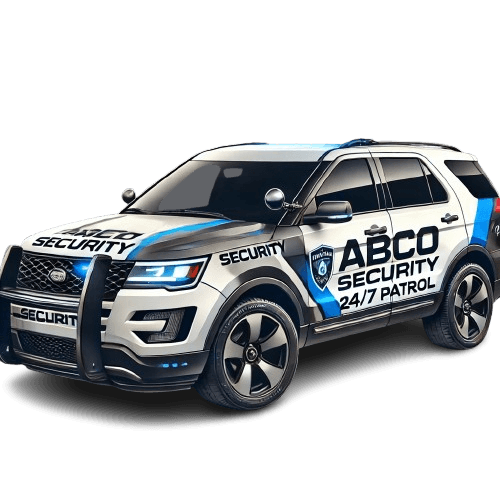

When considering a personal security guard, the reality is far more strategic than Hollywood’s portrayal. A professional guard is a highly trained expert in proactive protection and risk mitigation.
Their role isn’t just a physical presence; it’s about meticulous planning, risk management, and ensuring the safety of individuals, families, and executives. They work discreetly to integrate into a client’s life, providing security without disrupting routines.
What Does a Personal Security Guard Do?
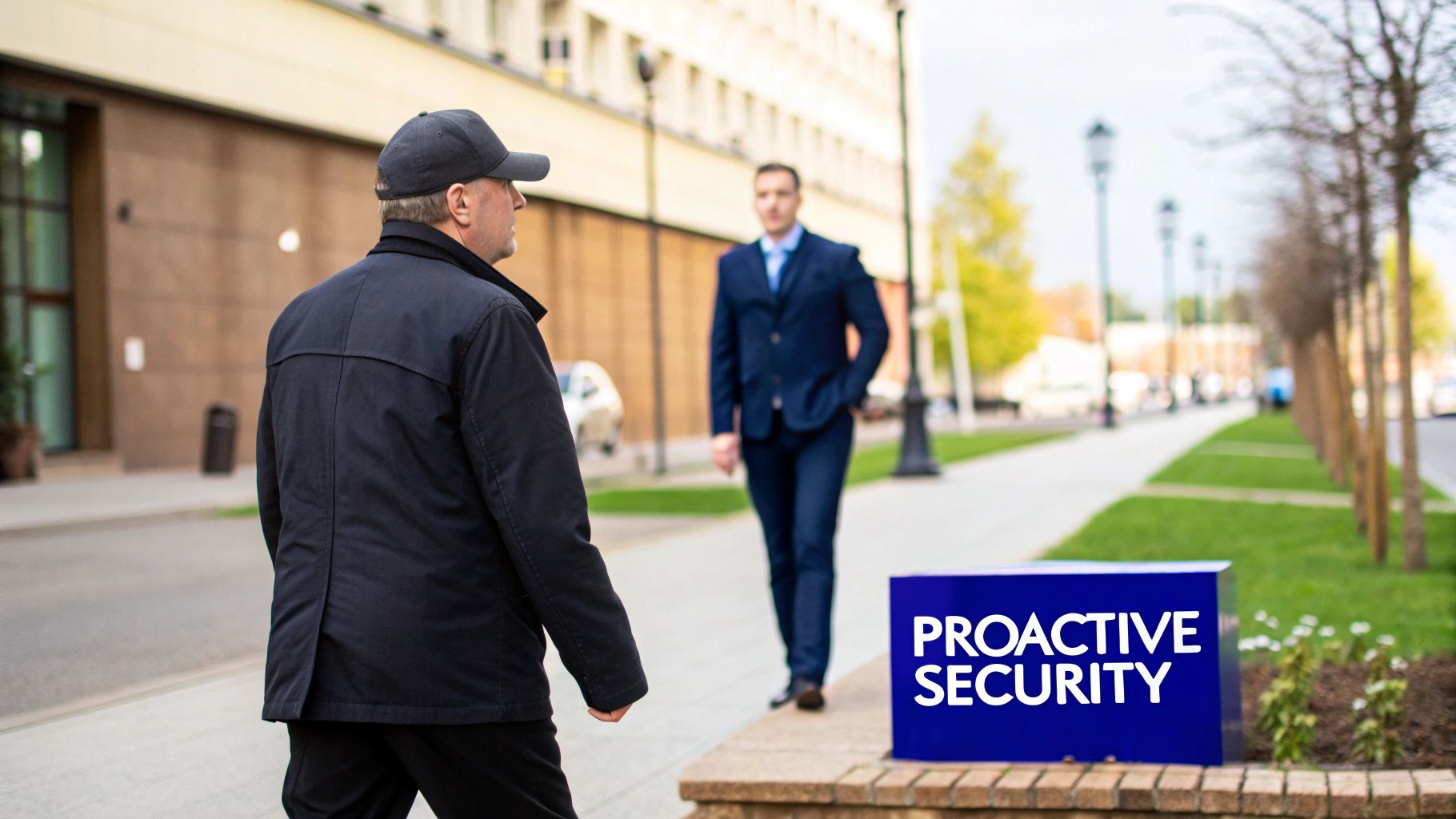
The work of a modern personal security guard in Australia is overwhelmingly proactive. The primary focus is on preventing incidents before they occur, offering a strategic investment in peace of mind.
The goal is to create a secure environment around a client. This is achieved through intelligence, careful planning, and constant situational awareness, not through brute force.
Core Responsibilities of Personal Security Guards
A guard’s duties are customised to the client’s specific risk profile. They constantly analyse environments and anticipate potential threats, ensuring a comprehensive security posture.
Practical examples of their responsibilities include:
- Advance Threat Assessments: Before a client arrives at a venue, the guard conducts a thorough assessment. They identify entry and exit points, check for security weaknesses, and map out secure evacuation routes.
- Secure Travel Planning: For trips across town or interstate, the guard plans the safest routes and coordinates with drivers. For example, a Security Company Melbourne would map out traffic patterns and potential chokepoints before a client’s journey.
- Discreet Surveillance: This involves subtly monitoring the client’s immediate surroundings for anything unusual without drawing attention or compromising their privacy.
- Access Control: At a private residence or office, the guard manages who gains access to the client, vetting visitors and politely denying entry to unauthorised individuals.
The essence of effective personal security is creating an environment where threats are unlikely to materialise. It is a discipline of foresight, planning, and control.
Real-World Scenarios for Personal Security
Consider a CEO attending a public conference. Their personal security guard would arrive hours early to sweep the venue, liaise with event security, and discreetly manage crowd interaction.
For a family concerned about privacy, the guard’s role is almost invisible. They conduct quiet perimeter patrols, monitor security systems, and screen deliveries—a protective layer that is felt, not seen.
In every case, the objective is the same: neutralise risks before they can escalate. This strategic mindset is the cornerstone of modern protection provided by reputable private bodyguard services in Australia.
Every action is backed by extensive training and adherence to industry standards set by organisations like the Australian Security Industry Association Ltd (ASIAL). This ensures every professional operates within national and state regulations.
Book a Consultation with ABCO Security Today
Why Hire a Professional Security Guard?
Professional security is more than a physical presence; it’s a strategic investment in safety and peace of mind. The real value lies in proactive deterrence and expert planning that anticipates problems.
The goal is to create an environment where threats are quietly neutralised. Should an incident occur, a trained expert is ready to take immediate control.
The Benefits of Proactive Threat Deterrence
The most visible benefit is active threat deterrence. A professional guard sends a powerful signal that a person or location is a hard target, often preventing incidents from starting.
If a situation does escalate, their value becomes clear. You have an on-site expert ready to act.
- Conflict De-escalation: Guards are skilled in using verbal techniques to defuse tension.
- Emergency First Aid: Many are certified to provide critical care in the first minutes after an injury.
- Coordinated Evacuation: In a crisis, they execute pre-planned escape routes to guide people to safety.
The Importance of a Customised Security Plan
Every security need is unique. A one-size-fits-all approach is ineffective, whether for an executive travelling internationally or a family seeking privacy at home.
A customised security plan is the solution. It maps out daily routines, identifies vulnerabilities, and sets clear emergency protocols. Building this strategy requires a solid grasp of risk and security management principles.
A professional security detail doesn’t just react; they shape your environment to make it safer. They bring order and control to potentially chaotic situations.
The private security industry in Australia has a significant impact on public safety, with over 153,000 licenced security personnel. This workforce is larger than the police and defence forces combined, as highlighted in the Security 2025 report from ASIAL.
Police resources are spread across communities, forcing a reactive response. Personal security, however, is a dedicated service focused entirely on you, allowing for proactive threat detection.
Book a Security Consultation Today
How to Identify Your Specific Security Needs
https://www.youtube.com/embed/AG8hWYr42f0
Hiring effective personal security is about matching your specific risks with the right professional skills. A clear self-assessment is the foundation of a solid security plan.
This process turns the vague idea of ‘feeling safe’ into a concrete list of needs. Knowing your vulnerabilities allows you to find a security partner who can solve your real problems.
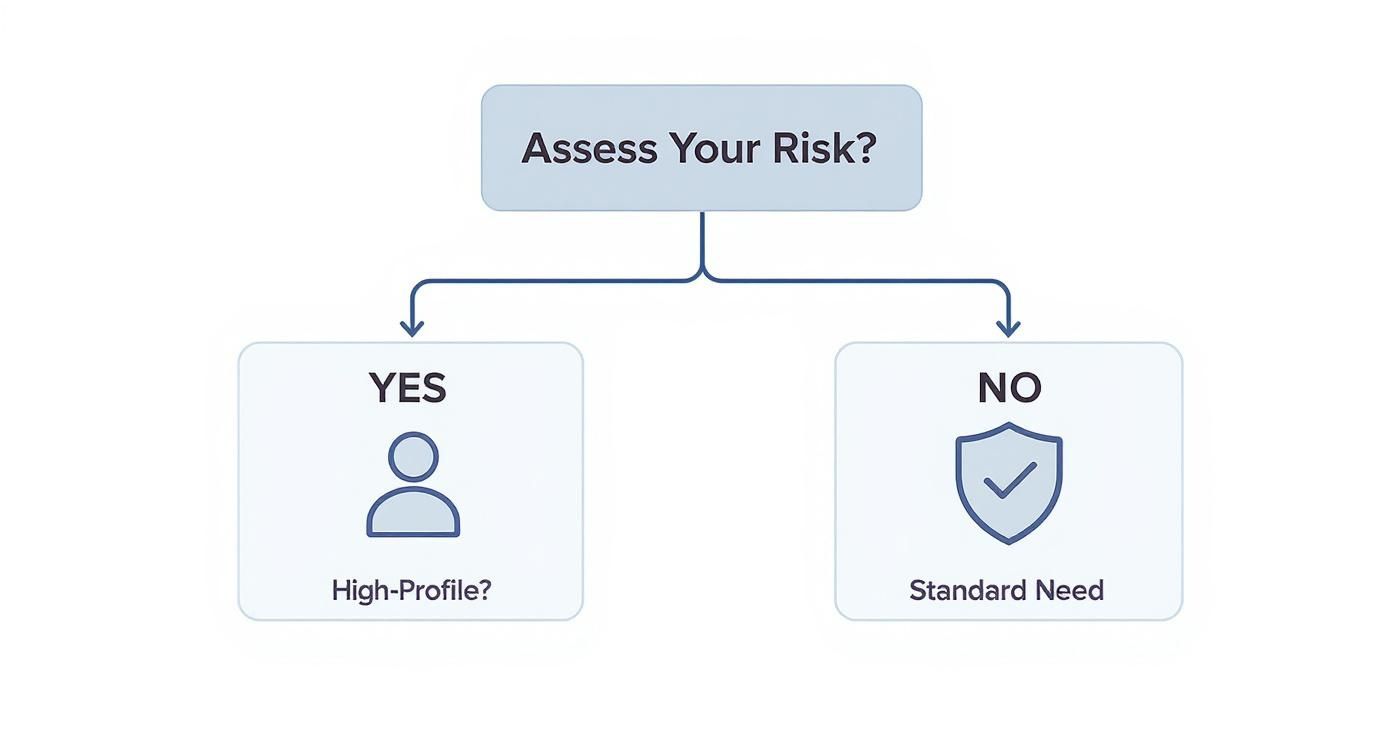
Start with a Personal Risk Profile
A risk profile maps your potential weak spots, considering your job, public profile, and daily habits. A high-profile CEO faces different threats than a private family concerned about break-ins.
To build your profile, ask these key questions:
- Do you have a public-facing role that might attract unwanted attention?
- Do you travel frequently to new or unfamiliar places?
- Do you or your family have high-value assets that could be targets?
- Have you received any direct or indirect threats in the past?
The answers will clarify whether your security needs are driven by your public life, personal wealth, or a specific threat.
Security Needs for Corporate Executives
For a corporate leader, security involves protecting their personal safety and safeguarding sensitive company information. Risks often come from competitors or disgruntled ex-employees.
Unique threats include:
- Corporate Espionage: Attempts to steal trade secrets.
- Public Exposure: Risk of being ambushed by media or protestors.
- Targeted Threats: Direct risks stemming from business decisions.
Executive security is often discreet, involving secure transport and advance sweeps of meeting locations.
Security Needs for High-Net-Worth Families
For high-net-worth individuals, the focus is on privacy and protection from opportunistic crime. The goal is to shield loved ones and assets from threats drawn to their wealth.
Key risks include:
- Theft and Burglary: Targeting homes, holiday properties, or valuable items.
- Privacy Invasion: Dealing with paparazzi, stalkers, or online harassment.
- Kidnapping or Extortion: A rare but serious threat requiring specialised prevention.
A family’s security plan often revolves around residential protection, safe travel coordination, and vetting household staff. Protecting vehicles with advanced car security systems is also a key component.
Security Needs for Event Organisers
Event security focuses on managing large crowds and controlling access to ensure a safe environment. Risks shift based on the event’s size, crowd demographics, and location.
Primary challenges include:
- Crowd Control: Preventing overcrowding and directing the flow of people.
- Access Management: Ensuring only authorised individuals enter restricted areas.
- Emergency Response: Having a solid plan for medical issues, fires, or disturbances.
A detailed risk assessment is crucial for event success, and tools like our event risk assessment template are invaluable for planning.
Matching Security Services to Your Risk Profile
This table helps identify common security needs based on different client profiles, guiding you toward the most appropriate services.
| Client Profile | Common Risks | Recommended Security Service |
|---|---|---|
| Corporate Executive | Corporate espionage, public exposure, targeted threats | Close Personal Protection (Bodyguard), Secure Transport, Venue Risk Assessment |
| High-Net-Worth Family | Theft, burglary, privacy invasion, kidnapping | Residential Security, Secure Transport, Travel Security, Staff Vetting |
| Event Organiser | Crowd control issues, unauthorised access, emergencies | Crowd Controllers, Static Guards, Mobile Patrols, Emergency Response Planning |
| Retail Business Owner | Shoplifting, vandalism, staff safety, robbery | Static Guards (Loss Prevention), Mobile Patrols, Alarm Response |
Understanding your unique situation allows you to move forward with confidence, knowing you have the right support.
Choosing a Security Provider in Australia
Choosing a security partner is a significant decision. You are placing your trust and well-being in their hands. The right provider operates with transparency, industry experience, and full compliance with Australian regulations.
A smart choice involves looking beyond price to assess a company’s credentials, training standards, and operational readiness.
Verifying Licences and Insurance
In Australia, proper licencing and insurance are non-negotiable. Before signing any contract, you must verify these crucial documents.
- Company Security Licence: The firm must hold a Master Licence for the state where it operates.
- Individual Guard Licences: Each guard must hold a current individual security licence.
- Public Liability Insurance: This protects you from financial consequences if an incident occurs. A professional company will readily provide their Certificate of Currency.
If a company hesitates to show you these documents, consider it a major red flag. Reputable firms are proud of their compliance and will offer this information upfront to build trust.
Industry Accreditation and Reputation
Look for signs that a company is a leader in its field. Accreditation from recognised industry bodies like the Australian Security Industry Association Ltd (ASIAL) demonstrates a commitment to professionalism and ethical practices.
You can often verify a company’s membership on the association’s website. Compliance and local expertise are hallmarks of a trustworthy security provider.
Key Questions for Potential Security Providers
The answers to these questions will reveal a provider’s experience, preparedness, and client focus.
What is your experience with clients who have a similar risk profile to mine?
Look for specific examples, not vague promises. Specialised skills are crucial.What are your recruitment and ongoing training standards?
The best firms invest in their people. Ask about background checks and training in areas like conflict de-escalation and first aid.Can you describe your standard emergency protocols?
A professional company will have documented plans for different situations. A clear explanation indicates preparedness.How do you ensure clear communication and reporting?
Effective partnerships are built on consistent communication. Clarify who your point of contact will be and how you will receive updates.
Focusing on these key areas—licencing, reputation, and operational readiness—will help you find a partner that offers genuine expertise. You can explore our approach on our security guard service page.
Understanding the Cost of Personal Security
The cost of personal security is not one-size-fits-all. The final price reflects the expertise required, the level of risk involved, and the specifics of your situation.
Understanding these variables is key to interpreting your quote. It ensures you receive tailored protection without paying for unnecessary services.
Factors That Shape the Final Price
The rate for a personal security guard is calculated based on the skills and risks tied to the job. A guard for a low-risk event will cost less than a close protection officer for a high-profile executive.
The main elements determining the price include:
- Guard Training and Skills: An officer with advanced qualifications, such as defensive driving or specialised first aid, will command a higher rate.
- Assessed Threat Level: This is the biggest cost driver. A high-threat environment demands more experienced personnel and intensive planning.
- Duration of Service: Short-term jobs often have a higher hourly rate than ongoing contracts. Work on weekends, public holidays, or unsociable hours also attracts premium rates.
- Armed vs. Unarmed Guards: In Australia, armed security is heavily regulated and reserved for high-threat situations. The training, licencing, and liability mean armed personal security guards are significantly more expensive.
Common Billing Models
Security providers typically offer different pricing models to suit various needs, whether for a single event or ongoing protection.
For example, a security driver for a visiting CEO might be billed a daily fee. A family needing 24/7 security would likely use a retainer package for a predictable monthly cost.
The rule is simple: cost scales with risk and expertise. The price reflects the critical distinction between a static site guard and a close protection officer.
For a detailed look at service structures, learn more about engaging private security contractors in Australia. This ensures your investment matches the level of safety you require.
Request Your Free Security Consultation and Quote Today
Integrating Security Seamlessly into Your Life
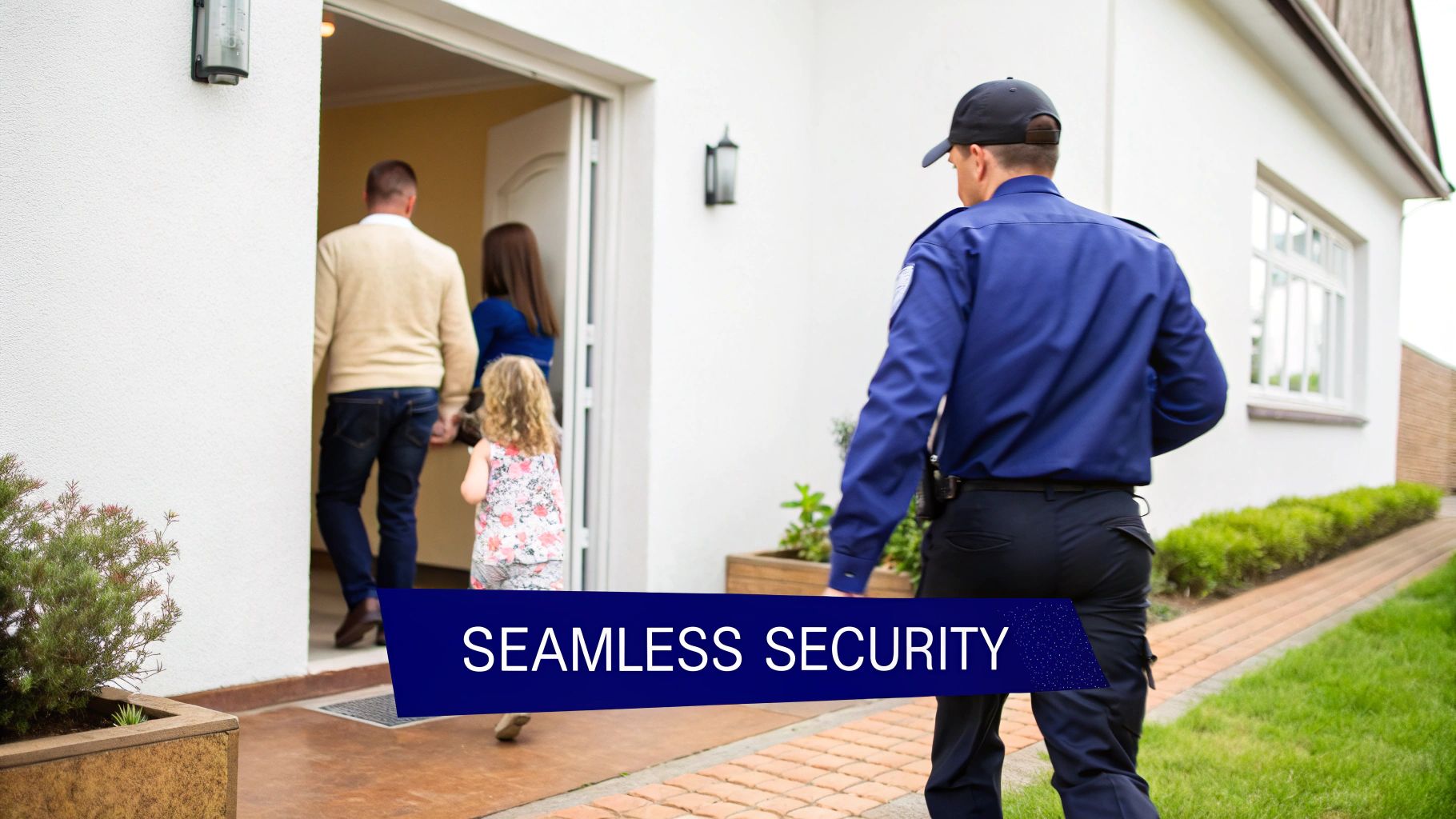
The best security provides a quiet layer of confidence, allowing you to focus on your life or business. This is built on a solid partnership with your security team, starting with clear communication.
When your security detail understands your routines and goals, they can deliver top-tier protection with minimal disruption, becoming a natural part of your world.
The Foundation: A Thorough Initial Briefing
Every successful security arrangement begins with a detailed briefing. This is where you outline every important detail of your daily life or business operations.
Your briefing should cover:
- Key Individuals and Locations: Who needs protection and where will they be?
- Daily Routines: What does a typical day, week, or month look like?
- Known Concerns: Are there any existing threats or specific worries?
- Communication Protocols: How will everyone stay in touch? Establish a primary contact and a clear chain of command.
Overt vs. Covert Security
Deciding whether your security should be visible or invisible is crucial. Each approach serves a different purpose, and the best choice depends on your goals.
Overt Security (Visible Deterrent)
This approach uses uniformed guards and marked vehicles to send a clear message: this area is protected. It is effective for deterring crime at events, retail stores, or residential properties.
Covert Security (Discreet Protection)
Covert security blends into the environment. Plain-clothed personal security guards provide close protection without attracting unwanted attention, ideal for executives and public figures who value privacy.
Effective security is about having the right kind of presence. The goal is to match the security posture to the desired outcome, whether visible deterrence or discreet peace of mind.
The Investigation and Security Services sector in Australia has grown significantly, with revenues recently estimated at $13.9 billion. You can explore these industry trends on IBISWorld’s Investigation and Security Services in Australia page.
By establishing clear communication and choosing the right security posture, your protection detail becomes a seamless extension of your world.
Book a No-Obligation Security Consultation Today
Frequently Asked Questions
Navigating the world of personal security can be daunting. Here are straightforward answers to the questions we hear most often.
What Are the Legal Powers of a Personal Security Guard?
In Australia, a licenced security guard has the same legal authority as any other private citizen. Their power lies in being a highly trained observer and a powerful deterrent.
Their role is to identify and de-escalate potential conflicts and be the first point of contact with police. They can perform a citizen’s arrest if they witness a serious (indictable) offence but do not have police powers.
Should I Hire an Armed or Unarmed Guard?
The decision between an armed and unarmed guard depends on your specific level of risk, as determined by a professional risk assessment.
For most situations, an unarmed guard is sufficient. They provide a strong visual deterrent and are experts in access control and monitoring.
Armed security is reserved for high-risk scenarios with a clear threat to life. Hiring an armed guard is a tightly regulated and serious step in Australia. For compliance information, resources like Fair Work Australia outline the strict national standards for high-risk roles.
How Is My Privacy Guaranteed?
Your confidentiality is paramount. Professional security protects your privacy with the same commitment as your physical safety. We operate under strict confidentiality agreements.
Every team member undergoes rigorous background checks and is trained to handle sensitive information with complete discretion.
Your personal life, movements, and conversations are kept strictly confidential. Trust is the foundation of any security relationship, a responsibility we take very seriously.
Reputable firms adhere to the ethical standards set by industry bodies like the Australian Security Industry Association Ltd (ASIAL).
At ABCO Security, our goal is to provide clarity, confidence, and expert security solutions.
about
avada factory
Sempery ultricies nibh at dolor cras urna eleifend nec. Atiam efficitur tempor.