What is event security staffing and why does it matter?
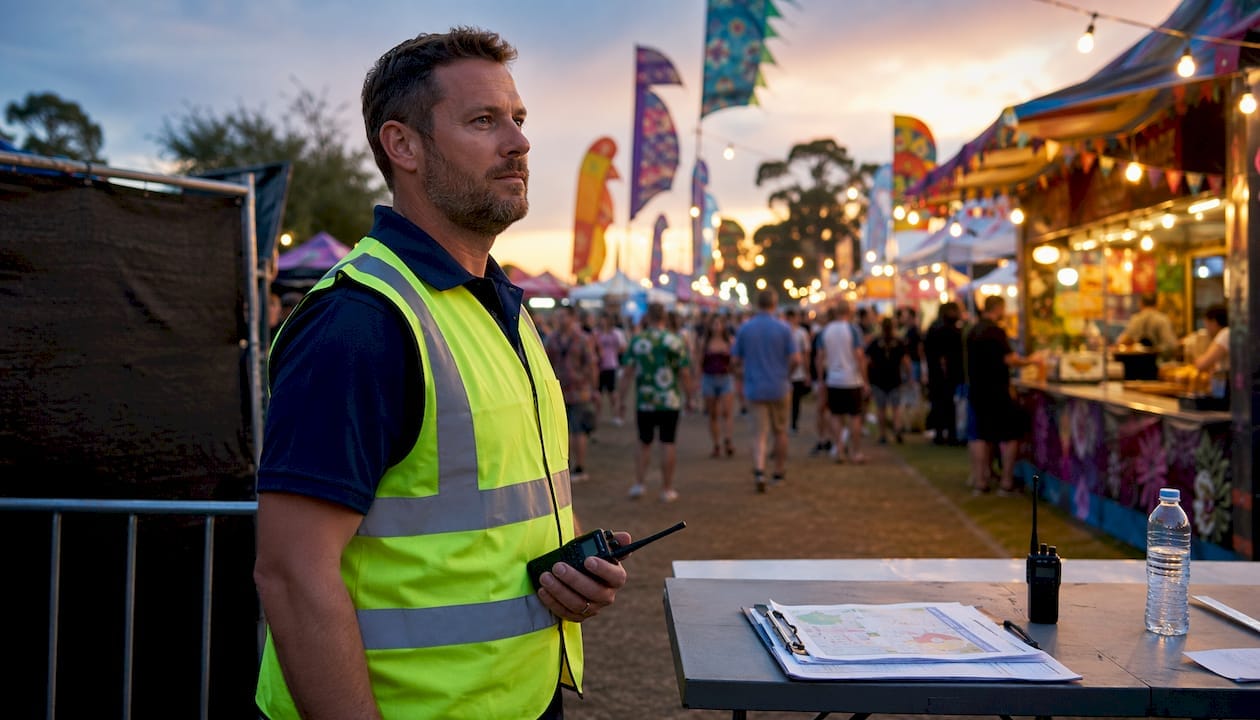
Event security staffing means deploying licensed security officers and crowd controllers to manage safety, control crowd behaviour, and reduce risk at Australian events. Get it wrong and you face legal exposure, reputational damage, and real harm to attendees.
Australian event organisers carry significant legal weight. Under national WHS legislation, you are classified as a Person Conducting a Business or Undertaking (PCBU), which means proactive consultation and coordination with every contractor on site, including your security provider. That duty of care extends to workers, volunteers, performers, and the public.
Risk management plans complying with AS/NZS ISO 31000:2018 are mandatory for many Australian events, particularly those with large numbers of attendees. The framework covers systematic identification, analysis, and treatment of risks before a single guest walks through the gate.
- Deployment of licensed security officers and crowd controllers
- Crowd management, access control, and asset protection
- Compliance with state and national WHS laws
- Coordination with police and emergency services
- Customised security plans aligned to event type and risk profile
What services do professional event security providers offer?
Professional event security staffing covers far more than a guard at the door. Licensed security guards are often legally required at events where alcohol is served, with minimum numbers tied to the event’s risk profile.
- Crowd control and management: monitoring behaviour, managing entry queues, and de-escalating tension before it becomes an incident
- Access control: ticket checking, accreditation verification, and keeping unauthorised people out of restricted areas
- Asset and cash protection: guarding valuables, managing cash handling procedures, and securing equipment
- Emergency response: coordinating evacuation, liaising with police and ambulance services, and executing the emergency management plan
- VVIP and executive protection: close personal protection for high-profile guests or performers
- Technology integration: CCTV and access control systems support personnel on the ground and extend situational awareness across large venues
Professional firms build customised security plans for each event, accounting for venue layout, expected attendance, alcohol service, and specific risk factors.
What qualifications do event security staff need in Australia?
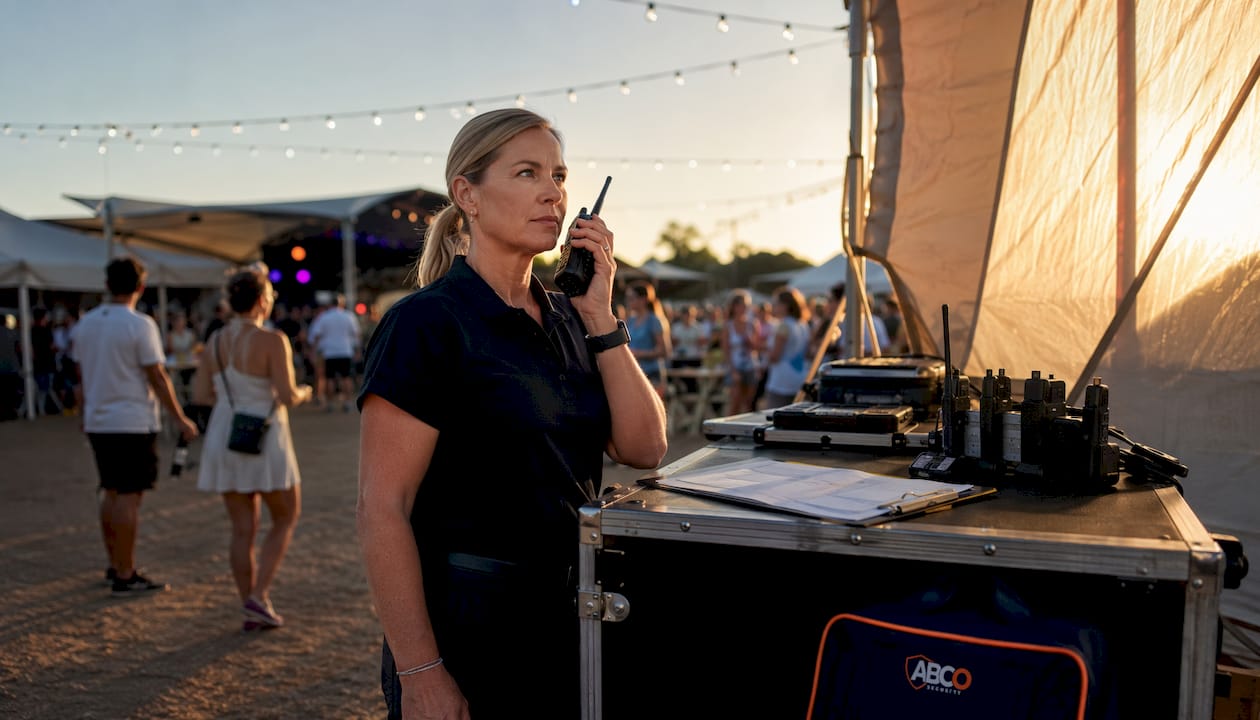
Every person carrying out a security activity at an Australian event must hold the appropriate licence. There are no exceptions.
Under the Security and Related Activities (Control) Act 1996) in WA, and equivalent legislation in other states including the Security Industry Act 1997 (NSW) and the Security Providers Act 1993 (QLD), crowd controllers and security officers must be licensed and operate under a licensed security agent. Police administer these acts and conduct surveillance to confirm compliance.
- Crowd controllers are licensed to control or monitor behaviour, screen people seeking entry, and remove people for behavioural reasons
- Security officers are licensed to watch, guard, and protect property
- RSA certification is mandatory for security staff working at venues where liquor is served
- Dual licensing is possible, but the two roles must remain clearly separated in practice
Pro Tip: Ask any prospective provider for their master licence number and verify it with your state’s police licensing unit before signing a contract.
Professionalism matters beyond the licence card. Experienced personnel read crowd dynamics early, communicate calmly under pressure, and know when to call for backup rather than escalate.
How does event security operate on the day?
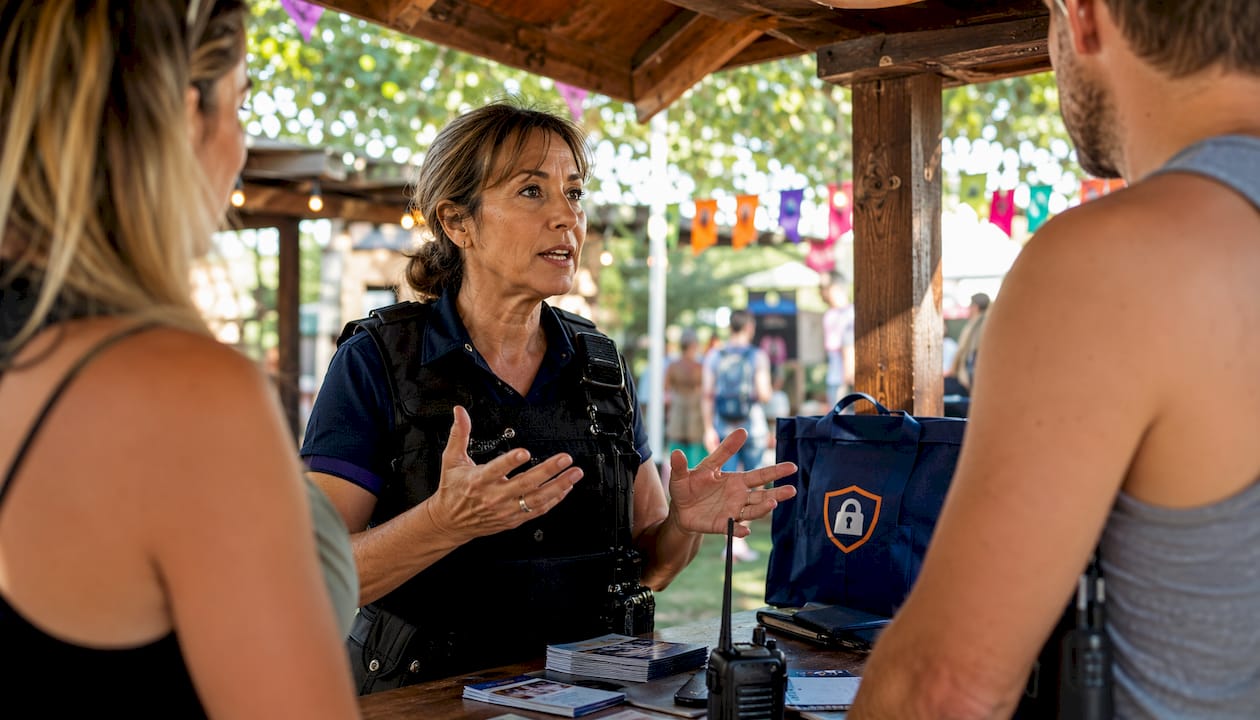
Effective event security staffing follows a structured cycle from pre-event planning through to post-event debrief. The WA Events Guidelines 2022) set out five clear phases: pre-event approvals, bump-in, the event itself, bump-out, and post-event debrief.
- Pre-event planning: crowd control agents collaborate with the event manager and police to delineate roles and responsibilities before approvals are finalised
- Staff briefings: security personnel are briefed on venue layout, emergency evacuation plans, accreditation protocols, and each operative’s specific role before the event opens
- On-site operations: security officers guard property while crowd controllers monitor behaviour and manage entry; both maintain regular contact with the Event Operations Centre
- Communication protocols: liaison with NSW Police Force or state equivalents is agreed in advance; organisers cannot direct police activity but must coordinate with them
- Incident reporting: all crowd control or security issues are documented throughout the event
- Post-event debrief: security representatives attend the debrief, report on key indicators, and flag any operational deficiencies for future events
A practical risk assessment completed before the event underpins every one of these phases.
How do you choose the right event security staffing provider?
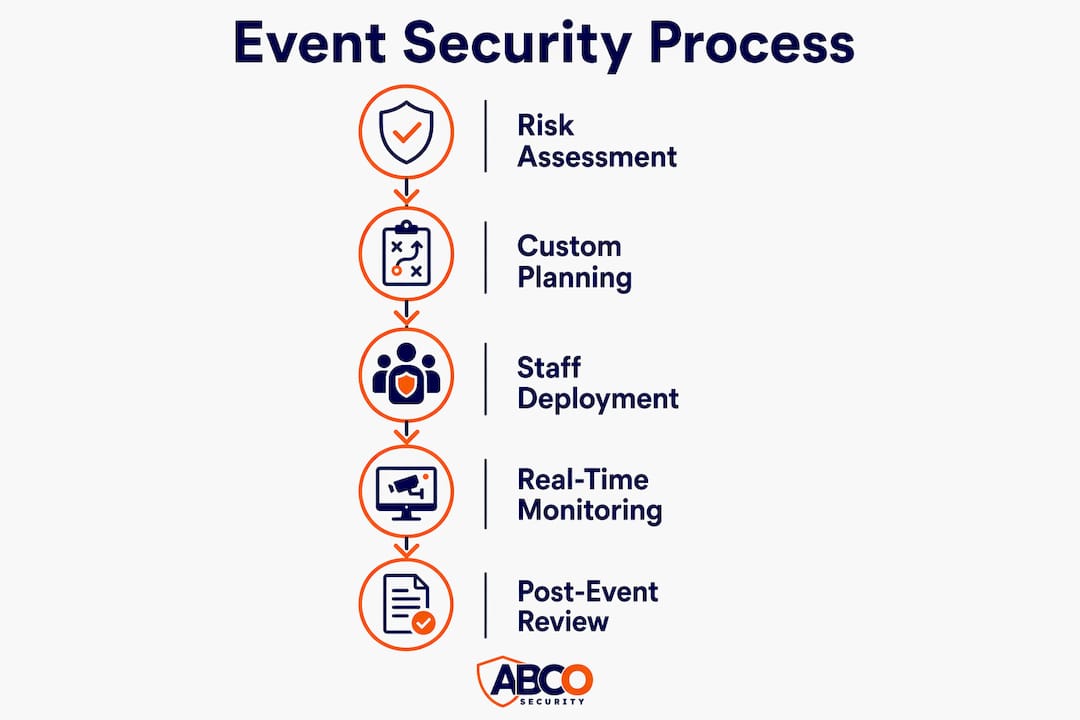
The right provider is not simply the cheapest quote. Selecting event security staffing involves checking company licences, reviewing prior experience with similar events, verifying client references, and confirming transparent pricing and clear contractual terms.
Here are the three providers most active in the Australian market for 2026:
| Provider | Licensing compliance | Experience level | Best for | Google rating |
|---|---|---|---|---|
| ASAP Security | Licensed crowd controllers, compliant with Australian security laws | Strong local knowledge across multiple cities | Mid to large-scale public and private events | — |
| NSA Security | Full regulatory compliance, detailed customised plans | High, specialising in high-risk and complex events | Events with regulatory demands and complex crowd management | — |
| NPB Security | Licensed security officers, technology-integrated approach | Experienced in corporate and entertainment venues | Corporate events and professional venue security | — |
ASAP Security brings strong local knowledge and licensed personnel across Australian cities, making it a practical choice for organisers running mid to large-scale events who need scalable coverage without lengthy onboarding.
NSA Security’s strength is in complexity. If your event involves high crowd density, strict regulatory conditions, or a detailed risk profile, their expertise in customised security plans and high-risk event management is worth the investment.
NPB Security focuses on professional staffing for corporate and entertainment venues, integrating security technology to extend the reach of their personnel on the ground.
Beyond choosing a provider, book your security team well in advance. Late hires risk insufficient coverage and inadequate preparation. For large events, engagement several weeks out allows time for coordinated planning, site-specific risk assessments, and staff training.
What legal and regulatory frameworks govern event security in Australia?
Australian event security staffing sits inside a layered compliance framework that spans federal, state, and local obligations.
- WHS legislation: event organisers as PCBUs must consult, cooperate, and coordinate with all contractors, including security firms, to manage health and safety risks
- AS/NZS ISO 31000:2018: provides the framework for systematic event risk management, mandatory for events with over 1,000 attendees
- State licensing acts: the Security Industry Act 1997 (NSW), Security Providers Act 1993 (QLD), and Security and Related Activities (Control) Act 1996 (WA) each legislate licensing requirements for security personnel
- Insurance: security firms must carry appropriate insurance and liability coverage; event organisers should obtain certificates of currency from every contractor
- Terrorism preparedness: under Australia’s Strategy for Protecting Crowded Places from Terrorism, event managers have a duty of care to protect attendees from foreseeable threats including terrorism
Statistic callout: Risk management plans complying with AS/NZS ISO 31000:2018 are mandatory for many Australian events, particularly those with large numbers of attendees.
Security firms and their staff must also carry workers compensation cover. Organisers should request a certificate of currency as standard practice before any contractor sets foot on site.
Abcosecurity offers integrated event security across Australia
Abcosecurity delivers licensed static guards, crowd control, CCTV monitoring, and access control as part of an integrated security solution built around your event’s specific risk profile. With over 15 years of experience and certification to ISO 9001 and ISO 30000, it suits event organisers who want a single provider managing physical security and technology together, rather than coordinating multiple contractors.
Where the providers compared above focus on staffing alone, Abcosecurity combines licensed personnel with 24/7 monitoring and electronic security systems. That means one point of accountability from pre-event planning through to post-event review. Explore Abcosecurity’s security industry best practices or contact the team directly to discuss your event’s requirements.
FAQ
What licences do event security staff need in Australia?
Security officers and crowd controllers must hold a valid licence under their state’s security legislation, such as the Security Industry Act 1997 (NSW) or the Security Providers Act 1993 (QLD). Staff working at licensed venues must also hold RSA certification.
How far in advance should you book event security staffing?
Book your security provider several weeks before the event to allow time for risk assessments, customised planning, and staff briefings. Late engagement risks inadequate coverage and poor preparation.
Are event organisers legally responsible for security at their events?
Yes. Under national WHS legislation, event organisers are classified as PCBUs and carry a primary duty of care for the health and safety of workers, volunteers, and the public at their events.
What is the difference between a security officer and a crowd controller?
A security officer guards and protects property. A crowd controller monitors behaviour, screens people seeking entry, and removes people for behavioural reasons. Both roles require separate licences under Australian law.
When is a risk management plan mandatory for an Australian event?
Risk management plans complying with AS/NZS ISO 31000:2018 are mandatory for many Australian events, particularly those with over 1,000 attendees.
Key takeaways
Effective event security staffing in Australia requires licensed personnel, customised risk plans, and compliance with state and national WHS legislation from the earliest planning stage.
| Point | Details |
|---|---|
| Licensing is non-negotiable | Every security officer and crowd controller must hold a valid state licence before working any Australian event. |
| Book well in advance | Engage your security provider several weeks out to allow for risk assessments, briefings, and coordinated planning. |
| Organisers carry legal duty | Event organisers are classified as PCBUs under WHS law and are responsible for all contractor safety coordination. |
| ISO 31000 compliance | Risk management plans aligned to AS/NZS ISO 31000:2018 are mandatory for events with over 1,000 attendees. |
| Abcosecurity’s approach | Abcosecurity combines licensed guards, crowd control, and 24/7 monitoring under one integrated security solution for Australian events. |
Recommended
about
avada factory
Sempery ultricies nibh at dolor cras urna eleifend nec. Atiam efficitur tempor.