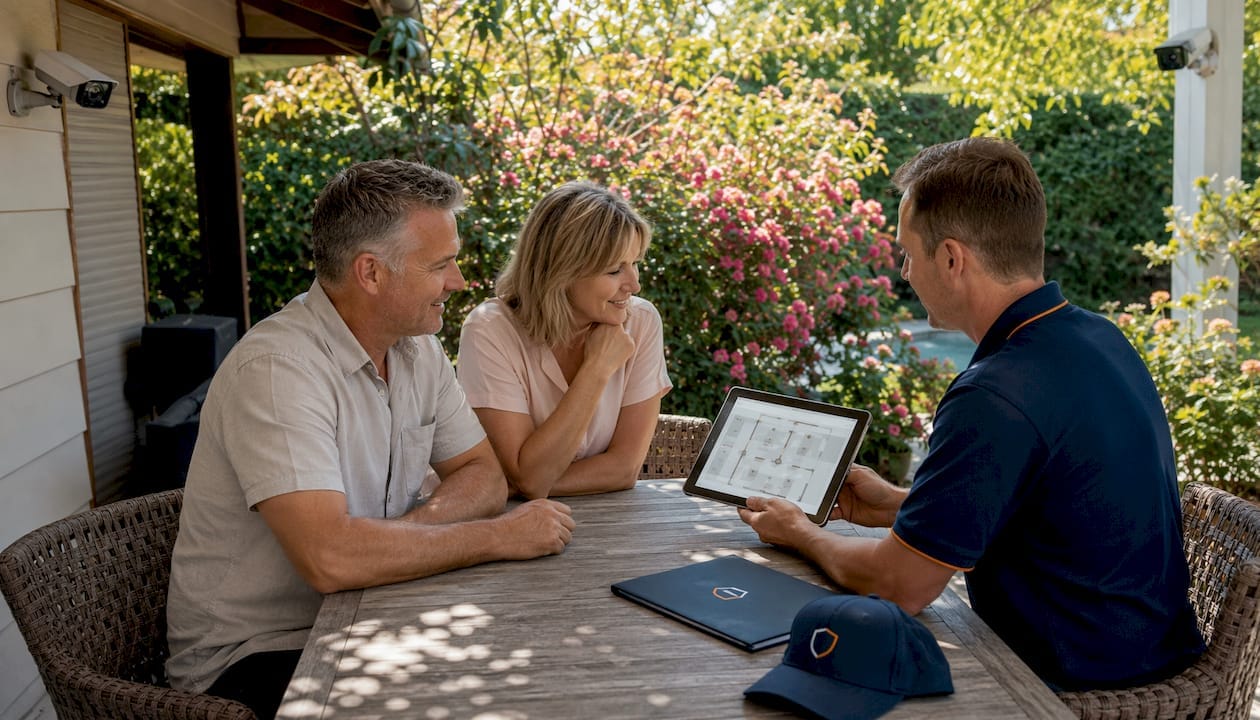
Professional residential security services combine alarms, CCTV, 24/7 monitoring, and access control into a layered system tailored to your property’s specific risks. For Australian homeowners, the three providers that consistently stand out are RACV Home Security, RAC WA Home Security, and Fallon Solutions. Each brings licensed installation, professional monitoring, and warranty-backed equipment, but they differ in regional focus, technology features, and service flexibility.
| Provider | Service types | Professional monitoring | Licensing and warranty | Best for |
|---|---|---|---|---|
| RACV Home Security | Alarms, CCTV, smart home | 24/7 back-to-base | Licensed installers, warranty included | Victorian homeowners wanting integrated packages |
| RAC WA Home Security | Alarms, CCTV, smart tech | 24/7 monitoring | Licensed, regional support | WA residents seeking localised expertise |
| Fallon Solutions | Alarms, CCTV, access control | 24/7 monitoring | Licensed installers, warranty backed | Homeowners across Australia needing flexible options |
Integrated home protection works best when these layers are fitted to your property rather than sold as a one-size package. The sections below walk through how to compare providers, what to budget, and what to look for before you sign anything.
What do the leading residential security options actually offer?
The three providers above cover the core of what most Australian homeowners need, but their strengths sit in different areas.
RACV Home Security is the natural first call for Victorian homeowners. Its packages combine alarm systems, CCTV, and smart home features under one roof, with professional 24/7 monitoring that coordinates with emergency services when needed. Equipment is warranty-backed, and installation is carried out by licensed technicians who provide basic training on the system before they leave. The RACV brand also carries weight with insurers, which can translate to premium discounts.
RAC WA Home Security takes a similar approach for Western Australia, with localised monitoring centres rather than outsourced national hubs. That regional focus matters: local operators understand WA-specific response times and can dispatch faster in metro Perth and surrounding areas. Smart technology integration, including app-based alerts and remote arming, is built into their standard packages.
Fallon Solutions is the most geographically flexible of the three. Operating across multiple Australian states, Fallon offers alarms, CCTV, and access control with licensed installers and a reputation for responsive customer service. It suits homeowners who want a customised scope rather than a preset bundle, particularly those adding access control to an existing alarm setup.
- RACV Home Security: best for Victorian homeowners wanting a single provider for alarms, cameras, and monitoring with strong regional support.
- RAC WA Home Security: best for WA residents who want localised monitoring and smart tech integration without relying on a national call centre.
- Fallon Solutions: best for homeowners across Australia who need flexible service combinations, including access control alongside alarms and CCTV.
Pro Tip: Ask each provider whether their monitoring centre is local or outsourced. A local centre typically means faster verified response times and better coordination with your state’s emergency services.
How do you choose the right residential security provider in Australia?
Choosing a provider comes down to four things: licensing, fit, contract terms, and reputation.
Licensing and insurance come first. Every security installer in Australia must hold a state-specific licence, such as a Private Security Individual Registration or Master Licence, to legally install equipment and keep your home insurance valid. Unlicensed contractors risk voiding your policy and leave you with no recourse if something goes wrong. Ask for the installer’s ABN, their state licence number, and a current certificate of insurance before any work begins.
Customisation matters more than package size. A property with a large perimeter and multiple entry points needs a different configuration than a terrace house with one door and two windows. A provider worth hiring will assess your property before quoting, not just hand you a brochure. Licensed security advisors confirm the provider meets training and background check standards, which directly affects the quality of that assessment.
Ask the right questions before you commit:
- What is your average monitoring response time, and do you verify alarms before dispatching?
- What are the contract length and early termination fees?
- Does the warranty cover both parts and labour?
- Can I upgrade or add components without restarting the contract?
- What happens to my monitoring if I move house?
Check reviews carefully. Watch for red flags including no verifiable physical address, unusually low quotes, and negative reviews with no management response. One or two complaints are normal; a pattern of unresolved issues is not.
What does residential security typically cost in Australia?
Budgeting for home security is straightforward once you know what each layer costs. Prices below are national averages including GST for standard residential installation.
- Basic home alarm system (wireless panel, door and window sensors, external siren): $500–$2,000 installed, typically half a day on-site.
- 4-camera CCTV system (IP cameras, NVR, cabling, app access): $1,500–$4,000, usually one full day.
- Full home security package (alarm, 4 cameras, video doorbell, smart locks, monitoring setup): $3,000–$8,000, taking 1–2 days.
- Professional 24/7 monitoring: $30–$80 per month, depending on the provider and response type.
Wireless systems are cheaper and faster to install, making them the practical choice for most residential retrofits. Wired systems cost more upfront but offer greater long-term reliability for larger properties or homes where Wi-Fi coverage is patchy.
Several factors push prices up: additional cameras or sensors, multi-storey layouts, concealed cabling requirements, and smart home integration all add to both equipment and labour costs. The most common hidden cost is the monitoring contract. Some providers bundle monitoring into the installation price for the first year, then roll into a monthly fee. Read the contract carefully for auto-renewal clauses and early exit penalties before you sign.
What are the key components of a home security system?
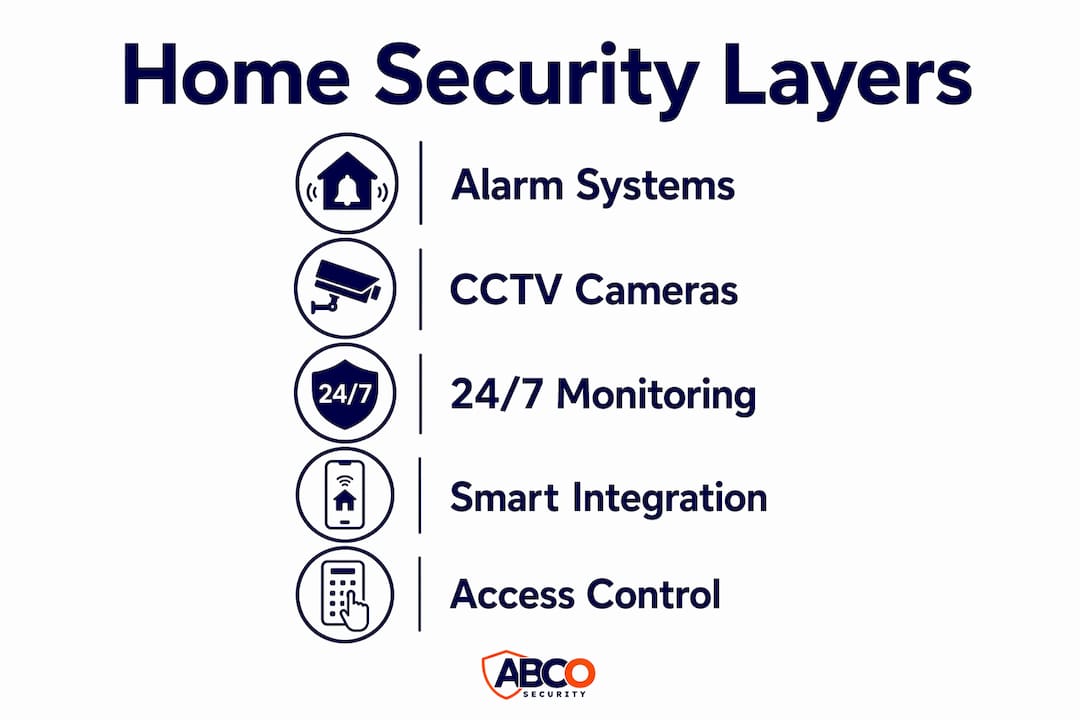
A layered home security system typically combines several technologies, each serving a distinct role.
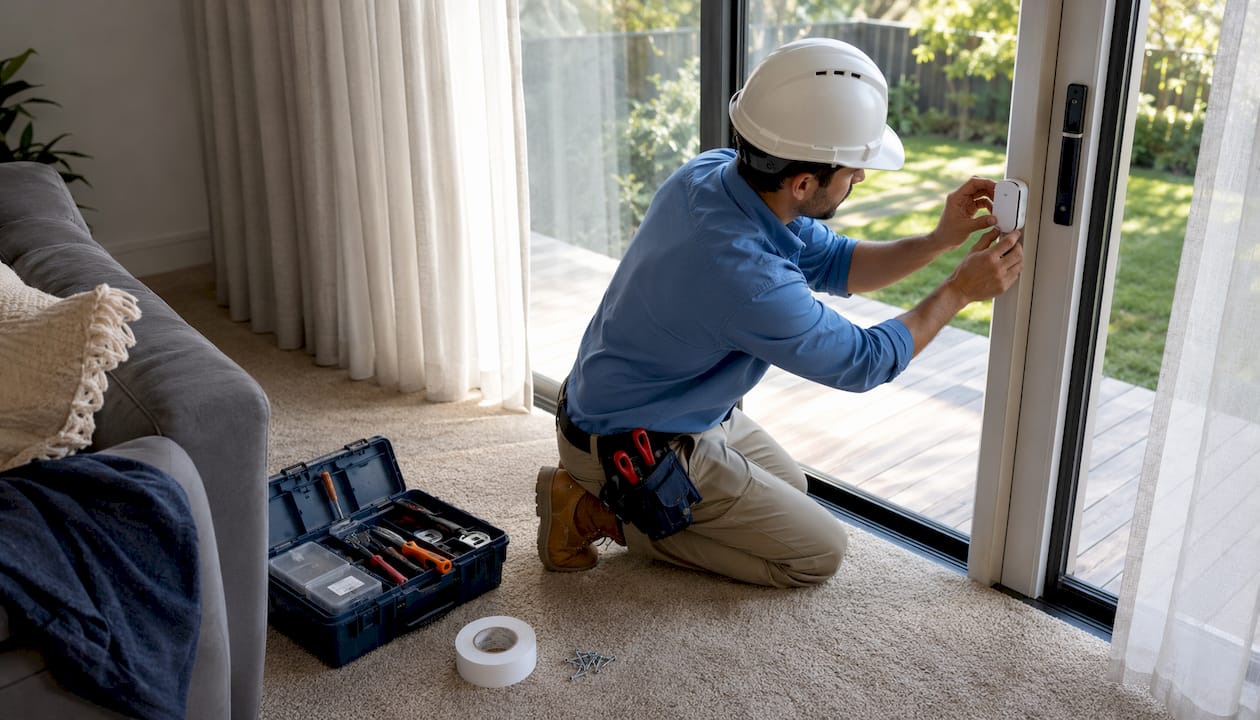
Alarm systems form the foundation. Wireless alarms use battery-powered sensors on doors, windows, and motion zones, communicating with a central panel via radio frequency. Wired systems run cables through the walls, which is more disruptive to install but harder to jam or interfere with. Both types can connect to a professional monitoring centre for back-to-base response.
CCTV and surveillance cameras have moved well beyond passive recording. Modern residential cameras include active deterrence features such as strobe lights and voice alerts that warn intruders in real time, rather than simply capturing footage after the fact. A four-camera setup covering the front door, rear access, driveway, and side gates covers most residential properties adequately.
Professional 24/7 monitoring is the layer that turns a standalone alarm into a genuine response system. Australian monitoring centres typically respond within minutes and coordinate with police or security patrols as needed. Self-monitored systems are cheaper but depend entirely on you being available and awake when an alert fires.
Smart home integration ties everything together through a single app. Video doorbells, smart locks, and remote arming let you manage access and check camera feeds from anywhere. For home security cameras with full installation, the app setup is usually included in the professional installation fee.
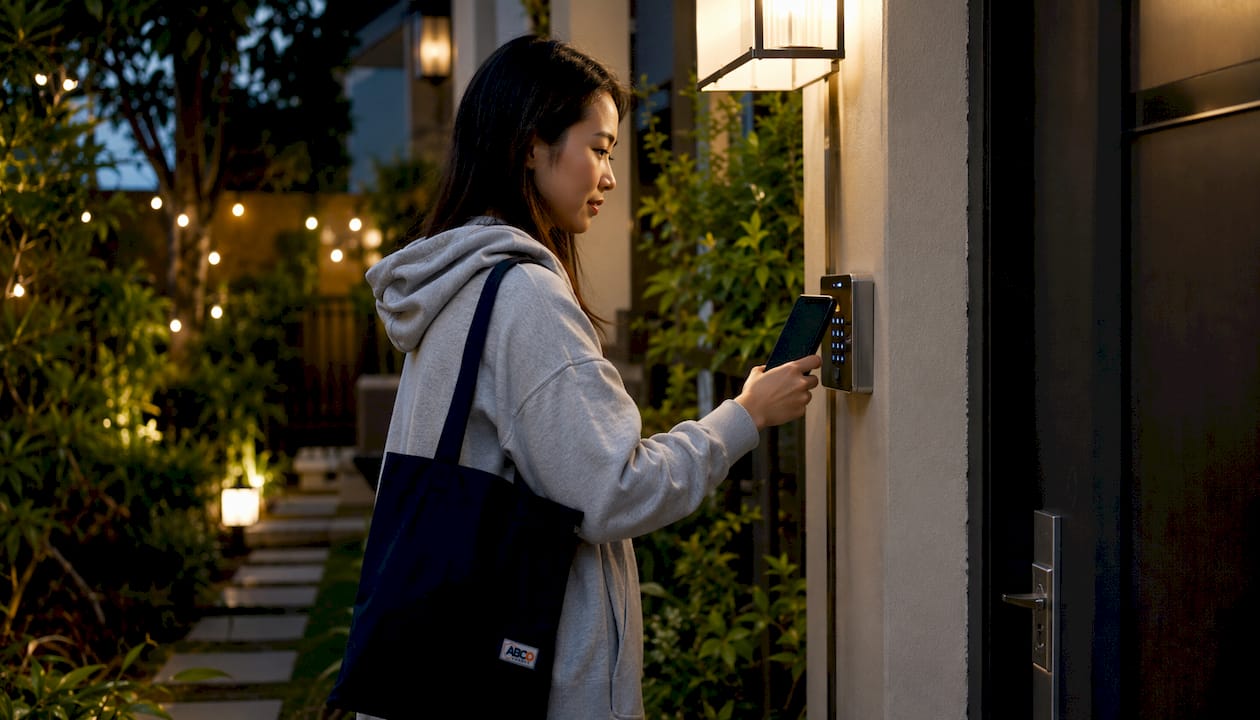
Access control and physical security cover the entry points themselves. Electronic access control with card readers or keypads suits homes with multiple occupants or frequent tradesperson access. Security screens on doors and windows must be installed to comply with Australian Standard AS 5040-2003, which requires that physical barriers do not block emergency egress during a fire or other emergency.
What standards and licences should your security provider hold?
Australia’s security industry is regulated at the state and territory level, which means the licence your provider needs depends on where you live.
- New South Wales: providers must hold a licence under the Security Industry Act 1997 and the Security Industry Regulation 2016, with master licensees required to carry public liability insurance and maintain incident registers.
- Queensland: installers must hold a Security Equipment Installer Licence issued by the Queensland Government before legally fitting alarm or CCTV equipment.
- ACT and other territories: providers must be registered with the relevant authority, confirming they meet training and background check requirements.
Across all states, licensed status is a key trust signal. It confirms the provider has passed background checks, completed approved training, and carries the insurance needed to protect you if something goes wrong on-site. An unlicensed installer not only risks poor workmanship but can also invalidate your home insurance policy entirely.
Warranty standards vary by provider, but professional installation should always include a warranty on both parts and labour, plus a handover session covering how to operate the system. Physical security products like security screens must comply with AS 5040-2003, balancing forced-entry resistance with the requirement for keyless emergency egress from bedrooms.
Abcosecurity’s integrated approach to home protection
For homeowners who want a single provider covering every layer of residential security, from alarm monitoring through to licensed guards and mobile patrols, Abcosecurity offers a genuinely integrated alternative to piecing together separate alarm, CCTV, and monitoring contracts.
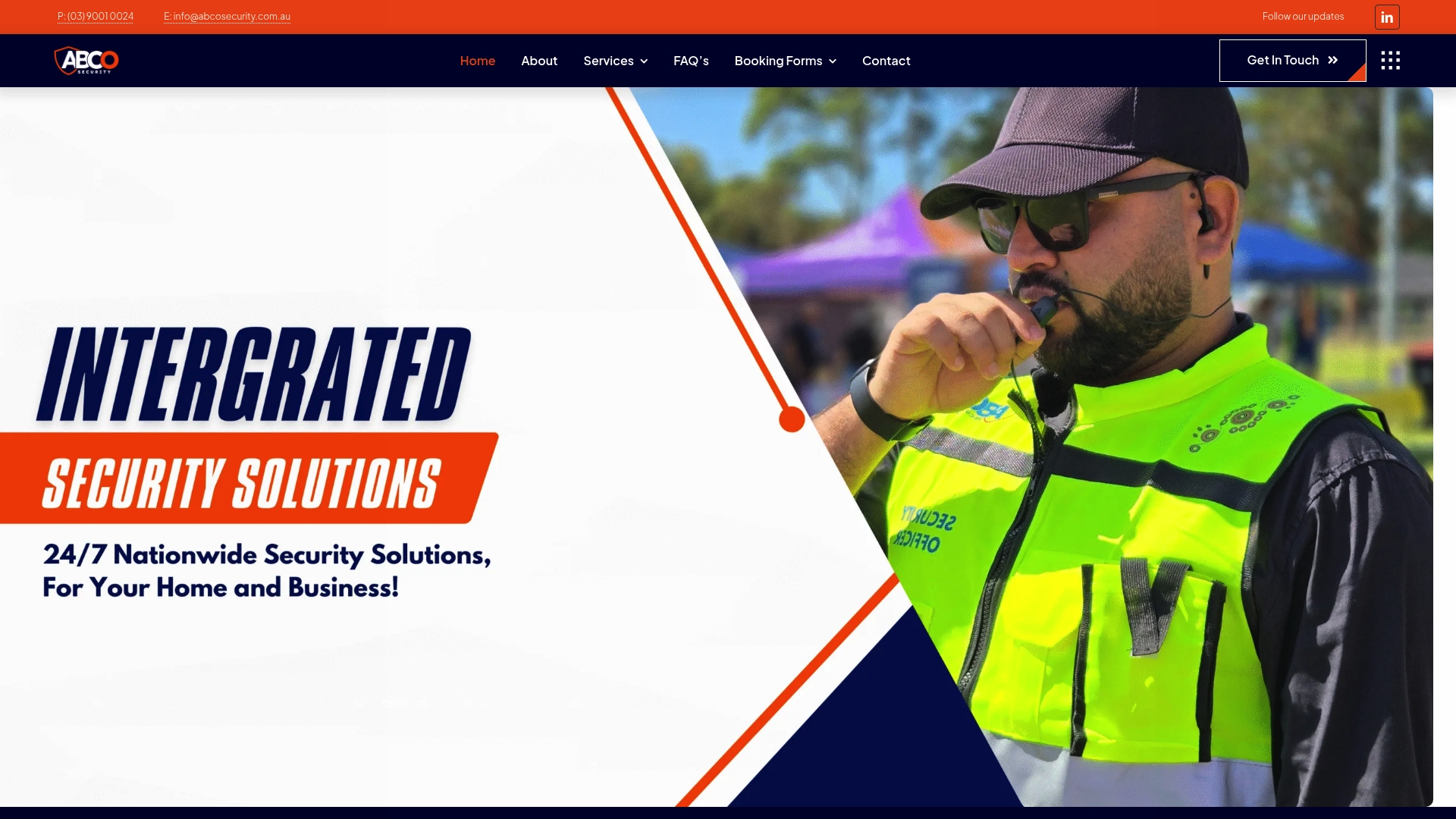
Abcosecurity holds ISO 9001 certification and brings over 15 years of experience across residential communities, corporate sites, and construction environments. That cross-sector track record means their security risk assessments draw on real-world threat data rather than generic checklists. Services include licensed static guards, mobile patrols, CCTV installation and 24/7 camera monitoring, access control, and alarm systems, all delivered under one service agreement. For homeowners who want a tailored assessment before committing to any hardware, Abcosecurity offers security consultations that map your property’s specific risk profile before recommending a solution.
Key takeaways
Professional residential security services deliver the most reliable protection when alarms, CCTV, monitoring, and physical controls are combined into a system fitted to your property’s actual risk profile.
| Point | Details |
|---|---|
| Layered systems work best | Combining alarms, CCTV, monitoring, and access control gives far better coverage than any single component. |
| Licensing protects you | Unlicensed installers can void your home insurance; always verify state-specific licences before work begins. |
| Budget realistically | Basic alarms cost $500–$2,000 installed; 4-camera CCTV systems range from $1,500–$4,000; full packages with cameras and monitoring run $3,000–$8,000. |
| Monitoring adds real value | Professional 24/7 monitoring costs $30–$80 per month and typically qualifies you for insurer discounts. |
| Abcosecurity for integrated cover | Abcosecurity combines licensed guards, CCTV, alarms, and monitoring under one ISO 9001-certified service agreement. |
FAQ
What does residential security mean?
Residential security refers to the combination of physical and electronic measures protecting a home from intrusion, theft, and other threats. These typically include alarm systems, CCTV, professional monitoring, access control, and physical barriers like security screens.
How much does a home security system cost in Australia?
A basic alarm system costs a few hundred to a few thousand dollars installed; CCTV system and full packages vary more widely. Professional monitoring involves a monthly fee that depends on the provider and level of service.
Who are the best home security providers in Australia?
RACV Home Security suits Victorian homeowners wanting integrated packages; RAC WA Home Security is the strongest option for WA residents needing localised monitoring; and Fallon Solutions offers flexible, multi-state coverage including access control. For fully integrated residential and guarding services, Abcosecurity covers all layers under one agreement.
Do I need a licensed installer for home security?
Yes. Australian state and territory regulations require security installers to hold a valid licence, such as a Private Security Individual Registration or Master Licence. Using an unlicensed contractor can void your home insurance policy and leaves you with no legal recourse if the installation fails.
How long does a home security installation take?
A basic alarm system takes roughly half a day. A four-camera CCTV system typically takes one full day. A comprehensive package covering alarms, cameras, smart locks, and monitoring setup usually takes 1–2 days depending on property size and cabling complexity.
Recommended
about
avada factory
Sempery ultricies nibh at dolor cras urna eleifend nec. Atiam efficitur tempor.