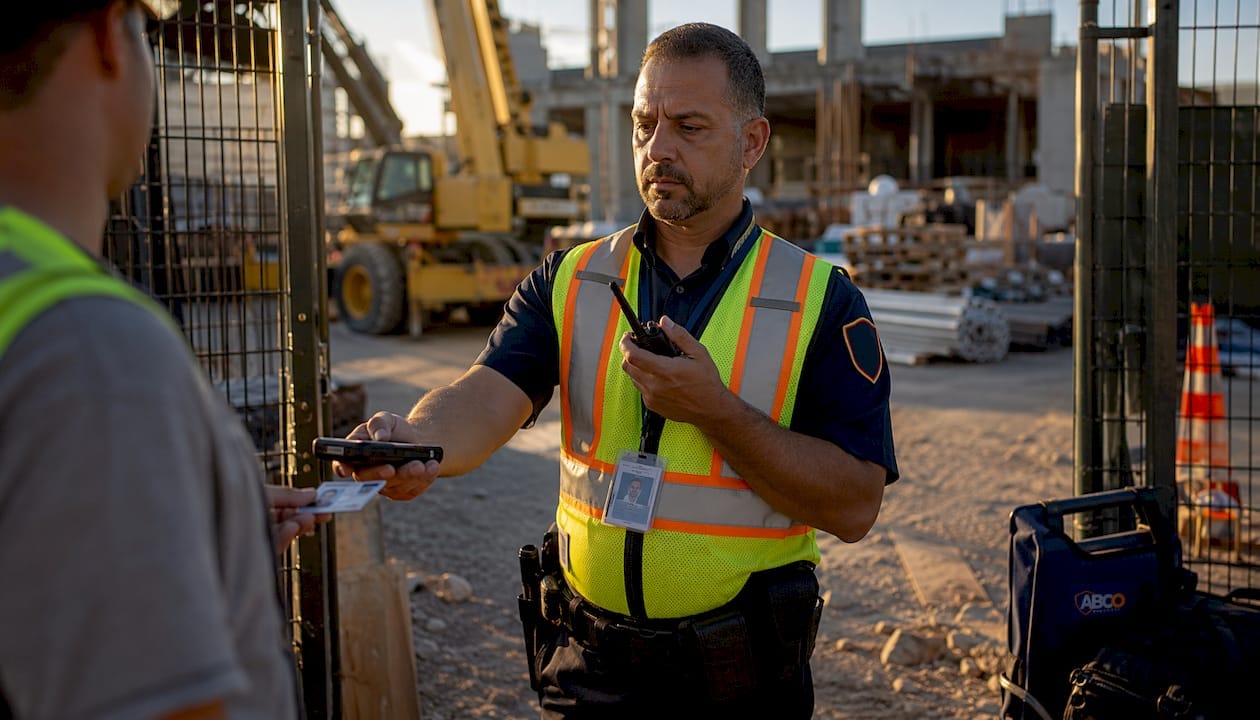
A professional construction site security guard does more than stand at a gate. They control access, deter theft, respond to incidents, and keep your site compliant with Australian WHS obligations — all at once. For project managers and builders, getting this right from day one is far cheaper than recovering from a break-in or a WorkSafe notice.
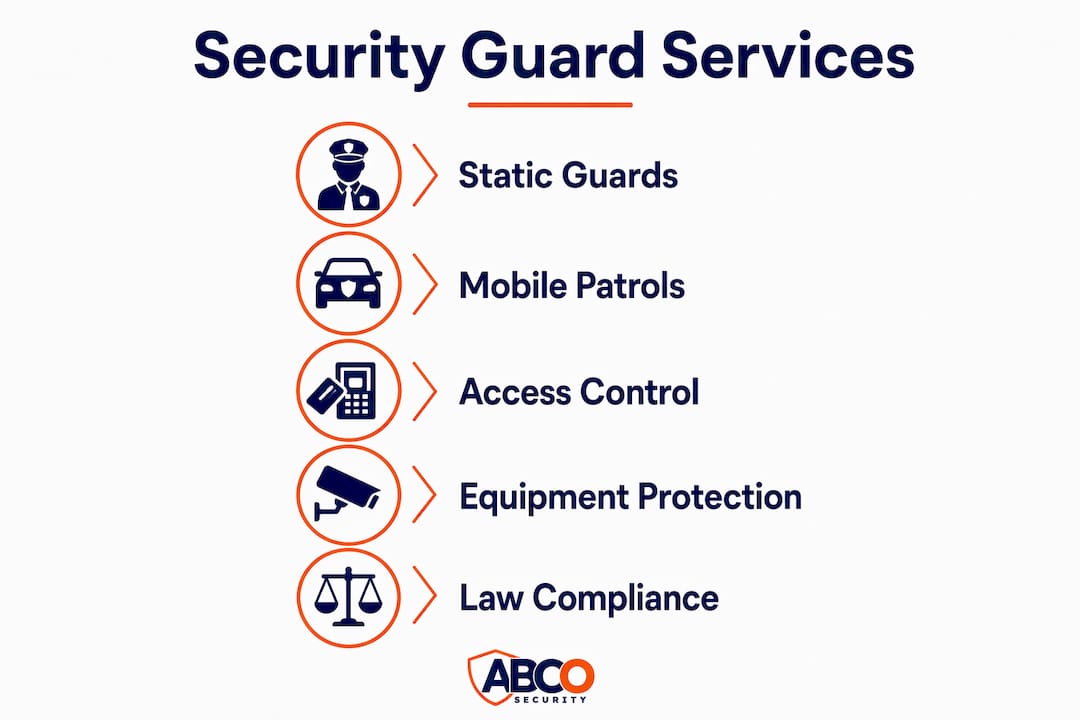
Here is what a complete construction site security service covers:
- Static guarding: a licensed guard stationed at your site entrance or key asset areas around the clock
- Mobile patrols: scheduled or random patrols covering large perimeters or multiple sites
- Access control: verifying credentials, logging visitors, and turning away unauthorised personnel
- CCTV monitoring: live or recorded surveillance integrated with guard response
- Incident reporting: documented records of every security event, breach, or near-miss
- Emergency response: direct liaison with police, fire, or ambulance when required
Table of Contents
- What types of construction site security guard services are available?
- How do security guards protect equipment and materials on site?
- What does Australian law require for construction site security?
- How do you choose the right construction site security company in Australia?
- Abcosecurity’s expertise in Australian construction site security
- Abcosecurity: construction site protection, done properly
- Key takeaways
- FAQ
What types of construction site security guard services are available?
Not every site needs the same mix. The right combination depends on your site size, stage of construction, location, and the value of materials on the ground.
Static security guards provide a continuous physical presence. They manage entry and exit points, check credentials, and act as a visible deterrent. On high-value urban sites or those near schools and residential areas, a static guard is often the baseline requirement.
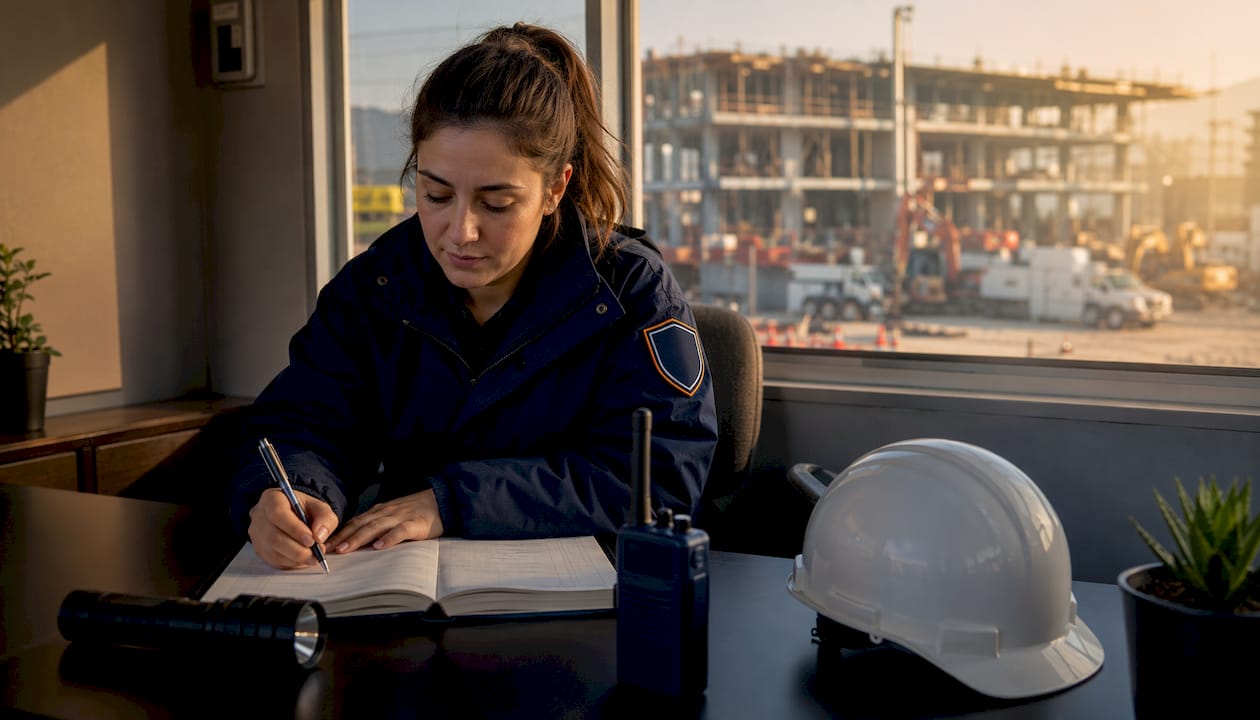
Mobile patrols suit large perimeters or projects where a single fixed post would miss too much ground. Under the ASIAL Mobile Patrol Code of Practice, patrol providers must supply digital proof of service, including GPS logs, geo-tagging, and on-site button activations. If a provider cannot show you those records, look elsewhere.

Access control services go beyond a sign-in sheet. Guards verify photo ID, check subcontractor credentials against approved lists, and maintain a real-time log of everyone on site. This matters for both security and WHS compliance.
CCTV monitoring integrated with guards closes the gap between what cameras capture and what actually gets acted on. A guard watching live feeds can dispatch a patrol or call police within minutes of detecting an intrusion.
Key service distinctions at a glance:
- Static guards: best for high-risk entry points and overnight protection
- Mobile patrols: cost-effective for large or multi-site coverage
- Access control: critical for sites with multiple subcontractors
- CCTV plus guarding: strongest deterrent for high-value material storage areas
- Incident reporting: mandatory for insurance claims and WHS documentation
How do security guards protect equipment and materials on site?
Construction sites carry enormous value in plant, materials, and machinery, often left exposed overnight or on weekends. Theft and vandalism are not random events; they tend to target sites with predictable gaps in coverage.
Guards assigned to asset protection conduct regular checks of secure storage areas, verify that high-value equipment is locked down, and confirm that machinery keys are removed and secured. They also monitor restricted access zones around cranes, hoists, and scaffolding, where unauthorised access creates both theft risk and serious safety hazards. Coordination with physical barriers like fencing and signage reinforces the guard’s presence rather than replacing it.
Best practices for guarding construction assets:
- Designate restricted zones around high-value plant and materials, clearly marked with signage
- Conduct regular documented checks of storage areas and lock-up points throughout each shift
- Integrate guard patrols with alarm systems so any breach triggers an immediate response
- Confirm mobile plant such as excavators has hydraulics de-energised and keys secured before each shift ends, as outlined in the SafeWork NSW site security checklist
- Position CCTV cameras to cover storage areas and feed directly to the monitoring station
What does Australian law require for construction site security?
The legal baseline is clear. WHS Regulation 298 requires every person with management or control of a construction site to secure it from unauthorised access “so far as is reasonably practicable.” That phrase carries real weight: it means you must do everything that is feasible given the risk, not just what is convenient.
WorkSafe Victoria identifies temporary security fencing as the most acceptable primary control, specifying a minimum height of 1.8 metres and construction that prevents climbing. Reinforcing mesh sheets are explicitly ruled out because they provide hand and foot holds. WorkSafe WA adds that fencing must also resist crawling underneath and withstand wind loads and human force. Security personnel surveillance is the secondary layer, used where fencing alone is not practicable.
Security guard licensing adds another compliance layer. In NSW, the Security Industry Act 1997 defines Class 1A licences for unarmed property guarding and patrols. In the ACT, Access Canberra issues equivalent subclass licences. Every state has its own framework, and the licence subclass must match the actual service being delivered. Hiring a guard whose licence does not cover the contracted activity puts your site in breach.
Security plans must also evolve with the site. Construction changes rapidly, and WorkSafe WA guidance explicitly requires stage-based reassessment of controls as new risks emerge.
Compliance checklist for project managers:
- Confirm all guards hold a current, correctly subclassed licence for your state
- Verify fencing meets height, material, and stability requirements before site closure each day
- Maintain signed-off shutdown checklists covering fencing, signage, utility isolation, and plant security
- Request digital patrol records from mobile patrol providers at the start of the contract
- Schedule a security plan review at each major construction stage
Pro Tip: Request a copy of each guard’s licence number and check it against your state’s public register before the first shift starts. A five-minute check prevents a compliance headache later.
How do you choose the right construction site security company in Australia?
The provider’s licence scope is the first filter. Their guards must hold the correct subclass for every activity they will perform on your site, whether that is static guarding, mobile patrol, or CCTV monitoring. Mismatched licences are your liability, not theirs.
Construction industry experience matters in ways that general security experience does not. A provider who understands site stages, subcontractor access patterns, and WHS shutdown requirements will write a security plan that actually fits your project. Ask for case studies from comparable projects, not just a list of sectors served.
Technology integration separates capable providers from basic ones. GPS-verified patrol logs, geo-tagged incident reports, and live CCTV feeds connected to a 24/7 monitoring centre are now standard expectations, not premium extras. Providers who cannot demonstrate these capabilities leave you with no verifiable proof of service if a dispute arises.
Top selection criteria:
- Correct licence subclasses for all contracted activities, verified against state registers
- Demonstrated construction industry experience with references from similar projects
- Digital proof of service for mobile patrols: GPS logs, geo-tags, and monitoring centre communication
- Integrated security technology including CCTV, alarms, and access control
- Clear contract terms covering service verification, incident reporting, and stage-based plan reviews
- Local knowledge of the site’s suburb and its specific risk profile
Abcosecurity’s expertise in Australian construction site security
Abcosecurity has delivered construction site security services across Australia for over 15 years, with ISO 9001 and ISO 30000 certifications underpinning its quality and security management systems. That combination of tenure and formal certification is relatively rare in the Australian market.
The service model covers licensed static guards, mobile patrols with digital proof of service, CCTV installation and live monitoring, access control systems, and 24/7 incident response. Each engagement starts with a site-specific security management plan that accounts for the construction stage, site location, and the value of assets on the ground. Plans are reviewed as the project progresses, which aligns directly with the stage-based reassessment approach required by WorkSafe guidance.
Abcosecurity’s guards hold the appropriate licence subclasses for their assigned roles, and the company’s compliance processes are built around Australian WHS standards. For Melbourne-based projects, localised knowledge of council requirements and neighbourhood risk profiles feeds directly into Melbourne construction site security planning.
Key Abcosecurity capabilities for construction clients:
- Licensed static guards and mobile patrols with GPS-verified attendance records
- CCTV monitoring integrated with 24/7 response centre
- Site-specific security plans reviewed at each construction stage
- Access control systems with visitor logging and credential verification
- ISO 9001 and ISO 30000 certified quality and security management
- Over 15 years of construction sector experience across Victoria and broader Australia
Abcosecurity: construction site protection, done properly
Construction project managers who have dealt with a site theft know the real cost: not just the stolen materials, but the project delay, the insurance claim, the WorkSafe paperwork, and the crew standing around waiting for replacement plant. Prevention is a fraction of that cost.
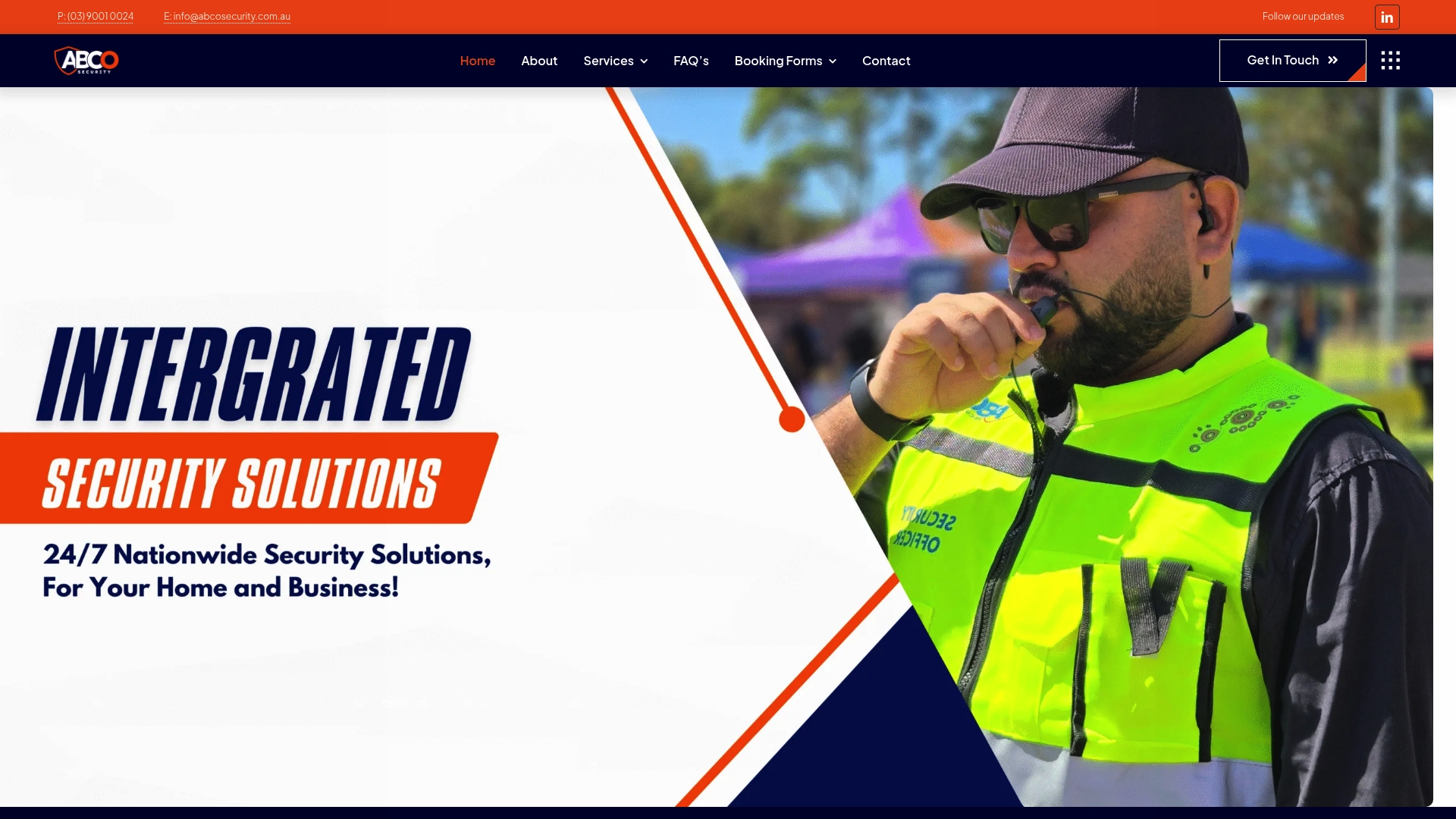
Abcosecurity provides integrated construction security that covers licensed guards, mobile patrols, CCTV monitoring, and access control under a single managed plan. The team holds the correct Australian licences, uses digital verification for every patrol, and builds security plans around your specific site stage and risk profile. Whether your project is in Melbourne’s CBD or a regional growth corridor, Abcosecurity’s local knowledge and technology integration mean your site is covered from day one. Contact Abcosecurity at abcosecurity.com.au to get a site-specific security assessment.
Key takeaways
A licensed, experienced construction site security guard service, integrated with technology and built around Australian WHS compliance, is the most effective way to protect site assets and meet your legal obligations.
| Point | Details |
|---|---|
| Legal obligation is clear | WHS Regulation 298 requires construction sites to be secured from unauthorised access so far as is reasonably practicable. |
| Fencing comes first | WorkSafe Victoria sets 1.8 metres as the minimum fencing height; guards are the secondary layer where fencing is not practicable. |
| Licence subclass must match the role | NSW Class 1A and ACT 1A subclasses cover unarmed guarding and patrols; mismatched licences create compliance liability for the site manager. |
| Demand digital patrol records | The ASIAL Mobile Patrol Code of Practice requires GPS logs and geo-tagging; insist on these from day one of any patrol contract. |
| Abcosecurity | Provides licensed static guards, mobile patrols, CCTV monitoring, and site-specific security plans with ISO 9001 and ISO 30000 certification. |
FAQ
What does a construction site security guard actually do each day?
A construction site security guard controls site access, verifies credentials, conducts patrols, monitors CCTV feeds, documents incidents, and liaises with emergency services when required. They also confirm that plant is secured and hazards are isolated before the site closes each day.
Do security guards replace the need for site fencing in Australia?
No. WorkSafe Victoria and WorkSafe WA both treat fencing as the primary control and security personnel as a secondary measure used only where fencing is not practicable. Guards supplement fencing; they do not replace it.
What licence does a construction site security guard need in Australia?
Licensing requirements vary by state. In NSW, a Class 1A licence covers unarmed property guarding and patrols. In the ACT, the equivalent is a 1A subclass licence issued by Access Canberra. Always verify that the guard’s licence subclass matches the contracted activity.
How do I verify that a mobile patrol provider is actually attending my site?
Under the ASIAL Mobile Patrol Code of Practice, providers must supply GPS logs, geo-tagged records, and on-site button activations as proof of attendance. Request these records as a contract condition before signing.
How often should a construction site security plan be reviewed?
Security plans should be reviewed at each major construction stage, as site risks, access requirements, and asset values change throughout the project. WorkSafe WA guidance explicitly requires stage-based reassessment of security controls.
Recommended
- Comprehensive Construction Site Security Guide – ABCO Security Services Australia
- Navigating 2026 Construction Site Security Regulations – ABCO Security Services Australia
- 2026 Guide to Construction Site Security Technology – ABCO Security Services Australia
- 7 Steps to Build a Construction Site Security Plan – ABCO Security Services Australia
about
avada factory
Sempery ultricies nibh at dolor cras urna eleifend nec. Atiam efficitur tempor.