TL;DR:
- Secure vacant sites immediately with layered physical, electronic, and personnel defenses to prevent theft and vandalism.
- Notify insurers and police within 24 hours, documenting inspections and activating monitored systems for insurer compliance.
Deploy an integrated, layered security package the moment a site goes vacant. That means physical hardening (locks, boarding, perimeter fencing), monitored electronic detection (alarm panels, CCTV with AI verification), and active security presence (randomised mobile patrols or static guards) — all running in parallel, not in sequence. Notify your insurer and local police within 24 hours. Failure to notify your insurer can void your property cover or result in denied liability claims.
Your first 72 hours:
- Notify your insurer and local police that the site is vacant. Confirm any vacancy clause requirements — most commercial policies apply additional conditions after 30–60 days of vacancy.
- Secure all high-risk entry points: external doors, roller doors, switchrooms, roof hatches, and accessible windows. Install quality deadlocks; board lower-floor windows with exterior-grade plywood.
- Activate temporary monitored detection and schedule your first randomised patrol within 48 hours.
Pro Tip: Deploy monitoring signage and ensure perimeter lighting is fully operational before you leave the site. A building that looks cared for attracts far less attention — visible deterrents like signage indicating professional monitoring deter opportunistic offenders at near-zero cost.
Abcosecurity holds ISO 9001 and ISO 30000 certification, operates 24/7 monitored services, and deploys licensed security personnel across Australia — all relevant when you are selecting a provider against insurer requirements.
Table of Contents
- What does a layered vacant property security plan actually look like?
- How to complete your 24–72-hour site checklist
- Which security technologies actually work in Australia?
- Static guards, mobile patrols, or concierge: which fits your site?
- Insurance, compliance, and working with Australian police
- How to build your vacant-property security plan: timeline and responsibilities
- Key takeaways
- Why integration is the only approach that holds up
- Abcosecurity’s integrated vacant property security services
- Useful Australian sources for policy, insurance, and procurement
- FAQ
What does a layered vacant property security plan actually look like?
A single measure fails because it addresses only one attack vector. A padlock stops casual entry but not a determined intruder with bolt cutters. A camera records an incident but does not prevent it. The layered approach works because each layer compensates for the gaps in the others.
The three core layers:
- Physical hardening: Deadlocks, boarding, perimeter fencing, gate locks, isolated roller shutters, and secured roof access. Isolate utilities and disable non-essential electrical systems early — copper and metal theft can compromise structural and electrical systems and trigger cascading damage worth far more than the stolen materials.
- Electronic monitoring: Monitored alarm panels, CCTV with AI video verification, motion sensors, and thermal cameras for dark perimeters. Remote AI verification reduces false dispatch costs and shortens police response times by filtering genuine events from noise.
- Active personnel: Licensed static guards for high-value or high-risk sites; randomised mobile patrols for most commercial vacancies. Predictable patrol schedules degrade deterrent value — sophisticated offenders map fixed visits, so randomisation is not optional.
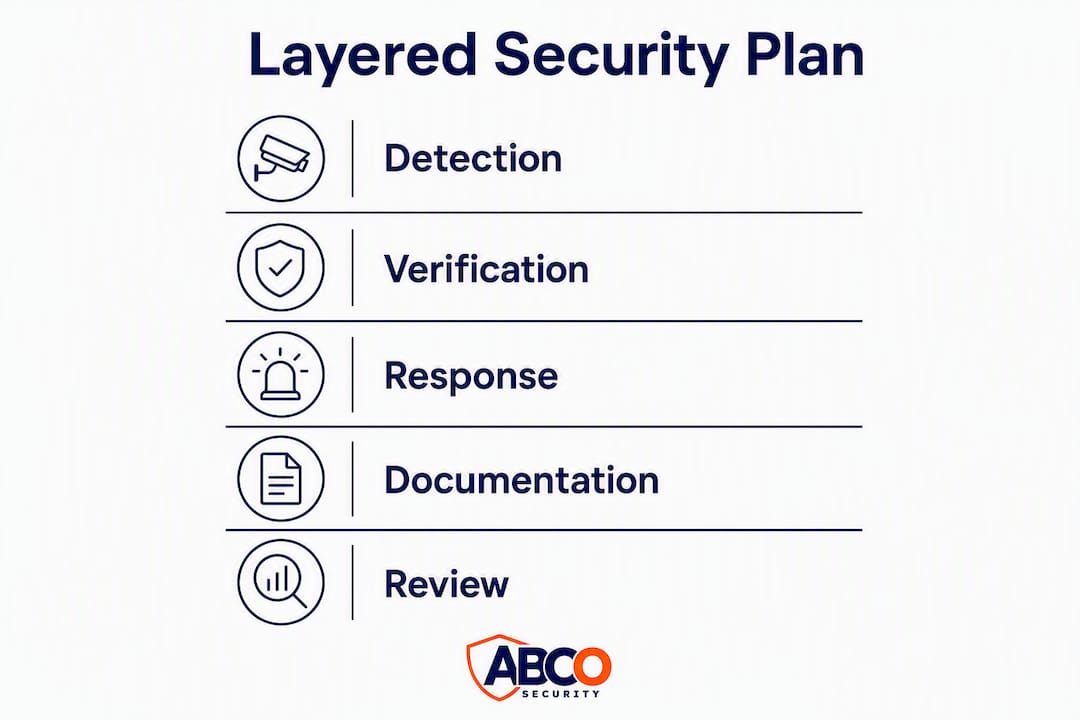
The layers interlock as detection, verification, and response. Monitored CCTV with remote AI verification means an operator confirms a genuine intrusion before dispatching personnel, cutting wasted responses and improving police triage. Pair that with a commercial property security system that logs every access event, and you have an audit trail that satisfies most insurer evidence requirements.
Pro Tip: Standardise your inspection checklists digitally from day one. Digital inspection templates log site condition, access events, and test results consistently — insurers increasingly treat them as best practice evidence, and they speed claims processing when incidents occur.
How to complete your 24–72-hour site checklist
Hours 0–24
- Notify police (non-emergency line) and your insurer in writing. Request confirmation of any vacancy clause conditions.
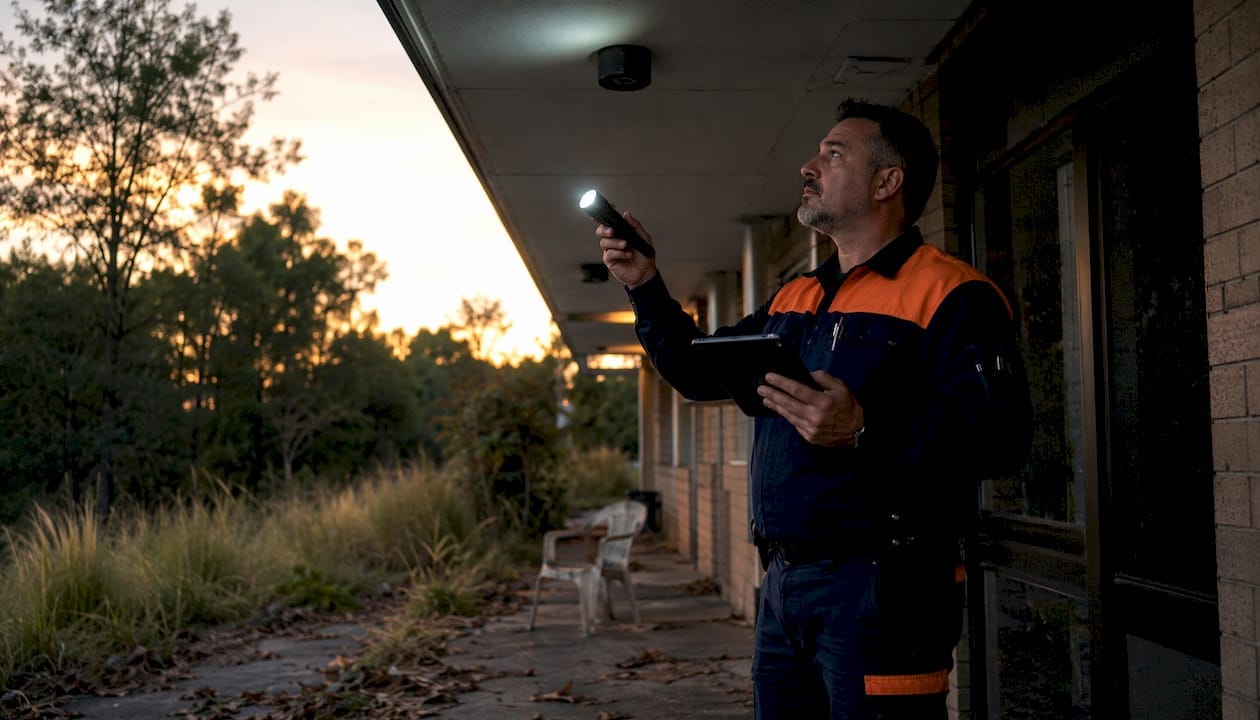
- Walk every entry point: external doors, roller doors, switchrooms, roof hatches, basement access. Photograph and log each one with a timestamp and geotag.
- Isolate utilities — shut off water where not needed, disconnect gas and non-essential electrical services, retain power only for alarms and lighting.
- Install quality mortise deadlocks on all exit doors; board accessible lower-floor windows.
- Redirect mail and seal letterboxes.
Hours 24–48
- Deploy a temporary wireless alarm hub and battery-powered cameras. Wireless systems minimise installation damage and can be redeployed across your portfolio when the vacancy ends.
- Confirm alarm monitoring is active and connected to a 24/7 control room.
- Schedule the first randomised patrol and brief the patrol provider on site-specific risks.
Hours 48–72
- Complete a full inspection using a digital checklist: entry point status, camera field-of-view checks, alarm panel status, utility isolation confirmation, photo log with signatures.
- Send the completed checklist to your insurer as evidence of compliance.
Inspection frequency by risk level:
| Risk level | Site characteristics | Recommended inspection cadence |
|---|---|---|
| Low | Urban, low-crime area, short vacancy | Weekly |
| Medium | Suburban, moderate vacancy period, some assets on site | Every 2–3 days |
| High | Remote, high-value assets, prior incidents, extended vacancy | Daily or multiple daily roaming patrols |
Photo logs must include timestamped, geotagged images stored in a centralised digital folder. A single untested fault — an alarm that has dropped off the network, a camera with a blocked view — can compound into significant loss during vacancy.
Which security technologies actually work in Australia?
The right tech mix depends on the vacancy scenario. An urban office building has mains power and NBN; a remote construction site has neither.
- Monitored alarm panels: Best for any site with mains power and cellular or NBN connectivity. Fast to deploy, integrates with 24/7 control rooms. Constraint: requires network connectivity.
- Wireless battery sensors: Ideal for heritage buildings or short-term vacancies where cabling is impractical. Minimal installation damage; redeployable. Battery life is the key constraint — schedule regular checks.
- Monitored CCTV with AI verification: The most effective combination for urban and suburban sites. AI filters false alarms from animals and weather; operators verify genuine events before dispatch. Reduces wasted police responses and lowers overall monitoring costs.
- Thermal cameras: Best for dark perimeters and large outdoor areas where standard cameras lose detail at night. Higher upfront cost but strong detection performance in low-light conditions.
- Solar-powered surveillance towers: Purpose-built for remote construction sites or rural properties without mains power. Remote AI verification and solar towers enable real-time alarm verification in infrastructure-poor sites where running cable is not feasible. Typical deployment time: same day to 48 hours.
- Licence plate recognition (LPR): Useful at gated entries for construction sites and industrial properties. Logs every vehicle entry and exit automatically.
Pro Tip: For short-term vacancies, prefer wireless, battery-backed systems. They preserve the building fabric, require no electrician, and move with you when the site is reoccupied or handed over.
Static guards, mobile patrols, or concierge: which fits your site?
Static guards suit high-value or high-risk sites: data centres, healthcare facilities with controlled substances, or construction sites with expensive plant. Continuous presence is the advantage; cost is the constraint — a static guard is the most expensive personnel option per hour.
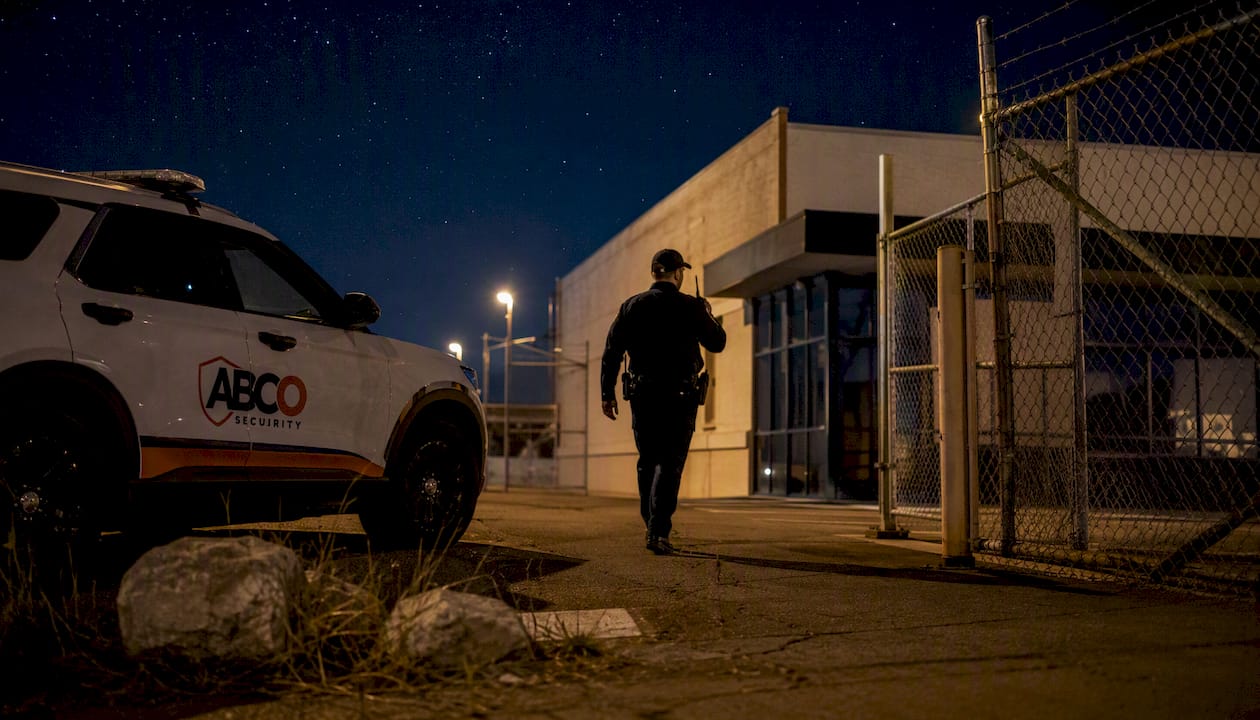
Randomised mobile patrols are the workhorse option for most commercial vacancies. A patrol vehicle visits the site at unpredictable intervals, conducts a documented inspection, and logs findings digitally. The randomisation matters: integrated security approaches recommend unpredictable patrol intervals specifically to prevent intruders timing their activity around fixed schedules. Patrol reports provide insurer-ready evidence of each visit.
Concierge or reception staffing is rarely appropriate for a fully vacant site but suits partially occupied buildings where controlled access and visitor management are still needed.
When selecting a provider, confirm: licensed personnel (Security Industry Act compliance in your state), 24/7 monitoring capability, documented patrol reporting, and ISO-aligned quality management. Abcosecurity’s static guard services and mobile patrol operations meet these criteria and operate across Australia.
A sample randomised patrol schedule generates visit windows (e.g., 10 PM–11 PM, 2 AM–3 AM, 5 AM–6 AM) and randomises the actual arrival time within each window. Patrol officers log entry time, exit time, observations, and any defects found — all timestamped and geotagged.
Insurance, compliance, and working with Australian police
Notify your insurer in writing the day the site becomes vacant. Most commercial insurers apply vacancy clauses after a defined period, commonly 30–60 days, and may require specific security measures — monitored alarms, regular inspections, or fencing — to maintain full cover. Confirm the exact requirements for your policy; commercial property insurance terms vary significantly between insurers.
Documentation to maintain for claims:
- Dated inspection logs with photo evidence (timestamped, geotagged)
- Alarm event logs and test records
- Patrol reports with officer signatures
- Access logs for all contractors and visitors
- Written insurer and police notifications
Liability exposure is a hidden cost many managers underestimate. If a trespasser is injured on a vacant site, the owner frequently faces legal responsibility — making thorough documentation and insurer notification essential from day one.
For police liaison: file a non-emergency report noting the site is vacant and request periodic drive-bys where available. When monitored verification is active, operators can contact police with confirmed visual evidence, which improves police triage and response priority.
Pro Tip: Re-key all locks when prior occupants vacate. Keep a centralised digital folder with dated evidence — inspection logs, alarm records, patrol reports — so you can respond to a claim without scrambling for paperwork.
How to build your vacant-property security plan: timeline and responsibilities
Immediate (0–72 hours)
- Facility manager notifies insurer and police in writing.
- Security provider conducts site risk assessment and recommends tech/personnel mix.
- Physical hardening completed by facility manager or contractor.
- Temporary monitored detection activated by security provider.
- First randomised patrol scheduled and briefed.
Short term (weeks 1–2)
- Digital inspection checklist template finalised and distributed to patrol officers.
- Insurer confirmation of vacancy clause compliance received and filed.
- Alarm and camera systems tested; faults rectified within 24 hours of detection.
Medium term (months 1–3)
- Inspection frequency reviewed against risk level (see table above).
- Service agreement reviewed: confirm SLAs for patrol frequency, reporting format, and maximum response time for alarm events (typically 15–30 minutes for high-risk sites).
- Escalation flow documented: alarm verification → on-site response → police contact → insurer notification, with named contacts and maximum allowable times at each step.
Exit or handover
- Final inspection completed and documented.
- Temporary equipment removed or transitioned to permanent installation.
- Insurer notified of reoccupation.
Responsibility matrix: The facility manager owns notifications, insurer liaison, and inspection scheduling. The security provider owns patrol execution, alarm monitoring, and incident reporting. Supplier installers own equipment commissioning and fault rectification. All parties sign off on the service agreement SLAs before the site goes live.
Key takeaways
Effective vacant property security requires physical hardening, monitored electronic detection, and active licensed personnel working together from the first 24 hours of vacancy.
| Point | Details |
|---|---|
| Notify immediately | Contact your insurer and police within 24 hours of vacancy to preserve cover and meet policy requirements. |
| Layer your defences | Physical hardening, monitored CCTV with AI verification, and randomised patrols each cover gaps the others cannot. |
| Randomise patrols | Fixed patrol schedules lose deterrent value; unpredictable visit times prevent intruders timing their activity. |
| Digitise inspection records | Timestamped, geotagged photo logs and digital checklists are the evidence base for insurance claims. |
| Abcosecurity | Provides licensed static guards, randomised mobile patrols, 24/7 monitored CCTV, and ISO 9001-aligned inspection processes for vacant sites across Australia. |
Why integration is the only approach that holds up
The conversation in the industry has shifted. Five years ago, a padlock and a camera felt like adequate cover for a short vacancy. Today, insurers expect documented inspection cadences, monitored alarms, and evidence trails. Police expect verified alarm events, not raw activations. And the threat profile has changed: copper stripping, arson, and organised squatting are not opportunistic — they are targeted, and they happen fast on sites that look unmonitored.
The 70% reduction in crime that Abcosecurity’s property protection service documents is not achieved by any single measure. It comes from the combination: a visible deterrent that raises the perceived risk for an offender, a detection layer that catches movement before damage occurs, and a response layer that puts a licensed officer on site before the situation escalates. Remove any one of those and the system degrades.
What gets underestimated is the documentation burden. Facility managers who deploy good physical and electronic security but fail to log inspections consistently find themselves in disputes with insurers when claims are lodged. The paperwork is not bureaucracy — it is the mechanism by which your security investment actually pays out when you need it. Standardised digital checklists, patrol reports with officer signatures, and a centralised evidence folder are as important as the hardware.
Abcosecurity’s integrated vacant property security services
When a site goes vacant, the gap between “we have a camera” and “we have a documented, monitored, insurer-compliant security programme” is where losses happen. Abcosecurity closes that gap with a service model built specifically for the complexity of vacant commercial, construction, and healthcare sites across Australia.
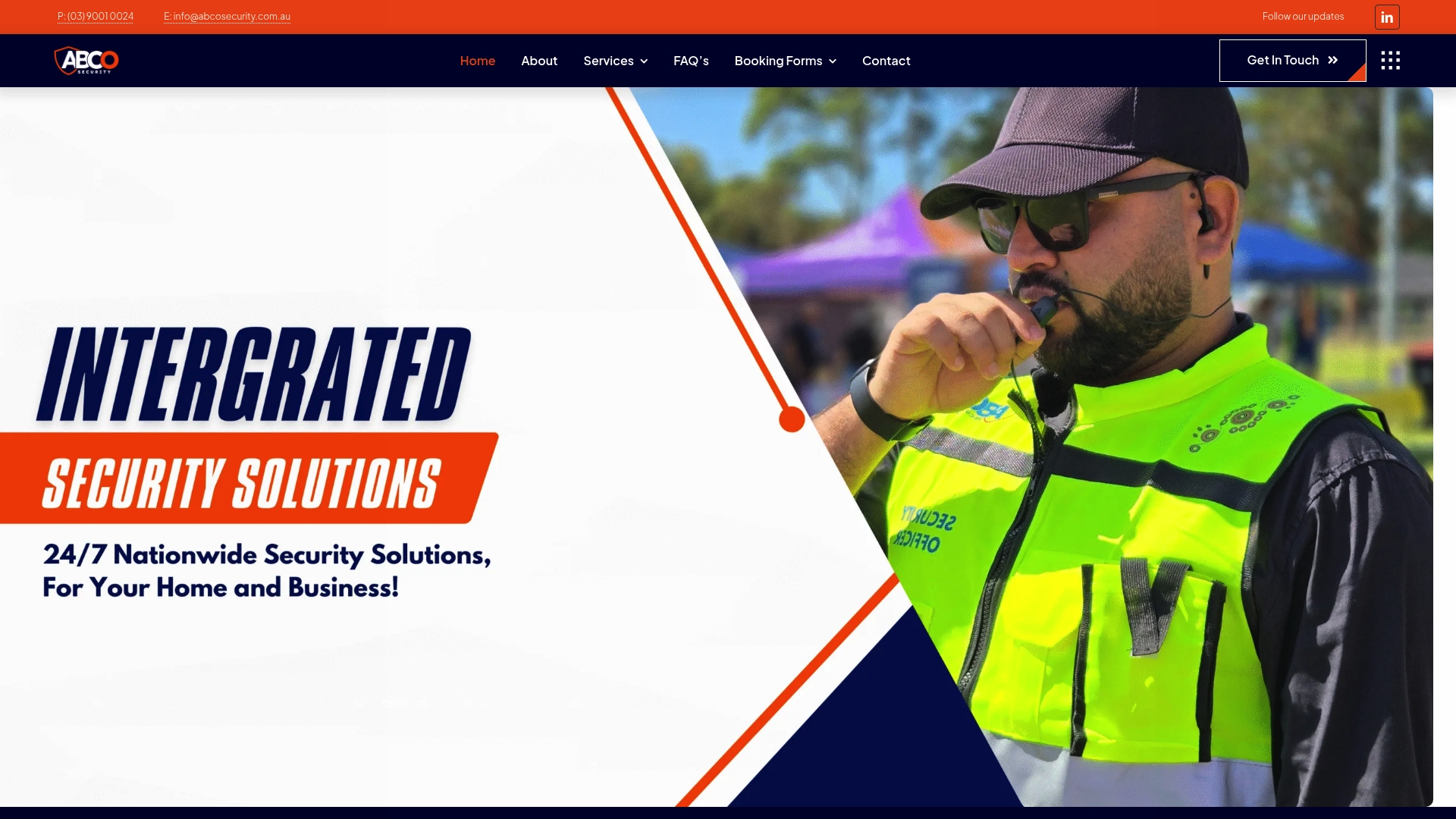
The service covers licensed static guards, randomised mobile patrols, monitored CCTV with AI verification, temporary wireless alarm installation, solar-powered surveillance towers for remote sites, and digital inspection checklists with full audit trails. Every service is delivered by licensed personnel under ISO 9001 and ISO 30000 quality frameworks, with 15+ years of sector experience behind the methodology.
Abcosecurity’s construction site security management programme is directly applicable to vacant construction sites and includes the SLA templates, patrol scheduling, and insurer-compliant reporting formats described in this guide.
To get started: request a free site assessment, receive a risk rating and recommended tech/personnel mix, and sign a service agreement with documented SLAs. Contact Abcosecurity for a site assessment and quote at abcosecurity.com.au.
Useful Australian sources for policy, insurance, and procurement
When confirming your obligations and selecting suppliers, these are the sources worth checking:
- Your insurer’s vacancy clause documentation — request this in writing and confirm the inspection frequency and security standards required to maintain full cover.
- State and territory police non-emergency reporting lines — file a vacancy notification and ask about periodic drive-by availability for your site.
- Insurance requirements for commercial real estate — practical guidance on vacancy clauses and evidence requirements for commercial property owners.
- PMVA vacant property inspection checklist template — a structured digital template aligned with insurer expectations.
- Abcosecurity.com.au — for site assessments, service agreements, and integrated security solutions across Australia.
State-specific rules on security licensing, police reporting, and insurer requirements vary. Confirm the current requirements for your jurisdiction before finalising your security programme.
FAQ
What should I do first when a property becomes vacant?
Notify your insurer and local police in writing within 24 hours, then secure all entry points and activate temporary monitored detection. Failure to notify your insurer can void your cover or result in denied claims.
How often should a vacant property be inspected?
Low-risk sites warrant weekly inspections; medium-risk sites every 2–3 days; high-risk or remote sites with valuable assets require daily or multiple daily patrols.
Are wireless alarm systems suitable for vacant buildings?
Yes. Wireless, battery-backed systems are practical for short-term vacancies and heritage buildings where cabling is not feasible — they minimise installation damage and can be redeployed across a property portfolio.
What documentation do insurers require for vacant property claims?
Insurers typically require dated inspection logs with geotagged photos, alarm event records, patrol reports with officer signatures, and written evidence of insurer and police notifications from the date of vacancy.
Does Abcosecurity provide services for vacant commercial and construction sites?
Yes. Abcosecurity provides licensed static guards, randomised mobile patrols, monitored CCTV, temporary alarm installation, and digital inspection reporting for vacant commercial, construction, and healthcare sites across Australia under ISO 9001 and ISO 30000 frameworks.
Recommended
- Essential Property Management Security Services: A Deep Dive – ABCO Security Services Australia
- Strata Manager Responsibilities: A Complete Guide for 2026
- Victoria Rental Property Security Standards Checklist – ABCO Security Services Australia
- Construction Site Security Management Guide – ABCO Security Services Australia
about
avada factory
Sempery ultricies nibh at dolor cras urna eleifend nec. Atiam efficitur tempor.