Security is one of Australia’s fastest-growing industries, and the demand for qualified professionals has never been higher. Whether you are considering a career change or just starting out in the workforce, understanding your training options is the first step toward a rewarding and stable future.
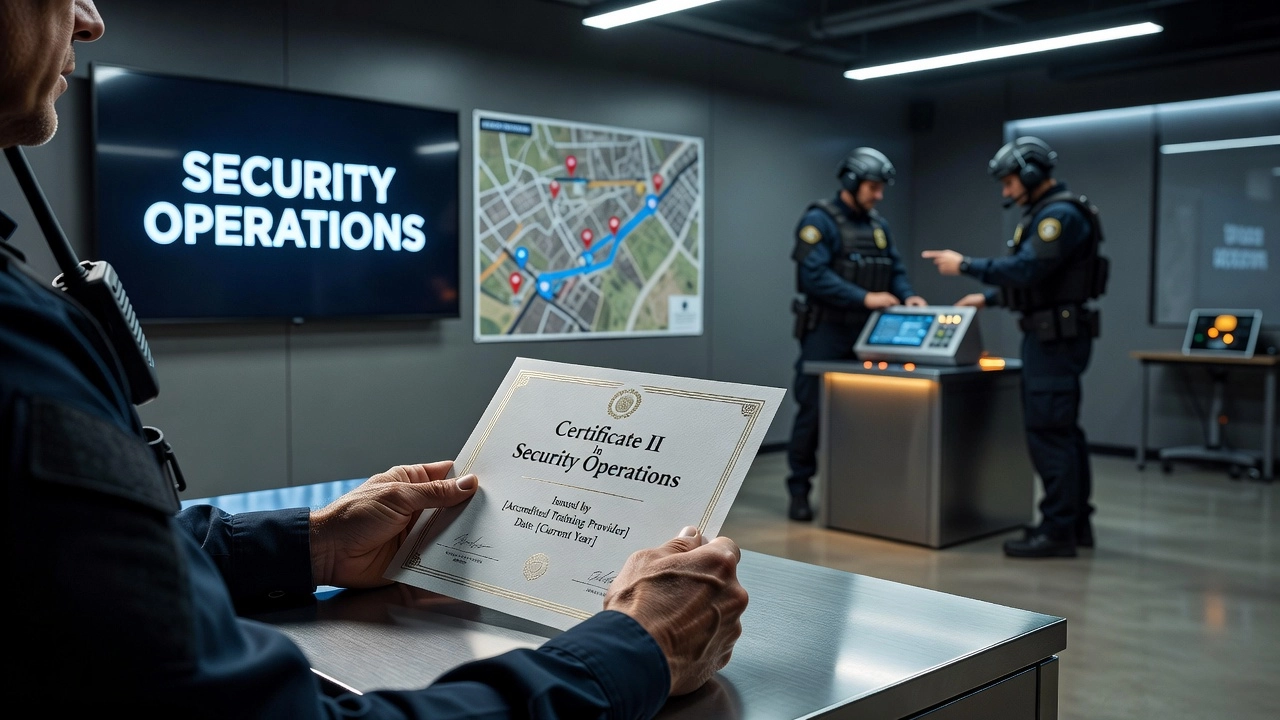
The Certificate II in Security Operations is a nationally recognised qualification designed specifically for beginners who want to break into the security sector. It provides the foundational knowledge and practical skills required to work as a security officer, crowd controller, or entry-level operative across a range of industries.
In this guide, you will discover exactly what the Certificate II in Security Operations covers, including the core units, licensing requirements, and the career pathways it opens up. We will also walk you through what to expect during training, how long it takes to complete, and why this qualification is considered the essential starting point for anyone serious about a career in security. By the end, you will have a clear picture of whether this course is the right fit for your goals.
The Direct Answer
Certificate II in Security Operations (CPP20218) is Australia’s mandatory entry-level qualification for licensed security guards, covering 14 core units across patrolling, crowd control, and property protection. In most states, including Victoria, you cannot legally work as a security officer without it.
I’ve spent over a decade hiring, deploying, and managing security personnel across Melbourne. This qualification is not optional paperwork. It is the regulated baseline that licensing bodies, insurers, and serious employers require before a single shift begins. Victoria Police explicitly lists CPP20218 as the approved training for unarmed guard, crowd controller, and control room operator licence categories. No qualification, no licence. No licence, no legal employment.
That is the ground truth, written from the operations floor, not a training brochure.
Pro Tip: Before enrolling anywhere, confirm your chosen RTO is approved on the national training register at training.gov.au. Unregistered providers exist, and their certificates are worthless for licensing purposes.
What Is Certificate II in Security Operations?
Certificate II in Security Operations (CPP20218) is a nationally recognised qualification sitting on the Australian Qualifications Framework (AQF), not a short course, workshop, or certificate of attendance. It is a formal credential listed on the national training register at training.gov.au, assessed against competency standards within the Property Services Training Package.
I’ve found that most people entering the industry underestimate how tightly this qualification is tied to the licensing process. Skip it and you simply cannot legally work.
This is the minimum licensing requirement in Victoria and the majority of Australian states and territories under relevant private security legislation, including Victoria’s Private Security Act 2004. It is not optional, and no other training is interchangeable with it.
Victoria Police Licensing and Regulation Division specifically recognises CPP20218 for three licence categories:
- Unarmed Guard
- Crowd Controller
- Control Room Operator
Importantly, Victoria requires training to be completed within 12 months prior to your licence application. Check the current eligibility and unit requirements before enrolling, as recognised units can be updated.
The qualification is delivered exclusively through Registered Training Organisations (RTOs) approved by the Australian Skills Quality Authority (ASQA). RTOs assess candidates against 14 core units of competency covering areas including legal obligations, WHS, defensive techniques, access control, and crowd behaviour management. Upon successful completion, you receive a formal AQF testamur and record of results, which you then submit as part of your licence application to the relevant regulatory body.
Working in security guard roles or event security without this qualification and a current licence is not a grey area. It is a legal breach.
Common Pitfall to Avoid: Enrolling with an RTO that does not deliver all required units for your target licence category. Always confirm the specific units included in your course match Victoria Police or your state regulator’s current requirements before paying a cent.
What the 14 Core Units Actually Cover
The CPP20218 qualification packs a specific, non-negotiable set of competencies into its 14 mandatory units. Here is what each unit group actually trains you to do:
- Patrolling premises: Systematically monitoring property to detect and deter threats
- Screening entrants: Checking persons, personal effects, and vehicles at access points
- Monitoring behaviour: Managing individual and crowd conduct, including intoxicated persons
- Removing persons from premises: Applying lawful removal procedures safely
- Writing incident reports: Documenting events accurately using standardised formats
- Managing conflict: Applying de-escalation techniques before any physical response
- Applying first aid principles: Responding to medical emergencies via HLTAID011
Most people overlook that this qualification also covers communication and conflict de-escalation, not just physical response protocols. Units like CPPSEC2101 focus specifically on verbal skills, situational awareness, and non-physical resolution, which are the tools you will use on the job far more often than defensive techniques.
What This Qualification Does Not Cover
Armed guarding, cash-in-transit operations, and close protection all sit outside the Certificate II scope entirely. Those roles require additional study under CPP31318 or CPP31418, plus separate licensing endorsements. Knowing this boundary early prevents wasted time applying for roles you are not yet qualified to hold.
All 14 units are mandatory with zero electives. This is deliberate. It ensures every licensed graduate, regardless of which registered training organisation they attended, meets the same baseline competency standard. Consistency across providers is the direct result of that fixed structure.
Practical assessment is non-negotiable for licensing compliance. Role-plays, scenario demonstrations, patrolling exercises, and hands-on first aid assessments are required components. Written theory alone will not satisfy your state licensing authority. If a provider is not conducting face-to-face practical assessments, that is a red flag worth investigating before you enrol.
How Long It Takes and What It Costs in Victoria
Costs and timelines vary more than most beginners expect, so here is a clear breakdown before you commit to a provider.
| Delivery Mode | Duration | Typical Cost (VIC, 2025–2026) |
|---|---|---|
| Face-to-face intensive | 7–10 days | $900–$1,100 |
| Blended online + practical | 2–3 weeks | $1,000–$1,350 |
| TAFE/institutional | 4–8 weeks | Varies; concessions available |
For a full breakdown of what licensing costs beyond the course itself, the Victoria security licence cost guide on ABCO is worth reviewing before you budget.
What Is Actually Included in the Price
Most people overlook bundled credentials when comparing course fees. Providers including Melbourne Training College, Kangan Institute, and Precision Training Academy typically include First Aid (HLTAID011) within the qualification package, since it is a core unit. Some also fold in RSA training or conflict management skill sets. A course listed at $1,100 that includes First Aid certification delivers more practical value than a $950 option that charges separately for it. Always confirm exactly what the fee covers before enrolling.
Government-subsidised training through Victoria’s Skills First funding can reduce costs significantly, sometimes to near zero for eligible candidates. Concession card holders and certain jobseekers are common beneficiaries. Check eligibility directly with your chosen provider before assuming full fees apply, as course cost breakdowns from Asset College show the gap between subsidised and full-fee prices is substantial.
Online vs. Face-to-Face: What Actually Works
Blended delivery is growing across Victorian RTOs in 2025 and 2026, allowing students to complete theory online before attending practical sessions. However, fully online completion is not sufficient for licensing. Victoria Police requires demonstrated hands-on competency, so the practical component is non-negotiable regardless of how you study the theory.
In my experience, the intensive face-to-face format produces more job-ready graduates. The compressed timeframe forces candidates to apply skills under pressure, which is closer to real site conditions than a self-paced blended program spread across weeks.
Pro Tip: Before enrolling, confirm the provider is approved by Victoria Police’s Licensing and Regulation Division. An unregistered RTO means your qualification cannot be used for licensing, regardless of what you paid.
Getting Your Security Licence in Victoria After the Course
Completing CPP20218 is only step one. The qualification meets the training requirement, but the licence itself comes from Victoria Police’s Licensing and Regulation Division (LRD), and the two processes are entirely separate.
The Licensing Process, Step by Step
Step 1: Complete CPP20218 through an LRD-approved RTO. Not every RTO is approved by Victoria Police. Verify your provider appears on the official LRD list before enrolling.
Step 2: Gather your supporting documents. You will need your Statement of Attainment, 100 points of certified ID, proof of Australian residency or valid work visa, a National Police Check with fingerprints, and two written character references. If you have lived overseas for more than 12 months since age 16, an international police check is also required.
Step 3: Submit your application to LRD. Complete form VP 1080 for a new Private Security Individual Operator Licence, selecting your intended activities such as Unarmed Guard, Crowd Controller, or Control Room Operator. Applications are lodged via fillable PDF with posted supporting documents; the old eServices portal is no longer in use.
Step 4: Undergo probity checks. LRD assesses your criminal history, fingerprints, and overall suitability. This stage cannot be rushed.
Step 5: Receive your licence. Approval comes as a plastic licence card authorising your specific activities.
Timing Matters More Than Most People Realise
Current processing data from the Victoria Police LRD site indicates applications submitted in late December 2025 were still being processed as of mid-2026. If you are targeting event security work during peak seasons such as AFL finals, the Melbourne Cup, or summer festival periods, you need to apply months in advance. Training evidence also has a 12-month validity window from completion, so do not let it sit idle.
One licence can cover multiple sub-activities under the same CPP20218 base qualification. Unarmed Guard, Crowd Controller, and Control Room Operator all draw from the same course. Higher-risk roles such as armed guard or cash-in-transit require additional qualifications beyond Certificate II.
For a detailed breakdown of licensing requirements in Victoria, ABCO’s security guard service page covers what licensed professionals are expected to deliver on the job.
Common Pitfall to Avoid: Submitting your LRD application before your RTO has formally issued the Statement of Attainment is the single most common mistake I see from new applicants. RTOs must complete assessment sign-off, verify your USI, and finalise competency records before the document is official. Submitting early does not speed up the process; it stalls your application for weeks while LRD waits on paperwork your provider has not yet released. Wait until you physically have the document in hand.
Where This Qualification Actually Gets You Hired
I’ve hired dozens of guards over the years, and the ones who hit the ground running almost always came in with their First Aid bundled alongside the Certificate II — it signals they took the prep seriously. From an employer’s standpoint, that combination is not a bonus; it is a practical necessity. Firms deploying guards across licensed venues, construction sites, and public events need personnel who are immediately compliant across all three areas. Adding current First Aid (HLTAID011) and RSA to your CPP20218 means a security company can place you on day one without scheduling supplementary training around you.
The Sectors Hiring Right Now
The industries with the strongest demand heading into 2025 and 2026 are construction, events, mining, and critical infrastructure. All four are running skills shortages simultaneously, which is unusually favourable for new entrants. Construction activity across Melbourne alone is generating consistent demand for licensed site guards; Australian mining workforce forecasts point to thousands of additional roles needed across remote and regional sites. Event security has rebounded sharply post-pandemic, with stadium, festival, and concert work now representing a major share of Victoria’s active job listings.
Indeed Australia currently lists over 100 active roles explicitly referencing Certificate II in Security Operations, with construction and event security positions making up the largest share in Victoria. That volume reflects real, immediate demand rather than projected growth.
Where ABCO Places These Guards in Melbourne
Licensed guards holding CPP20218 are a baseline requirement on most commercial construction sites in Melbourne. ABCO’s construction site security service deploys qualified personnel for 24/7 asset protection, access control, and theft prevention across active and vacant sites, precisely the environment this certificate prepares you for.
Crowd controller licensing flows directly from the same qualification, making it the standard entry point for festival, concert, and stadium work. ABCO’s event security teams operate across high-volume events in Melbourne, and every crowd controller on those teams holds the licence that starts here.
Pro Tip: Do not wait until after you finish the course to organise your First Aid. Book it concurrently or immediately after so both credentials are current when you apply. Employers notice the gap when they are not.
Career Pathways Beyond Certificate II
Certificate III in Security Operations (CPP31318) is the logical next move once you hold your licence and have six to twelve months of ground-level experience. It introduces supervisory competencies, advanced threat and risk assessment, and the ability to lead teams with limited oversight. Graduates step into team leader, security coordinator, and control room supervisor roles that pay noticeably more than entry-level guarding positions.
Specialised Licence Categories
Three pathways require dedicated study beyond general guarding. Armed guarding adds firearms units and a Victoria Police endorsement, typically combined with cash-in-transit (CIT) training in a single course package. CIT specifically covers secure transport of valuables, armoured vehicle protocols, and chain-of-custody procedures. Close protection (CPP31418) focuses on VIP security, advance work, and high-level threat assessment. Each has its own sub-licence category, and most providers require an active security licence before enrolment.
Technology-Integrated Roles Are the Fastest-Growing Segment
In 2025 and 2026, the sharpest demand is for control room operators and CCTV monitoring specialists who can manage live surveillance, escalate incidents, and integrate with on-ground teams. Firms offering 24/7 electronic security solutions are expanding these roles rapidly. Most people overlook that a Certificate III explicitly supports pathways into these positions, making it far more than a supervisory upgrade.
The Numbers Confirm the Timing Is Right
ASIAL’s 2025 Licensing Report recorded +6.1% national growth in individual licence holders, with Victoria surging +16.15%, the strongest state result nationally. Australia’s private security industry now employs 180,000+ people, exceeding combined police and defence workforce figures, and IBISWorld projects the sector will reach $13.9 billion by 2026. Entering this industry now, with a clear upskilling plan, puts you ahead of a market that is actively expanding.
Pro Tip: Map your first three years before you enrol. Cert II gets you licensed; Cert III gets you promoted. Decide early whether your target is supervision, technology roles, or a specialist licence, because that choice determines which elective units you should prioritise from day one.
Why the Timing to Enter This Industry Is Strong
The numbers behind this industry make a compelling case for entering now rather than waiting. IBISWorld projects the Australian Investigation and Security Services industry at $13.9 billion in 2026, with approximately 6,727 businesses operating across the sector. That is not a niche market; it is a mature, scaled industry with consistent government and commercial contract pipelines supporting long-term stability.
The workforce data reinforces this. ASIAL’s Security Industry Licensing Report 2025 confirms that individual security licence holders grew by 13.4% nationally between 2019 and 2024, reaching 167,530 by the end of that period. The most recent year alone showed a 6.1% increase. This is expansion, not saturation.
Most people overlook that the skills shortage in this sector is structural, not cyclical. Demand is being driven by infrastructure investment and compliance obligations, not just economic conditions. Construction sites, large-scale events, and critical infrastructure all carry legal and insurance requirements for licensed security coverage, and those requirements do not ease when economic conditions tighten.
Victoria stands out specifically. ASIAL’s 2025 report flags the state as a standout growth market, with individual licence numbers up over 16% in the latest reporting period. Melbourne’s major infrastructure pipeline and a packed events calendar are direct contributors. For anyone holding a fresh certificate ii in security operations qualification, that translates to real, accessible job opportunities across construction security, event security, and mobile patrol roles without a lengthy wait for the market to catch up.
Pro Tip: Target employers with active construction or events contracts first. These sectors are where the fastest placements are happening in Victoria right now, and many operators are hiring before candidates have even completed the licensing process.
Frequently Asked Questions
Is Certificate II in Security Operations required to work as a security guard in Australia?
Yes. In Victoria and most other states, CPP20218 is the minimum educational requirement to apply for a private security licence. Victoria Police’s Licensing and Regulation Division explicitly lists it as the approved training for unarmed guard, crowd controller, and control room operator activities. Without it, your licence application will not progress.
How much does Certificate II in Security Operations cost in Victoria?
Expect to pay between $900 and $1,350 through most Victorian RTOs, though promotional rates occasionally drop below that range. Courses bundled with First Aid training typically sit at the higher end. Government subsidies through the Skills First program can reduce costs significantly for eligible domestic students. Always confirm current pricing directly with your chosen RTO before enrolling.
Can I complete Certificate II in Security Operations fully online?
No. Blended delivery is the standard approach: theory modules completed online, followed by mandatory face-to-face practical sessions covering defensive techniques, patrolling, and crowd control. Victoria Police requires demonstrated practical competency for licensing purposes, so any provider offering a fully online pathway does not meet the state’s licensing standards. Check Melbourne Training College’s delivery schedule for a current example of how blended intake is structured.
What jobs can I get with Certificate II in Security Operations?
The qualification opens entry-level roles including unarmed security guard, crowd controller, control room operator, and concierge security officer. In Melbourne right now, construction security and event security represent the highest-demand entry points, driven by active development projects and a packed events calendar.
What is the difference between Certificate II and Certificate III in Security Operations?
Certificate II is the licensing baseline. Certificate III (CPP31318) builds on it with supervisory competencies and specialist endorsements covering armed guarding, cash-in-transit, and close protection roles. Most employers and licensing bodies expect prior Cert II completion or equivalent experience before Cert III enrolment.
Pro Tip: Most people overlook the Skills First subsidy when budgeting for this course. Check your eligibility before paying full price; it can cut your out-of-pocket cost by several hundred dollars.
Pro Tip Before You Enrol
Before you pay a single dollar, go to training.gov.au and search the RTO by name or code. Confirm they hold current, active approval to deliver CPP20218 in Victoria specifically. Some providers advertise the course nationally but are not on scope for Victoria delivery. If their registration is lapsed or limited, your Statement of Attainment may not satisfy Victoria Police Licensing and Regulation Division requirements, which means delayed licensing and zero income while you sort it out.
Most approved RTOs issue Statements of Attainment accepted directly by the LRD, but “most” is not “all.” A two-minute confirmation call to the RTO asking “Is your Statement of Attainment accepted by Victoria Police LRD for CPP20218?” costs nothing. Paying for a course and discovering the answer is no will cost you considerably more.
Bundle First Aid. HLTAID011 is already a core unit within the qualification, but if your provider treats it as a bolt-on, pay the extra and lock it in. Venues, events, and construction sites increasingly require a current First Aid certificate before they will let you through the gate. It broadens your deployable options from week one.
If your target is construction site security or event security in Melbourne, start your job search with employers already active in those verticals. The qualification is identical, but sector-specific inductions and experience accumulate faster when your first employer already operates in your target environment.
Common Pitfall to Avoid: Choosing an RTO on price alone. The cheapest course frequently lacks quality practical assessments, licensing pathway support, and industry connections. A $200 saving upfront can translate into weeks of delayed licensing and lost shifts.
Conclusion
The Certificate II in Security Operations is more than just a qualification. It is your gateway into one of Australia’s most in-demand industries. To recap the key takeaways: this nationally recognised credential equips you with essential practical skills, meets the licensing requirements needed to work legally as a security operative, and opens doors to diverse career pathways across multiple sectors. Best of all, it is designed for beginners, meaning no prior experience is necessary to get started.
If you are ready to build a stable, rewarding career with real long-term potential, now is the time to take action. Research registered training providers in your state, compare course options, and enrol in a program that fits your schedule and goals.
Your future in security starts with a single step. Make that step today and invest in a qualification that pays dividends for years to come.
about
avada factory
Sempery ultricies nibh at dolor cras urna eleifend nec. Atiam efficitur tempor.