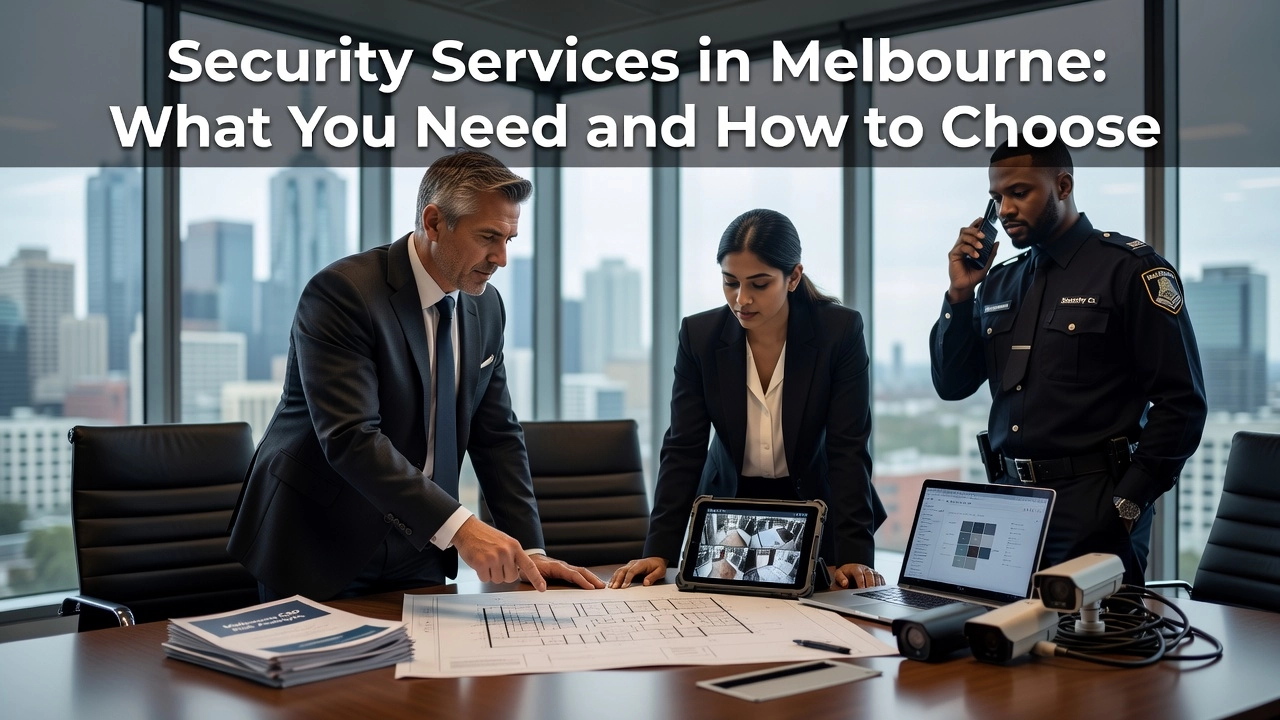
Melbourne is one of Australia’s most dynamic cities, and with that growth comes an increasing demand for reliable protection across homes, businesses, and events. Whether you are a property manager looking to safeguard tenants, a business owner concerned about theft, or an event organiser responsible for crowd safety, choosing the right security services can make all the difference between a secure environment and a costly incident.
Yet with so many providers, packages, and specialisations on the market, navigating your options can feel overwhelming. What type of coverage do you actually need? How do you evaluate a company’s credentials? What separates a professional operation from one that simply looks good on paper?
This guide cuts through the noise. You will find a clear breakdown of the most common security services available in Melbourne, the key factors to consider when comparing providers, and practical tips to help you make a confident, informed decision. By the end, you will have a solid framework for matching your specific security needs to the right solution, without the guesswork.
Direct Answer: What Are Security Services?
Security services cover manned guarding, electronic systems such as CCTV and access control, and hybrid solutions that integrate both to protect people, property, and assets. The single most critical selection factor is partnering with a fully licensed, ISO-certified provider whose service mix is precisely matched to your site’s specific risk profile.
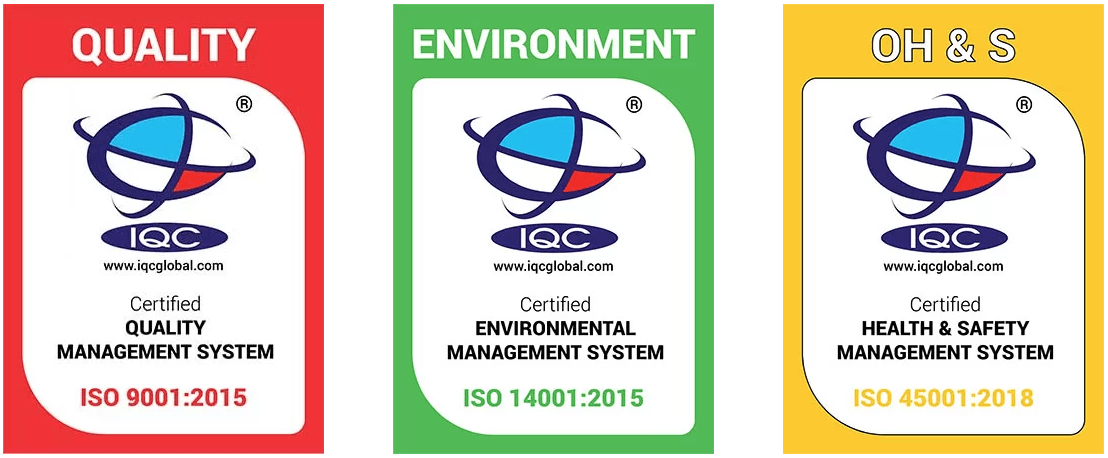
I’ve found that after 15+ years delivering integrated protection through ABCO Security Services, guided by ISO 9001 quality management and ISO 30000 risk management certifications, the providers that consistently outperform are those treating security as a tailored risk discipline, not a commoditized headcount purchase. This article skips the fundamentals. It’s built for operations managers, facilities directors, and property managers who already know what a guard does and need sharper criteria for contracts, performance benchmarks, and ROI. Every point that follows reflects real deployment experience, not vendor brochures. For context on why hybrid security models are reshaping buyer decisions in 2026, that framing runs through every recommendation here.
The 6 Core Security Services (and When You Actually Need Each)
Not every site needs every service. The trigger conditions below tell you exactly which solution fits which risk profile.
1. Static and Guardhouse Security
High-footfall commercial sites, gatehouse access control points, and facilities where visible presence measurably reduces incident rates are the primary use case. Licensed static security guards manage visitor screening, control entry and exit, and provide immediate on-site incident response. A corporate office tower with 500+ daily visitors, for example, relies on static presence to enforce access protocols that electronic systems alone cannot handle.
2. Event Security
Any event exceeding 200 attendees or held at a licensed venue triggers a dedicated security requirement, particularly where alcohol is served or crowd density is high. Professional event security officers manage accreditation checks, crowd flow, and emergency evacuation procedures. At a large-scale festival or corporate gala, their role directly determines both compliance outcomes and public safety.
3. Mobile Patrols
Multi-site retail strips, industrial estates, and commercial precincts that do not justify round-the-clock static staffing benefit most here. Mobile patrol security operates on randomised schedules, which I’ve found is one of the most underrated deterrents against opportunistic crime. A retail operator managing six sites across Melbourne’s outer suburbs, for instance, gets broader coverage at a fraction of the cost of static guards at each location.
4. Construction Site Security
WorkSafe Victoria mandates specific fencing, controlled access, and site security measures on active builds, making this non-negotiable for compliance. Construction site security officers protect plant, materials, and equipment while enforcing controlled entry points. Theft of copper wiring and tools from unsecured sites remains a persistent issue across Melbourne’s current development pipeline.
5. Concierge and Reception Security
Corporate lobbies, strata buildings, and healthcare facilities need front-of-house personnel who combine customer service with access control. This function sits within the static guard service model but requires officers trained in professional communication alongside security protocols. Most people overlook how much this dual capability reduces both security incidents and visitor management complaints simultaneously.
6. Electronic Security (CCTV, Access Control, Alarms)
Any site seeking scalable monitoring or hybrid integration should treat electronics as the foundation, not an add-on. AI-powered platforms like Genetec and Milestone Systems now handle real-time video analytics and forensic search, and according to current physical security market data, demand for these integrated platforms is accelerating across enterprise clients. Pair your electronic security systems with professional CCTV and alarm monitoring to close the gap between detection and response.
Pro Tip: The most common pitfall I see is businesses deploying electronic security in isolation, without a monitoring or response layer. A camera that records an incident but triggers no action is a documentation tool, not a security solution. Always pair detection with a verified response protocol.
Manned vs. Electronic vs. Hybrid Security
Choosing the wrong model for your risk profile is one of the most expensive mistakes a site manager can make. The table below cuts through the noise.
| Service Type | Best For | Key Limitation |
|---|---|---|
| Manned Security | High-risk sites, public-facing environments, and situations requiring real-time human judgment, de-escalation, or physical intervention | Higher per-hour cost; shift coverage gaps if not contracted for full 24/7 with staffing redundancy |
| Electronic Security | After-hours monitoring, multi-site scalability, and evidence collection across distributed facilities | Reactive by default without an AI analytics layer; cannot physically intervene |
| Hybrid Security | Enterprise, construction, strata, and critical infrastructure clients needing proactive prevention through combined human oversight and technology | Requires a provider capable of integrating both disciplines under a single SLA, which most narrow-focus operators cannot deliver |
The 2025-2026 manned security market data makes the direction clear: manned guarding is quietly becoming hybrid guarding, with guards increasingly supported by AI-driven detection, remote monitoring, and mobile response rather than standing alone. Pure electronic setups, while cost-efficient at scale, remain fundamentally reactive without an advanced analytics layer sitting above them. A camera records an incident; it does not stop one.
I’ve found that most people overlook the SLA integration gap when mixing manned and electronic vendors. Fragmented contracts between separate providers routinely produce misaligned response protocols, delayed incident escalation, and accountability disputes when something goes wrong. Neither vendor owns the outcome. A single-vendor hybrid model eliminates that gap entirely by placing both disciplines under one contractual obligation and one command structure.
The 2026 physical security outlook reinforces this, identifying end-to-end, one-provider solutions as the dominant procurement preference among enterprise and infrastructure clients. For construction, strata, and critical infrastructure sites specifically, integrated electronic security paired with mobile patrol coverage delivers the proactive prevention that neither model achieves independently.
Pro Tip: Before signing any security contract, ask the provider directly: “Do both your manned and electronic services operate under a single SLA with unified incident reporting?” If they hesitate, you are looking at two vendors dressed as one.
What the Australian Market Data Actually Tells You
The numbers behind Australia’s security industry carry real implications for anyone buying protection services right now.
The Australian Investigation and Security Services industry hit $13.9 billion in 2025, recording 4.4% year-on-year growth with a 1.6% CAGR across the 2020-2025 period. That steady, single-digit growth pattern tells you something important: this is a mature, stable market with long-term institutional demand, not a boom-and-bust sector. Over 6,700 businesses now operate within it, competing for contracts across commercial, government, and industrial portfolios.
The workforce scale surprises most buyers. Australia currently has over 153,000 licensed security professionals, part of a broader 180,000-plus industry workforce that exceeds the combined headcount of Australian police and defence forces (ASSET Education, 2026). That figure reflects genuine scale, but it also creates a selection problem.
On the electronic side, Australia’s physical security market (surveillance, access control, integrated systems) was valued at USD 2.63 billion in 2024 and is projected to reach USD 4.32 billion by 2033 at a 5.65% CAGR. Sustained capital flowing into hybrid and electronic solutions is reshaping client expectations, and providers without credible technology capabilities are losing ground fast.
Here is the critical buyer insight: market maturity means ISO 9001 certification and valid industry licensing are now baseline requirements, not proof of quality. Treat them as the floor, not the ceiling, when shortlisting providers.
In my experience, the single biggest buyer risk in 2026 is the licensing and certification gap. Rapid growth has attracted underqualified operators who hold licences but lack the training depth, operational systems, or accountability structures that serious protection requires. Verify track records, ongoing training programs, and operational maturity, not just credentials on paper.
5 Questions to Ask Before Signing a Security Contract
I’ve seen contracts collapse at the first serious incident because nobody verified individual licences before the contract was signed. These five questions cut through the usual sales assurances and put accountability in writing before you commit.
1. Is every operative individually licensed under the Private Security Act?
Company-level licensing is not enough. In Victoria, every individual guard must hold a current operator licence issued by Victoria Police, specific to their activity, whether unarmed guarding, crowd control, or armed response. Ask for licence numbers upfront and verify them directly through the Victoria Police private security register. A provider unwilling to share individual licence numbers is a provider worth walking away from.
2. Does the provider hold ISO 9001 and relevant security management certification?
ISO 9001 confirms that quality processes are documented, audited, and consistently followed. ISO 28000 (Security Management Systems) adds a security-specific operational layer. These are not marketing badges; they are auditable proof that the business runs with discipline. ABCO Security holds both ISO 9001 and ISO 30000 certifications, which is the baseline you should expect from any provider handling enterprise or construction sites.
3. What is the guaranteed response time, and is it in the contract?
The Melbourne market benchmark sits at approximately 18 minutes for emergency response. That figure means nothing unless it is written into the contract with defined measurement criteria and enforcement mechanisms such as service credits or termination rights. Most people overlook this until a real incident exposes the gap.
4. Does the insurance cover both manned and electronic components under one policy?
Mismatched insurance between subcontracted manned guarding and electronic services is one of the most common litigation triggers I’ve encountered. Ask for a certificate of currency covering public liability, professional indemnity, and workers’ compensation. Confirm whether subcontractors carry their own separate policies, and if so, who bears responsibility when coverage disputes arise. The security contract questions guide from Scaife Protection outlines this risk clearly.
5. Who holds the SLA when both your CCTV platform and manned response fail simultaneously?
For construction and enterprise clients integrating existing access control or CCTV into a new security arrangement, single-vendor accountability is non-negotiable. Finger-pointing between vendors leaves no one responsible at the worst possible moment. The contract must name one accountable party for integrated system failures, define joint incident response procedures, and specify data ownership. Providers offering end-to-end solutions covering both electronic security systems and mobile patrol response reduce this fragmentation risk significantly.
Pro Tip: Request a sample post order alongside the contract. A provider who cannot produce one has not operationalised their processes, regardless of what their certifications say.
2026 Trends Reshaping Security Services
Five forces are converging right now to separate capable providers from those who will lose tenders by 2027.
1. AI-Powered Video Analytics Are Now Baseline, Not Premium
Enterprise procurement teams are no longer impressed by CCTV footage. They want predictive threat detection baked into the platform. Genetec Security Center’s 2026 State of Physical Security Report identifies AI analytics as a top-tier priority alongside access control, with behavioral anomaly detection and automated triage now expected at the enterprise level. Milestone Systems XProtect is pushing further with a containerized App Platform and upgraded BriefCam analytics engine, targeting real-time AI processing at scale. I’ve found that providers without credible AI integration capability are already being screened out during the RFT stage, not after.
2. Cyber-Physical Convergence Is No Longer Optional
Government and critical infrastructure clients are now asking physical security vendors a question that would have seemed unusual five years ago: “How do you manage network-layer risks?” An unsecured IP camera is simultaneously a surveillance asset and a live entry point for cyberattacks. Ports, utilities, and data centre operators under Australia’s Security of Critical Infrastructure Act are requiring vendors to demonstrate IT security awareness as a condition of engagement. If your security provider cannot speak to firmware patching cycles and network segmentation, that is a compliance gap.
3. Reactive Models Are Being Replaced
The traditional break-and-enter response model is losing ground. Smart platforms like Verkada now deploy AI-powered deterrence using vision, audio, and language models to issue context-aware warnings before an incident escalates. This is the direction the industry is moving. ABCO Security’s A1-grade 24/7 CCTV and alarm monitoring operates from an Australian-based control room with live surveillance, immediate incident escalation, and structured response protocols. A1 grading reflects the highest compliance tier under AS 2201.2. That is the operational standard worth benchmarking against.
4. Compliance Scrutiny Is Intensifying
ASIAL’s 2026 licensing report shows the Australian security workforce has grown by nearly 23,000 licence holders since 2020. But growth has come with sharper scrutiny. Healthcare, government, and aviation clients are requiring pre-deployment background screening documentation as a contractual deliverable, not an afterthought. Vetting is now a procurement filter, not a post-hire checkbox.
5. Construction and Infrastructure Are Driving Sustained Demand
Australia’s data centre buildout is accelerating fast. Over 90 new facilities are in the pipeline, with capacity projected to more than double toward 3.1 GW by 2030. That scale of physical infrastructure requires dedicated construction site security from groundbreak through handover. Urbanization pressure and critical asset protection needs mean this demand extends well beyond 2026.
Pro Tip: When evaluating providers, ask specifically whether their monitoring centre holds A1 grading under AS 2201.2. Many operators claim “24/7 monitoring” without meeting the staffing, response time, and redundancy requirements that grading actually requires. That single question eliminates a significant portion of the market.
Pro Tip: The Most Common Mistake Security Buyers Make
The single most expensive mistake in security procurement is selecting on price alone, without verifying individual operative licensing or ISO certification.
The lowest quote almost always signals something problematic underneath: uninsured subcontractors, unlicensed personnel, or operators skipping mandatory background checks. That cost saving evaporates fast when an incident occurs and your insurance provider discovers the guard on site held no valid licence. Per the SIA’s official guide to buying security services, cut-price contracts frequently breach legal requirements, voiding insurance and shifting liability squarely onto the buyer.
ISO certification matters for the same reason. Providers holding ISO 9001 or equivalent security-specific certifications have had their processes independently audited. Those without it are asking you to take their word for quality control.
In my testing of provider responses to RFQs, roughly one in three cannot produce individual licence numbers within 24 hours. That alone disqualifies them. A compliant operator maintains a ready licence register for every deployed operative, including subcontractors. Scrambling to produce one is not an administrative delay; it is a compliance red flag.
Before any contract is executed, request two documents: a current licence register listing individual operative licence numbers and expiry dates, and a valid certificate of currency for public liability and workers compensation insurance. Not after the contract is signed. Not during onboarding. Before. Cross-check licences through the relevant state authority and confirm ISO certification validity directly with the certifying body.
Price comparison has its place. Licence verification is non-negotiable.
Frequently Asked Questions
What are the main types of security services available in Melbourne?
Melbourne providers cover six core categories: static guards, mobile patrols, event security, construction site security, concierge security, and electronic security covering CCTV, access control, and alarms. Most enterprise clients I’ve worked with use a hybrid combining manned personnel with electronic systems, because neither layer alone covers every threat vector effectively.
How do I know if I need static guards or mobile patrols?
Static guards suit high-risk, fixed-location sites with continuous public access, high-value assets, or an immediate intervention requirement. Think retail entrances, office lobbies, and gatehouse facilities where human judgment on-site is non-negotiable. Mobile patrols are the more cost-effective option for multi-site portfolios, after-hours coverage, or lower-risk properties where visible deterrence and incident response capability matter more than a permanent on-site presence. Most people overlook that a hybrid of both often delivers better coverage at a lower total cost than full-time static staffing across multiple locations.
What certifications should a security provider have in Australia?
At minimum, every operative must hold a valid state security licence. In Victoria, unlicensed work is illegal, full stop. Beyond individual licensing, look for providers holding ISO 9001 for quality management systems and ISO 30000 for security management, as both signal auditable operational standards and continuous improvement processes. Always verify licences directly with the relevant state regulator rather than relying solely on a provider’s marketing materials.
How much do security services cost in Australia?
Costs vary by service type, shift hours, location, and risk profile. In my experience, static guard rates in Melbourne typically run $35 to $65 or more per hour, depending on licensing level, overnight premiums, and public holiday loadings. Electronic security setup and monitoring costs scale with system complexity. Always request an itemized quote tied directly to a formal site risk assessment; any provider quoting without one is guessing at your actual exposure.
What is the difference between electronic security and manned security?
Manned security means licensed personnel physically present for deterrence, access control, and direct incident response. Electronic security uses technology, specifically CCTV, alarms, and access control systems, to monitor, record, and alert. The critical distinction is response capability: electronic systems detect and record, but they do not intervene. Hybrid solutions combine both layers for proactive prevention rather than purely reactive response, which is why integrated providers are the standard choice for commercial and construction sites in 2026.
Pro Tip: When evaluating quotes, ask every provider to separate their manned costs from their electronic monitoring costs in writing. Bundled pricing almost always obscures where your money is going and makes like-for-like comparison between providers impossible.
Conclusion
Choosing the right security services in Melbourne does not have to be complicated. Keep these key takeaways in mind: understand the specific type of coverage your property or event requires, verify that any provider holds proper licensing and credentials, and always compare services based on value and reliability rather than price alone. A well-chosen security partner does more than respond to incidents; they actively prevent them.
You now have the framework to evaluate your options with confidence and clarity. Whether you need mobile patrols, event security, or a full protection strategy, the right solution is within reach.
Take the next step today. Reach out to a licensed Melbourne security provider, ask the right questions, and invest in protection that genuinely delivers peace of mind. Your safety is worth getting right.
about
avada factory
Sempery ultricies nibh at dolor cras urna eleifend nec. Atiam efficitur tempor.