Every year, businesses lose billions of dollars to warehouse theft, vandalism, and operational disruptions. Yet many facility managers continue relying on outdated security measures that were never designed to handle the complexity of modern operations. The gap between what companies think is protecting them and what actually works has never been wider.
Securing an industrial warehouse is not simply a matter of installing cameras and hiring a few guards. It requires a strategic, layered approach that accounts for physical vulnerabilities, human behavior, technology integration, and evolving threat patterns. A single weak point in that system can unravel everything else.
This analysis breaks down the real risks facing warehouse facilities today, examines why single-solution security strategies consistently fall short, and explores the layered frameworks that security professionals are using to build genuinely resilient operations. Whether you are reassessing your current setup or building a security plan from scratch, you will come away with a clearer understanding of where threats originate, how they escalate, and which countermeasures deliver the strongest return on investment.
The Fast Answer: What Industrial Warehouse Security Actually Requires
Industrial warehouse security requires a layered approach combining licensed on-site guards, perimeter controls, and monitored surveillance. No single measure stops theft, internal shrinkage, and unauthorised access simultaneously.
I’ve seen this pattern repeatedly across large distribution sites in Victoria: operators invest in CCTV, consider the job done, then face a stock discrepancy or after-hours breach that a single camera angle couldn’t prevent. Melbourne warehouse operators consistently underestimate at least one of the three key threat vectors until an incident forces a review. According to a solid warehouse security checklist framework, the gaps almost always appear at perimeter entry points, internal access zones, or loading docks, rarely where the cameras are pointed. A genuinely effective warehouse security package integrates all three layers from day one, not as an afterthought following a loss event.
Why Warehouses Are High-Value Targets
Safe Work Australia’s 2024 data puts the risk in hard numbers: transport, postal, and warehousing recorded 54 work-related fatalities, a rate of 7.4 per 100,000 workers, the highest of any sector in Australia. That figure reflects more than physical hazards from forklifts and heavy machinery. It signals an industry operating under sustained pressure, where fatigue, distraction, and operational intensity compound every security vulnerability on site.
Structural Gaps Criminals Exploit
The architecture of a modern warehouse works against it. High throughput means constant movement of goods, vehicles, and personnel across multiple access points simultaneously. Rotating shift rosters introduce fresh faces daily, making it difficult for guards or supervisors to identify who belongs on site. Overnight and early-morning shifts are particularly exposed; reduced staffing across large footprints creates unmanned stretches of fencing that serve as reliable entry points for opportunistic and organised intruders alike.
According to ASIS International’s 2026 warehouse security analysis, criminals increasingly target these operational realities rather than attempting forced perimeter breaches.
The Threat Most Operators Miss
Most people overlook how much internal shrinkage costs relative to external theft. In high-SKU environments, employee theft accounts for a disproportionate share of total stock loss, yet security budgets remain skewed toward perimeter fencing and external patrols. Small, high-value items disappear in increments that inventory systems attribute to “picking errors.” By the time patterns emerge, losses are already significant.
Cargo staging adds another layer of exposure. Stock sitting in loading docks between inbound receipt and permanent storage has no fixed owner and minimal oversight. That custody gap is the most exploited window on any site.
E-commerce fulfillment centres face a specific problem: high delivery volumes create plausible cover for tailgating and impersonation. A person following an authorised driver through a dock entrance looks entirely routine during peak periods. Pairing professional mobile patrol services with structured visitor management protocols closes that gap more effectively than camera systems alone.
Pro Tip: Audit your internal access logs before investing in additional perimeter hardware. I’ve found that most sites have more to gain from addressing internal movement controls than from extending their fence line.
The Security Layers That Actually Work
Layered security, what practitioners call “defense in depth,” is the only model proven to address every warehouse threat vector simultaneously. A single measure, whether cameras alone or perimeter fencing, always leaves exploitable gaps. Overlapping layers create redundancy: if one fails, others detect, deter, or delay long enough for a response.
I’ve found that e-commerce growth is accelerating this requirement significantly. BRR Architecture’s research confirms that the shift since 2020, from bulk pallet handling to thousands of smaller personal packages, has sharply elevated shrinkage risk and pushed security integration into facility design from day one, not as an afterthought.
The following three sub-sections break down each layer with the practical, operational detail that generic security checklists consistently miss. For facilities running 24/7 mobile patrol coverage or monitored electronic security systems, understanding how these layers interact is what separates adequate protection from a genuinely resilient security posture.
Pro Tip: Map your layers against shift change windows and loading dock activity peaks. Most people overlook that these two windows, not overnight hours, are when the majority of access breaches and internal shrinkage incidents actually occur.
Layer 1: Licensed Static Guards
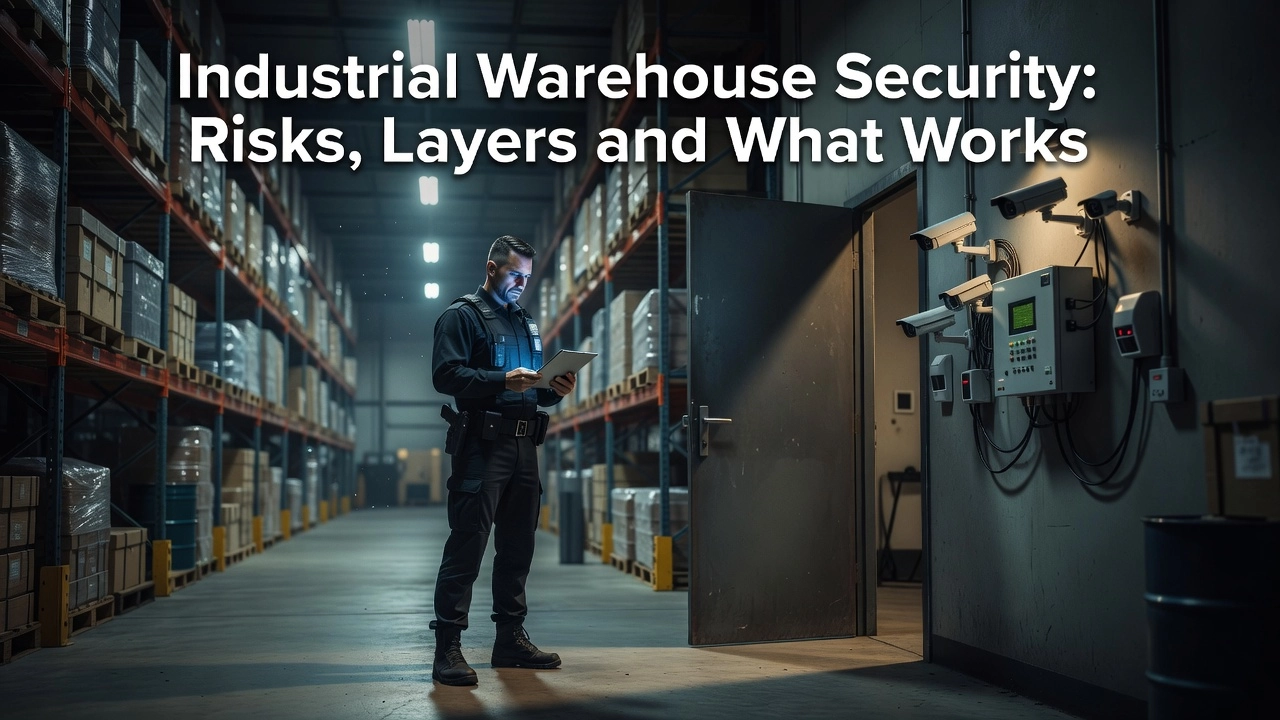
A trained static security guard stationed at access control points does something no camera or sensor can: they read context. A guard assesses why a contractor is lingering near a high-value staging bay, questions a vehicle idling at the wrong dock, and makes a judgement call before an incident becomes a loss. Visible human presence also changes behaviour before any confrontation is needed, deterring opportunistic theft that automated systems can only record after the fact.
For 24/7 fulfilment operations, the unmanned overnight shift is the single highest-risk window on the calendar. Trailer yards fill up, vehicle cycling slows, and on-floor supervision drops to skeleton levels. Loaded trailers sitting until morning pickup are primary targets. Internal theft risk also concentrates after hours, when fewer witnesses are present and monitoring gaps widen.
I’ve found that warehouses placing guards at dock entry, not just the front gate, see faster incident identification and fewer staging-area losses. At high-throughput logistics sites, the loading dock is where inventory is most exposed: doors open frequently, vehicle movements are constant, and direct access to stock creates ongoing pilferage opportunities for both external intruders and internal staff.
Positioning a guard at dock entry, rather than reception, tightens control over the precise zone where most losses originate. Front-gate coverage handles visitor management; dock-level coverage handles the real threat. Both points require coverage on active shifts, but if you are prioritising placement at a single-guard site, the dock wins every time.
Layer 2: Mobile Patrols for Large-Footprint Sites
Static guards work well anchoring a single entry point, but they do not scale across sites exceeding 10,000 sqm with multiple outbuildings, loading docks, and dispersed perimeters. Covering that footprint with static posts typically requires several guards per shift, which can push costs well beyond what the risk profile justifies, particularly during low-activity overnight windows.
Mobile patrols solve this directly. A single officer in a GPS-tracked marked vehicle can check perimeters, access points, outbuildings, and yard areas across the full site, delivering broader visibility at significantly lower cost than multi-post static deployment.
The critical factor is unpredictability. Most people overlook how quickly opportunistic thieves adapt to fixed routines. I’ve found that a patrol arriving at the same time every night loses nearly all deterrent value after the first week. Offenders conduct basic surveillance, identify the timing gap, and operate within it. Predictability is a vulnerability.
Randomised patrol intervals remove that window. By varying arrival times, routes, and check frequencies, the patrol creates sustained uncertainty that no fixed schedule can replicate. For large Victorian distribution centres handling high-value stock, this is the practical standard. Studies support it: increased but randomised patrol visits have demonstrated a 16% reduction in targeted incidents, with residual deterrence effects because offenders cannot predict officer presence.
In 2025-2026, the best implementations layer GPS-tracked randomised patrols with alarm response capability, so the same officer covering the site can also react to triggered sensors. That dual function compounds the return on the patrol investment considerably.
Common Pitfall to Avoid: Scheduling patrols at consistent intervals to satisfy a contract minimum. A predictable patrol is barely better than no patrol at all on a large site.
Layer 3: CCTV and Alarm Monitoring
By 2025–2026, AI-powered surveillance has moved from a premium add-on to a baseline expectation. Platforms like Pelco and Genetec now deliver real-time anomaly detection, behavioral analysis, and predictive alerts as standard features, not upgrades. Edge analytics process footage locally at the camera level, enabling instant alerts across large warehouse perimeters without constant cloud dependency. I’ve found that warehouses running these systems catch incidents in progress rather than reviewing footage after the fact.
That said, the most important distinction most operators miss: CCTV and alarm monitoring without a response capability is documentation, not prevention. Cameras record incidents. Guards stop them. A sensor triggering at 2 AM means nothing if no one acts on it within minutes.
Pairing monitored systems with on-site or on-call personnel closes that response gap directly. When an AI-verified alert triggers a guard or mobile patrol team, the system shifts from reactive to genuinely preventive. Human attention fatigue, a known limitation in passive monitoring, is offset by AI filtering that surfaces only verified threats.
The real performance gain comes from coordination under a single integrated provider. Cameras, alarms, and personnel operating through separate vendors create communication gaps that incidents exploit. Under one provider, alarm activation automatically pulls relevant camera feeds, notifies response personnel, and logs the event in a unified platform. Neither technology nor guards perform at their ceiling when operating independently; together, they deliver commercial-grade protection built around verified response, not just recorded evidence.
Comparing Common Warehouse Security Configurations
The data makes the case clearly. Single-layer configurations each cover one risk dimension reasonably well, but none handles all four simultaneously. Here is how the common setups stack up:
| Configuration | Theft Deterrence | Internal Shrinkage Control | After-Hours Response | WHS Compliance Support |
|---|---|---|---|---|
| CCTV only | Medium | Medium | Low | Medium |
| Access control only | Medium | Medium | Low | Medium |
| Static guard only | Medium | Medium | Medium-High | Medium-High |
| Mobile patrol only | Low-Medium | Low-Medium | Medium | Low-Medium |
| Integrated (guards + CCTV + patrol) | High | High | High | High |
The integrated model wins across every category without exception. Research comparing cameras against human guarding consistently shows that technology documents incidents while personnel resolve them; you need both functions operating together. Facilities combining surveillance with on-site guards report theft reductions of up to 50% compared to single-layer deployments.
Most people overlook internal shrinkage when budgeting security. Employee theft accounts for roughly 35% of warehouse inventory losses, and that figure is not addressed by perimeter cameras or access cards alone. It requires behavioral accountability, verified access logs, and human presence that signals consistent oversight. The integrated model delivers all three simultaneously, which is why it is the only configuration I recommend for any industrial warehouse environment running high-value stock around the clock.
Common Pitfall to Avoid: Treating CCTV installation as a completed security solution. Cameras without professional monitoring and guard response create a false sense of coverage; footage confirms what happened, it does not prevent the next incident.
WHS Compliance: The Security Obligation Most Operators Miss
Most warehouse operators treat WHS compliance and security as separate conversations. They are not.
Under Australia’s Model Work Health and Safety Act, every Person Conducting a Business or Undertaking carries a primary duty of care to eliminate or minimise risks to workers, and security-related hazards sit squarely within that obligation. Unauthorised persons on-site, violent incidents during isolated late-night shifts, and inadequate emergency response capability are all WHS exposure points, not just operational inconveniences.
The numbers reinforce why this sector demands attention. Safe Work Australia’s 2024 data records 54 fatalities in transport, postal, and warehousing, a rate of 7.4 per 100,000 workers, placing it among the highest-risk industries nationally. That figure is not abstract. It represents a workforce operating in environments where inadequate access control, poor lighting, and absent security presence compound risk directly.
The regulatory consequence is equally concrete. Where inadequate security contributes to worker harm, whether through an assault during a night shift or delayed emergency response due to compromised access control, WHS regulators have authority to issue improvement notices, conduct investigations, and pursue enforcement action. “So far as is reasonably practicable” is the legal standard, and deploying licensed security professionals is a documented, defensible step toward meeting it.
In my experience, the WHS angle should be the first agenda item with your security provider, not an afterthought discussed at contract renewal. Integrating WHS requirements into your security brief from day one ensures access management, patrol schedules, and emergency protocols are designed to satisfy both operational and regulatory obligations simultaneously.
Pro Tip: Request that your security provider documents how each proposed measure addresses a specific WHS risk. This creates an audit trail that demonstrates due diligence if a regulator ever comes knocking.
2025–2026 Trends Reshaping Warehouse Security
Three converging forces are reshaping how operators think about protecting their facilities in 2025–2026, and most security plans written even two years ago are already behind.
Physical-cyber convergence is the most underestimated shift. IoT-connected inventory systems, automated picking robots, and cloud-based WMS platforms have created operational technology (OT) environments that sit directly alongside traditional physical vulnerabilities. A perimeter breach is no longer just a theft event; it can become the entry point for ransomware targeting the systems controlling your entire picking and dispatch operation. Maersk’s December 2025 warehousing trends report confirms this reality, noting that increased automation requires supply-chain resilience strategies that treat physical and digital risk as a single problem, not parallel ones.
E-commerce is compounding the pressure on security infrastructure. Demand for large-scale logistics facilities keeps climbing, and IMARC Group projects Australia’s physical security market will reach USD 4.32 to 4.45 billion by 2033 to 2034 (CAGR approximately 5.2%). Multi-site operators are responding by adopting cloud-based Access Control as a Service (ACaaS), which SiteOwl’s Physical Security Outlook 2026 identifies as shifting from niche to mainstream. ACaaS provides centralized access management across distributed facilities without the cost and complexity of separate on-premise systems at each site.
Most people overlook when security needs to start: I’ve found that operators who embed security infrastructure at the design stage of a new distribution centre consistently outperform those who retrofit it post-occupancy. Cabling routes, camera sightlines, access control chokepoints, and guard post positioning all cost significantly less to get right during construction than to modify later. For facilities still in build phase, construction site security provides the foundation that transitions directly into your permanent operational security model, with no gaps between phases.
Pro Tip: When briefing your security provider on a new warehouse build, request a security design review at concept stage, not after the floor plan is finalized. Moving a loading dock access point on paper costs nothing; moving it after the slab is poured costs thousands.
What a Credible Industrial Warehouse Security Provider Looks Like
Four criteria separate a credible provider from a cheap alternative. If a shortlisted company cannot demonstrate all four, walk away.
With over 150,000 licensed security professionals operating nationally according to ASSET Education, the market is crowded. That volume makes due diligence essential, not optional.
Licensing is the baseline. Every guard deployed to your site must hold a current individual Security Industry licence issued under their state’s legislation, such as Victoria’s Private Security Act 2004. This is not a box-tick; it confirms background clearance, minimum training, and a fit-and-proper-person assessment. Request licence numbers before any guard sets foot on-site. Providers who hesitate to provide this documentation are a hard no.
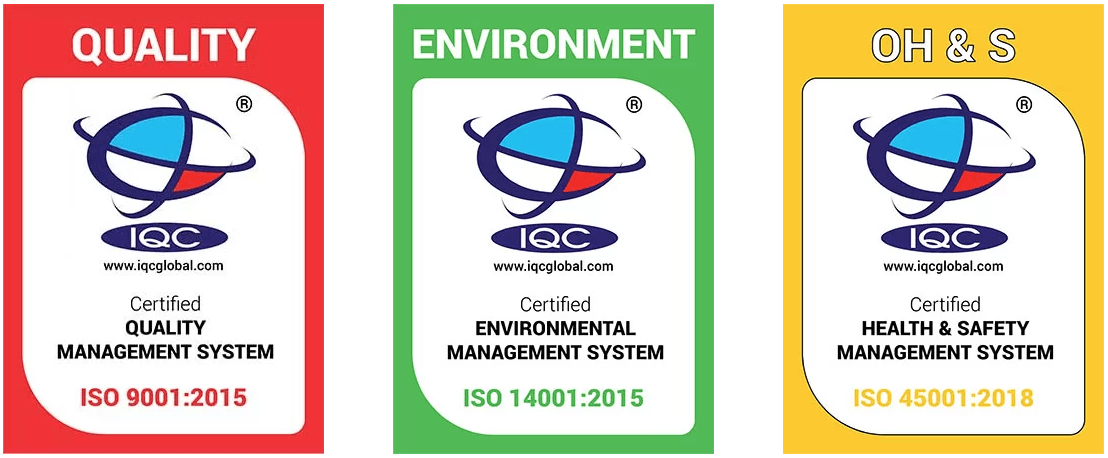
ISO 9001 certification goes beyond the individual guard. It signals a formal Quality Management System governing training protocols, incident handling, record-keeping, and service delivery across the entire organisation. ABCO Security holds this certification, meaning their processes are audited and structured, not improvised. Individual guard competence matters, but organisational process is what prevents gaps at 3am on a public holiday.
True 24/7 capability requires roster depth. “We can arrange cover” is not 24/7 operations. Genuine around-the-clock protection means documented shift structures, surge capacity, escalation protocols, and a real operations centre. Ask directly: what is your response time if a guard calls in sick during a night shift?
Integration capability is non-negotiable for modern facilities. A provider offering licensed static and mobile guard services must be able to coordinate personnel with your existing CCTV, alarm, and access control infrastructure. Guards operating in isolation from your electronic systems create blind spots. Confirm this capability with specific examples before signing any contract.
Common Pitfall to Avoid: Selecting a provider based on hourly rate without verifying ISO certification or roster depth. Low-cost operators frequently rely on casuals with inconsistent training, which may satisfy a budget line but will not satisfy your insurer after an incident.
Pro Tip Before You Sign Any Security Contract
Before any guard sets foot on your site, request a fully documented post-order and incident response protocol. A competent provider produces this immediately; it is a living operational playbook covering patrol routes, access control procedures, escalation chains, incident reporting steps, and site-specific emergency contacts. If a provider hesitates or offers vague directives, that tells you everything about their operational maturity before you have committed to a contract.
The non-negotiables remain consistent throughout every section of this analysis: a layered approach combining physical barriers with technology, licensed guards operating under verified credentials, randomised patrols with documented proof of coverage, monitored CCTV with genuine response capability, and full WHS alignment embedded into daily operations.
Australia’s warehouse market is projected to reach USD 8.68 billion by 2034, driven by e-commerce expansion and 3PL growth. As throughput scales, so does exposure to theft, shrinkage, and supply-chain crime. The gap between adequate and inadequate security widens in direct proportion to that growth.
Do not wait for a theft incident, a WHS breach, or an insurance dispute to discover your provider lacks the operational depth your site demands. Request the post-order documentation upfront. A professional provider from ABCO Security’s mobile patrol and electronic security teams will have it ready before the conversation ends.
Frequently Asked Questions
What is the biggest security risk in an industrial warehouse?
Internal shrinkage (employee theft) is the highest-volume loss category. Perimeter breaches and cargo staging theft carry the greatest single-incident value risk. Both threats require separate countermeasures; treating them as one problem is where most operators go wrong.
Do I need security guards if I already have CCTV installed?
CCTV records what happened. It does not stop what is happening. Licensed security guards provide the physical presence, real-time judgment, and intervention capability that cameras fundamentally cannot. After-hours response, in particular, requires a human on the ground or a mobile unit that can attend within minutes.
How often should mobile patrols visit a warehouse site?
There is no single correct number. Risk profile, site size, inventory value, and operational hours all factor in. What I consistently recommend is randomised intervals over fixed schedules. Experienced offenders conduct reconnaissance; predictable patrol times become a gap to exploit rather than a deterrent.
Is warehouse security required under Australian WHS law?
Not in terms of prescribed guard numbers. However, the duty to eliminate or minimise foreseeable risks to workers extends to security-related hazards, including violence, unauthorised access, and after-hours incidents. Inadequate security that contributes to worker harm puts the PCBU directly in the sights of state regulators.
Can ABCO Security provide integrated guards and electronic monitoring for a warehouse?
Yes. ABCO Security delivers combined manned guarding, mobile patrols, and monitored electronic security built specifically for industrial warehouse environments across Melbourne and Victoria, under one coordinated service framework.
Conclusion
Warehouse security is not a problem you solve once and forget. The risks are real, the costs are significant, and the gap between outdated measures and modern threats continues to grow. Three truths stand out from this analysis: single-solution approaches consistently fail, layered systems built around physical controls, technology, and human factors deliver measurably better outcomes, and regular reassessment is not optional but essential.
If your current setup was designed more than three years ago, it may already be falling behind the threats your facility faces today.
Start by auditing your weakest points. Identify where your layers are thin or missing entirely. Then build from there, methodically and with purpose. The facilities that protect their operations most effectively are not the ones with the biggest budgets; they are the ones with the clearest strategy.
about
avada factory
Sempery ultricies nibh at dolor cras urna eleifend nec. Atiam efficitur tempor.