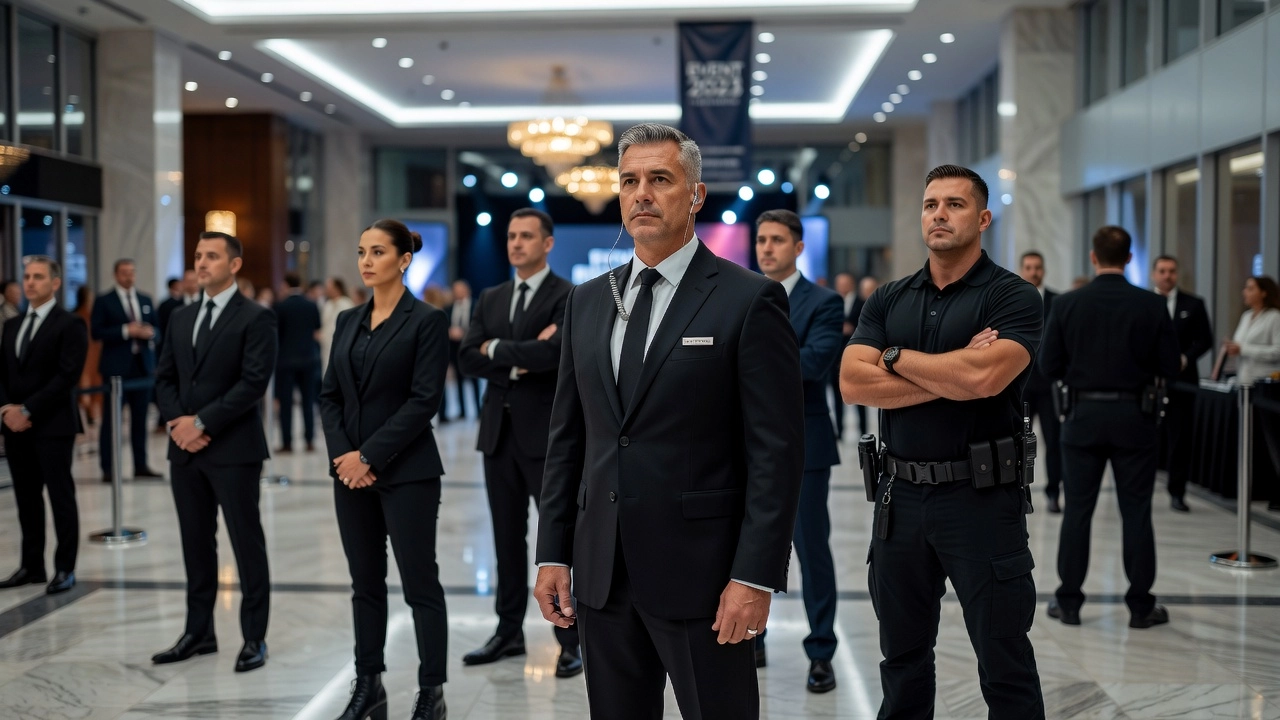
Most people assume event security means a few guards standing at the entrance checking tickets. The reality is far more layered, strategic, and sophisticated than that. Whether you are organizing a corporate conference, a music festival, or a private gala, understanding what professional event security truly involves can mean the difference between a seamless experience and a serious incident.
Professional event security is not a last-minute checkbox. It is a comprehensive system built around risk assessment, crowd management, access control, communication protocols, and emergency response planning. Each element works together to create an environment where attendees feel safe without even noticing the security measures in place.
In this post, we break down exactly what a professional event security operation looks like from the ground up. You will learn the key components that security teams deploy, the planning that happens long before the first guest arrives, and the standards that separate amateur setups from truly professional ones. If you want to elevate how you approach security for your next event, this guide gives you the framework to do it right.
What Event Security Actually Covers
Event security is not a single service. It is a coordinated deployment of licensed personnel, access systems, and response protocols, scaled to the specific risk profile of your event.
Most organisers learn this the hard way. I’ve reviewed enough post-incident reports to know that the majority of preventable failures trace back to one root cause: treating security as a commodity line item rather than a specialist function.
What the Service Category Actually Includes
Professional event security covers crowd management, access control, perimeter monitoring, emergency response coordination, asset protection, and formal incident reporting. For larger events, this extends to VVIP protection, CCTV integration, ticket and wristband verification, crowd zoning, and patron welfare checks. Each function requires trained, appropriately licensed personnel. None of it is interchangeable.
The Licensing Distinction Most Organisers Miss
Here is where Australian law draws a line that regularly catches organisers off guard. Under Victoria’s Private Security Act 2004, a crowd controller licence is a separately prescribed category. A general security guard licence does not cover crowd control at a licensed venue. Deploying the wrong licence type exposes the event organiser to personal liability under WHS legislation, where they are classified as a Person Conducting a Business or Undertaking (PCBU). Most people overlook this entirely until something goes wrong.
This distinction matters across every event type that requires tailored security deployments: AFL precinct activations, music festivals, corporate expos, product launches, cultural events, and licensed venue nightlife each carry different threat vectors and compliance requirements.
Market Scale Signals Industry Maturity
The global event security guard services market reached $5.52 billion in 2025, growing at a CAGR of 6.9% and projected to hit $7.11 billion by 2029. That trajectory, combined with staffing ratio frameworks now standard across the industry, confirms this is a mature specialist sector. Victoria’s compliance obligations under the VCGLR further reinforce that point locally.
Pro Tip: Before signing any security contract in Victoria, verify that the provider holds both a security firm licence and employs crowd controllers with individual crowd controller licences. Ask for licence numbers upfront. A reputable provider will supply them without hesitation.
5 Things That Separate Professional Event Security from a Warm Body in a Vest
The difference between a professional event security team and a warm body in a vest comes down to five non-negotiable standards. Most providers will claim to meet them. Few actually do.
1. Licensing Verification
Under Victoria’s Private Security Act, crowd management at licensed venues requires licensed crowd controllers, not generic security guards. These are legally distinct categories, and deploying the wrong licence type shifts liability directly onto the event organiser. I’ve found that most event organisers overlook the licensing check entirely; they assume the provider has it handled. Always ask to see the licence numbers before the contract is signed. A credible provider will produce them without hesitation.
2. Pre-Event Risk Assessment
A professional provider completes a formal risk assessment covering venue layout, expected attendance, alcohol service, entry and exit points, and emergency procedures before a single guard is deployed. Under Victorian guidelines, events exceeding 500 attendees require a mandatory individual risk assessment rather than a standard formula. A provider who has to pause when asked about local compliance requirements is a significant warning sign.
3. Guard-to-Attendee Ratios
The common baseline is 1 licensed guard per 100 attendees, but that number is a floor, not a ceiling. High-risk environments require higher density. According to event security staffing ratio guidance, professional planners layer specialist roles on top of the base ratio: entry screening teams, mobile patrols, and dedicated incident response personnel. A reputable provider advises on this proactively.
4. Communication Protocol
Professional teams operate on a unified comms system with a defined command structure and a clear escalation path to venue management and emergency services. The difference between a trained guard and a last-minute hire becomes most visible at the point of escalation. A trained professional reads a tense situation and manages it verbally; an untrained one makes it worse.
5. Post-Event Incident Reporting
Every deployment should produce a written incident log capturing ejections, use-of-force incidents, medical interventions, and police handoffs. This documentation protects the organiser legally and provides actionable data for future planning. Per the Victoria event security complete guide, providers operating under VCGLR guidelines are expected to maintain this documentation as standard practice, not as an optional add-on.
Pro Tip: Request a sample incident report from any prospective provider before signing. If they cannot produce one, that absence tells you exactly what their post-event accountability looks like.
How Technology Is Changing Event Security in 2026
The security industry in 2026 is not choosing between technology and people. It is stacking them deliberately.
The Hybrid Model Is Now the Baseline
The dominant operational shift I’ve observed across professional deployments is the hybrid model: AI-driven surveillance and digital monitoring tools layered on top of licensed guard teams, not substituting for them. AI handles continuous passive monitoring across large venue footprints, flagging crowd density anomalies, perimeter breaches, and behavioural irregularities in real time. Human guards handle what AI cannot: judgement calls, physical intervention, crowd de-escalation, and dynamic response. The Hybrid Video Surveillance Market is growing at a CAGR of 11.8% from 2026 to 2033, which tells you where sustained industry investment is flowing.
AI-Powered Surveillance at Scale
AI-powered CCTV systems now perform behavioural analysis, crowd density mapping, and predictive threat detection directly at the camera level using edge computing. This matters operationally because processing data at the source reduces latency and gets faster alerts to on-ground teams without bandwidth bottlenecks. For large outdoor events, corporate functions, and public festivals, this is the difference between a guard team reacting to an incident and positioning ahead of one. The Asia Pacific video surveillance market is projected to reach USD $91.95 billion by 2034 at a CAGR of 12.57%, confirming Australia sits inside one of the fastest-growing surveillance adoption regions globally.
Compliance Is Now Part of the Brief
Most people overlook that deploying AI surveillance at events creates data obligations, not just operational benefits. Growing compliance pressure on Victorian event operators around crowd safety data and surveillance practices means that how you collect, store, and manage video data is now a legitimate planning consideration. Operators that treat surveillance as a purely technical decision are exposing themselves to governance risk.
What This Means for Your Event
The global sports event security market was reportedly valued at $26.7 billion in 2024, and that level of capital investment is accelerating technology adoption across all event categories, including corporate and private. For Melbourne operators, this is relevant now. ABCO Security’s CCTV and alarm monitoring capability is built to function as exactly this infrastructure layer: continuous, monitored digital oversight that complements on-ground event security personnel. Guards cover physical presence and response; monitored CCTV covers the gaps no guard team can sustain across a large venue footprint alone.
Pro Tip: When briefing a security provider, ask specifically how their surveillance monitoring integrates with on-ground guard communication. If there is no direct protocol linking camera alerts to guard response, the technology is decoration, not security infrastructure.
What to Ask Before You Hire an Event Security Company
Before signing any contract, run through these five questions. A provider’s answers will tell you more than their website ever will.
1. “What licences do your guards hold, and can I see the licence numbers for the staff assigned to my event?”
A reputable provider answers this without hesitation. In Victoria, crowd controllers and security guards operate under distinct licence categories, and you are entitled to verify both. If a company hedges, delays, or tells you licence details are only available “closer to the date,” walk away. Licensing is not a bureaucratic formality; it is your first line of accountability.
2. “Will you conduct a site walkthrough before the event?”
If the answer is no, that is a red flag. Good event security planning requires physical inspection of entry and exit points, crowd flow patterns, emergency access routes, and perimeter vulnerabilities. A company that builds your security plan from a desk is guessing. I have never seen a desk-planned deployment handle an unexpected crowd surge well.
3. “What is your communication and escalation protocol if an incident occurs?”
You need a specific answer, not a vague reference to “standard procedures.” Ask who the on-site supervisor is, how they communicate with deployed guards, and at what threshold emergency services are contacted. A professional provider has this documented and will walk you through it clearly.
4. “Do you carry public liability insurance, and what does it cover?”
This is non-negotiable for any licensed venue or public event permit. Ask for the coverage limits and confirm whether your organisation is protected under the policy. Most venues require proof of coverage from all contracted service providers before granting access.
5. “Can you provide mobile patrol support before or after the event?”
For large venues or events running late into the night, static guards alone leave perimeter gaps. Pairing your on-site team with mobile patrol coverage extends response capability well beyond fixed posts. Similarly, ask whether the company’s security guard services include roving supervisory patrols during the event itself, not just door posts.
Pro Tip: Ask for two verifiable references from events of comparable size and format. Any provider worth hiring will have them ready.
Ad Hoc Security vs. Licensed Event Security Provider: A Direct Comparison
Every row in this table represents a legal decision, not a procurement one. When an organiser chooses ad hoc security, they are not saving money; they are retaining liability that a licensed provider would otherwise absorb.
| Risk Dimension | Ad Hoc / In-House | Licensed Provider |
|---|---|---|
| Victorian licensing compliance | Typically unlicensed or under-licensed; no Private Security Act 2004 (Vic) endorsement | Fully licensed crowd controllers and security guards, endorsed by Victoria Police |
| Pre-event risk assessment | No formal assessment; reactive by default | Customised security plan aligned to AS/NZS ISO 31000:2018 |
| Guard-to-attendee ratios | Undefined; based on availability, not risk | Evidence-based ratio planning scaled to event type, alcohol status, and venue layout |
| Formal incident reporting | No incident log; no post-event record | Written post-event reports; documented trail for legal and insurance purposes |
| Insurance coverage | Limited or no public liability insurance; organiser absorbs all exposure | Full public liability insurance held by provider |
| 24/7 availability | Unavailable or unreliable after core hours | 24/7 deployment with emergency coordination capability |
The right-hand column is not a features list. Each gap in the ad hoc column is a liability sitting directly with the event organiser. Under national WHS legislation, organisers are classified as Persons Conducting a Business or Undertaking, which means the duty of care to workers, attendees, and volunteers cannot be contracted away through informal arrangements. I’ve found that most organisers who use ad hoc security simply have not been told this clearly. The Private Security Act 2004 (Vic) is unambiguous: unlicensed personnel operating in a security role at an event creates direct personal exposure for the organiser, not just the individual.
Why Local Expertise Matters for Melbourne Events
Melbourne’s event calendar is among the most active in the Asia-Pacific region. AFL finals, the Formula 1 Grand Prix, major music festivals, a dense corporate conference season, and a nightlife precinct built around licensed venues all create security demands that repeat on a known cycle. Each category carries a different crowd profile, a different regulatory trigger, and a different failure mode if the security deployment is wrong.
Venue Knowledge Cannot Be Imported
I’ve found that national and global providers consistently underestimate how location-specific event security actually is. Managing crowd flow at Festival Hall, where a standing concert crowd compresses toward the stage and exits are limited, is a fundamentally different operational task from staffing a Southbank rooftop function with a 150-person corporate guest list and alcohol service. Those are not variations on the same skill set. They are separate operational problems requiring separate tactical knowledge, and that knowledge lives with operators who work these venues repeatedly.
Victorian Compliance Is Non-Negotiable
The Private Security Act 2004, administered by Victoria Police’s Licensing and Regulation Division, draws a clear legal distinction between a security guard and a crowd controller. These are separate licence activities with separate scopes of work. Events involving liquor service or a foreseeable public safety risk legally require licensed crowd controllers, and the compliance obligation does not sit exclusively with the security provider. Event organisers carry direct legal exposure. Sweeping amendments that took effect in June 2025 tightened subcontracting rules and introduced client-side obligations, with further requirements including mandatory risk management plans still forthcoming. Providers unfamiliar with Victorian liquor licensing, which operates simultaneously with security legislation for crowd controllers, introduce compliance risk that an out-of-state operator may not even recognise.
Response Time Is Operational Currency
Most people overlook the operational cost of timezone and regional office coordination when a last-minute staffing gap opens at 10pm on a Friday before a Saturday event. Melbourne-based operators respond faster because the decision-maker is local, the available personnel are local, and the venue briefing does not require a relay through a state office. Understanding how many crowd control staff your event actually needs is only half the equation; having a provider who can staff that number on short notice is the other half.
Providers like ABCO Security operate with 24/7 availability and an integrated service stack that covers event security, mobile patrols, concierge, and CCTV monitoring under one operational structure. For Melbourne events with complex or shifting requirements, that integration matters more than a lower quote from a provider who will need three internal approvals to change a deployment.
Pro Tip: Before confirming any provider, verify their company licence number and confirm individual guard licences through the Victoria Police public register. A provider who cannot supply both immediately is a liability risk, not a cost saving.
Frequently Asked Questions About Event Security
Q1: What is the difference between a security guard and a crowd controller in Australia?
These are legally distinct licence classes, not interchangeable titles. A crowd controller licence is specifically required for anyone managing access, screening patrons, or controlling behaviour at licensed venues and public events. A general security guard licence does not cover crowd control functions. Using a guard in a crowd control role without the correct endorsement is treated the same as deploying unlicensed personnel, and the liability sits with the organiser.
Q2: How many security guards do I need for my event?
The industry baseline is 1 licensed guard per 100 attendees for a general public event. That ratio increases significantly based on risk profile:
| Event Type | Recommended Ratio |
|---|---|
| General public event | 1 per 100 guests |
| Licensed venue with alcohol service | 1 per 50-75 guests |
| High-density indoor event | 1 per 50 guests |
| High-risk or late-night event | Case-by-case assessment |
I’ve found that organisers consistently understaff alcohol-service events by defaulting to the general baseline. A formal risk assessment from your event security provider should determine the final ratio, not a blanket formula.
Q3: What licences should an event security company hold in Victoria?
Under the Private Security Act 2004 (Vic), the security company must hold a current business security licence, and every individual guard deployed must hold their own personal licence. Following amendments that came into force on 19 June 2025 under the Private Security and County Court Amendment Act 2024, all private security activities are now licensed activities with additional compliance requirements. You can verify any guard’s licence status through the Victoria Police public licensing register before your event.
Q4: Does my event need a crowd controller or a security guard?
The primary trigger is alcohol service. In Victoria, venues trading past 1:00 AM and high-capacity venues above 200 patrons commonly require crowd controllers as a licence condition imposed by the Victorian Commission for Gambling and Liquor Regulation. Corporate events, private functions, and expos without a liquor licence operating during standard hours may be adequately covered by licensed security guards. Confirm the specific venue licence conditions with your provider before assuming either way.
Q5: What should an event security risk assessment include?
A thorough Security Management Plan covers venue layout and entry/exit points, expected attendance numbers, alcohol service status, guard deployment positions and shift rotations, emergency evacuation procedures, communication protocols between guards and management, and a venue map marking first aid stations and restricted areas. For events on public land in the City of Melbourne with 500 or more attendees, formal council approval is required and security arrangements are frequently a condition of that permit. Most people overlook the lead time; start the permit process at least 8-12 weeks out.
Pro Tip: Verify your provider’s business licence and each individual guard’s licence on the Victoria Police public register before the event date, not on the day. Licence processing backlogs in Victoria mean a provider’s paperwork may still be in progress, and that risk transfers directly to you as the organiser.
Common Pitfall to Avoid
The most expensive mistake in event security costs nothing upfront. It shows up after an incident, in a liability claim, when the guard on duty was not licensed for the role they performed.
I’ve seen this play out more than once. An organiser books security on hourly rate, assumes the agency handles compliance, and never requests individual licence details. Then something goes wrong, and the paper trail reveals a crowd controller deployed in a security guard role, or an unlicensed subcontractor filling a gap. Under the Private Security Act 2004 and its 2025 amendments, joint liability can sit with the organiser, not just the provider. That is not a technicality; it is the statute.
The fix is mechanical. Before any contract is signed, request the licence category and number for every guard assigned to your event. Cross-check each one against the Victoria Police public register. A business-level licence does not cover gaps in individual officer credentials, and Melbourne’s compliance environment has narrowed the window for plausible deniability considerably since 2023.
Most people overlook the quoting stage as a quality signal. A provider that does not ask about venue type, expected attendance, alcohol service status, and event format before pricing your job is not conducting a risk assessment. They are selling shifts. That distinction matters operationally and legally.
ABCO Security operates across Melbourne 24/7 with direct knowledge of Victorian licensing requirements, AFL-date risk variables, and venue-level compliance expectations. If you want a provider that assesses your event before quoting it, talk to the ABCO event security team before you sign anything else.
Conclusion
Professional event security is never as simple as it appears on the surface. As this post has shown, effective protection involves thorough risk assessment, strategic access control, trained crowd management, and detailed emergency response planning, all working together before a single guest walks through the door.
The difference between amateur and professional security is not just manpower; it is preparation, coordination, and expertise. Attendees should feel comfortable, not watched. Organizers should feel confident, not anxious.
If you are planning an upcoming event, do not treat security as an afterthought. Partner with a qualified professional security team early in your planning process, communicate your specific needs clearly, and invest in the level of protection your event genuinely requires.
Your guests deserve a safe experience. Your reputation depends on it. Start those conversations now, before the pressure of event day makes the right decisions harder to reach.
about
avada factory
Sempery ultricies nibh at dolor cras urna eleifend nec. Atiam efficitur tempor.