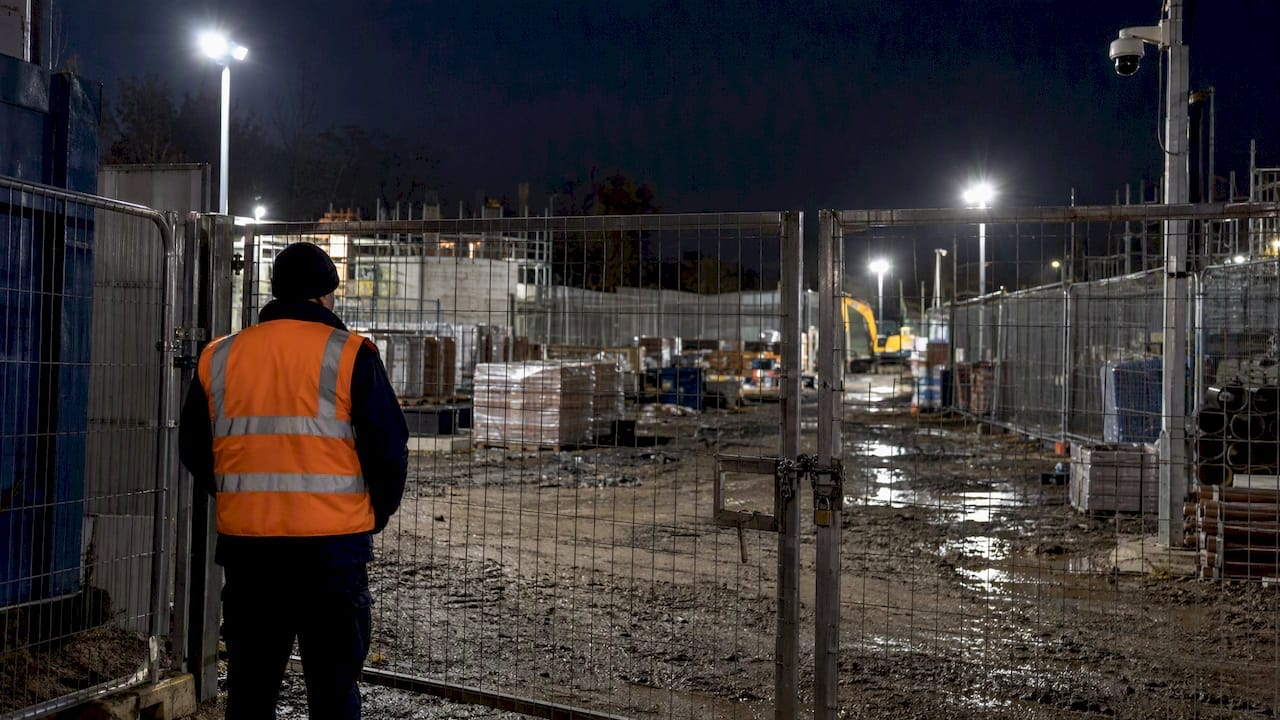
The strongest construction site night security combines a secured perimeter, lit approaches, monitored detection and targeted guarding, backed by a documented after-hours plan. Anyone with management or control of a site carries a legal duty to secure it outside working hours, and the cheapest wins tonight are locked gates, high-value tools in a container, and perimeter lights switched on before you leave.
TL;DR:
- Using perimeter fencing with secure gates and even lighting is crucial, as most breaches occur through small oversights like left-open gates or uneven illumination.
- Monitored CCTV and alarm systems outperform app-only cameras by verifying alerts, enabling faster and more accurate responses to genuine threats.
- Maintaining a documented after-hours shutdown routine, including checks of fencing, signage, equipment, and systems, significantly reduces theft risk.
- The legal responsibility for security falls on site managers or owners, who must include security measures in risk assessments, documentation, and signage.
- Budget priorities should start with low-cost measures like locks, signage, and lighting before adding monitored systems and human patrols as risk levels justify.
Table of Contents
- What a multi-layer night security system looks like
- Practical after-hours checklist and shutdown plan
- Night-time surveillance technology: CCTV, thermal, PTZ and monitored options
- Perimeter controls: fencing, gates and lighting that actually work
- Human response: guards, mobile patrols and verified alarm response
- Legal duties, risk assessment and who is responsible for site security
- Cost, timing and prioritisation when budget is limited
- How ABCO Security approaches the multi-layer plan
- Common night security mistakes site managers make
- How we can help you build the full night security stack
- FAQ
- Sources
What a multi-layer night security system looks like
No single measure stops a determined thief or keeps a curious trespasser safe. Effective night security works in layers: physical barriers that slow entry, technical surveillance that detects and records, and an organised response that turns an alert into action. SafeWork NSW’s site security checklist treats this layered mix, fencing, signage, hazard isolation and documented checks, as standard practice, with the exact combination set by a site-specific risk assessment.
The logic is simple: detect, verify, respond. A fence slows someone down. A camera or sensor picks up movement. A monitoring centre or a guard verifies whether it is a real intrusion or a stray cat, then decides whether to call police, dispatch a patrol or do nothing. Remove any one stage and the system either over-reacts to false alarms or misses genuine break-ins.
Each layer has its own job on site:
- Physical barriers: perimeter fencing, locked gates, secured containers and barricades around excavations or voids.
- Technical surveillance: CCTV, motion sensors, monitored alarms and lighting that supports camera performance at night.
- Organised response: static guards, mobile patrols, monitoring centre verification and a documented call tree for incidents.
A site that only has a fence is relying on luck. A site with cameras but no monitored response is recording evidence of a theft it did not prevent. The combination is what actually reduces incidents, and it is also what regulators expect to see when they ask how a site was secured outside hours.
Practical after-hours checklist and shutdown plan
A shutdown routine only works if it is written down and followed every single night, not just before holidays. Build it around three phases: secure the site, secure the valuables, and confirm the systems that will watch over it while no one is there.
- Walk the perimeter and check every fence panel, gate lock and chain is intact, with no gaps, leaning sections or climbable materials stacked nearby.
- Confirm signage is legible and shows current 24/7 contact details, as required under temporary fencing guidance from WorkSafe Victoria.
- Remove or store ladders, and barricade or cover open excavations, voids and trenches so they cannot be accessed after dark.
- Lock plant and tools in containers, remove ignition keys from machinery, and photograph serial numbers for anything left on site, following the approach Victoria Police recommends for theft prevention.
- Test alarms and cameras, confirm the monitoring centre is receiving signals, and check patrol or guard contact numbers are current.
- Record the date, time and name of whoever completed the check, and note any issue found along with who was notified to fix it.
Just-in-time delivery scheduling for whitegoods, fittings and other high-value items, so they arrive close to installation rather than sitting in storage overnight, is a tactic SA Police point to as a practical way to cut the overnight inventory worth stealing. The same checklist logic applies whether you are locking up for one night or a full Christmas shutdown, and a filled-in SafeWork NSW checklist gives you a record to point to if an incident does happen.
Pro Tip: Keep a laminated copy of the checklist and the current emergency contact list in the site office and in the guard’s vehicle, phones get lost and apps go down right when you need them.
For a longer, downloadable version of this process, our comprehensive construction site security guide walks through planning templates for staged and full-scale shutdowns.
Night-time surveillance technology: CCTV, thermal, PTZ and monitored options
Not every camera does the same job, and choosing the wrong one for your site size is a common waste of budget. A fixed camera at a gate is built to identify faces and numberplates up close. A pan-tilt-zoom (PTZ) camera covering a large yard is built to detect movement across distance, then zoom in once something is flagged, which suits sprawling sites better than a wall of fixed lenses.
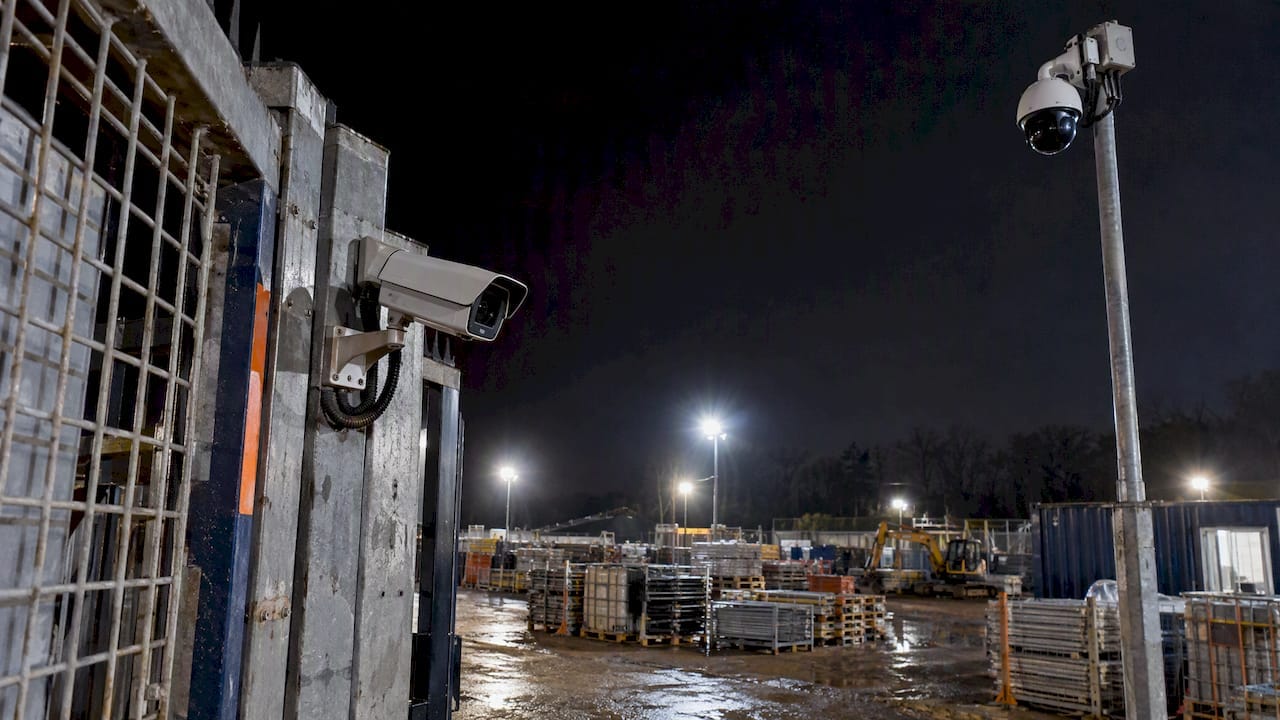
Thermal cameras solve the problem ordinary CCTV struggles with: total darkness and glare from site lighting. They detect body heat rather than relying on visible light, which makes them useful on sites without reliable power for floodlighting, though they are generally better at detection than at producing footage clear enough for identification.
Power and connectivity shape what is realistic for a given site:
- Solar and battery-backed units suit remote or pre-power sites where running mains cabling is not yet practical.
- 4G/LTE-connected cameras avoid the need for on-site internet and work well for short-term or mobile setups.
- Off-grid monitored systems combine battery power with cellular data, trading some reliability for flexibility on sites without fixed infrastructure.
The real difference in outcomes, though, sits with monitoring. Monitored CCTV and alarm systems route an alert to a staffed monitoring centre that verifies what triggered it before deciding on a response, reducing false alarms and speeding up genuine ones compared with app-only camera systems that rely on the site manager checking a phone notification at 2am. NSW Police’s Safer by Design guidance frames this kind of organised surveillance, alongside layout and technical measures, as a core part of an effective crime prevention strategy.
One of the most consistent findings in crime prevention guidance is that verified, monitored response outperforms unverified alerts for both speed and accuracy. Choosing a monitored option over a standalone app camera is a trade worth making on any site holding materials worth stealing.
Perimeter controls: fencing, gates and lighting that actually work
The perimeter is the first layer a trespasser meets, and it is also the layer most often undermined by small oversights. WorkSafe Victoria recommends temporary fencing of at least 1.8 metres, built to resist both wind and climbing, and specifically flags reinforcing mesh as a poor choice because its grid pattern gives intruders an easy handhold.
A few details separate fencing that works from fencing that is just there:
- Avoid reo mesh and similar climbable panels, and keep pallets, bins or stacked materials away from the fence line where they could be used as a step.
- Secure every gate with a proper padlock and chain, or an electric or remote-controlled gate with auto-close, so a gate left ajar does not undo the rest of the perimeter.
- Use temporary barricading and reflective gear around hazards visible from outside the fence, protecting passers-by as much as deterring entry.
- Light the full perimeter evenly rather than pointing a single floodlight at the gate, since uneven lighting creates dark pockets and glare that both reduce what a camera can actually capture at night.
Case study evidence from WorkSafe Queensland’s work with Hyne Timber shows the benefit of pairing remote-controlled gates with web-interface cameras and clearly separated pedestrian and vehicle access, an approach that improved both security and day-to-day safety on site.
Human response: guards, mobile patrols and verified alarm response
Technology detects, but a person still has to decide what to do about it. Static guards on night shifts typically handle access control at the gate, periodic walks of the site, and the first response to an alarm or a reported disturbance. Mobile patrols instead cover several sites in a rotation, checking fencing and signage integrity, confirming lights and cameras are operating, and responding when a monitoring centre flags an alert that needs eyes on the ground.
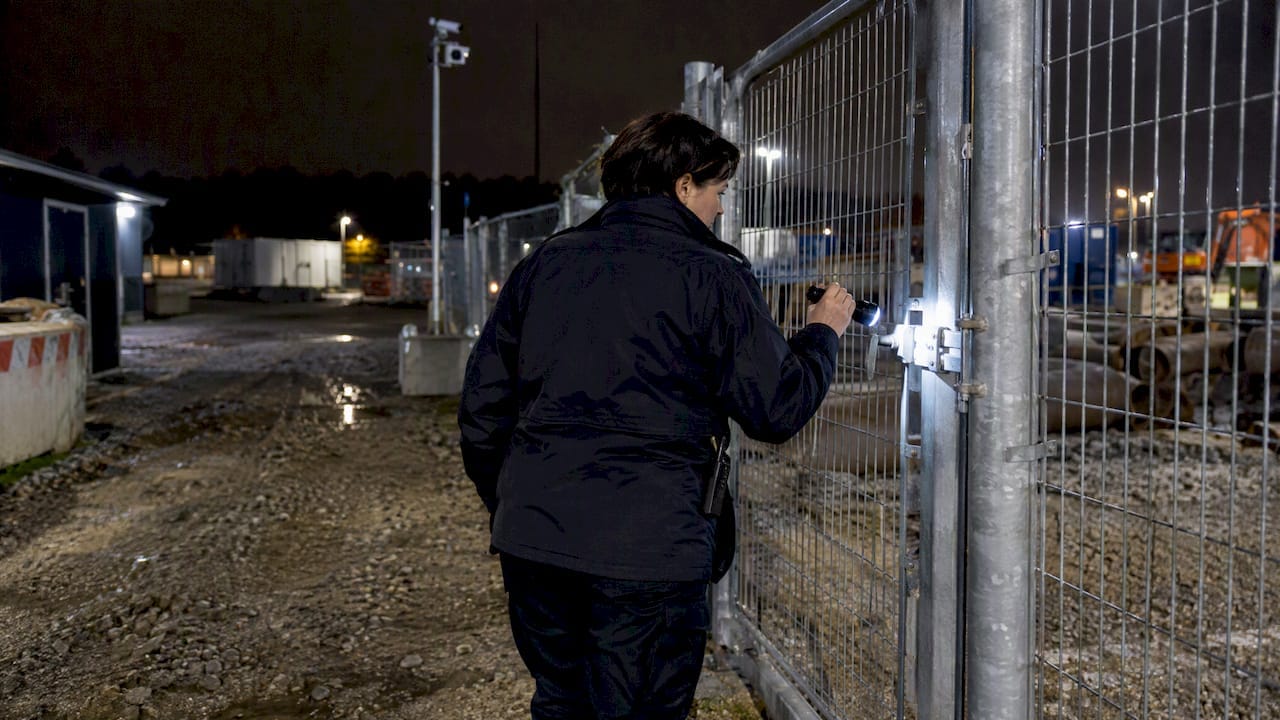
The two work best combined with monitored systems rather than instead of them: a verified alarm from a monitoring centre can trigger an immediate patrol callout, while a guard with access to live camera feeds can confirm an intrusion before escalating to police.
Deciding how much human coverage to pay for comes down to a few practical signals:
- High-value plant, fit-out materials or a history of theft on the site or in the area points towards static guarding or more frequent patrols.
- A quiet, well-fenced site with reliable monitoring may only need scheduled patrol checks rather than a guard on-site every night.
- Contract terms worth checking include guard licensing, rostered hours, response times for mobile patrols, and what gets included in incident reporting.
Legal duties, risk assessment and who is responsible for site security
Under work health and safety regulations, the person with management or control of a construction workplace carries the legal duty to secure it from unauthorised access outside working hours. WorkSafe Queensland has pointed to enforcement action following breaches, including an example where a business was fined an amount in the tens of thousands after a member of the public was injured on an unsecured site.
That duty is discharged through documentation, not good intentions:
- Include security explicitly in the site risk assessment, covering fencing, lighting, surveillance and after-hours contact arrangements alongside the usual physical hazards.
- Consult subcontractors on who is responsible for securing their own work areas, equipment storage and signage, so no zone falls through the gaps between trades.
- Display current 24/7 contact details at entry points, matching what WorkSafe Victoria’s fencing guidance requires on temporary fencing signage.
- Keep dated records of checks and incidents, since a documented history of reasonable steps is what regulators and insurers ask for after something goes wrong.
Cost, timing and prioritisation when budget is limited
If funds are tight, spend first on the measures that cost little and remove the easiest opportunities. Quality padlocks, legible signage with current contact numbers, perimeter lighting and locked on-site storage cost relatively little and close off the most common entry points. Scheduling just-in-time deliveries for whitegoods and fit-out items removes overnight stock without spending anything at all.
Once the basics are in place, mid-cost upgrades follow:
- Monitored cameras and alarms add verified detection without the ongoing cost of a guard on-site every night.
- Remote or electric gates with auto-close cut down on human error, like a gate left unlocked after the last delivery.
- Permanent anti-climb fencing suits longer builds where temporary fencing would need repeated reinforcement anyway.
A typical medium-sized site can roll out locks, signage and lighting in the first week, add monitored cameras and alarms within the first month, and layer in guards or patrols once the risk assessment identifies a specific need. Measuring the return comes down to tracking incidents, theft losses and whether the site passes regulator scrutiny on its security arrangements.
How ABCO Security approaches the multi-layer plan
We build night security around the same layers this guide covers: secured perimeters, monitored detection and an organised human response. Our A1 CCTV & Alarm Monitoring service gives sites verified, 24/7 alert handling rather than an app notification someone has to check themselves, and our licensed guards and mobile patrols cover the response layer once an alert is confirmed.
We operate to ISO 9001 and ISO 30000 quality and risk management standards, and we have worked across construction and other sectors for more than 15 years. When you’re assessing a provider, ask about guard licensing, monitoring response times, and how incidents get reported and recorded, those answers tell you more than any brochure.
Common night security mistakes site managers make
Most failures aren’t technology failures, they’re follow-through failures. Signage with a faded or disconnected contact number is worse than no signage at all, because it creates false confidence. Fences get climbed not because they’re too low but because someone left pallets or bins stacked against them. Alarms get ignored because no one tested the call-out number in months.
The fixes are rarely glamorous: choose fencing without climbable mesh patterns, test every emergency contact monthly rather than assuming it still works, and stagger high-value deliveries so there’s less to steal on any given night. A five-minute toolbox talk before a shutdown period, covering who locks what and who to call, closes more gaps than another camera ever will.
— Abco
How we can help you build the full night security stack
We put together construction site night security as a single managed service rather than a pile of separate purchases, which means you’re not left coordinating a locksmith, a camera installer and a guard company on your own. Our Construction Site Security Services cover fencing advice, monitored CCTV and alarms through A1 CCTV & Alarm Monitoring, licensed Security Guarding, and Mobile Patrol Services for sites that need scheduled checks rather than a guard overnight.
For sites wanting straightforward after-hours monitoring without a full guarding contract, our Night Owl Service offers daily and longer-term plans; current prices are on the pricing page. A proposal from us sets out which layers your site actually needs based on its size, location and risk profile, rather than selling every service regardless of fit. If you’re coordinating security across more than one active job, this guide to managing multiple job sites is a useful companion for keeping responsibilities consistent across crews.
Get in touch through our construction site security services page to arrange a quote and a site-specific security plan.
FAQ
Is there security at construction sites?
Many construction sites have some form of security, ranging from basic fencing and signage through to monitored CCTV, alarms and on-site guards, depending on the site’s size, value and risk profile. The specific mix is usually set by a site risk assessment rather than a single fixed standard.
What are the responsibilities of a construction site security guard?
A night-shift guard typically controls access at the gate, walks the site periodically to check fencing and storage, and responds first to alarms or reported disturbances before escalating to police if needed. Guards working alongside monitored systems also verify alerts from cameras or sensors before deciding on further action.
Who is responsible for site security?
Under work health and safety regulations, the person with management or control of the construction workplace is responsible for securing it from unauthorised access outside working hours, as outlined by WorkSafe Queensland. On multi-contractor sites, this responsibility should be clearly divided and documented so each trade knows which areas and equipment they’re securing.
What are the security measures taken at construction sites?
Common measures include perimeter fencing built to resist climbing, locked gates, perimeter lighting, monitored CCTV and alarms, secured storage for tools and plant, and either static guards or mobile patrols for after-hours response. SafeWork NSW’s site security checklist sets out the standard physical, administrative and surveillance controls expected on a well-secured site.
Sources
- Site security checklist
- Prevent construction site theft
- Construction site security fencing
- Onsite traffic management case study: Hyne Timber
Recommended
about
avada factory
Sempery ultricies nibh at dolor cras urna eleifend nec. Atiam efficitur tempor.