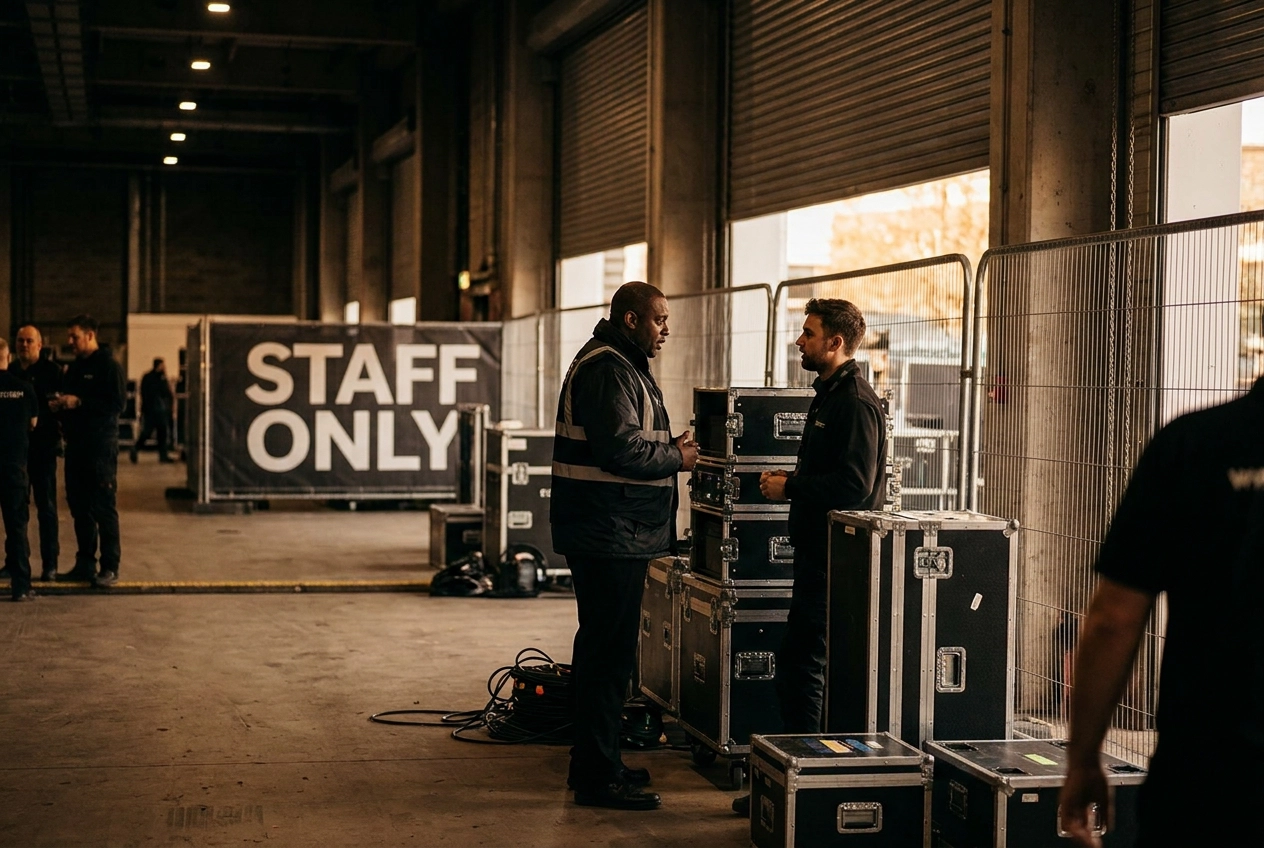
Back-of-house event security is where most serious event incidents begin, because accreditation, deliveries, and talent movement rarely get the same discipline as front-of-house crowd flow. If you allocate access control and guard coverage to back-of-house first, then scale outward to the crowd, you remove the weak points that put accreditation, egress, and reputation at risk.
Most people overlook the dock door propped open, the unaccredited crew member trailing a delivery, or the late load-in that blocks egress. Those are not minor operational issues. Under the OHS Act 2004, Victorian organisers owe a duty of care to employees, contractors, and volunteers, and WorkSafe Victoria’s guidance follows identify, assess, control. That makes back-of-house crew a protected population. This analysis starts with the direct answer, then moves through loading docks, artist areas, accreditation and the delivery crowd, front-of-house versus back-of-house budgets, and sequencing coverage behind the barriers first. I’ve found that effective event security depends on trained security guards controlling access before the crowd arrives. You will also get a pro tip, the pitfall that sinks events, and FAQs.
Back of House Event Security: The Direct Answer
Back-of-house event security is the control of access, movement and egress in the zones the public never sees: loading docks, artist areas, crew corridors and accreditation points. Incidents that reach the news, from unauthorised backstage entry to altercations around talent, begin there, not at the crowd barrier.
Victorian organisers owe an OHS Act 2004 duty of care to employees, contractors and volunteers, so crew zones are a legal obligation, not a courtesy (WorkSafe Victoria).
Covering behind the barriers first is field judgement, not a legal requirement. WorkSafe covers duties, contractor management, hazard registers and safe egress, not who stands at the dock door at 4pm. Closing that gap starts with choosing the right event security guard services.
Loading Docks: The Door Nobody Watches
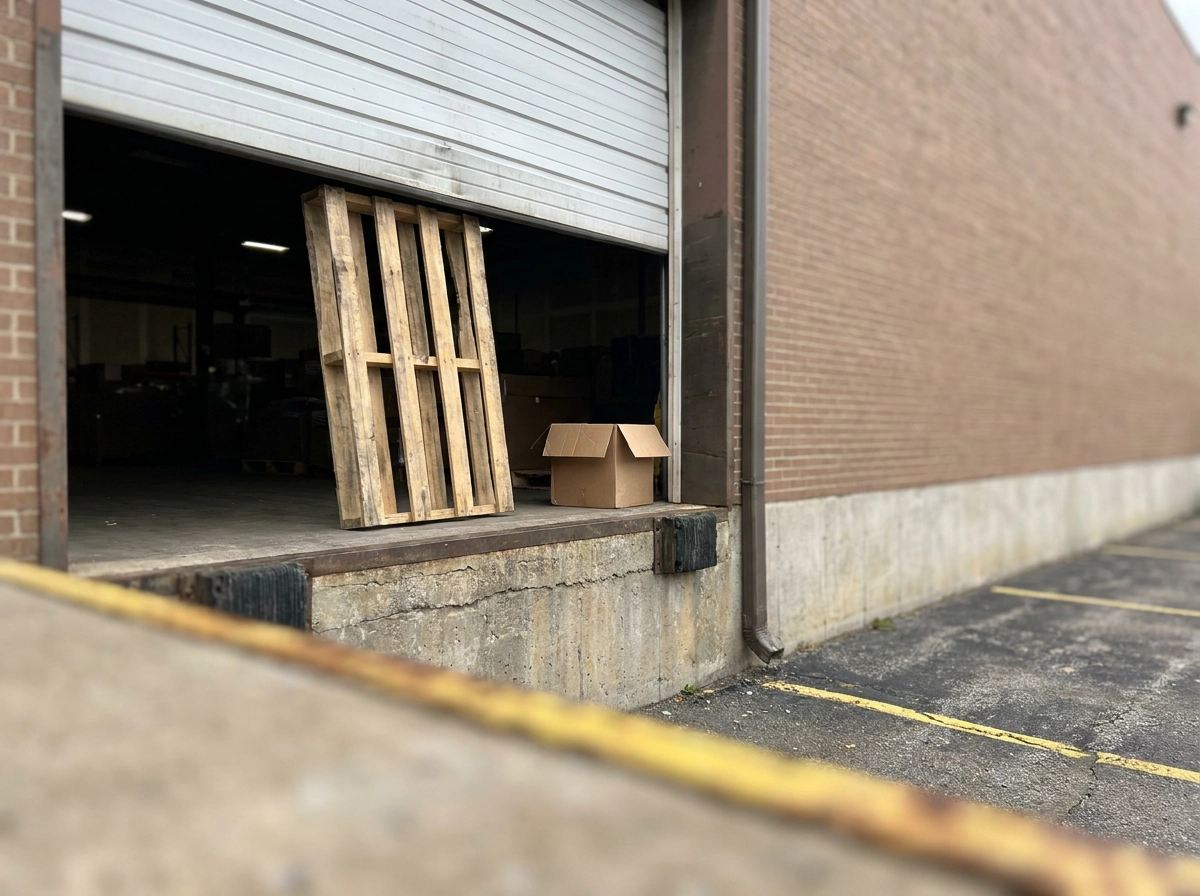
Propped dock doors are the most consistent failure I see on site. Airflow, smoke breaks and a quick run to the truck leave it open with nobody watching inside.
Vetting starts at the gate, not the dock mouth: match driver identity, vehicle, manifest and expected arrival window before the truck nears the building. Load-ins overlapping public egress are a scheduling failure, not a guard one. WorkSafe Victoria’s access and egress principles make your run sheet a control measure, not admin.
After-hours, a static presence pays for itself. One briefed guard at the dock mouth, or scheduled mobile patrol checks overnight (mobile patrol coverage), closes the window daytime leaves open.
Most overlook that a dock is a two-way door. Outbound risk travels with the delivery, the exposure covered in warehouse security systems.
Artist Areas: Movement Nobody Counts

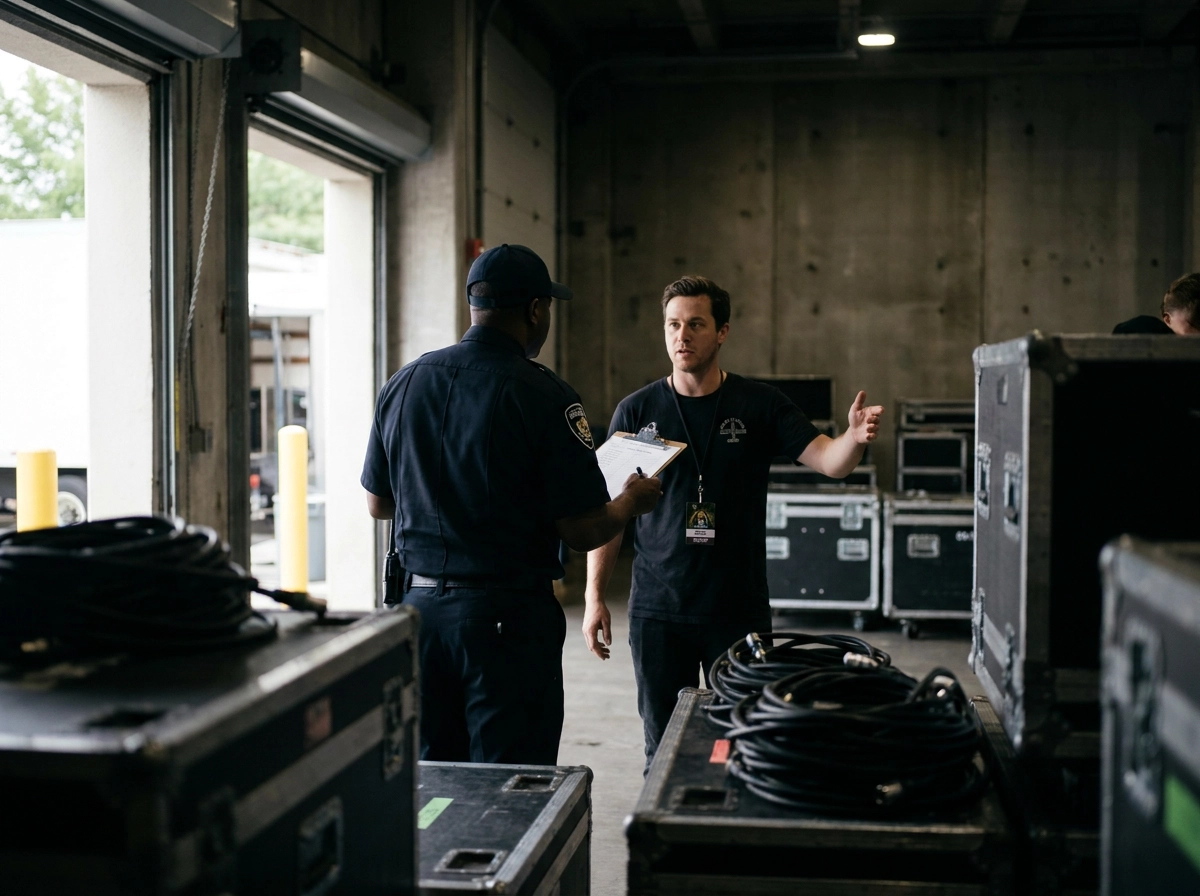
Artist movement follows routes nobody plans. Runner-led walks, side-of-stage crossovers and green room visits cut through crew corridors. An artist arrives with management, family and ad-hoc guests, so unless someone logs them, nobody backstage can say who is inside the zone at any given moment.
Apply the cash room discipline to the green room and production office: list, verify, log. The asset differs; the control does not. In my experience the real exposure is the unvetted entourage moving through areas holding equipment, cash and staff who lack authority to challenge them.
In my testing, one named gatekeeper with a printed list and real authority to refuse resolves more artist-area incidents than two extra roaming guards. A professional event security guard team understands that.
Accreditation and the Delivery Crowd
Access control fails on the pass, not the gate. A credential without a zone marking is decoration. Colour-code zones and verify at the choke point, where people funnel, not at the door where they arrive in groups.
Tailgating behind deliveries is the most common bypass, because a delivery is a rolling crowd. The check must pause and count heads, the logic behind our tailgating prevention FAQ.
Brief guards on refusal and logging; control collapses when the door has no script for saying no, or backup when they do. Volunteers and contractors carry the same Victorian OHS duties as paid crew (WorkSafe Victoria), so their movement needs identical accreditation logic. Accreditation is a training problem before a hardware one: event-briefed teams handle refusal pressure better than general duties guards.
Front of House vs Back of House: Where the Budget Actually Goes
That discipline starts at the dock door; the budget does not. Front-of-house draws the money because it is sponsor-facing and politically sensitive. Back-of-house gets the remainder, which is why it fails.
Lower crowd density, far higher rates of uncontrolled access.
| Front of house | Back of house | |
|---|---|---|
| Visibility | Public, sponsor-facing | Hidden, unlogged |
| Threat | Crowd crushing | Unauthorised access |
| Budget | Funded first | Funded last |
| Control | Barriers, bag checks | Dock, accreditation, guards |
| Failure | Reported fast | Quiet, then incident |
| Regulator focus | Capacity, egress, first aid | Hazard register, contractors |
In my experience, the first cuts are after-hours dock coverage and a dedicated accreditation guard, the two that also generate incident reports. Static guard coverage belongs where access is uncontrolled, not where crowds are thickest (security guard services); the same role clarity decides your front-of-house model (concierge vs reception security).
Sequencing Coverage: Behind the Barriers First
Sequence it that way. Map back-of-house access before you count crowd numbers: staff entries, gates, dock doors, artist entries. Lock accreditation at choke points, not at doors where groups arrive: one verified entry per zone, so a pass means something. Place static guards at the dock and artist zone, and schedule load-ins outside public egress windows so the two movements never compete. Our crowd control risk assessment starts here. Then scale outward to crowd density, gate queues and bag checks, so each guard is informed by a controlled perimeter. Contractor management sits underneath. The Victorian major events guide covers contractor management, a hazard register, an event safety plan and monitoring, but it is a 2006 first edition; verify against current WorkSafe Victoria guidance before citing. Register docks, artist areas and load-in overlap as named hazards under identify, assess, control. That register makes your coverage defensible after an incident.
Pro Tip and the Pitfall That Sinks Events
Run one test at your next load-in: walk unescorted from the dock door to the stage. If nobody stops you, your money sits in the wrong place. Move a guard before you move a crowd barrier, because crowd management measures that reduce surge risk hold only behind a closed perimeter.
The pitfall: answering a back-of-house incident with front-of-house headcount. The crowd was never the problem, and the next breach will land in the same quiet zone. Post-incident, insurer and WorkSafe Victoria scrutiny falls on your hazard register and documented control measures, not on how many guards faced the audience. Fix the dock, the artist zone and the accreditation check first. Crowd coverage scales from there, never the other way around.
FAQs
These questions recur:
Who is responsible for back-of-house security? The organiser holds primary duty under the OHS Act 2004, then delegates dock, artist and accreditation control to the provider via the event safety plan.
Do volunteers count under Victorian OHS duties? Yes. WorkSafe Victoria names employees, contractors and volunteers, so crew-zone volunteers need the same accreditation and control.
How many guards does a loading dock need? One briefed guard at the dock mouth during deliveries and load-out beats roaming coverage, plus overnight mobile patrol checks.
Should dock doors stay staffed after close? Yes, until deliveries, equipment and cash movements finish. Then doors get propped and vehicles move unrecorded.
Does back-of-house coverage come from the crowd budget? Budget it first, then scale crowd coverage to density. See how to hire event security.
Conclusion
Back-of-house security fails where budgets and briefings stop. Loading docks, artist areas, and accreditation checks are your highest-risk quiet zones. I’ve found that one briefed guard at the dock mouth, counted artist movement, and enforced crew accreditation prevents most incidents. Budget these controls first, then scale crowd coverage to density. Review your event safety plan with event security services and mobile patrol for overnight dock checks. Post-incident, insurers and WorkSafe Victoria will ask for documented hazard controls, not front-of-house headcount. Fix the quiet zones before the gates open. Pro tip: assign named back-of-house owners per zone and test their radio response during load-in. The common pitfall is stripping dock or artist coverage to plug a crowd gap; that simply moves the breach to the next unwatched door.
about
avada factory
Sempery ultricies nibh at dolor cras urna eleifend nec. Atiam efficitur tempor.