Limit how much cash sits on your premises, put dual control on every count, and use a licensed cash-in-transit provider whenever volumes or risk justify it. Those three moves cover most of what Safe Work Australia, state police forces, and CPA Australia recommend for reducing both robbery risk and internal theft.
Your first move today:
- Pull out your opening and closing checklist and check it covers dual control on counts.
- Confirm who is authorised to open the safe, and cut that list down if it’s grown too long.
- If you’re transporting more than a modest amount weekly, get a quote from a licensed security provider before your next big trading day.
Key Takeaways
Cash handling security works when cash on site is minimised, counting is done under dual control, and transport is handled by licensed professionals wherever volume or risk justifies the cost.
| Point | Details |
|---|---|
| Eliminate where practicable | Move to EFTPOS or card only where the business model allows; document the decision if it’s not possible. |
| Dual control on counts | Have two staff involved in reconciliation, or rotate the counter to prevent a single point of failure. |
| Safe features matter | Time-delay, post-feed, and anchored safes reduce both theft opportunity and reward. |
| Vary transport patterns | Change routes, timing, and dress when carrying cash in-house; predictability is the risk. |
| Get a professional assessment | Abcosecurity offers site surveys that turn these checklist items into a phased, actionable security plan. |
Table of Contents
- What is cash handling security and why does it matter?
- Daily cash handling checklist for opening, counting and banking
- What is the most secure way to store cash?
- When should you use a security company to transport cash?
- How premises design deters robbery and theft
- Training staff for robbery response and after an incident
- Building a documented cash handling policy
- How a professional security assessment strengthens cash handling
- Sources
- FAQ
What is cash handling security and why does it matter?
Cash handling security is the combination of procedures, equipment, and staff training that protects money as it moves through your business, from till to safe to bank. It matters because cash is the one asset in most retail and hospitality operations that’s genuinely liquid, genuinely anonymous, and genuinely attractive to both opportunistic thieves and your own staff under financial pressure.
The strongest control available isn’t a safe or a guard. It’s removing cash from the equation altogether. Safe Work ACT states plainly that eliminating cash handling by shifting to EFTPOS or card-only payments is the most effective control available, and only when that’s not practicable should you move to structured procedures that minimise the risk instead. Plenty of businesses can’t go cashless entirely, whether it’s a market stall, a pub with an older customer base, or an industry where cash tips and cash sales are simply part of the model. For those businesses, the rest of this guide is your risk-minimisation playbook, built directly from what government safety regulators and police services actually recommend.
Daily cash handling checklist for opening, counting and banking
Retail cash handling security lives or dies on daily discipline, not annual policy documents. Build these steps into every shift.
Opening:
- Verify the safe count against yesterday’s closing figure before anyone touches the till.
- Set float amounts per register and record who received what.
- Log every staff member authorised to handle cash that day.
During trading:
- Keep till drawers closed between transactions and never left open unattended.
- Cap the cash allowed in any single drawer. Once it hits the limit, staff shift the excess to the safe.
- Use your POS system to log which staff member processed which cash transaction, not just the till total.
Counting and cashing up:
- Run counts with two people present wherever staffing allows. One counts, one verifies.
- Reconcile the Z read against POS records and physical cash before anyone signs off.
- Where dual control isn’t possible, rotate who counts so the same person doesn’t handle it every single shift.
Closing:
- Clear tills into the safe well before close, not all at once at the end of the night.
- Set a fixed deposit schedule rather than an ad hoc one; predictability for your books, unpredictability for anyone watching your habits.
Pro Tip: Ask two different staff members to complete the same reconciliation independently once a month, without telling them in advance. Discrepancies between their totals often expose training gaps before they become theft.
What is the most secure way to store cash?
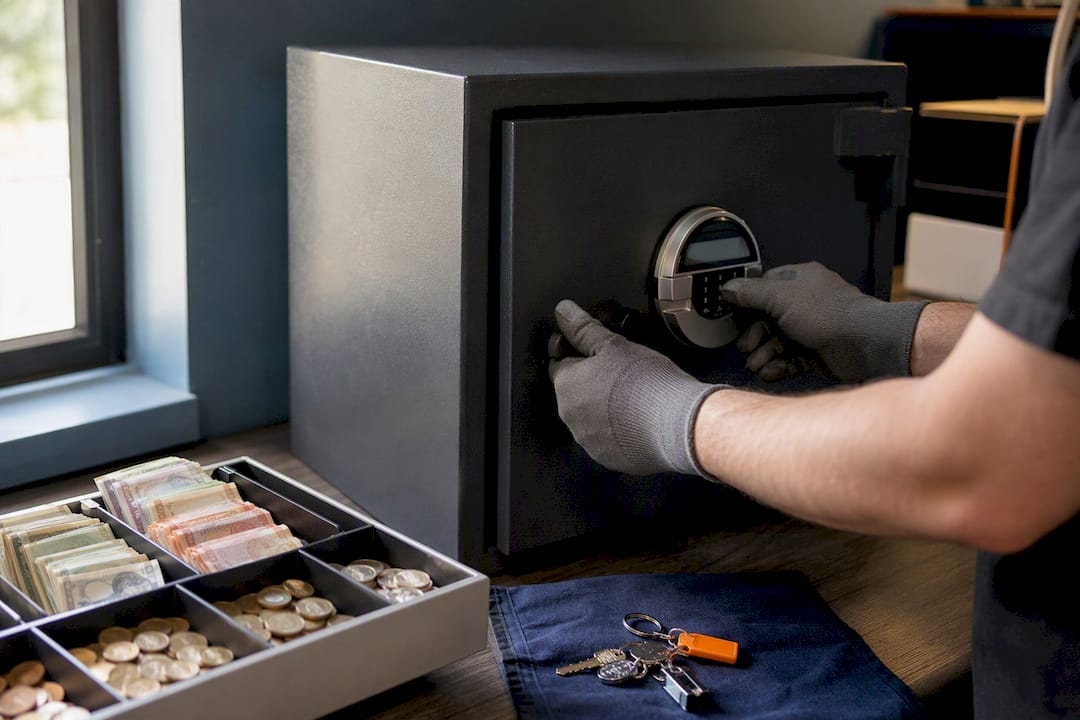
The safest storage combines a safe built for the job with strict rules on who can open it. Victoria Police recommends safes with time-delay mechanisms and post-feed slots, which let staff deposit cash throughout the day without reopening the main compartment. Some businesses add dye-stain cassettes that mark stolen notes if the safe is forced.
Beyond the hardware itself:
Anchor the safe to the floor or a wall. An unanchored safe is a safe a thief can simply carry out.
Limit who holds keys or codes to the smallest workable number, and rotate codes when staff leave.
Log every safe access with a time and name, even for routine drops.
Run petty cash through an imprest system with a fixed float, kept in a locked cash box separate from the main safe.
Time-delay and post-feed features do more than slow a thief down. They reduce the reward available for an attack, which is precisely why police guidance treats them as a baseline rather than an optional extra.
When should you use a security company to transport cash?
Cash transport security is where a lot of businesses take on risk they don’t need to carry themselves. If your transfers are frequent, your volumes are significant, the bank is a fair distance away, or your area has a higher crime rate, Safe Work Australia’s transport guide recommends engaging a professional cash-in-transit provider rather than sending staff.
Checking a provider before you sign:
- Confirm their security licence is current in your state.
- Ask how they verify collection staff on arrival, including ID checks and confirmation calls before handover.
- Check they manifest each collection so there’s a paper trail for every bag.
If you’re transporting in-house because volumes don’t yet justify a contract:
- Vary your route and timing. A predictable Tuesday 3pm bank run is exactly what an opportunist watches for.
- Skip the branded uniform and the marked company vehicle. Plain clothes and an unmarked bag draw far less attention.
- Send two people together rather than one, and tell someone in the office when you expect them back.
- WorkSafe Victoria also recommends making deposits at random intervals through the day rather than one large predictable trip.
Log every transfer, and review that log periodically. If a pattern of predictability has crept back in, it’s time to change it again.
How premises design deters robbery and theft
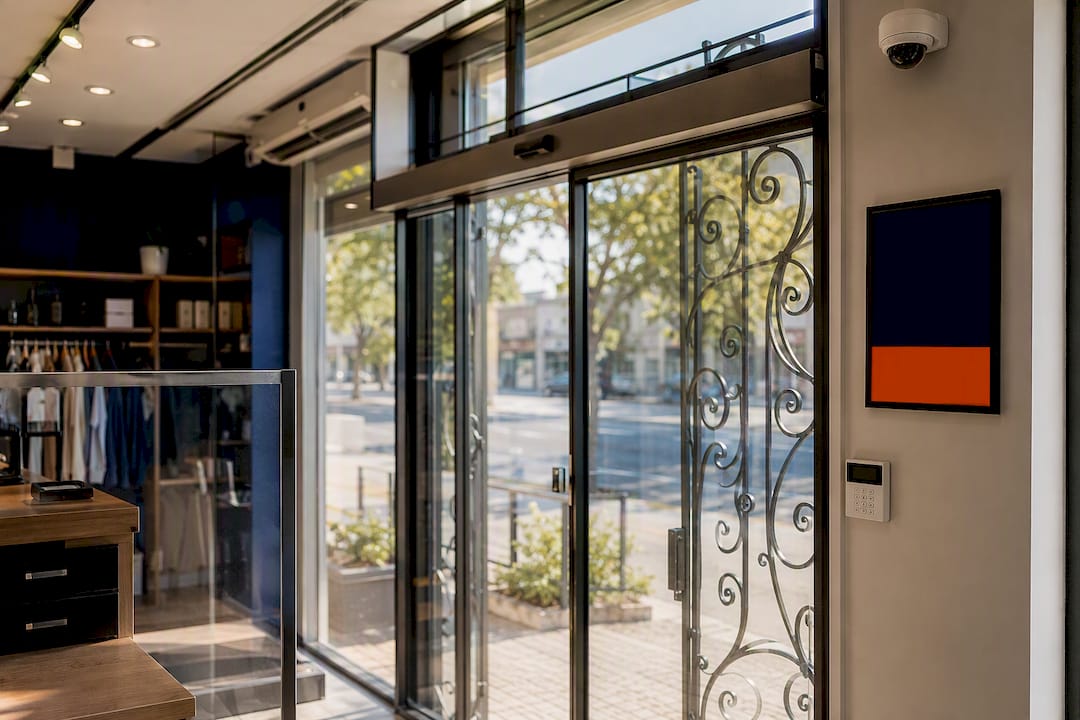
Physical layout does more security work than most owners give it credit for. Position tills away from entrances so a fleeing offender has further to travel, and keep counting rooms out of customer sightlines entirely rather than behind a half-height counter. Control access to rear and side doors just as tightly as the front.
On the technology side:
- Install CCTV with coverage over every till and the safe, not just the entrance.
- Fit monitored alarms and entrance sensors that alert a control room, not just a siren.
- Add duress or panic buttons at till points and in the counting room.
- Use visible signage stating minimal cash is kept on site. It’s a cheap deterrent that works because it removes the incentive before an offender ever walks in.
Pro Tip: Keep the safe itself out of customer view where you can. A visible safe with a queue of people in front of it is an unintentional advertisement.
Training staff for robbery response and after an incident
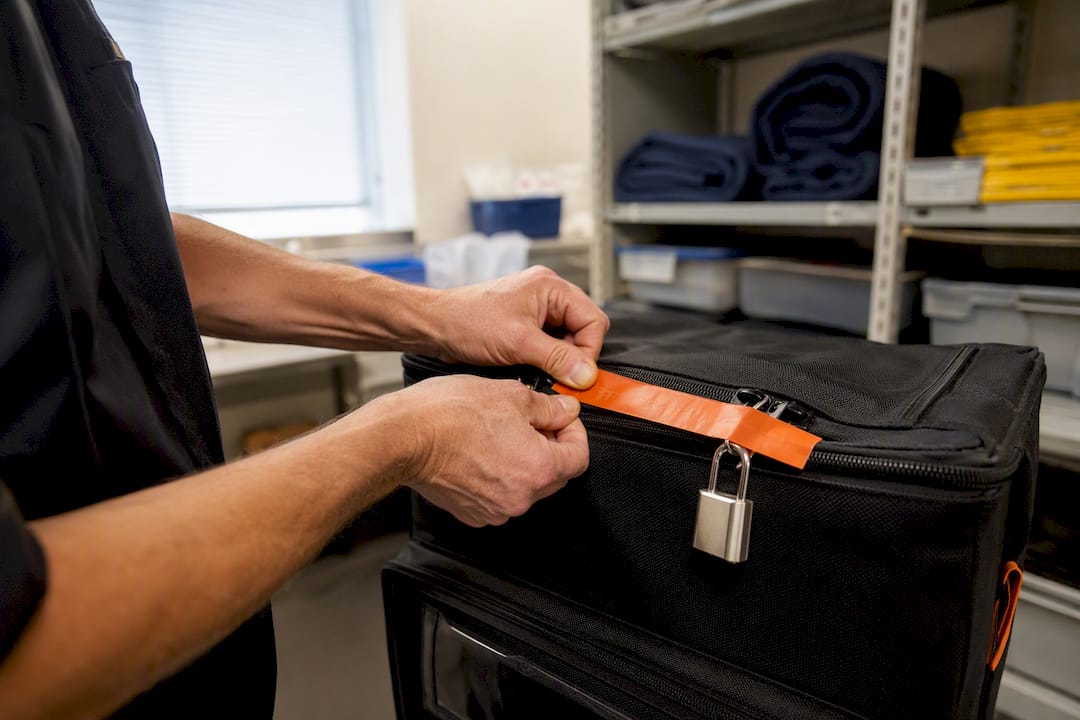
Staff training and armed-robbery response deserve more attention than most businesses give them, usually because owners assume it’ll never happen to them. Run drills at least annually, document who is authorised to handle cash, and keep an emergency contact list at every till point.
During an armed robbery:
- Prioritise personal safety over property. Cash is insured; people aren’t.
- Follow instructions calmly and avoid sudden movements or arguing.
- Do not attempt to intervene or chase.
- Call Triple Zero (000) once it’s safe to do so, not before.
After the incident:
- Secure the scene and don’t let anyone touch till areas or door handles until police arrive.
- Preserve CCTV footage immediately, before it’s overwritten by your system’s storage cycle.
- Notify police and your insurer the same day.
- Offer staff welfare support and record statements while memories are fresh.
A simple script helps under pressure: “Take what you need, we’re not going to stop you.” Staff should also know exactly which button activates the duress alarm and when it’s appropriate to use it, ideally the moment it’s safe to do so without alerting an offender.
Building a documented cash handling policy
A defensible cash-handling policy starts with a proper risk assessment: identify the hazards (robbery, manual handling injuries from moving heavy coin bags, internal fraud), assess how likely and how severe each one is, then select controls using the hierarchy of eliminate, substitute, minimise.
Your written policy should cover:
- Roles and responsibilities for every person who touches cash.
- Segregation of duties between who counts, who banks, and who reconciles.
- A fixed deposit schedule and a written discrepancy procedure for when the numbers don’t match.
- Vetting requirements for any new hire with cash access.
- A schedule for both regular and unannounced audits.
If elimination via EFTPOS-only trading is genuinely not practicable for your business, document why. That record matters if you’re ever asked to demonstrate you took the risk seriously rather than ignored the safest option available.
How a professional security assessment strengthens cash handling
A proper site assessment doesn’t start with a sales pitch. It starts with a survey: how cash moves through your premises, where the pinch points are, what your current tills, safe, and camera coverage actually achieve versus what you assume they achieve. From there, a risk score gets attached to each gap, and a phased plan gets built around it, technology first where it’s cheap and fast, staffing changes where they’re needed.
Typical interventions in that plan might include a secure counting room away from public view, CCTV and alarm systems integrated onto one platform, duress buttons wired into a monitored response, and staff training packages that cover exactly the drills outlined above. Where transport volumes justify it, a licensed cash collection partner gets brought into the plan rather than left to chance.
A site that’s never been formally assessed is usually carrying two or three risks the owner has simply stopped noticing, because they’ve become part of the daily routine. An outside set of eyes finds them in an afternoon.
The output of a proper assessment is a short risk register and an action plan you can actually work through, not a lengthy report that sits in a drawer.
A note from the field
Robbery and internal theft rarely come from nowhere. They exploit the same gaps: predictable routines, unclear authority over cash, and safes that are more decorative than functional. Fixing those three things prevents most incidents before they start.
Get a cash handling security assessment
There’s a difference between guessing your cash handling is adequate and having someone confirm it. Abcosecurity runs site assessments that cover exactly what’s outlined in this guide: till and safe placement, CCTV and alarm coverage, duress integration, and coordination with licensed cash-in-transit partners where your volumes call for it.
The assessment isn’t a sales pitch dressed up as advice. It’s a risk register and a short action plan you walk away with, whether you’re a single retail site or managing cash across several locations. If you’re ready to see where your current setup falls short, start with Abcosecurity’s integrated security solutions guide and request a no-obligation site assessment. For businesses further along that want to see documented outcomes, Abcosecurity’s property protection case study shows a 70% crime reduction from a comparable integrated approach.
Sources
- Cash handling
- Guide for handling and transporting cash
- Business armed robbery awareness booklet (Queensland Police Service)
- Internal controls for small business (CPA Australia)
FAQ
Is depositing $2,000 in cash suspicious?
No, depositing cash in usual daily amounts is routine for most businesses. Banks follow anti-money-laundering rules that require reporting above a high threshold, but ordinary daily takings well under that raise no automatic flags.
How do you handle cash securely day to day?
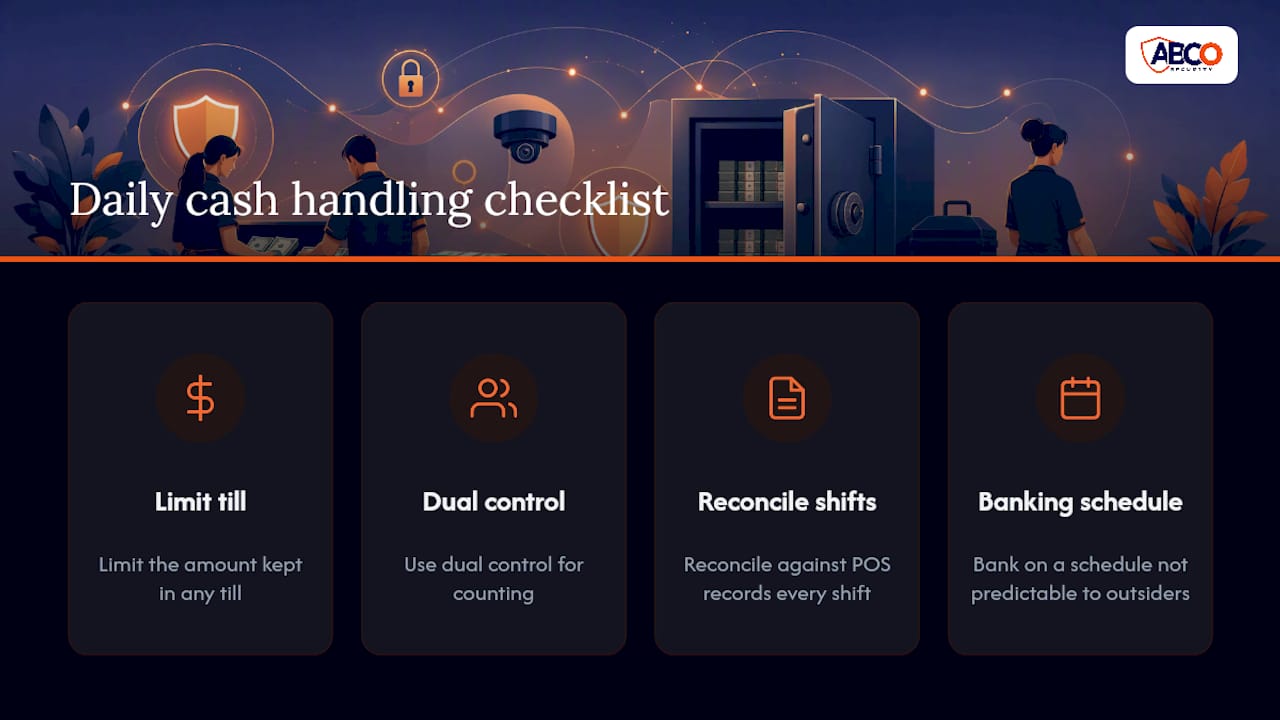
Limit the amount kept in any till, use dual control for counting, reconcile against POS records every shift, and bank on a schedule that isn’t predictable to outsiders. The full checklist above covers opening through to closing.
What is the most secure way to store cash?
A safe with time-delay and post-feed features, anchored to the building, with keys or codes limited to a small, named group of authorised staff. Petty cash should sit in a separate locked box under an imprest system.
Can you keep cash in your pocket going through airport security?
Yes, there’s no legal limit on carrying cash through Australian airport security screening for domestic travel, though larger amounts must be declared on international departures and arrivals under Australian Border Force rules.
When should a business use a professional cash-in-transit provider instead of staff?
When transfer frequency, cash volume, distance to the bank, or local crime rates are high, a licensed provider is the safer option. Abcosecurity’s site assessments help determine exactly where that threshold sits for your operation.
Recommended
about
avada factory
Sempery ultricies nibh at dolor cras urna eleifend nec. Atiam efficitur tempor.