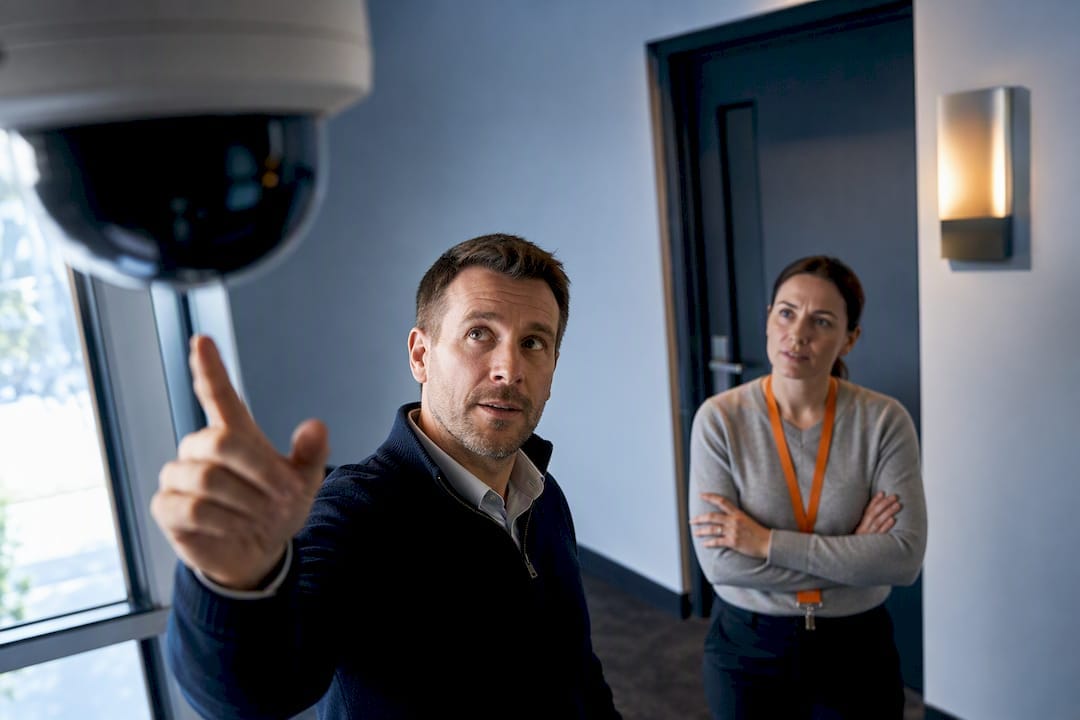
CCTV is legal across Australia, but it is not a free-for-all. Coverage splits between the Privacy Act 1988 for larger organisations and government agencies, and state or territory surveillance device laws for most local and residential installs. Whoever is filming must generally give notice, collect only what’s necessary, and secure the footage. Facial recognition and other biometric processing sit in a higher-risk category and demand extra care.
TL;DR:
- CCTV use by small businesses and homeowners is largely governed by state laws and local rules, not the Privacy Act, which mainly applies to large organizations and government agencies.
- Employers installing workplace CCTV must provide notice, limit monitoring to necessary areas, and follow guidelines to build trust and avoid legal issues.
- Installing cameras on private property should respect neighbor privacy, focusing on entry points and boundaries, and avoiding capturing private spaces without consent; disputes are typically resolved locally.
- Facial recognition technology in retail CCTV is considered biometric data and requires clear consent, privacy impact assessments, and proportionate collection to avoid breaches.
- Signage and detailed documentation are best practices for CCTV compliance, with penalties often arising from collecting excessive data or biometric information without proper notice or consent.
Table of Contents
- How Australia’s CCTV legal framework works
- Workplace CCTV: employer obligations and best practice
- Residential and neighbour privacy: what homeowners and renters can do
- Retail and facial recognition: why biometric surveillance is treated differently
- Strata and rental properties: cameras in shared buildings
- A step-by-step compliance checklist for installing CCTV
- Penalties and enforcement: what brings in the regulator
- How ABCO Security builds CCTV systems that hold up legally
- Why proportionate surveillance builds trust, not just security
- How ABCO Security helps you install CCTV the right way
- Sources
- FAQ
How Australia’s CCTV legal framework works
There is no single national CCTV law. Instead, two layers apply depending on who is filming and where. The Privacy Act covers Australian Government agencies and organisations with an annual turnover above $3 million, plus certain health service providers regardless of size. Everyone else, including most small businesses and private homeowners, falls largely outside its reach, though state and territory surveillance device acts step in to fill the gap.
Where the Privacy Act applies, the Australian Privacy Principles set the standard:
- Notify people that cameras are operating and why, usually through signage or a privacy policy.
- Collect only the footage needed for a stated purpose, rather than filming broadly “just in case”.
- Store footage securely and control who can access it.
- Destroy or de-identify footage once it’s no longer needed.
State surveillance device acts add another layer, often making covert recording a criminal offence in specific circumstances. The two systems overlap rather than replace each other, so working out which one applies to your situation is the first real compliance step.
Workplace CCTV: employer obligations and best practice
Employers who install CCTV at work carry extra obligations, and in some states these are set out in dedicated legislation. The Workplace Surveillance Act 2005 (NSW) prohibits covert surveillance of employees unless a covert surveillance authority has been obtained, and requires written notice, often given at least 14 days before monitoring starts, explaining how footage is collected, stored and accessed. The OAIC’s workplace monitoring guidance reinforces that staff should be told about surveillance regardless of which state they work in.
The Fair Work Ombudsman’s workplace privacy guide recommends applying the Australian Privacy Principles as a standard even where they aren’t strictly required, because it reduces legal exposure and builds trust with staff.
A solid employer checklist includes:
- A written privacy policy naming monitored areas, the purpose of monitoring and who can access footage.
- Clear signage at entry points and in monitored zones.
- A retention schedule so footage isn’t kept indefinitely.
- Staff training on how complaints or access requests are handled.
Pro Tip: Treat your CCTV policy as a live document, reviewed whenever you add cameras or change who can view footage.
Residential and neighbour privacy: what homeowners and renters can do
Private individuals filming their own property usually sit outside the Privacy Act, but that doesn’t mean anything goes. The OAIC notes that state surveillance laws, local council rules and strata by-laws commonly govern residential camera placement and use, and disputes often land with local mediation services or councils rather than a privacy regulator.
Practical placement guidance for homeowners:
- Angle cameras at your own entry points and boundaries, not a neighbour’s windows, bedroom or private garden.
- Check strata by-laws before mounting anything on common property.
- If a neighbour’s camera genuinely intrudes on your privacy, try direct conversation first, then mediation or your local council; involve police only where there’s a genuine safety concern.
Renters have a related but separate question, covered in the strata and rental section below.
Retail and facial recognition: why biometric surveillance is treated differently
Facial recognition technology (FRT) turns ordinary CCTV footage into biometric data, and biometric data gets tougher treatment under the Privacy Act than a standard video feed. The OAIC’s determination that Bunnings breached Australians’ privacy with a facial recognition tool, alongside a similar finding against Kmart, established that collecting biometric data indiscriminately, without clear consent, can breach the Privacy Act even when the underlying CCTV use would have been unremarkable.
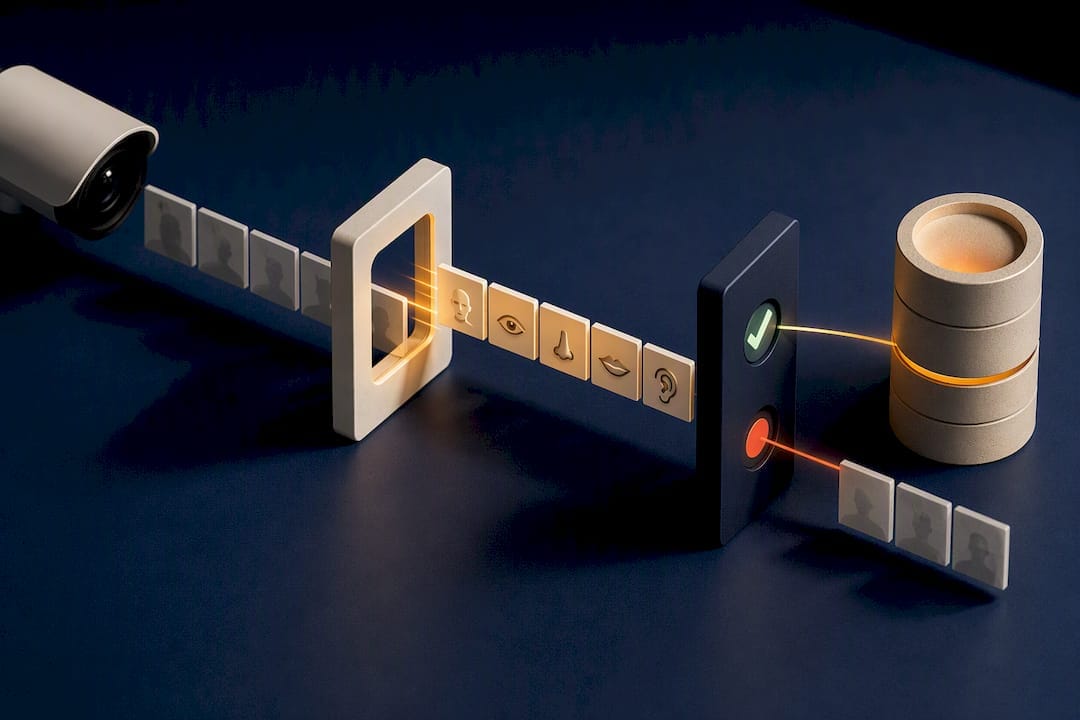
More than a quarter of Australians, 27%, rate facial recognition as one of the biggest privacy risks they face, a figure that helps explain why regulators scrutinise FRT rollouts closely.
Before deploying FRT or behavioural analytics, retailers should:
- Consider whether a less intrusive method could achieve the same loss-prevention or safety goal.
- Conduct a privacy impact assessment before switching the system on.
- Document why the collection is proportionate to the risk being managed.
Strata and rental properties: cameras in shared buildings
Apartment living adds another approval layer. Owners corporations typically control cameras on common property through strata by-laws, and installing one without approval is a frequent source of disputes.
Workable controls include:
- Seeking owners corporation approval before mounting anything in a stairwell, lobby or car park.
- Limiting the camera’s field of view to your own entry rather than shared walkways.
- Documenting the purpose and who has access to footage.
Renters generally have more freedom with removable, non-hardwired cameras. Consumer Affairs Victoria’s guidance on tenant alterations indicates these usually don’t need landlord consent, provided they don’t capture a neighbour’s private space, while hardwired installations generally do.
A step-by-step compliance checklist for installing CCTV
Getting CCTV right isn’t complicated, but skipping a step is how businesses end up explaining themselves to a regulator. Work through it in three stages.
- Before installing: work out whether the Privacy Act applies to you, check your state’s surveillance device act, review your lease or strata by-laws, and run a privacy impact assessment if you’re considering facial recognition or analytics.
- During installation: put up clear signage, limit each camera’s field of view to what you actually need to see, document who is authorised to view footage, and secure both the physical hardware and the digital storage.
- After installation: set a retention schedule with a secure deletion process, update your privacy policy to reflect the new system, and train staff on how to handle access requests or complaints.
Pro Tip: Write down your reasoning for each camera’s placement and purpose while you’re installing it. That record is exactly what a regulator or a strata meeting will ask for later.
Businesses weighing up whether cameras alone are enough, or whether a mixed approach with patrols or guards makes more sense, will find more detail in ABCO’s guide to security systems with cameras.
Penalties and enforcement: what brings in the regulator
Most CCTV complaints start with an individual raising a concern, either with the organisation directly or with the OAIC. From there, an investigation can lead to a formal determination, an enforceable undertaking, or reputational and operational fallout regardless of the legal outcome.
- Common findings in determinations involve collecting more data than necessary, especially biometric data, without adequate notice or consent.
- Remedies can include orders to stop a practice, delete data, or change internal processes.
- Getting legal advice early, and documenting the steps taken to fix a problem, tends to matter more to outcomes than trying to argue the original conduct was fine.
How ABCO Security builds CCTV systems that hold up legally
A professional security company has spent many years designing security systems, working to international quality standards, with 24/7 monitoring built into its operations. That background shapes how ABCO approaches CCTV specifically, not just as a technical install but as a compliance decision from day one.
A typical ABCO deployment involves:
- A site risk assessment that identifies what actually needs to be monitored, rather than filming everything by default.
- Privacy-by-design placement choices, signage and documented retention and access rules.
- A monitoring plan matched to the site’s actual risk profile.
For anyone comparing a DIY install against a professional one, a compliant quote should spell out camera placement reasoning, retention periods and who holds access, not just hardware specifications. ABCO’s CCTV installation approach starts from that same brief.
Why proportionate surveillance builds trust, not just security
Cameras work best when people understand why they’re there. Overreach breeds resentment and regulatory risk in equal measure; a documented, proportionate system protects people and premises without treating everyone as a suspect.
— Abco
How ABCO Security helps you install CCTV the right way
Getting the legal side right takes more than reading the rules once. ABCO Security runs a site survey before recommending any camera placement, matching coverage to genuine risk rather than filling every wall with a lens. That’s the difference between a system that survives a complaint and one that invites it.
Our A1 CCTV & Alarm Monitoring service pairs compliant installation with 24/7 monitoring, and sites needing round-the-clock coverage on a budget can start with the Night Owl Service, priced from $5.45 per day. For technical install work, our partners at PC Scientist cover business and venue CCTV placement in more depth. Get in touch for a compliance-first site survey and quote.
This article is general information, not a substitute for advice from a qualified lawyer. Consult a qualified legal professional about your own circumstances before acting on anything here.
Sources
- Security cameras | OAIC
- Workplace privacy best practice guide | Fair Work Ombudsman
- Workplace Surveillance Act 2005 No 47 – NSW Legislation
FAQ
Can my neighbour point a CCTV camera at my house?
A neighbour can generally install CCTV on their own property, but state surveillance laws and local council rules restrict cameras that deliberately capture your windows, bedroom or private yard. If the footage seems intrusive, raise it directly first, then use mediation or your council, since the OAIC notes most residential disputes are resolved locally rather than by a privacy regulator.
Can my boss watch me on CCTV at work?
Yes, but employers must generally notify staff and, in states like NSW, provide written notice before monitoring starts under the Workplace Surveillance Act. Covert surveillance is prohibited unless specifically authorised, and the footage’s purpose, storage and access should be documented in a workplace policy.
Can I point my security camera at my neighbour’s property?
You should avoid it. Filming a neighbour’s private spaces, such as their windows or backyard, can breach state surveillance device laws even where the Privacy Act itself doesn’t apply, and it’s a common trigger for neighbourhood disputes that end up with a council or mediator.
Is facial recognition CCTV legal in Australian retail stores?
It can be, but the OAIC’s Bunnings determination found that collecting facial recognition data without clear consent breached the Privacy Act. Retailers considering FRT should run a privacy impact assessment and document why the collection is proportionate before switching it on.
Do I need to put up signs for CCTV cameras?
Signage is not always a strict legal requirement, but it is standard practice for meeting notification obligations under the Privacy Act and workplace surveillance laws. The Fair Work Ombudsman treats clear signage as part of best practice for any monitored workplace.
Recommended
about
avada factory
Sempery ultricies nibh at dolor cras urna eleifend nec. Atiam efficitur tempor.