
TL;DR:
- Professional alarm monitoring supervises business signals around the clock, verifying threats and directing responses. It relies on Grade A1 centers with redundancy, encryption, and integration with video for effective threat verification. Regularly updating response plans and maintaining reliable communication ensure optimal protection and response accuracy.
Commercial alarm monitoring services are a managed security function where trained operators supervise your business alarm signals around the clock, verify threats, and coordinate a response. A triggered alarm without professional monitoring is little more than a noise. With professional monitoring, that same signal reaches a Grade A1 monitoring centre within seconds, triggering a verified, structured response. Australian Standard AS 2201.2 sets the benchmark for these centres, requiring 99.9% uptime, redundant communication systems, and blast-resistant construction. For business owners and facility managers, understanding what separates a monitored system from a basic alarm is the first step toward genuine asset protection.
What does commercial alarm monitoring actually include?
Effective monitoring manages and responds to signals rather than simply receiving them. That distinction matters because the technology, procedures, and communication pathways behind the scenes determine whether a real threat gets a real response.
Commercial alarm monitoring covers a broader range of signal types than most business owners expect:
- Intrusion detection: motion sensors, door contacts, and glass-break detectors
- Duress and panic alarms: silent alerts triggered by staff in distress
- Environmental alerts: smoke, fire, temperature, and flood sensors
- Access control events: after-hours door access or credential failures
The communication pathway is where professional systems separate themselves from consumer-grade alternatives. Dual-path monitoring using IP plus cellular provides a backup channel that keeps signal uptime intact if one path fails. For high-risk sites such as data centres, pharmacies, or financial offices, this redundancy is not optional. Encrypted links protect signal integrity from tampering.
Integration with CCTV and access control is what turns a monitoring centre into a genuine command point. Linking alarms to video and access credentials enables operators to verify a threat visually before dispatching a response. That verification step reduces false alarms and ensures the right action is taken every time.

Pro Tip: Ask any monitoring provider whether their centre holds Grade A1 certification under AS 2201.2. Centres meeting this standard maintain 99.9% uptime and operate with physical and electronic redundancy that lower-grade facilities simply do not match.
How do monitoring centres manage incident response?
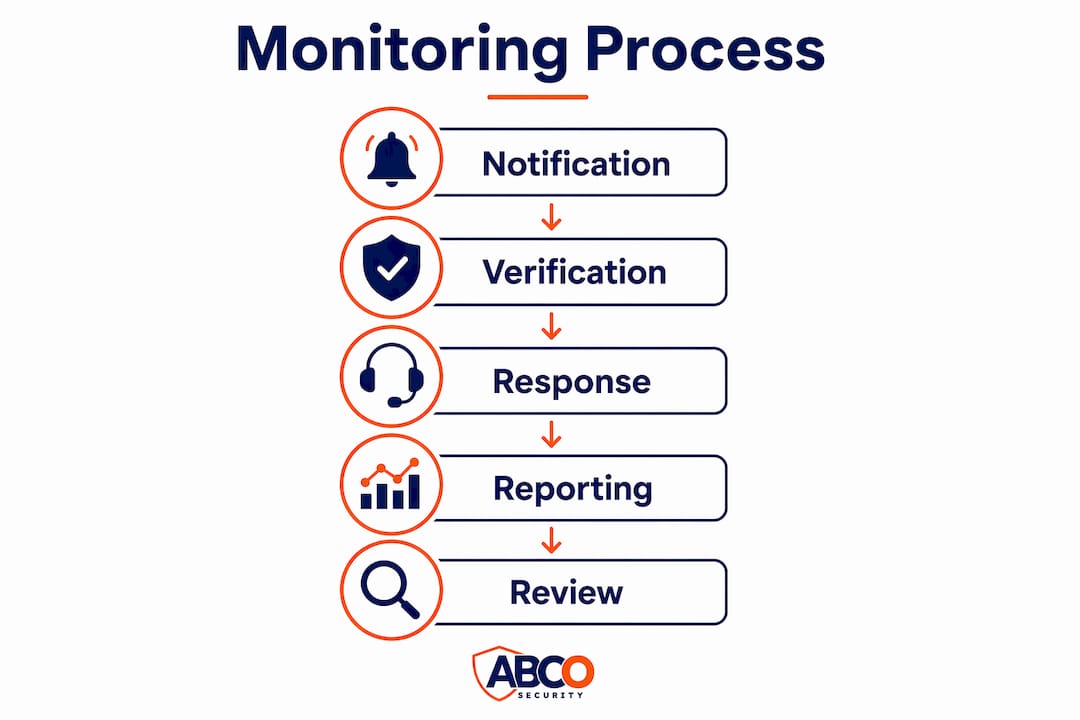
A Grade A1 monitoring centre certified under AS 2201.2 follows a defined workflow from the moment an alarm signal arrives. Speed and accuracy at each step determine whether a genuine threat is contained or escalates.
The response sequence works as follows:
- Signal receipt: the monitoring platform logs the alarm type, zone, and time stamp automatically.
- Operator verification: the operator checks CCTV footage linked to the alarm zone and reviews site-specific run sheet instructions before taking any action.
- Keyholder contact: the operator calls keyholders in the order listed on the run sheet, confirming whether the alarm is genuine or a false trigger.
- Escalation: if keyholders cannot be reached or confirm a threat, the operator dispatches a patrol service or contacts police.
- Documentation: every action, call, and decision is logged with a time stamp for compliance, insurance, and audit purposes.
Professional operators acknowledge an alarm within 30–60 seconds and filter out 95% of false triggers through sequential verification. That figure reflects the value of trained staff over automated-only systems. A system that cries wolf repeatedly trains police and keyholders to ignore it. Verification breaks that cycle.
False alarm management is a formal part of the process, not an afterthought. Operators use CCTV confirmation, two-call verification, and site knowledge to distinguish genuine events from equipment faults or user error. Detailed audit trails support insurance claims and demonstrate due diligence to regulators.
Pro Tip: Request a sample incident report from any provider before signing a contract. A well-documented report shows the monitoring centre’s discipline and gives you evidence of response times and escalation accuracy.
What factors should guide your choice of monitoring service?
Choosing between business alarm monitoring companies requires more than comparing monthly fees. The right service fits your site’s operational profile, risk level, and technology environment.
Site-specific needs and run sheets
Every commercial site has unique hours, access patterns, and asset sensitivities. A warehouse operating across three shifts needs a different escalation plan than a medical clinic open five days a week. Site-specific run sheets must reflect current staff, current hours, and current site layout. Many businesses set up their monitoring once and never update it. That gap between the run sheet and reality causes costly delays and misdirected responses.
Technology compatibility and communication reliability
Your monitoring provider must support the communication paths your site requires. Dual-path signalling using IP and 4G/5G cellular is the standard for commercial sites with meaningful asset risk. Verify that the provider uses encrypted failover rather than relying on a single internet connection. Cloud-only systems risk complete disconnection during NBN or internet outages, leaving your site unmonitored at the worst possible moment.
Cost relative to risk
Commercial sites typically pay A$70–A$120 monthly for dual-path professional monitoring. That fee covers 24/7 operations, secure signalling hardware, and trained operator time. Weighed against the cost of a single break-in, stock loss, or liability claim, the monthly investment is straightforward to justify. Providers offering significantly lower fees often cut corners on communication redundancy or operator training.
Key evaluation criteria when comparing providers:
- Grade A1 certification under AS 2201.2
- Dual-path communication with encrypted cellular failover
- Experience with your industry sector (healthcare, construction, corporate)
- Tailored response protocols rather than generic escalation scripts
- Maintenance support and regular system testing included in the agreement
- Clear service accountability with documented response time guarantees
Abcosecurity holds ISO 9001 and ISO 30000 certifications and brings over 15 years of experience across construction, healthcare, and corporate environments. That sector-specific depth means response protocols are built around how your site actually operates, not a generic template.
Common pitfalls in business security monitoring
The most expensive mistake in corporate alarm monitoring is treating the system as a one-time installation. A “set and forget” approach creates gaps that grow wider as your business changes.
Outdated keyholder lists are the most common failure point. Staff leave, phone numbers change, and access responsibilities shift. When an operator works through a call list and reaches disconnected numbers or former employees, response time blows out and the incident may go unresolved. Maintaining current site instructions is not a technical task. It is an operational discipline that requires a named owner and a review schedule.
DIY and cloud-only monitoring solutions carry a specific risk that is easy to overlook. These systems often lack encrypted cellular failover, which means an internet outage during a break-in leaves your site completely unmonitored. Professional systems use cellular backup precisely because internet connections fail at inconvenient times. The risk of cloud-only monitoring is not theoretical. It is a documented failure mode that professional-grade systems are designed to eliminate.
Pro Tip: Schedule a full system test every six months and update your run sheet at the same time. Treat it like a fire drill. The discipline of regular testing surfaces faults before they matter.
Additional practices that keep business alarm monitoring reliable over time:
- Conduct quarterly keyholder list reviews and confirm contact details are current
- Log every false alarm with a cause code to identify recurring equipment faults
- Integrate alarm monitoring with camera monitoring services for visual verification capability
- Confirm your provider’s maintenance response times are contractually defined
- Review your commercial property security systems annually as your site evolves
Understanding how predatorial crimes target businesses also informs how you structure your escalation process. Alarm monitoring works best when it is part of a broader security awareness plan, not a standalone layer.
Key takeaways
Commercial alarm monitoring services deliver reliable protection only when technology, current site instructions, and trained operators work together as a coordinated system.
| Point | Details |
|---|---|
| Grade A1 certification matters | Choose a monitoring centre certified under AS 2201.2 for 99.9% uptime and verified redundancy. |
| Dual-path communication is non-negotiable | IP plus cellular failover prevents outages from leaving your site unmonitored during critical moments. |
| Run sheets must stay current | Update keyholder lists and site instructions whenever staff, hours, or site layout changes. |
| Verification reduces false alarms | Trained operators filter out 95% of false triggers, protecting your relationship with police and keyholders. |
| Cost reflects risk coverage | A$70–A$120 monthly for professional monitoring is a direct offset against theft, liability, and compliance exposure. |
What 15 years of monitoring work has taught me
Most business owners focus on the alarm panel and the sensors. The monitoring centre is almost an afterthought. That is the wrong priority. The panel is just a signal generator. The monitoring centre is where the actual security decision gets made.
The businesses I have seen suffer the worst outcomes after a security incident almost always had the same problem: their run sheet was out of date. The monitoring centre called the right number on the wrong list, reached someone who no longer worked there, and lost critical minutes. The alarm was real. The response failed because the paperwork was not maintained.
The other pattern I keep seeing is the appeal of low-cost cloud-only solutions. They look capable on a product page. They fall apart the moment the internet goes down, which is exactly when a motivated intruder cuts the line or the NBN drops out during a storm. Professional-grade systems use cellular backup because the people who designed them understand that failures cluster around high-stakes moments.
My honest view is that alarm monitoring is not a technology purchase. It is an ongoing service relationship. The provider needs to know your site, understand your operational rhythms, and update your response plan as your business changes. A provider who hands you a contract and disappears is not a monitoring partner. They are a liability.
— Abco
How Abcosecurity supports commercial alarm monitoring
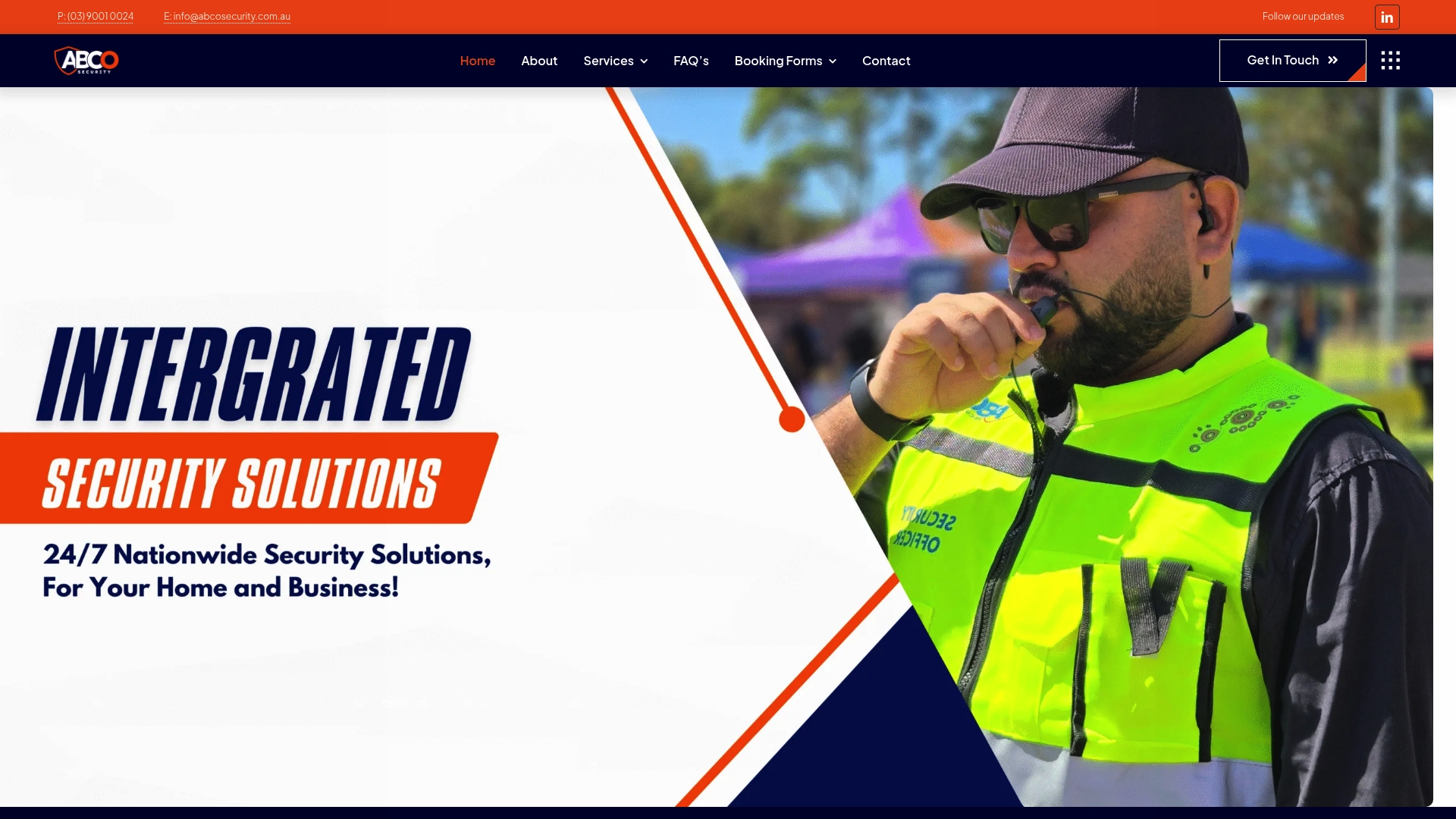
Abcosecurity delivers professional alarm monitoring through Grade A1 certified centres that meet AS 2201.2 standards, with dual-path communication and encrypted cellular failover built into every commercial deployment. With over 15 years of experience across healthcare, construction, and corporate environments, Abcosecurity builds response protocols around your site’s actual operational profile, not a generic script. ISO 9001 and ISO 30000 certifications underpin every service agreement, giving you documented accountability and audit-ready reporting. If your current monitoring arrangement lacks verified response times, current run sheets, or technology redundancy, Abcosecurity’s team can assess your setup and recommend a plan that fits your risk profile and budget.
FAQ
What is commercial alarm monitoring?
Commercial alarm monitoring is a managed service where trained operators supervise alarm signals from a business premises 24/7, verify threats, and coordinate a response including keyholder contact, patrol dispatch, or police notification.
What does Grade A1 monitoring mean?
Grade A1 is the highest certification level under Australian Standard AS 2201.2. It requires 99.9% uptime, redundant communication systems, and blast-resistant monitoring centre construction.
How much does business alarm monitoring cost?
Commercial sites typically pay A$70–A$120 per month for dual-path professional monitoring. The fee covers 24/7 operations, secure signalling hardware, and trained operator time.
Why is dual-path signalling important?
Dual-path signalling combines IP and 4G/5G cellular communication so that if one path fails, the other maintains the signal connection. Cloud-only systems without cellular backup risk complete disconnection during internet outages.
How often should I update my monitoring run sheet?
Update your run sheet whenever staff change, business hours shift, or the site layout is modified. A quarterly review is the minimum standard for keeping keyholder lists and escalation procedures accurate.
Recommended
about
avada factory
Sempery ultricies nibh at dolor cras urna eleifend nec. Atiam efficitur tempor.