Per-item custody and locked storage stop more tool theft than any other combination of measures, and GPS tracking is the third priority for high-value plant. Police statistics show that gear assigned to a named worker and locked down overnight rarely goes missing. Start today with an end-of-day check and permanent marking on every tool you own.
TL;DR:
- Assign custody to individual workers for every tool, and enforce check-in and check-out procedures daily to reduce internal and walk-on theft.
- Use reinforced storage containers, puck locks, and targeted lighting to buy time and deter thieves from quickly accessing tools or equipment.
- Mark tools with permanent identifiers and keep photographic records to make recovered items easier for police to trace and return.
- Fit GPS trackers on high-value plant and equipment to receive geofence alerts and speed up insurance claims, but avoid tracking every small tool.
- Develop a site culture with clear responsibilities and consequences, and act quickly to report and document thefts to improve recovery chances.
Table of Contents
- Priority checklist: what to fix first on a construction site
- How common is tool theft, and what patterns drive the losses?
- Physical security controls that actually slow thieves down
- How to mark and record tools so police can return them
- Digital check-in/out systems that stop internal theft
- When does GPS tracking make sense for construction equipment?
- Building a site culture where tool loss has consequences
- What to do immediately after tools are stolen from site
- A 30/90/180-day plan to roll out theft prevention
- When it’s time to bring in a specialist
- Get a construction site security assessment
- Sources
- FAQ
Priority checklist: what to fix first on a construction site
Fixing everything at once isn’t realistic on a live site. Work through these in order, because each one buys you more theft prevention per dollar than the next.
- Assign custody per item. Every hand tool gets checked out to a named worker each morning and checked back in each afternoon.
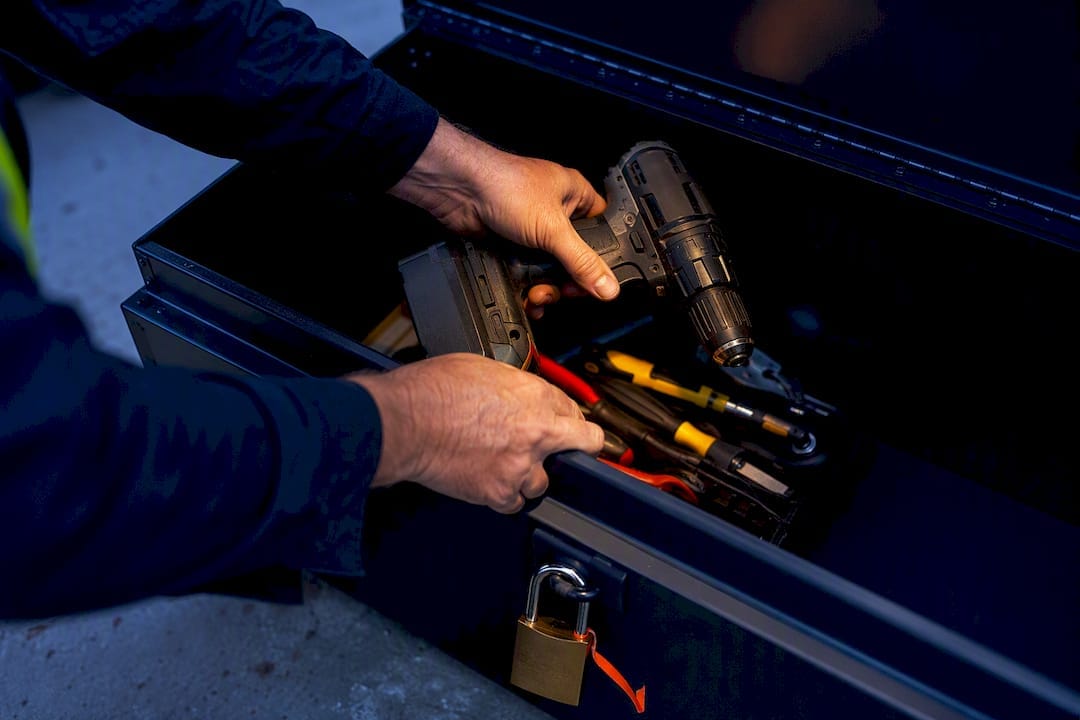
- Lock it down overnight. Reinforced containers or fixed toolboxes beat exposed-shackle padlocks every time.
- Mark and photograph everything. Engraved ID plus a photo record makes stolen gear harder to sell and easier to return.
- Light the storage zone. Motion-activated lighting aimed at containers, not the whole yard.
- Fit GPS to plant and high-value kit. Anything over your set dollar threshold gets a tracker.
- Build a reporting culture. Workers who feel ownership over gear report gaps faster than any camera does.
The quick wins here cost almost nothing: check-in sheets, an engraving pen, and a torch-lit walk of the compound before you lock the gate.
How common is tool theft, and what patterns drive the losses?
Tool theft in Australia isn’t a rare inconvenience. It’s a running cost most builders absorb without ever putting a number on it.
In Victoria alone, a large number of hand and power tools worth millions were stolen in the year to 30 June 2025, according to MapTrack’s Australian Equipment Loss & Downtime Index. Queensland tells a similarly grim story: police recorded more than 25,000 tools stolen in 2024–25, but only a small percentage ever made it back to their owners.
That low recovery rate is the real problem. Once a tool leaves the site, the odds of seeing it again are poor, which is exactly why prevention has to happen before the theft, not after it.
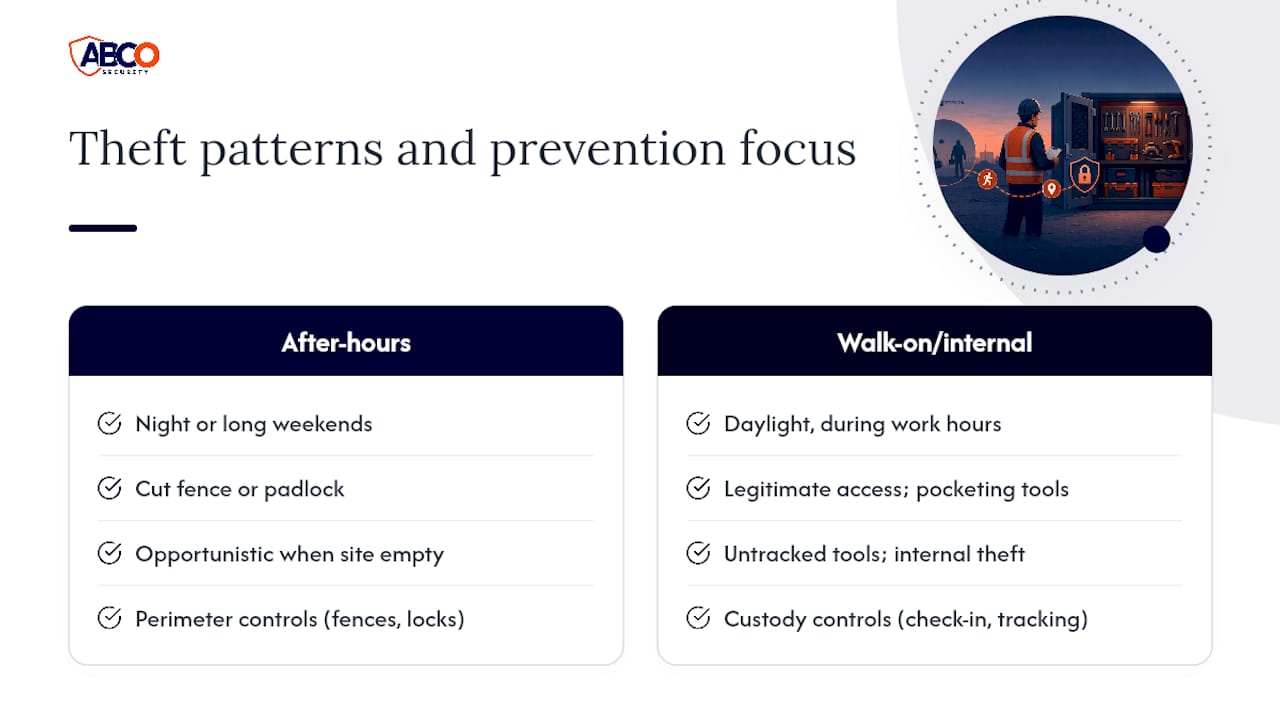
Two distinct patterns drive most losses. After-hours break-ins are opportunistic: a thief cuts a fence or a padlock overnight or over a long weekend when the site sits empty. Walk-on and internal theft happen in daylight, often during work hours, when someone with legitimate access to the site simply pockets a tool or walks off with a drill nobody’s tracking. Industry reporting suggests this second category, internal and walk-on theft, accounts for a substantial share of total losses, which is why custody controls matter as much as fences.
Physical security controls that actually slow thieves down
Physical measures won’t stop a determined thief, but they buy time, and time is what turns a theft attempt into a failed one.
Start at the boundary. A well-maintained perimeter fence, a single controlled gate, and a sign-in procedure for every visitor and delivery driver removes the easiest access points. Sites with open, unmonitored entries are the ones that show up repeatedly in loss reports.
Lighting matters more than most managers assume. Floodlighting the whole yard is expensive and often pointless, since a well-lit site just gives a thief better visibility to work by. Motion-activated lights aimed specifically at storage containers and gang boxes are more effective and cheaper to run.
Storage is where the real decisions get made:
- Use reinforced shipping containers or purpose-built site boxes rather than trailers with flimsy doors.
- Bolt or chain smaller toolboxes to a fixed structure so they can’t just be lifted onto a ute.
- Choose puck locks over standard exposed-shackle padlocks. A shackle sitting in the open gives an angle grinder or bolt cutter something to bite into; a puck lock’s shielded design doesn’t.
- Keep spare keys off-site or in a coded lockbox, never left in a site office drawer.
CCTV and alarms sit last on this list deliberately. A camera that nobody watches and an alarm that nobody responds to are theatre, not security. If you install either, pair it with a monitored response, whether that’s your own night crew or a contracted patrol.
Pro Tip: Test your lock choice by asking your site foreman to try cutting through it with the tools already on site. If it takes more than 30 seconds, you’ve made the right call.
How to mark and record tools so police can return them
Marking is the cheapest theft deterrent available, and it’s also the step most sites skip because it feels tedious rather than urgent.
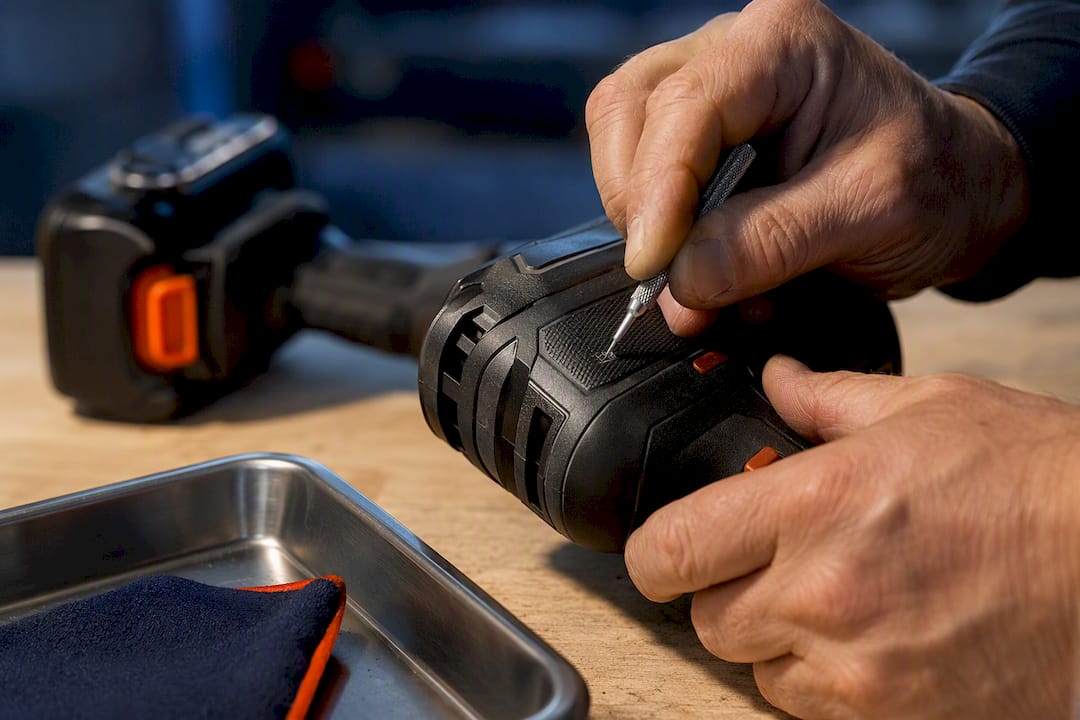
Police guidance is consistent on this: marking tools and keeping photographic records makes recovered items harder to resell and dramatically easier for officers to match back to an owner. An engraved serial number or a stamped ABN on the housing of a drill turns an anonymous power tool into evidence.
Build your inventory around three things:
- Permanent identification. Engrave or forensically mark the tool body, not just a sticker that peels off in a week.
- Full records per item. Serial number, purchase receipt, and at least two photos, including one of any unique marking or damage.
- Backed-up storage. Keep the register somewhere that survives a site office fire or a stolen laptop, not a folder on a single desktop.
A searchable cloud-based asset register does more than tidy your paperwork. When a theft happens, you can hand police a complete, timestamped list within minutes instead of trying to reconstruct what was on site from memory. Insurers move faster too, because a documented asset register with photos and receipts removes the guesswork from a claim.
Digital check-in/out systems that stop internal theft
Custody controls are the single biggest lever most sites underuse. A per-item assignment model, where each tool is scanned out to a named worker and scanned back in, addresses internal and walk-on theft in a way that fences and cameras simply can’t, because the problem often isn’t someone breaking in. It’s someone already inside walking out.
QR or barcode tagging is cheap to roll out. A sticker on each tool, a phone-based scanning app, and a shared spreadsheet or low-cost inventory tool is enough to start; you don’t need enterprise software on day one.
- Morning check-out. Worker scans the tool to their name before it leaves the container.
- End-of-shift check-in. Same tool gets scanned back before anyone clocks off.
- Daily reconciliation. Site supervisor reviews any tool still checked out at close.
- Weekly audit. Cross-check the physical inventory against the digital log.
- Monthly deep audit. Full stocktake against purchase records, with discrepancies escalated to management.
Discrepancies need a real consequence, not just a note in a diary. A tool that’s unaccounted for at the daily check should trigger a call to the last worker who scanned it out, that same day, while memory is fresh.
Pro Tip: Assign one person, not a rotating roster, to own the check-in log. Shared responsibility for an audit trail usually means nobody actually owns it.
When does GPS tracking make sense for construction equipment?
GPS tracking earns its cost on plant and high-value gear, not on every hand tool in the container. Set a clear dollar threshold, commonly plant and equipment worth several thousand dollars or more, and fit trackers above that line rather than trying to tag every impact driver on site.
- Geofence alerts fire the moment a tracked asset leaves a defined boundary outside work hours, giving you a head start most theft victims never get.
- Paired with 24/7 monitoring, an alert can trigger a rapid-response call to police within minutes rather than hours.
- Equipment owners who maintain GPS tracking data resolve insurance claims 40 to 60% faster than those without it, according to MapTrack’s loss and downtime research.
Trackers aren’t magic. Batteries die, units get found and removed, and no independent national figure confirms exactly how much tracking reduces plant theft overall, so treat vendor recovery claims with some caution. Insurers still want the same evidence a claim always needs: serials, photos, and a documented incident timeline. GPS data supplements that case; it doesn’t replace it.
Building a site culture where tool loss has consequences
Controls only work if the people using them buy in. A policy nobody reads and an induction nobody remembers won’t stop theft, no matter how good the hardware is.
Your policy needs a handful of clear elements:
- Who’s responsible for each tool once it’s checked out.
- The exact steps for reporting a missing item, including who to call and how fast.
- Real consequences for repeated loss, distinct from genuine wear and tear or accidental damage.
- Clear rules on personal tools brought on site, so nobody’s gear gets tangled up with the company register.
Induction day is where this sticks or doesn’t. Walk every new worker through the check-in system, show them where the marking is on a sample tool, and explain who to contact if something’s missing before their first shift ends.
Framing the system as protection, not surveillance, changes how workers respond to it. A scanned tool assigned to a named worker also protects that worker from being blamed for someone else’s loss, and peer accountability tends to follow once that point lands.
What to do immediately after tools are stolen from site
Speed matters here. The faster you act, the better your odds with both police and your insurer.
- Secure the scene. Don’t let anyone move gear or clean up until you’ve documented what’s there.
- Pull your records. Serial numbers, photos, and purchase receipts for every missing item, straight from your asset register.
- Check any trackers. If tracked plant is involved, confirm the last known location before it’s lost to a dead battery.
- Call 000 if theft is in progress, otherwise file a stolen-property report with your local police as soon as possible.
- Notify your insurer with the police reference number and full documentation attached.
Police and insurers both move faster with digital records in hand. A check-in log showing exactly when a tool was last scanned, combined with GPS history where it exists, turns a vague loss report into a documented timeline, and that shortens claim processing considerably. Insurers increasingly reward sites that can demonstrate proactive prevention, sometimes reflected in better premium terms at renewal, because a site with marking, custody controls, and tracking is a measurably lower risk to underwrite.
A 30/90/180-day plan to roll out theft prevention
Spreading the work over six months keeps it affordable and stops any one week from being swallowed by setup.
- First 30 days: Engrave and photograph every tool, install motion lighting on storage areas, and start end-of-day check sheets.
- Next 90 days: Roll out a QR or barcode check-in system, upgrade to reinforced containers and puck locks, and run induction training on the new process.
- By 180 days: Fit GPS to plant and equipment above your value threshold, install monitored CCTV where warranted, and review contract options for ongoing patrols.
Track ROI through simple markers: fewer unexplained tool gaps at weekly audits, faster insurance claim turnaround, and, where relevant, a better premium at renewal. Those three numbers tell you whether the investment is paying off.
When it’s time to bring in a specialist
DIY controls handle most of the load, but sites running multiple crews, high-value plant, or a history of losses hit a ceiling fast. That’s when a managed approach, licensed patrols, monitored alarms, and integrated access control, starts paying for itself in fewer delays and faster insurer relationships. Sites that combine internal custody discipline with professional monitoring recover more and lose less. Review your setup against a proper site security assessment before deciding what’s missing.
— Abco
Get a construction site security assessment
A practical next step once you’ve maxed out what marking, lighting, and check-in sheets can do on their own is to layer in licensed mobile patrols, monitored CCTV, and access control that runs whether your site supervisor is there or not, backed by certified processes built over many years in the industry.
Reliable connectivity underpins any digital check-in system, and partners offering telecom solutions built for tradies can help keep scanning and reporting workflows running smoothly across a large site. If you’re weighing up reinforced storage fittings, engineering resources like those covering southern Tasmania’s engineering firms are worth a look for custom container modifications.
If your site is carrying real exposure on plant and hand tools, get a proper read on where the gaps sit. Check out ABCO’s construction site security technology guide and request a site assessment to see exactly where monitoring and access control would close your biggest risks.
Sources
- Secure your tools | Your safety
- Tradies urged to lock up their livelihood as tool thefts surge across Queensland | myPolice QLD
- Australian Equipment Loss & Downtime Index 2026 | MapTrack
FAQ
How do you mark your tools so they don’t get stolen?
Engrave a permanent identifier, such as your ABN or business name, directly onto the tool body, and photograph each item alongside its serial number for your records. Police guidance treats this as one of the most effective deterrents because marked tools are harder to resell and easier for officers to return.
What should you do if your tools get stolen?
Secure the scene, pull your serial numbers and photos from your asset register, check any GPS trackers for a last known location, and file a police report immediately with that documentation attached. Notify your insurer straight after with the police reference number, since digital records speed up claim resolution considerably.
What happens if tools are stolen from a construction site during work hours?
Walk-on theft during work hours is common and often involves someone with legitimate site access, which is why per-item custody through a check-in/out system matters as much as perimeter fencing. Report it the same way as an after-hours break-in: police report, full documentation, and an insurance claim backed by your records.
Is GPS tracking worth it for construction tools?
GPS tracking is worth fitting to plant and equipment above a set value threshold, generally several thousand dollars or more, rather than every hand tool on site. It won’t guarantee recovery, but paired with monitoring it can resolve insurance claims 40 to 60% faster than relying on records alone.
Recommended
about
avada factory
Sempery ultricies nibh at dolor cras urna eleifend nec. Atiam efficitur tempor.