The most effective way to stop copper theft is a combined approach: physical hardening, monitored surveillance and simple operational controls, implemented together rather than one at a time. Each measure alone deters an opportunist; stacked together, they deny access, kill anonymity and strip the resale value out of whatever gets taken. Any incident still needs reporting through the right channel, whether that’s Triple Zero for an active break-in or Crime Stoppers for a tip that doesn’t need a lights-and-sirens response.
TL;DR:
- Effective copper theft prevention requires a combination of physical barriers, surveillance, operational controls, and community reporting mechanisms.
- Fencing, locks, concealment tactics, and secure storage are fundamental for reducing opportunistic theft on construction sites and critical infrastructure.
- Temporary CCTV, monitored alarms, and proper lighting significantly deter theft and improve response times during active build phases.
- Timing deliveries, marking property, and daily site checks limit opportunities for thieves and make stolen copper harder to sell.
- Collaboration with law enforcement and recyclers through signage, transaction checks, and community campaigns enhances the disruption of resale channels.
Table of Contents
- Priority checklist: quick actions to implement this week
- Physical hardening: fencing, locks and concealment tactics
- Electronic deterrents: lighting, alarms and CCTV options
- Operational controls: logistics, marking, records and daily checks
- Reporting, regulation and community action to disrupt resale channels
- Abco Security’s perspective on getting this right
- How Abco Security can help you lock this down
- Where to find the official guidance
- Sources
- FAQ
Priority checklist: quick actions to implement this week
Copper wire theft prevention isn’t complicated. It’s a matter of sequencing. Do the cheap, fast things first, then layer on anything that needs a booking or a contractor.
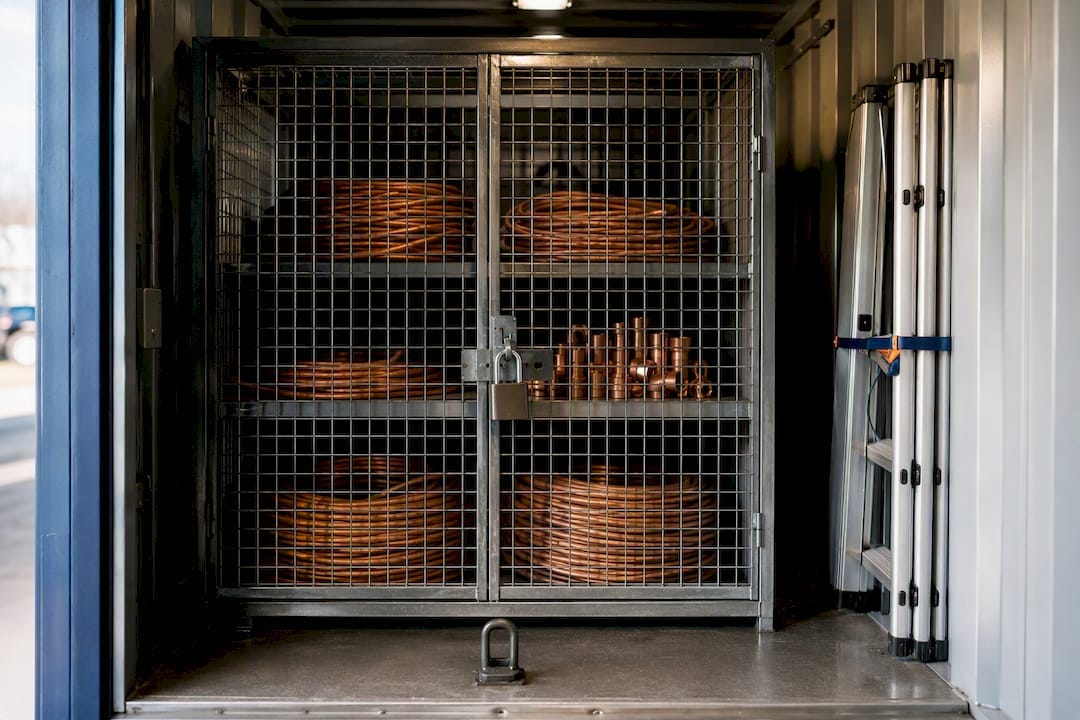
- Secure storage first. Lock cable drums, switchboard components and spare fittings in a container or caged area overnight, not on open pallets.
- Schedule deliveries just before they’re needed. Copper sitting on-site for a week is copper someone’s had time to plan around.
- Hire temporary CCTV or a mobile surveillance unit for the exposed weeks between fit-out and handover.
- Add security lighting to bin areas, switch rooms and site perimeters.
- Upgrade fencing so there are no gaps, no adjacent climb aids, and a proper chain and lock at every gate.
- Fit tamper-proof fasteners on anything portable, like isolator covers and meter boxes.
- Mark stock with a unique identifier or property marking so it’s traceable if it turns up at a scrap yard.
A small residential renovation might only need better locks and a motion light. A hospital plant room or a substation upgrade needs monitored alarms, patrols and a documented risk assessment, because the copper volume and the consequences of losing power are on a different scale entirely.
Statistic callout: Local police guidance flags fencing, temporary lighting, hired CCTV, scheduled deliveries, secure storage and inventory tracking as the primary theft-prevention measures for construction sites, precisely because sites without them are the ones getting hit repeatedly.
Physical hardening: fencing, locks and concealment tactics
Fencing is where most sites fail, and it’s the cheapest fix available. A site security checklist built for Australian sites calls for properly fixed signage, fencing with no gaps, a chain and lock at every gate, removal of climb aids like stacked pallets or skip bins near the perimeter, and scheduled checks to catch damage before it becomes an entry point. None of that needs a specialist. It needs someone walking the boundary with a checklist.
Storage matters as much as the fence line. Copper cabling, fittings and switchgear should sit in a locked container or a caged compound, anchored so it can’t just be dragged out through a cut gap. Ladders, cutting tools and anything that helps someone climb or cut should come off-site or into the container at knock-off, not left leaning against a wall.
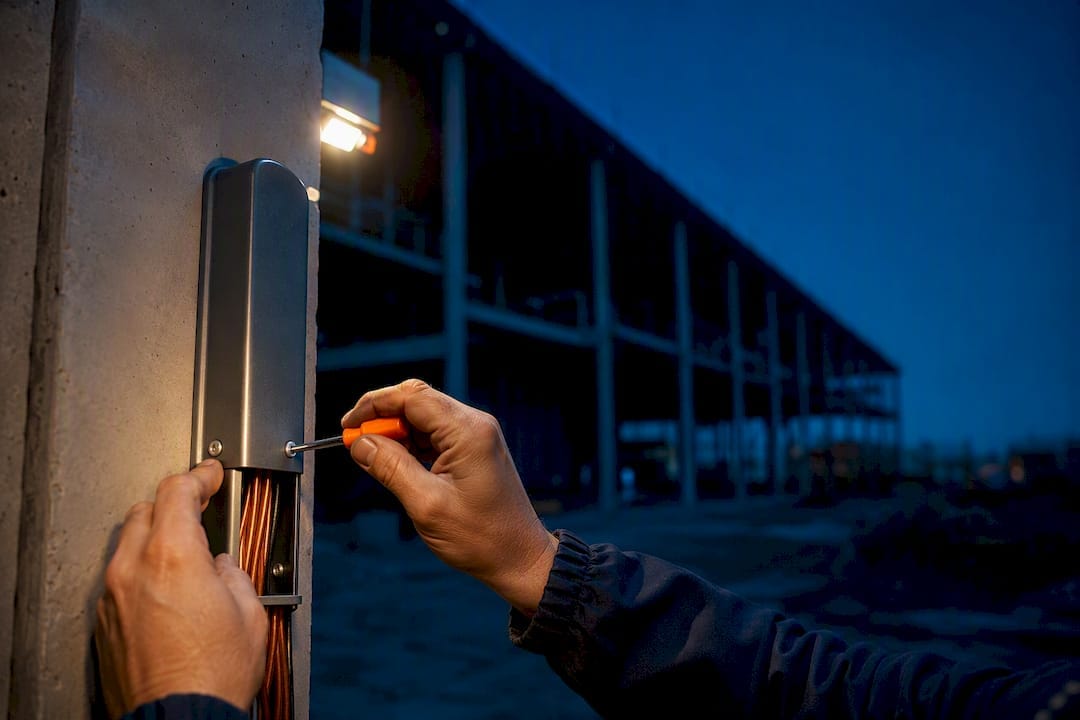
Concealment is the underrated third layer. Painting exposed copper pipe to look like less valuable material, boxing in exterior cabling, and fitting tamper-resistant screws on covers all buy time. None of it is foolproof, and a determined thief with the right tool still gets through. But most copper theft is opportunistic, and opportunists move on when something looks like work.
Electronic deterrents: lighting, alarms and CCTV options
Light removes the cover a thief relies on. Motion-activated flood lighting on switch rooms, compound gates and any area where copper is stockpiled does two jobs at once: it discourages someone from lingering, and it gives any camera nearby a usable image instead of a dark blur.
Temporary and mobile surveillance units are worth the hire cost on active builds, particularly in the weeks when copper volume on-site peaks. A monitored feed, watched in real time by a control room, beats an unattended camera that only gets checked after something’s gone missing, because it turns detection into an actual response instead of evidence for later. Short-term hire of temporary CCTV and lighting is often the fastest, most cost-effective fix for sites with high copper turnover, especially when it’s paired with monitored feeds or scheduled patrols.
- Fixed CCTV suits a permanent facility with ongoing risk.
- Mobile trailer units suit a construction site that moves through phases.
- Monitored alarms wired to a control room beat a standalone siren that nobody’s around to hear.
Pro Tip: Combine a monitored alarm with a mobile patrol response clause in your security contract. An alarm that just makes noise buys you nothing if there’s no one positioned to act on it within minutes.
Operational controls: logistics, marking, records and daily checks
The single biggest lever most facility managers ignore is timing. Copper theft prevention is as much a logistics problem as a security one, and every day of copper sitting unused on-site is a day of unnecessary exposure.
- Order just-in-time. Stage deliveries close to install date instead of stockpiling weeks ahead.
- Mark every reel and box. Photograph deliveries, log serial or batch numbers, and record what’s been installed versus what’s still in storage.
- Run a daily checklist. A five-minute walk-through at the start and end of each shift catches a cut fence or a forced lock before it becomes a bigger loss.
- Control key access. Limit who can open compounds and switch rooms, and log it.
- Brief the crew. Tell subcontractors what’s missing and what to watch for; most theft tips come from someone on-site who noticed something off.
The Australian Institute of Criminology points to property marking and efficient delivery scheduling, combined with information sharing, as measures that make stolen copper genuinely harder to sell.
Reporting, regulation and community action to disrupt resale channels
If a theft is happening now, or you catch someone on-site, call Triple Zero (000). For anything after the fact, suspicious activity, or a tip you’d rather give without your name attached, Crime Stoppers QLD is the anonymous channel, and it’s the one most people underuse.
Copper theft isn’t just a site problem. Councils and police increasingly run joint campaigns, and AIC research shows multi-agency work with recyclers, including transaction recording and standardised checks at the point of sale, has cut theft rapidly in some jurisdictions. Signage warning of marked stock and active reporting also protects shared infrastructure like sports field lighting towers, a target Crime Stoppers has flagged directly.
Abco Security’s perspective on getting this right
Copper theft prevention fails most often not from a lack of equipment, but from inconsistent follow-through. A site with a good fence and no daily checklist is still a soft target. That’s the gap Abcosecurity has spent over 15 years closing, running risk assessments, monitored CCTV and patrols against standards like ISO 9001, because a documented process outlasts any single guard or camera.
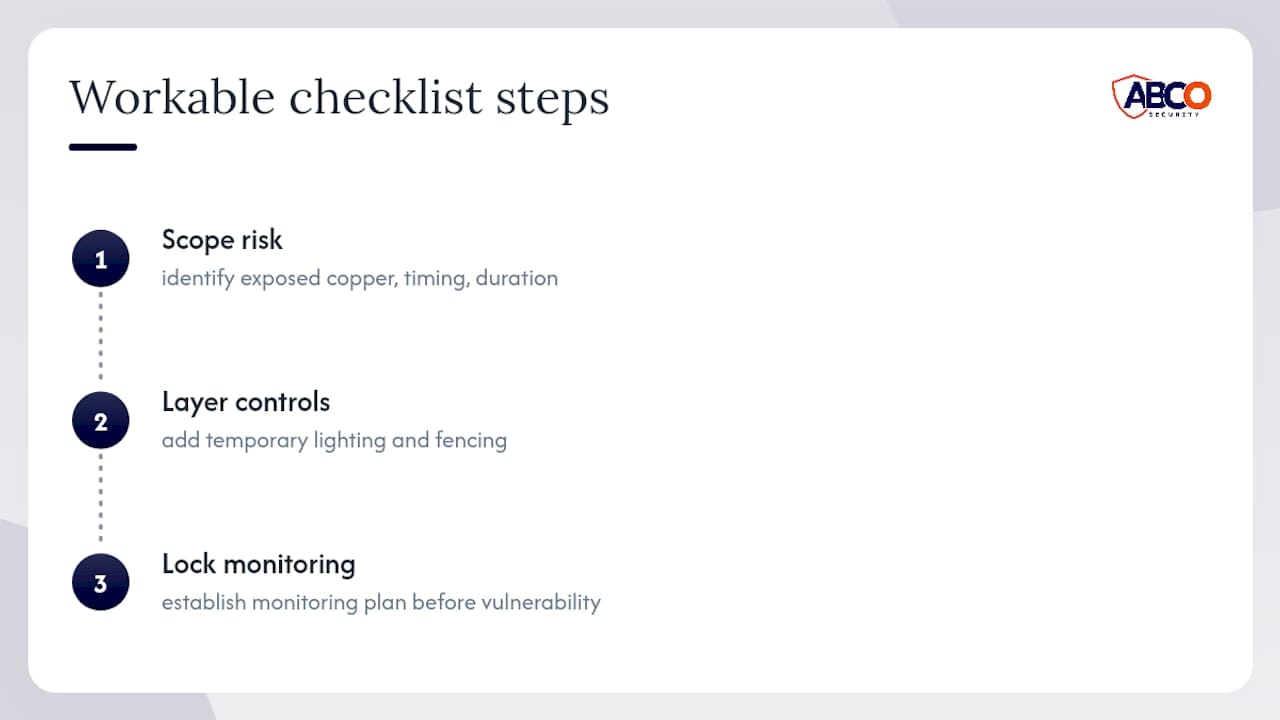
A workable checklist starts with scoping the actual risk (what copper is exposed, when, and for how long), layering short-term controls like temporary lighting and fencing, then locking in a monitoring plan before the vulnerable phase begins. For a site with high copper turnover or critical infrastructure exposure, a managed security provider is usually more cost-effective than piecing together rented equipment yourself.
— Abco
How Abco Security can help you lock this down
Getting fencing, lighting and a monitored camera feed coordinated across a live site takes more logistics than most facility teams have spare hours for, which is exactly where a managed provider earns its cost back. A security company can run a site risk assessment, deploy temporary or mobile cameras, and put monitored alarms and patrol response behind them, all coordinated as one plan instead of separate rented pieces.

Before you request a quote, have your site layout, current copper storage volumes and delivery schedule ready. It speeds up the scoping call considerably. If you’re weighing up options for an active build, the construction site security technology guide walks through camera and alarm integration in more depth, and the construction site security management guide covers how a full site security plan comes together. Get in touch with a security provider for a scoping call and a written risk assessment tailored to your site’s actual exposure.
Where to find the official guidance
For fact sheets and reporting tools, check NSW Police’s copper theft resources, Crime Stoppers QLD’s campaign page, and the AIC’s scrap metal theft research.
Sources
- Copper Theft Campaign • Crime Stoppers QLD
- Preventing thefts from construction sites – Bayside
- Strategies for preventing scrap metal theft | Australian Institute of Criminology
- Site security checklist (SafeWork NSW)
FAQ
Where do thieves usually steal copper from?
Construction sites, switch rooms, air conditioning units, substations and community infrastructure like sports field lighting towers are the most common targets, largely because copper there is exposed, unmarked and often unattended overnight.
Why is copper theft such a serious problem?
Beyond the value of the metal itself, a single theft can knock out power, halt a build for days and cost far more in repairs and downtime than the copper was ever worth, which is why police and councils treat it as a priority issue.
What happens to stolen copper after it’s taken?
It’s typically stripped of identifying marks and sold quickly to scrap metal buyers, which is why property marking and stricter recycler transaction checks, recommended by the Australian Institute of Criminology, make it harder to convert into cash.
Should I call the police or Crime Stoppers?
Call Triple Zero (000) for an incident in progress or an emergency; use Crime Stoppers for anonymous tips about suspicious activity or past theft where there’s no immediate danger.
Is hiring a security provider worth it for a small site?
For a short-term or low-volume site, basic lighting and secure storage may be enough; for sites with ongoing copper exposure or critical infrastructure, a managed security provider typically costs less than the losses and downtime a single theft causes.
Recommended
about
avada factory
Sempery ultricies nibh at dolor cras urna eleifend nec. Atiam efficitur tempor.