The fastest way to stop diesel theft is to combine tank-level sensors, tamper-resistant locks, targeted surveillance and simple operational controls into one system rather than relying on any single fix. NSW Police and NSW DPIRD recommend exactly this layered strategy, and Independent industry experience backs it up. Get the quick fixes in place this week, then build outward from there.
TL;DR:
- Locking all valves and caps, recording daily fuel levels, and installing motion-activated lighting provide immediate, low-cost deterrents and evidence collection within 72 hours.
- Pairing ultrasonic or float sensors with alert systems ensures rapid notification of unauthorized level drops, with calibration and power source stability critical for reliable monitoring.
- Reinforcing tanks with anti-siphon devices, lockable caps, and industrial-grade hardware significantly reduces the risk of theft at the physical level.
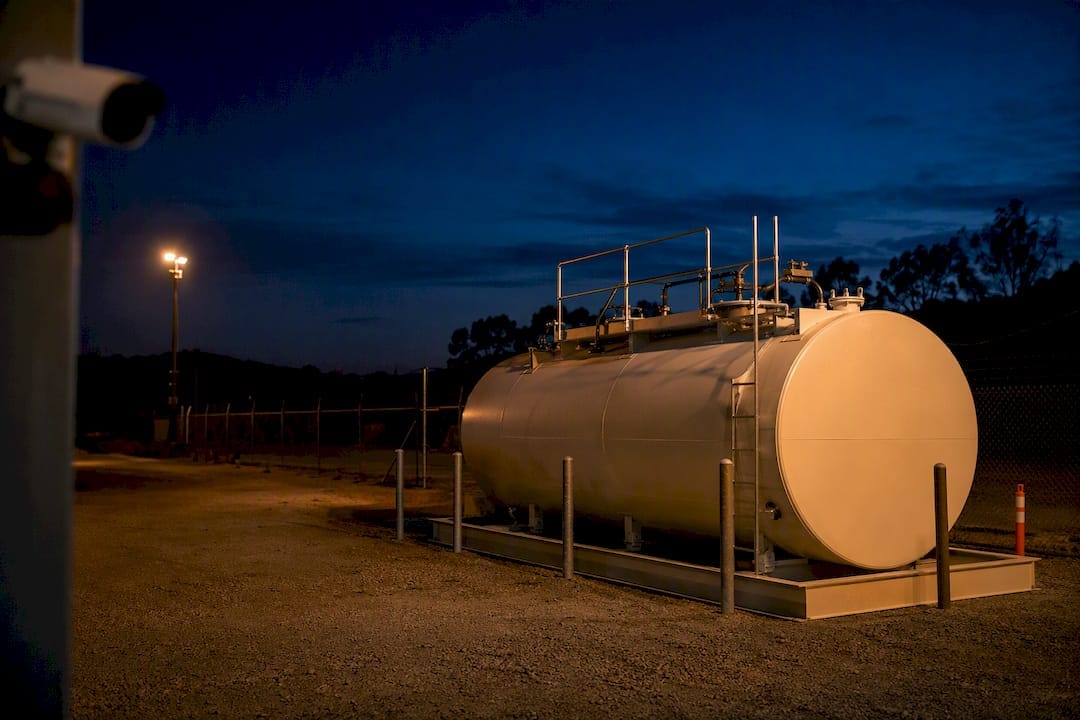
- Surveillance should focus on approach routes and perimeter access points, combining cameras, motion lighting, and entry sensors for active alerts during theft attempts.
- Operational controls such as scheduled dips, fuel flow reconciliation, and strict fuel-card management help detect internal theft and fraud more effectively than physical security measures alone.
Table of Contents
- Quick action checklist: immediate, low-cost steps for the next 72 hours
- Fuel level sensors and real-time monitoring: which types and why they matter
- Physical barriers and tamper-resistant hardware to stop siphoning
- Surveillance and perimeter detection: cameras, lighting and gate sensors
- Operational controls that catch theft and fraud: dipping, flow meters and fuel-card hygiene
- Protecting remote and mobile assets: GPS trackers, portable cameras and alarms
- Implementation checklist and cost considerations for a phased rollout
- Employee training and awareness programs to prevent internal theft
- Legal and insurance considerations related to diesel theft prevention
- Regular maintenance and inspection schedules to detect and prevent leaks or unauthorised fuel removal
- What we’ve seen work across comparable sites
- How ABCO Security can help: services and next steps
- Sources
- FAQ
Quick action checklist: immediate, low-cost steps for the next 72 hours
Before you buy anything, lock down what you already have. Most fuel theft happens because a tank sat unlocked and unwatched, not because a thief defeated sophisticated hardware.
Start with these steps today:
- Lock every tank valve and fuel cap you can, and check bowsers and machinery tanks too, not just the main storage.
- Dip your tanks now and record the reading with a date and time, then repeat daily so any drop shows up fast.
- Set up a temporary camera, even a phone on a tripod, aimed at the access route to your tank rather than the tank itself.
- Add motion lighting to any dark approach path, since a lit route deters casual opportunists more than a dark one with a lock.
- Pull your last three months of fuel-card statements and receipts together in one folder, so anomalies are easy to spot.
Every reading, photo and receipt you collect now becomes evidence later. NSW DPIRD points out that police need timestamped records to link thefts across properties, and a scrappy phone photo with a date on it is worth more than a vague memory of “the tank seemed lower.”
Fuel level sensors and real-time monitoring: which types and why they matter
Sensors turn a guess into a record. Ultrasonic sensors measure the distance to the fuel surface and work well in most tank shapes, float sensors are cheaper and suit simple diesel bowsers, pressure sensors handle tanks with irregular geometry, and in-tank probes give the most granular reading for large bulk storage. Which one you need depends on tank size and how often you need a reading.
The real value is in the alert logic, not the sensor itself. A well-set system flags a sudden level drop, a fill or drawdown outside normal hours, or a level crossing below a set threshold, and pushes that alert to a phone in seconds. NSW DPIRD notes that a timestamped log turns an isolated complaint into a pattern police can act on, which matters when a thief is working several properties in the same district.
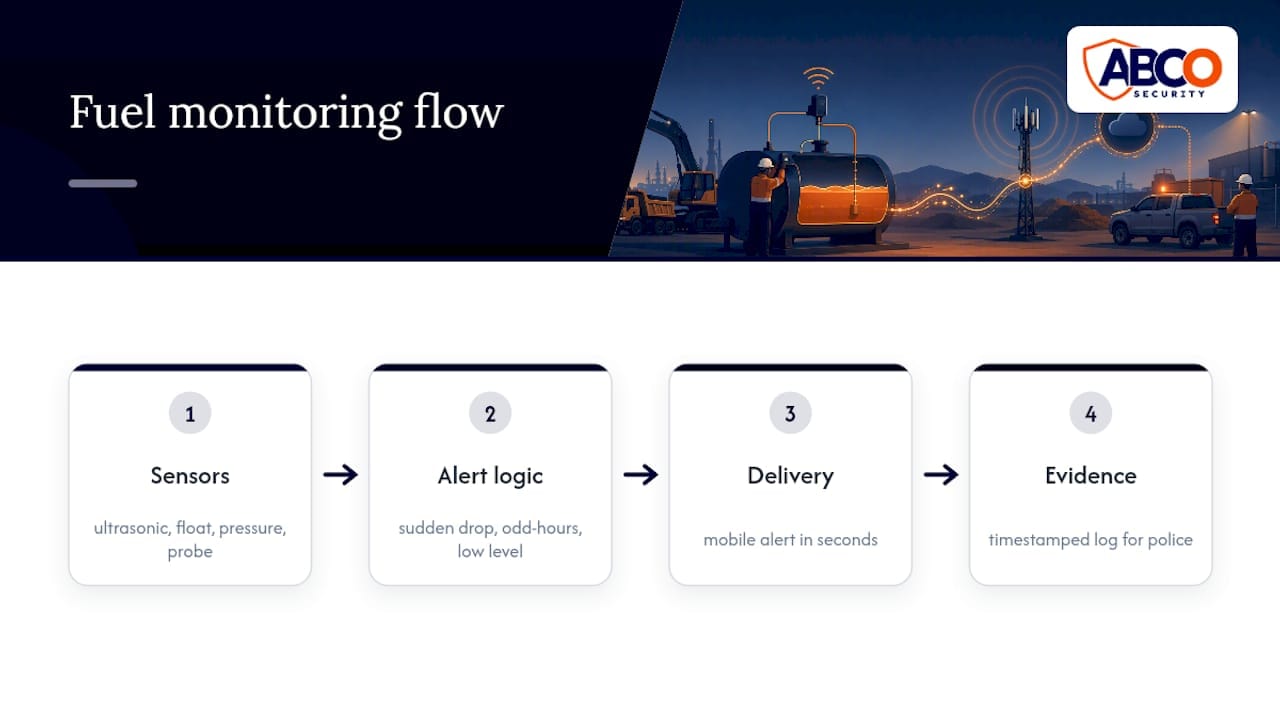
Installation needs a stable power source (solar works for most remote tanks), reliable mobile signal for the alert to reach you, and a calibration check after fitting so the readings match what you measure with a dipstick.
Pro Tip: Pair a level sensor with a flow meter on bulk tanks so you can reconcile “fuel that left the tank” against “fuel that went into a vehicle” and catch the gap between the two.
Physical barriers and tamper-resistant hardware to stop siphoning
A sensor tells you theft happened. Hardware is what stops it happening in the first place, and it doesn’t need to be complicated to work.
- Fit anti-siphon baffles or internal mesh screens inside the tank neck, which block a hose or pump without slowing down a legitimate refuel.
- Choose lockable caps and sender-unit covers rated for the tank or bowser you’re protecting, since standard caps on heavy machinery are often the weakest point on the whole rig.
- Match your lock to the asset: a hardened cable lock or valve lock for a mid-size tank, a full steel enclosure for a bulk storage tank holding thousands of litres.
South Australia Police guidance is blunt on this point: a cheap padlock is often no better than no lock at all, and a hardened cable lock or industrial enclosure sized to the value of the fuel it protects is the better spend, as covered in their fuel security guidance.
Surveillance and perimeter detection: cameras, lighting and gate sensors
A camera pointed only at the tank captures a thief’s back, not their face or their vehicle. NSW DPIRD recommends framing the approach route and, where possible, the number plate, because that’s the footage police can actually act on.
For remote sites without mains power, solar or battery cameras are the practical option, and recording to both a local card and the cloud means you still have footage if the camera itself is tampered with or stolen. Our guide to CCTV placement that meets AS 4806 covers the specifics for facility and security managers setting this up properly.
- Aim cameras at gates, driveways and the tank’s approach path, not just the fuel outlet.
- Combine motion lighting with the camera so any movement at night is lit and recorded, not just recorded in the dark.
- Add a gate or entry sensor that triggers an alert the moment someone opens a gate outside expected hours.
Together, these three elements turn a passive camera into an active alert system, which is the difference between reviewing footage after the fact and getting a warning while the theft is still happening. Our remote video monitoring guide walks through provider selection if you’re weighing up a monitored option.
Operational controls that catch theft and fraud: dipping, flow meters and fuel-card hygiene
Hardware and cameras stop outsiders. Process controls are what catch the harder problem: someone with legitimate access taking more than their share. The Crime and Corruption Commission (Queensland) frames this as an operational fix, not a physical one, and its 2026 fuel-fraud guide sets out the same three-part discipline that works on any fleet or farm.
- Dip tanks daily, or at a frequency matched to risk, and use a flow meter on any bulk tank so drawdown volumes reconcile against vehicle usage.
- Tie every fuel card to a specific vehicle, check the odometer reading against litres purchased, and set a transaction limit that flags anything unusual.
- Run random audits alongside your scheduled ones, and when a number doesn’t add up, pull the sensor log and camera footage for that window before assuming the worst.
The CCC’s own guidance is worth noting here: tightening administrative process, not just adding locks, is often what actually uncovers internal misuse.
Protecting remote and mobile assets: GPS trackers, portable cameras and alarms
Bowsers, fuel trailers and machinery left on a remote site or moved between jobs need a different approach to a fixed tank, because the asset itself can walk.
GPS trackers with geofencing alert you the moment a bowser or trailer moves outside its expected boundary, which is often the first sign of theft rather than the fuel loss itself. Portable solar cameras and battery-powered alarms extend coverage to sites with no power at all, and Bluetooth or RFID padlocks log every access event with a timestamp, which gives you the same audit trail a fixed sensor provides.

Mount trackers out of easy reach and where possible out of sight, since a visible tracker is often removed before it triggers anything useful. If a tracked asset does move unexpectedly, treat the alert as active in progress and contact police immediately rather than waiting to confirm the loss yourself.
Implementation checklist and cost considerations for a phased rollout
You don’t need to buy everything at once. A staged rollout protects the highest-value assets first and lets each layer pay for itself before you add the next.
- Fix the free and cheap items immediately: locks, dipping records and basic lighting, all covered in the 72-hour checklist above.
- Add sensors and cameras to your highest-risk tanks within the first month, prioritising remote sites with no natural surveillance.
- Build out perimeter fencing, gate sensors and access control over the following quarter as budget allows.
Weigh the cost of each layer against the value of the fuel it protects rather than against an arbitrary budget cap: a tank holding several thousand litres of diesel justifies a meaningfully larger spend on hardware than a single machinery tank does. After installation, check that sensor alerts actually reach a phone, that camera footage is reviewable, and that dipstick readings match sensor readings within a reasonable margin. Our security risk assessment checklist is a useful starting point for working out which site needs which layer first.
Employee training and awareness programs to prevent internal theft
Technology catches outsiders faster than it catches people who already have legitimate access to your fuel, which is why training matters as much as any sensor. Staff who understand what triggers an alert, why dipping matters, and how fuel-card limits work are far less likely to test the system, and far more likely to notice something wrong themselves.
Cover the basics in an induction and repeat them at toolbox talks: every fuel-card transaction is checked against the vehicle and odometer, every tank is dipped on a schedule, and every access point is on camera. Make clear that this applies to everyone, not just new hires, since a program that only targets junior staff tends to breed resentment rather than compliance.
Give staff a simple way to report something odd, whether that’s a fuel-card receipt that doesn’t match a fill or a gate left open, without it feeling like an accusation. The CCC (Queensland) guidance treats tighter controls as a fraud deterrent in their own right: staff who know a transaction will be checked are less likely to test the boundaries, and a program built around that expectation tends to hold up better than one built around suspicion.
Review the program annually and update it whenever you add new equipment, sensors or fuel-card rules, so the training reflects what’s actually in place on site rather than a policy written once and forgotten.
Legal and insurance considerations related to diesel theft prevention
Report every theft, even a small one. Police guidance across states, including Victoria Police’s farm security advice, is consistent on this point: consistent reporting builds the pattern that lets investigators link incidents across properties, and a single unreported loss can be the missing piece in an active investigation elsewhere.
Insurance is the other half of this. Most policies covering fuel or plant assets expect reasonable security measures to be in place, and a claim following a theft with no lock, no record and no footage is a harder claim to support than one backed by a dipstick log, a sensor alert timestamp and camera footage of the vehicle involved. Check your policy wording for any specific security requirements tied to fuel storage, since some insurers set minimum standards for locks or monitoring as a condition of cover.
Keep dipping records, sensor logs, camera footage and any police report number together for each incident. That bundle is what an insurer and an investigator both need, and assembling it after the fact is far harder than keeping it current from day one. If your site holds fuel above the thresholds that trigger storage or handling obligations in your state, check those requirements alongside your theft prevention plan rather than treating them as separate issues.
Regular maintenance and inspection schedules to detect and prevent leaks or unauthorised fuel removal
A leak looks identical to theft on a dipstick reading, which is why maintenance and security checks belong in the same routine rather than two separate ones. Schedule tank, valve and hose inspections at least monthly, and more often for tanks in exposed or high-use locations, checking for corrosion, loose fittings and any sign of tampering around the cap or valve.
Test sensors and cameras on the same schedule. A level sensor giving a false reading or a camera with a dead battery is a gap you won’t notice until you need the footage, so build the check into your existing maintenance round rather than treating it as a separate task. South Australia Police guidance recommends positioning tanks within sight of occupied buildings where the site layout allows it, which also makes visual inspection part of daily routine rather than a scheduled event.
Cross-check dipstick readings against sensor data at each inspection. A small, consistent gap between the two often points to a slow leak rather than theft, and catching that early saves both fuel and the cost of remediation. A gap that only appears overnight or during unattended hours points the other way, and that’s exactly the pattern the alert logic covered earlier in this article is built to catch.
What we’ve seen work across comparable sites
The sites that get on top of diesel theft fastest follow the same sequence: assess the site properly before buying anything, layer in sensors and cameras rather than picking one, and pair that hardware with a monitored response rather than a camera nobody watches. Skipping the assessment step is the most common mistake, since it leads to spending on hardware that doesn’t match the actual weak point.
Three numbers worth tracking after any rollout: time-to-alert from a level drop to a phone notification, the proportion of incidents your sensors catch versus ones found by chance during a manual dip, and the trend in unexplained fuel variance month to month. If that variance isn’t trending down within a couple of months, the layer that’s missing is usually the operational one, not the hardware.
**
How ABCO Security can help: services and next steps
Getting sensors, cameras and locks right is only half the job. The other half is having someone actually watching the alerts and able to respond when one fires, which is where a lot of self-installed systems fall short.

Security providers specializing in integrated solutions can build response layers around existing hardware.
- A site assessment to identify your highest-risk tanks, access points and blind spots before you spend on anything else.
- A1 CCTV & Alarm Monitoring that watches your sensor and camera feeds around the clock, not just during business hours.
- Mobile Patrol Services for remote depots and construction sites where a physical check between patrols catches what a camera alone might miss.
Some security providers work to ISO 9001 and ISO 30000 standards and have significant experience in integrated security across construction, industrial, and remote sites. If diesel theft is an ongoing cost on your site, get in touch through the Night Owl Service plans to talk through a site assessment and what a monitored response would look like for you.
Sources
- Rural Crime Prevention | Fuel Theft — NSW DPIRD
- Minimising fuel fraud in the public sector (April 2026) — CCC Queensland
- Fuel security — South Australia Police
- Farm chemical security and safety | Crime prevention | Victoria Police
FAQ
What is the best anti-theft device for a diesel tank?
There’s no single best device: the strongest protection combines a lockable, anti-siphon cap with a level sensor that alerts on sudden drops. Police guidance from South Australia Police recommends locking anything that can be locked and pairing that with sensor lighting and CCTV rather than relying on hardware alone.
How much fuel can you legally store at home?
Storage limits depend on your state’s dangerous goods or fuel storage regulations and the type of container used, so there’s no single national figure. Check your state’s relevant authority or your local fire and emergency service before increasing your on-site diesel storage.
How long will diesel fuel last once stored?
Diesel typically stays usable for a significant period in a sealed, well-maintained tank, though contamination, water ingress or algae growth can shorten that considerably. Regular inspection and dipping, covered earlier in this article, will catch degradation before it affects equipment.
What is the best lockable fuel cap?
The best lockable cap is one rated for your specific tank or bowser fitting, with a hardened locking mechanism rather than a light-duty consumer lock. South Australia Police guidance notes that a budget padlock is often barely better than none at all, so match the lock’s strength to the value of the fuel it protects.
Recommended
about
avada factory
Sempery ultricies nibh at dolor cras urna eleifend nec. Atiam efficitur tempor.