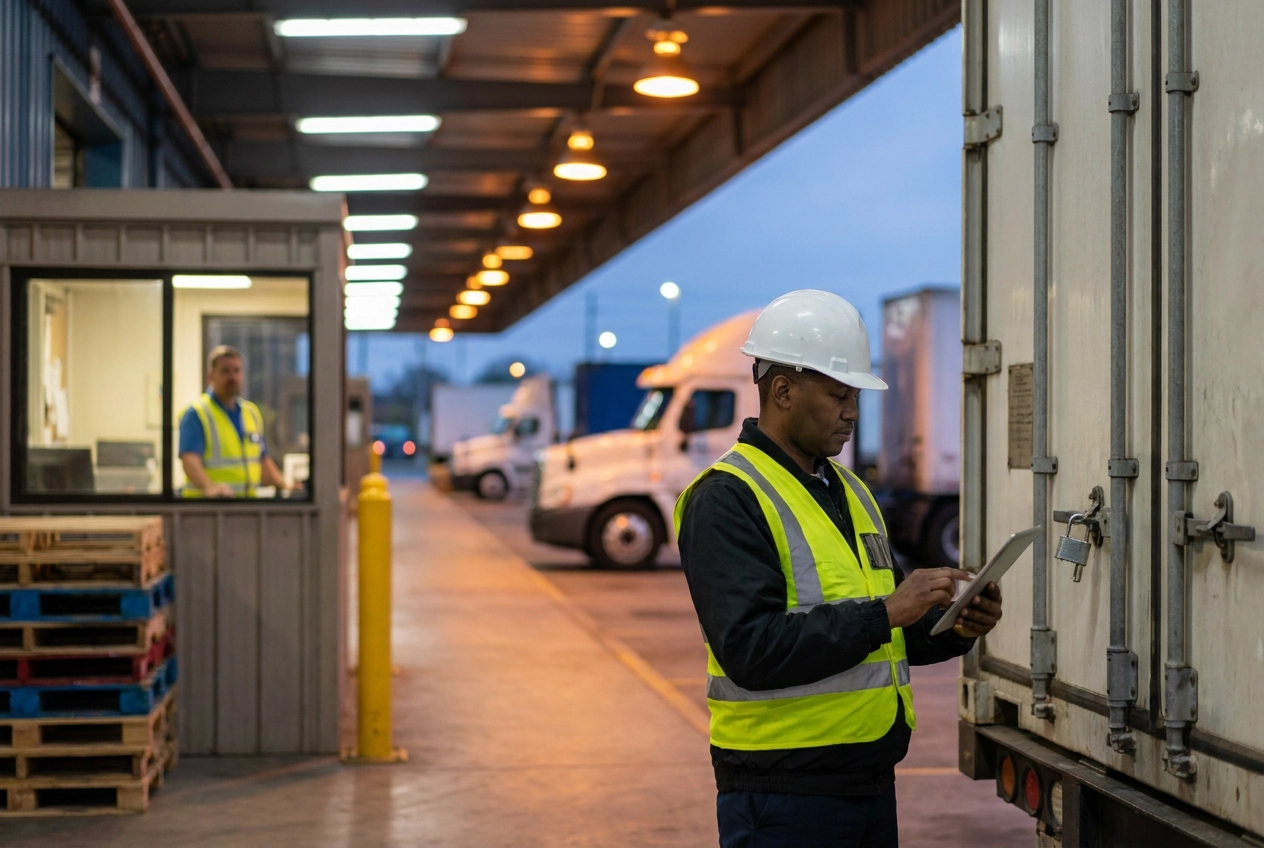
Dock doors and dispatch windows are where warehouse theft starts. The two-hour dispatch window concentrates loss because paperwork, trailer access, and shift change collide at the outbound dock.
Most warehouse security reviews start with fences and camera coverage. In my experience, that focus misses the daily window where inventory actually disappears. Cargo theft is not evenly spread around a site. It clusters at the outbound dock during loading, especially when dispatch supervision is thin and trailer seals are treated as a formality. Reporting through 2025 and 2026 shows thieves targeting bigger paydays, which makes that window more valuable.
This analysis covers The Two-Hour Window Nobody Watches and why the loss lands in that window. It explains why more cameras over racking rarely move the number, then details the three controls that actually shift it: dispatch supervision, trailer seal discipline, and professional security guard presence during loading. I have found that operators who tighten those controls get clearer reductions than those who buy more hardware. CCTV and alarm monitoring still matter, but they support the process rather than replace it. You will also get a pro tip, the costliest pitfall, and FAQs.
The Two-Hour Window Nobody Watches
Warehouse theft doesn’t happen evenly around a site. It concentrates at the outbound dock in the two hours around dispatch, where paperwork, trailer access and shift change overlap.
The three controls this piece defends: dispatch supervision, trailer seal discipline, and guard presence during loading. This is a practitioner’s read, not a single dataset. Cameras over racking record loss after the trailer clears the gate, so they rarely move the number; a recording and a control are different things. The dock is the last point where a correction costs you a conversation, the same reason strata concierge security covers every access point. Once sealed and rolling, it’s an insurance claim and a police report.
Why the Loss Lands in That Window
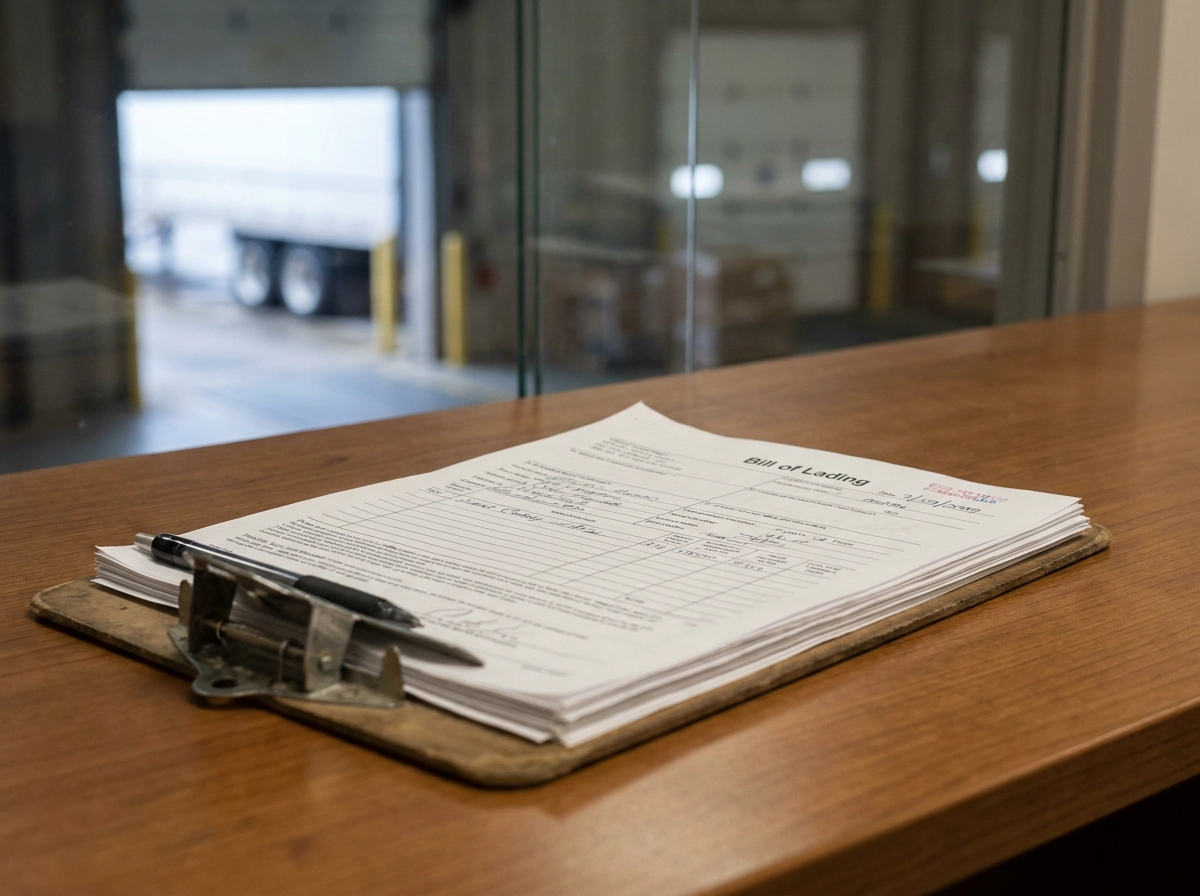
Trace the door sequence: pick slip, load build, door open, trailer in, goods loaded, seal applied, paperwork signed, trailer released. Loss lives between those steps.
Paperwork lag is the quiet one: loads are recorded after they leave, so a short pallet surfaces at count unattached to a door or trailer.
Trailer access is the cheapest opportunity on site: open door, backed-in trailer, hi-vis and a clipboard. The easiest way to look like you belong.
Shift change resets accountability. A load counted on one shift and signed off on another has no owner. The same gap sits behind our construction site security guard shift handover protocols.
Your loss figure is a floor, not a ceiling: cargo crime is chronically under-reported.
Why More Cameras Over Racking Rarely Move the Number
Coverage is not control. A camera documents a pallet leaving the yard; it does nothing to stop it. CCTV coverage rarely changes that. Footage over racking is reviewed after stock count, days after the trailer left, when the departure can’t be tied to a person, trailer or seal number.
Land Line’s 2026 review found 2025 incident volumes flat, with thieves targeting higher-value loads. Fewer, bigger hits are what passive camera review spots worst. Academic review: systemic, not isolated. Systemic problems don’t get solved by observing the same unguarded process more.
In my experience, sites that cut shrinkage didn’t buy more lenses. They named one person on the door for the loading window and gave them authority to hold a trailer.
The Three Controls That Actually Shift the Number

Rank controls by the value of one outbound trailer load, not by cost. A single high-value load usually pays for a season of dock supervision.
| Control | Targets | Cost | Effect on loss |
|---|---|---|---|
| Dispatch supervision | Decision point | Low | High |
| Trailer seal discipline | Chain of custody | Low | High |
| Guard presence during loading | Unattended window | Medium | High |
| Extra cameras over racking | Evidence only | Medium-high | Low |
TAPA’s Facility, Trucking and Guarding Security Requirements are the recognised language for these controls, and they matter when logistics partners audit you. Prefer controls that leave a record: a supervisor’s initials, a seal number, a door-open timestamp. Those turn suspicion into a claim that stands up. See what operational controls actually reduce opportunity.
Disclosure: ABCO Security Services sells static guarding and mobile patrols in Melbourne, so read the next section with that on the table.
1. Dispatch Supervision
One person owns the door for the loading window. Not the team, not whoever is closest. Unassigned responsibility is where every dock loss I’ve investigated started.
Run the release check before the seal: match load to paperwork while the trailer is open, so a discrepancy is fixable at the dock. Sign the load plan at build; signing at release confirms a count you never saw.
The supervisor needs authority to hold a trailer without a phone call up the chain. Otherwise, the control is theoretical.
Log door-open and door-close times per trailer. I would trade a dozen camera angles for that column; variation points straight at the shift to examine. Field notes from commissioning access-controlled doors cover the hardware.
2. Trailer Seal Discipline
Record the seal number at application, photograph it, and match it against the receiver’s paperwork. If those numbers never meet, the seal is decorative. Keep seals in one controlled location under one accountable holder, issued and logged; a box in a site office drawer is stock, not a control. Check integrity on arrival as well as departure; a broken or mismatched seal needs a same-shift written report while trailer and driver are still in the yard. Use high-security bolt seals on high-value loads as a written standard. If drivers apply their own, get the number before departure; chasing it later means calling a third party with no reason to help. The documentation discipline behind diesel theft prevention applies here.
3. Guard Presence During the Loading Window
Seal discipline only holds if someone owns the door. A guard at the dock is presence plus process check: matching paperwork to load, confirming seal numbers, controlling access through an open door. Target peak-value cover. Two hours around dispatch on high-volume days beats twelve hours of diffuse standing. Use static security guards matched to the load schedule, not the shift roster. Add overnight mobile patrols checking dock doors, trailer yard and gate lines; most dock losses are set up by day and collected after hours. Integrating technology with manned security guarding supports this. Guards do not replace supervision. They stop the door going unattended when the supervisor is pulled away. We sell static guarding and mobile patrols in Melbourne, so weigh that reasoning, not a pitch.
Pro Tip and the Pitfall That Costs the Most

Before spending anything, run a two-week dock log: door open/close times, seal number, supervisor initials, trailer ID. Compare it to your next stock count; the gap names the door and shift to fix first. Fix one door on one shift before any site-wide rollout. A control that survives two weeks on your worst door survives the rollout; one that doesn’t was never a control.
The costliest mistake is buying extra dock cameras while leaving the loading window unsupervised. A clearer recording of the same loss, less budget to fix it. Practical lessons from the field start at the door, not the lens.
Worse: seal discipline treated as the driver’s job. It belongs to whoever releases the trailer.
FAQs
What time of day does warehouse theft happen most?
In my experience it concentrates in the loading and dispatch window, and in the shift handover immediately after.
Do more cameras reduce warehouse theft?
No, not on their own. They produce evidence after the load has left the yard and rarely change the loss number.
What is trailer seal discipline?
Controlled issue, recorded numbers, photographed application, and a match check at both ends of the journey.
Can one guard at the dock really reduce loss?
It closes the unattended window, which is where the opportunity sits. No control is a guarantee.
Conclusion
Theft at the dock rarely starts with a broken lock. It starts with an unwatched dispatch window, weak seal control, and no supervisor at the trailer. Cameras document the loss; they do not close the gap. The fix is operational: run the two-week dock log, own the seal from release to receipt, and put a guard on the loading window before expanding site-wide.
If your next stock count still points to one door and one shift, stop guessing. Book a warehouse security guard assessment and test one control for two weeks. Start with your worst door, not your full site. A control that survives there is worth rolling out everywhere.
about
avada factory
Sempery ultricies nibh at dolor cras urna eleifend nec. Atiam efficitur tempor.