When a high-profile corporate executive becomes the target of a credible threat, most businesses discover their existing security measures fall dangerously short. It is a reality that many Melbourne organisations only confront when it is already too late to prepare properly.
The demand for executive security solutions has grown significantly across Melbourne’s corporate landscape, driven by rising incidents of corporate espionage, targeted harassment, and physical threats against senior leadership. Yet despite this growing need, many businesses still rely on outdated protocols or generic security arrangements that fail to address the specific vulnerabilities executives face daily.
This analysis cuts through the noise to examine what genuinely effective executive protection looks like for Melbourne businesses in the current environment. You will learn how to assess your organisation’s actual threat exposure, understand the core components that separate professional executive security from basic guarding services, and identify the practical steps required to build a protection framework that works in real-world conditions. Whether you are reviewing existing arrangements or building a security strategy from the ground up, this breakdown will give you the clarity to make informed decisions.
What Executive Security Solutions Actually Means
Executive security solutions is an integrated service category covering close protection, corporate guarding, mobile patrols, and technology-driven monitoring for senior personnel and high-value business assets. It is not a single product, a single vendor, or any one branded company.
Worth clarifying upfront: searches for this term surface a mix of category content and listings for specific entities, including “Executive Security Solutions Pty Ltd” on business directories like ZoomInfo. If you arrived here looking for that company specifically, this article covers the broader service category that any credible provider in this space should be delivering.
The category has moved well beyond physical headcount. AI-driven threat detection, cloud-based CCTV monitoring, and integrated platforms are now baseline expectations at the executive level, not premium add-ons. According to Executive Protection Trends in 2025, 73% of large public companies now maintain dedicated executive security programs, with 76% using third-party vendors to deliver them. Median corporate security spend hit USD $95,000 in 2024, a 120% rise in three years.
For Melbourne operators, the numbers make investment non-negotiable. Australia’s security solutions market is valued at USD $6,762.5 million in 2025 and is growing at 8.4% CAGR through 2030, ahead of the global benchmark of 7.2%. Integrated platforms combining mobile patrol services with technology-driven monitoring are cited as a primary growth driver for that period.
In my experience, most corporate buyers arrive with a headcount in mind, not a threat model. That gap is precisely where incidents happen.
Who Actually Buys Executive Security in Melbourne
The buyers contracting executive security in Melbourne are not small business owners shopping on price. They sit inside ASX-listed companies, mid-tier law firms, financial services institutions, corporate real estate groups, and construction companies running multi-million dollar infrastructure projects across the CBD and outer metro corridors. These are organisations with genuine threat exposure, reputational stakes, and internal accountability structures that make security procurement a formal, considered process.
The decision rarely lands with a single person. Corporate operations managers typically own the vendor relationship, but HR directors often initiate the brief when a personnel threat has been identified. C-suite executive assistants are more involved than most providers expect; they frequently coordinate close protection logistics for senior leadership attending high-profile events or travelling between sites. For corporate security arrangements in Melbourne, that coordination layer matters because gaps between principals tend to appear at handoff points, not during stationary coverage.
Buyers at this level carry intermediate knowledge. They know that uniformed security guards and CCTV systems exist. What they are actually evaluating is whether a provider can deliver integrated coverage across physical guarding, access control, and real-time monitoring as a coherent system, not a collection of standalone services. This is a different procurement conversation from basic compliance tick-boxing.
Melbourne’s CBD amplifies this complexity. High-density corporate precincts, buildings adjacent to government facilities, active major infrastructure projects, and a packed calendar of high-profile events layer threat scenarios that generic national providers frequently underestimate. The geographic spread from the CBD to growth corridors like Truganina and Werribee also creates mobile response gaps that need deliberate coverage planning through mobile patrol services.
Most people overlook the response capability gap entirely. Buyers invest in visible deterrence, guards in uniform and cameras on walls, but underinvest in the patrol and rapid-response infrastructure that actually resolves incidents after they occur. Visible deterrence prevents opportunistic threats. Structured mobile patrol coverage and 24/7 monitored response handle everything else.
The Core Components of a Credible Executive Security Program
A credible executive security program is not a single service. It is five interdependent layers operating as one system.
Most single-service providers will never tell you this, because their business model depends on you not knowing it.
The Five Pillars
1. Close Protection and Corporate Security Guards Trained protection officers do more than stand at a door. They conduct advance threat identification, risk neutralisation, and proactive emergency response. I’ve found that organisations underestimate this distinction until an incident forces a review. Corporate security guards operating at this level require scenario training well beyond standard licensing, covering both static assignments and dynamic movement protection.
2. Concierge Security for Reception and Access Control Every credible program deploys controlled access at all entry points: card credentials, barrier systems, and visitor logging as minimum standards. A recent case study on executive protection failures confirmed that the absence of a staffed entrance and visitor log directly enabled a high-profile breach, one that CCTV footage documented but could not prevent.
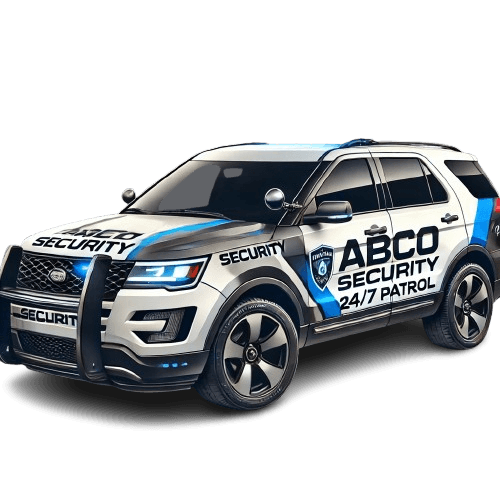
3. Mobile Patrols for Multi-Site and After-Hours Coverage Static guards cover defined positions. Mobile patrol coverage closes the gaps across multiple sites, parking structures, perimeter zones, and hours when fixed posts are unstaffed. This layer is consistently the first cut when organisations try to reduce security spend, and consistently the gap exploited first.
4. Electronic Security: CCTV and Alarm Monitoring Cameras with Pan/Tilt/Zoom capability monitored 24/7 from a centralised operations centre, integrated with intrusion alarm systems, form the intelligence backbone of any serious program. Without human response coordination attached to that monitoring, footage becomes evidence rather than prevention.
5. Real-Time Incident Response Coordination A senior executive can move through 14 engagements in a single day. Static protocols fail in dynamic environments. Effective incident response requires live threat intelligence feeding directly into physical deployment decisions, not post-incident reporting.
Why Removing One Layer Breaks the System
Each pillar compensates for the blind spots of the others. Electronic monitoring detects; guards respond; patrols cover perimeter and off-hours; concierge controls access; coordination ties the response together. Pull any single layer out and you create a gap that a motivated threat actor will find. Most people overlook this because they evaluate each service in isolation rather than mapping threat scenarios across the full program.
The Security Industry Association’s Security Megatrends report identifies converged physical-digital security as the dominant structural shift heading into the late 2020s. This is not a forward-looking concept; it is the operational baseline for 2026.
Single-Service Provider vs. Integrated Program
| Dimension | Single-Service Provider | Integrated Executive Security Program |
|---|---|---|
| Coverage Hours | Defined shift hours only | 24/7 across all layers |
| Response Capability | Reactive, siloed to one function | Coordinated, cross-layer real-time response |
| Technology Integration | Standalone (e.g., CCTV only) | CCTV, alarms, access control, and digital threat feeds unified |
| Licensing Compliance | Single-discipline licensing | Multi-discipline licensing across all service categories |
| Scalability | Limited to contracted scope | Scalable across sites, travel, and events |
Pro Tip: When evaluating any security provider, ask them to map each of their services against the five pillars above and identify explicitly which gaps they do not cover. If they cannot answer that question directly, they are not operating at executive security program level.
How Technology Is Reshaping Executive-Level Protection in 2026
Smart surveillance and managed service models have moved from aspirational to operational. According to top security technology trends tracked for 2026, AI-powered analytics, cloud-managed monitoring, and managed security service contracts now define what enterprise clients expect from a professional program, not what they pay extra for.
AI-driven threat detection has crossed the baseline threshold. Real-time behavioural analytics, anomaly detection, and automated alerts are standard contract expectations in 2026. Modern systems classify loitering, perimeter breaches, and crowd formation without requiring a human operator watching every feed. The latest generation of AI surveillance, trained on billions of data points, has substantially reduced false positive rates while improving genuine threat identification. For executive clients, this directly supports internal governance requirements: automated incident logs, timestamped audit trails, and remote reporting are native outputs rather than manual add-ons.
Cloud-based CCTV infrastructure reinforces this. Current security technology overviews confirm that organisations still running local DVR or NVR hardware are operating systems that are functionally limited and increasingly non-compliant with governance expectations. Executive clients expect 24/7 visibility from any authorised device, with footage stored securely off-site and accessible for incident review on demand.
I’ve found that the most effective executive programs use technology to extend the reach of guards, not replace them. Mobile patrol officers responding to real-time alerts cover three times the ground of static posts. Technology without trained personnel to act on it is just footage. Personnel without real-time intelligence are reactive rather than preventive.
ABCO’s electronic security services and CCTV and alarm monitoring are built on exactly this integration model, connecting technology infrastructure directly to physical response capability across Melbourne operations.
Pro Tip: When reviewing an executive security proposal, ask specifically whether AI analytics feeds directly into the patrol dispatch workflow. If the answer is no, the technology and the personnel are operating as separate silos, and you are paying for both at reduced effectiveness.
Victorian Licensing and Compliance: What to Check Before You Sign
Victoria’s licensing framework has tightened significantly in 2026, and most corporate buyers are not keeping pace with it.
The non-negotiable compliance baseline for Melbourne businesses covers three layers: individual guard licences issued by the Licensing and Regulation Division (LRD) of Victoria Police, corporate Security Business Licences at the provider entity level, and ASIAL membership as a voluntary but meaningful credibility signal beyond statutory minimums. Critically, ASIAL issued an urgent notice confirming that all Victorian security Registrations must transition to full Licences by 19 June 2026. Providers who missed that deadline are legally prohibited from operating until a new application is assessed, a process that can take months. That is not a technicality; it is an operational gap that directly affects your coverage.
Why This Becomes Your Problem, Not Just Theirs
The liability logic is direct. If a provider deploys an unlicensed guard and an incident occurs on your premises, exposure does not sit exclusively with the provider. A client who performed no verification at the engagement stage is in a materially weaker legal position than one who documented active compliance checking. I’ve found that most RFPs at the corporate level skip the licensing verification step entirely, assuming the provider has handled it. That assumption has caused real problems for Melbourne firms that discovered, after an incident, that their contracted personnel were operating under lapsed or transitional registrations. This is why licensing and liability compliance in protective security is increasingly treated as a client-side obligation, not just a provider-side requirement.
National providers operating across five states carry significantly more compliance surface area. Victorian licence requirements, LRD oversight, and the 2026 transition deadline are jurisdiction-specific. A provider managing regulatory portfolios across Melbourne, Sydney, Brisbane, Adelaide, and Perth is balancing five different frameworks simultaneously. Melbourne-specific providers operate within a single regulatory environment and answer directly to Victoria Police’s LRD, which creates accountability that multi-state operators structurally cannot replicate at the same depth.
Pre-Signature Compliance Checklist
Before briefing any provider, run this verification sequence:
- Individual guard licences: Confirm every deployed guard holds a current Victorian licence via the Victoria Police LRD portal
- Corporate Security Business Licence: Verify the entity holds a full licence, not an old-style Registration
- June 2026 transition status: Request proof of transition application lodgement if any doubt exists
- ASIAL membership: Confirm current membership status through the ASIAL member directory directly
- Public liability insurance: Request certificates of currency confirming minimum coverage levels, industry standard sits at $20M for commercial contracts
- Corporate structure: Confirm the entity is registered as a company, sole trader, or partnership via the ASIC register
Pro Tip: Request all compliance documentation before the contract is drafted, not after. Providers who hesitate to produce current licence certificates and insurance certificates of currency at the pre-signature stage are signalling a compliance posture you do not want managing your principal’s safety.
How to Evaluate and Brief an Executive Security Provider
Before you request a single quote, build a threat model. Map your assets, key personnel, access points, and credible risk scenarios first. Headcount comes later.
Step 1: Threat Model Before Proposal
Most organisations skip this and then wonder why their security program feels misaligned. Identify what you’re protecting, who might target it, and through which vectors. Executive security threat evaluations in 2026 now account for digital impersonation, home and event targeting, and reputational risk alongside traditional physical premises. AI-assisted assessment tools are accelerating this process meaningfully; one provider delivered assessments 3x faster and uncovered 25% more threat insights by integrating AI into threat evaluation workflows.
Steps 2 Through 5: What to Demand From Any Provider
Require integrated coverage. Any proposal quoting only static guards or only technology is underspecifying the brief. Physical personnel and monitoring must operate as a single layered system, not parallel services.
Test response times directly. Ask for documented average callout times from mobile patrol teams in your specific Melbourne suburb or precinct. Metro-wide averages are meaningless for operational planning.
Verify the technology stack before signing. Cloud monitoring dashboards, GPS tracking, and real-time incident reporting are baseline requirements, not premium additions. I’ve found that providers who position these as upsells are typically operating on legacy infrastructure.
Confirm 24/7 availability and a named account manager. Executive clients managing incidents through a generic call centre is a structural failure, not an inconvenience. Direct escalation paths and a dedicated contact are non-negotiable at this tier.
Pro Tip: Request a written SLA covering response time commitments and account manager availability before contracts are finalised. If a provider resists putting those terms in writing, treat that as a disqualifying signal.
Common Pitfall to Avoid When Buying Executive Security
The single most expensive mistake I see Melbourne businesses make is buying security by headcount. Two static guards sounds like double the protection. In practice, one trained guard supported by mobile patrol coverage and monitored CCTV delivers broader deterrence, faster incident response, and documented evidence capability that two static guards at a fixed point simply cannot replicate. You are paying more for a narrower perimeter.
The ROI argument is not abstract. According to research on making the business case for executive protection, the cost of a single unmitigated security incident, measured across reputational damage, legal liability, leadership disruption, and brand exposure, routinely exceeds a full year of integrated security investment at the executive level. The question is never whether integrated coverage costs too much. It is whether your business can absorb the alternative.
Most people overlook the provider selection signal hiding in plain sight. Send a credible security firm your three highest-probability risk scenarios and they return a coverage model. Send the same brief to a commodity operator and they return an hourly rate card. That response tells you everything about their actual capability.
Melbourne businesses can work directly with ABCO’s security team to build a threat-modelled brief rather than a headcount-based quote, which is the standard the industry is moving toward.
Frequently Asked Questions
What is included in executive security solutions? Executive security solutions typically include close personal protection, advance venue and route assessment, residential and office perimeter security, monitored CCTV and alarm response, mobile patrol, and emergency response planning. The specific mix is determined by a threat assessment, not a standard package.
How is executive security different from standard business security? Standard business security is site-focused and largely reactive, covering access control, static guards, and alarm response at a fixed location. Executive security is person-focused and proactive. It follows the principal across locations, assesses threats before movement, and integrates multiple service layers into a single managed plan. Per executive protection fundamentals, the risk profile of a named individual differs fundamentally from a fixed asset.
What licences should a Melbourne security provider hold? In Victoria, all security providers and individual operatives must hold a current licence issued under the Private Security Act 2004 (Vic), administered by Victoria Police Licensing and Regulation Division. Licence categories cover specific work types including personal protection and crowd control. Verify current category requirements directly with Victoria Police before signing any contract, as classifications are subject to regulatory update.
How much do executive security solutions cost in Melbourne? Cost depends on threat level, coverage model, hours of operation, and service mix. Integrated models combining a guard, mobile patrol, and monitored CCTV frequently achieve superior outcomes at comparable cost to purely headcount-based deployments. Engage providers on a threat-modelled basis to get accurate scope-based pricing rather than hourly guard rates.
What is the difference between a static guard and mobile patrol for executive protection? A static guard holds a fixed position, providing presence and access control within a defined perimeter. Mobile patrol covers multiple locations or routes on a scheduled or randomised basis, extending deterrence and enabling response across a wider area. Integrating both within a monitored system produces materially better executive-level security outcomes than relying on either in isolation.
Pro Tip: Before you brief any provider, document your three highest-probability risk scenarios. A credible executive security firm will respond to those scenarios with a coverage model. A commodity provider will respond with a rate card.
Conclusion
Effective executive security is not a luxury; it is a strategic necessity for Melbourne businesses operating in today’s complex threat environment. The key takeaways are clear: generic security arrangements consistently fail senior leaders, threat assessment must be ongoing rather than reactive, and professional executive protection requires tailored solutions built around your organisation’s specific vulnerabilities.
Waiting until a credible threat emerges is not a risk worth taking. The cost of inadequate preparation far exceeds the investment in getting protection right from the start.
Now is the time to audit your current security arrangements honestly. Identify the gaps, engage qualified professionals, and build a protection framework that matches the real risks your executives face.
Your leadership team drives your organisation forward. Protecting them is not just good security practice. It is good business.
about
avada factory
Sempery ultricies nibh at dolor cras urna eleifend nec. Atiam efficitur tempor.