

The fastest way to cut false alarms is to check your alarm history, fix the root cause with a licensed technician and put a works-management plan in place. Do this before you spend money on new equipment. AS1851 maintenance compliance and the threat of fire service charges make this urgent, and the checklist and regulatory sections below spell out exactly how to act.
TL;DR:
- Most false alarms are caused by environmental factors like steam, dust, or aerosols, which are often preventable through regular cleaning and ventilation improvements.
- Contractors working near detectors significantly contribute to unwanted activations, but implementing a works-management plan with permits and detector protection can eliminate most of these triggers.
- Upgrading to multi-sensor or heat-only detectors in steam-heavy zones and utilizing alarm delay functions can reduce nuisance trips without compromising real fire detection.
- Maintaining accurate activation records, timely inspections, and documented rectification efforts are crucial for qualifying for fee waivers and avoiding repeated charges.
- Professional monitoring services paired with physical site checks and a proactive management approach outperform hardware upgrades in minimizing false alarms and related costs.
Table of Contents
- What counts as a false or unwanted alarm?
- What causes most false alarms?
- What’s the fastest way to reduce false alarms right now?
- Why is contractor management the single biggest lever?
- Which detector and system upgrades actually cut false alarms?
- What charges and leniency periods apply after a false alarm?
- How does professional monitoring support fewer false alarms?
- Publisher perspective: management beats replacement
- How Abco helps you get ahead of false alarms
- Sources
- FAQ
What counts as a false or unwanted alarm?
Fire services don’t classify an alarm as “false” just because nobody saw smoke. The standard definition used across Australian fire services is an unwanted alarm: a fire brigade attends a property in response to an automatic activation and finds no genuine emergency. That distinction between “device activation” and “attended unwanted alarm” matters more than most owners realise.
A detector can trip and reset itself with nobody ever knowing. It only becomes a chargeable, loggable event once a truck rolls and crews confirm there’s nothing burning. This affects three things directly:
- Liability — repeated attendances at the same address build a pattern fire services track.
- Waiver eligibility — you can only argue for a fee waiver if you can show what caused each attendance and what you did about it.
- Recordkeeping obligations — your maintenance logs and incident register become the evidence that separates a one-off from a systemic problem.
Get the classification wrong in your own head and you’ll underinvest in the fix. Get it right and you know exactly what fire services will ask to see.
What causes most false alarms?
Most unwanted alarms trace back to a small, repeatable set of triggers, and knowing which one applies to your site tells you where to spend your prevention budget.
- Environmental triggers — cooking fumes, burnt toast, steam from showers or kitchens, aerosol sprays, dust from renovations, and insect infestation inside detector housings are the primary non-emergency causes that Fire and Rescue NSW records across commercial and residential sites.
- Operational triggers — contractors cutting, grinding or welding near detectors, cleaners disturbing dust with no notice given, and accidental knocks to manual call points.
- System failures — ageing sensors, poor detector placement near kitchens or bathrooms, and units that have simply drifted out of calibration since their last service.
Poor ventilation makes almost every one of these worse, because it lets smoke, steam and dust linger near a sensor instead of clearing the space.
What’s the fastest way to reduce false alarms right now?
Start with a triage pass, then move into routines you keep running year-round.
Do these immediately:
- Pull your alarm activation history for the last 12 months and look for repeat zones or times.
- Identify and, where safe, temporarily isolate the specific zone or detector causing repeat trips (never disable a whole system without notifying your monitoring provider).
- Book a licensed technician to inspect the flagged detectors within the week, not the month.
Then build these into your calendar:
- Keep AS1851-compliant maintenance on schedule, not just when something trips.
- Clean detector heads on a fixed cycle, especially in kitchens, loading docks and workshops.
- Run a pest control pass through roof spaces and ceiling voids where detectors sit.
- Fix ventilation gaps that trap steam or fumes near sensors.
- Induct new occupants on where detectors are and what sets them off.
Behavioural controls that cost nothing:
- Set a clear smoking and vaping policy, and enforce it near entries and break areas.
- Put signage near sensitive detectors warning tradespeople and cleaners.
- Require contractor induction and a permit-to-work sign-off before any hot work or dust-generating job starts.
Pro Tip: Before you replace a “faulty” detector, check whether it’s actually mislocated. A smoke detector six metres from a commercial fryer will keep failing no matter how new it is.
Why is contractor management the single biggest lever?
Trade-related activations are one of the most preventable categories of unwanted alarm, and they’re also the easiest to fix with a documented plan rather than new hardware. Fire and Rescue NSW’s own guidance treats a works-management plan as the essential control for any site running renovations, fit-outs or maintenance near fire detection.
A working plan needs three elements in sequence:
- Detector protection or isolation — physically shield or temporarily isolate detectors in the work zone before cutting, sanding, welding or spray-painting starts.
- Monitoring notification — call your monitoring centre before isolating anything and again once work finishes, so the isolation window is documented and detectors go back online on schedule.
- Permit-to-work sign-off — no contractor starts dust or heat-generating work without a signed permit confirming the above two steps are done.
Keep every isolation notice, technician report and permit on file. That paper trail is exactly what fire services expect to see if you ever apply for a charge waiver down the track.
Which detector and system upgrades actually cut false alarms?
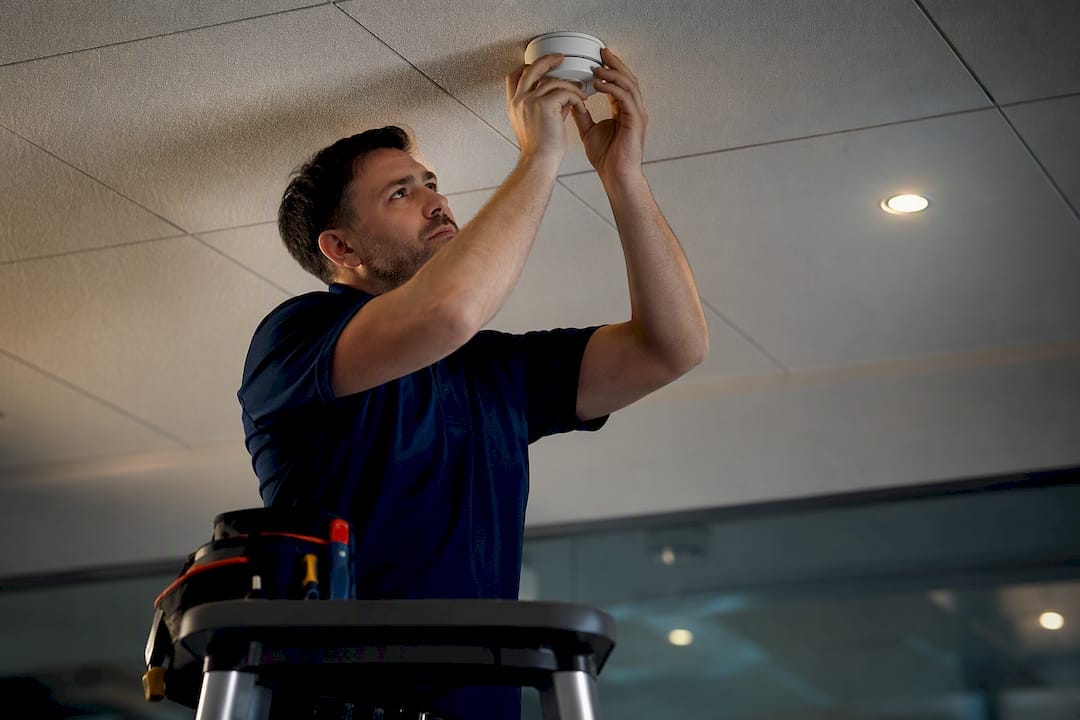
Not every false alarm needs a policy fix. Some need better hardware in the right spot.
Kitchens, bathrooms and loading docks are steam and fume-heavy zones where a standard smoke detector is the wrong tool. Multi-sensor detectors, which combine smoke and heat sensing logic, or heat-only detectors where appropriate, cut nuisance trips without sacrificing real detection. On the panel side, look for:
- Alarm delay and acknowledgement functions, which give staff a short window to investigate and cancel before brigade notification.
- Zoning, so one nuisance-prone area doesn’t trigger a building-wide response.
- Alarm signalling equipment (ASA) features where your monitoring setup supports staged verification.
Queensland’s design guidelines for reducing unwanted alarms recommend running pragmatic cooking and shower simulation tests during commissioning, so detectors are proven against real household or workplace conditions, not just a smoke can in a lab. For anything beyond a straightforward retrofit, bring in a fire engineer rather than guessing at detector placement.
What charges and leniency periods apply after a false alarm?
Charges exist because unwanted alarms carry a real cost. A Western Sydney University study put the annual economic burden of unwanted automatic fire alarms in New South Wales at between $246 million and $349 million, with an average cost per incident of roughly $4,952 to $7,403 once crew time, equipment and disruption are counted.
Fire services frame fees as an accountability measure rather than pure punishment, designed to push owners toward better maintenance and behaviour. NSW applies a 60-day leniency window after a first activation and a 24-hour consolidation window that groups multiple attendances into one charge rather than several.
Waivers typically hinge on:
- Evidence of rectification (technician invoice, replaced part, changed procedure).
- Up-to-date AS1851 maintenance records.
- A documented change in practice, such as a new works-management plan.
After any attendance, gather your logs, invoices and technician reports immediately while the detail is fresh, then lodge a waiver application if you meet the criteria.
How does professional monitoring support fewer false alarms?
A site running on isolated fixes rarely gets ahead of the problem. Licensed technicians catch the placement and calibration issues a general handyman won’t, and a properly configured A1 CCTV & Alarm Monitoring setup gives you a verified activation history instead of guesswork.
Support that actually moves the needle looks like:
- Licensed technicians auditing detector placement against your specific kitchen, workshop or dock layout.
- Monitoring protocols that verify an activation before automatic brigade notification is triggered.
- Mobile patrols able to physically check a site after an after-hours trip, before crews are dispatched unnecessarily.
- Site risk assessments that document your baseline, which becomes waiver evidence later.
Publisher perspective: management beats replacement
Operational discipline, meaning logs and a working works-management plan, prevents more false alarms for less money than swapping out detectors on a hunch. A prompt audit of your activation history is still the most useful thing you can do this week.
— Abco
How Abco helps you get ahead of false alarms
Fixing false alarms usually isn’t a hardware problem first. It’s a management gap, and that’s exactly where a dedicated security partner earns its keep instead of a one-off electrician visit.

Abco Security runs A1 CCTV & Alarm Monitoring built around verified response, so a nuisance trigger gets checked before it becomes a brigade attendance and a fee. Abco pairs that monitoring with mobile patrol services for physical verification and security guarding where a site needs someone on the ground. For sites managing renovations or fit-outs, construction site security services coordinate directly with your works-management plan so isolations, permits and monitoring notifications aren’t left to chance. If your building needs a straightforward after-hours option, the Night Owl Service starts from $5.45 per day. Request a site audit through Abco and get a maintenance and monitoring plan built around your actual activation history, not a generic checklist.
Sources
- The economic cost of unwanted automatic fire alarms (Western Sydney University)
- Automatic fire alarms (Fire and Rescue NSW)
- Fire alarm and building design guidelines for the reduction of unwanted alarms (QFES)
FAQ
How do I reduce false alarms at my property?
Start by reviewing your alarm activation history to spot patterns, then get a licensed technician to inspect the flagged detectors. Follow up with an AS1851 maintenance schedule, better detector placement and a works-management plan for any trade activity near sensors.
What’s the best strategy for cutting false alarm dispatches?
The most reliable strategy pairs operational controls, meaning logs, contractor induction and works-management plans, with targeted hardware fixes like multi-sensor detectors in steam or fume-prone areas. Verified monitoring through a service such as A1 CCTV & Alarm Monitoring also stops nuisance triggers before they reach dispatch.
What is the fine for false alarms in NSW, Australia?
NSW doesn’t publish one flat fine, since charges follow attendance costs and leniency rules rather than a fixed penalty. Fire and Rescue NSW applies a 60-day leniency window after a first activation and a 24-hour consolidation rule that groups repeat attendances into a single charge.
What is the most common cause of false alarms?
Cooking fumes, steam and burnt food are among the most frequently recorded triggers, alongside aerosol sprays, dust and insect infestation inside detector housings, according to Fire and Rescue NSW. Poor ventilation tends to make each of these worse by letting smoke or steam linger near the sensor.
Does Abco help with false alarm reduction?
Yes. Abco combines monitored alarm services, mobile patrols and site risk assessments to verify activations before they escalate to a brigade attendance, and documents the process for any future waiver application.
Recommended
about
avada factory
Sempery ultricies nibh at dolor cras urna eleifend nec. Atiam efficitur tempor.