A gated community security programme only earns its name when six things are in place: a documented access brief, hardened perimeter controls, verified resident and visitor flows, functioning surveillance and lighting, a real maintenance schedule, and privacy governance for whatever data the access system collects. Miss one and the rest is theatre. Providers like Abcosecurity build these elements into a single operational plan rather than treating gates and cameras as separate purchases, and the steps below show property managers and strata committees exactly how to do it.
TL;DR:
- Properly designed access strategies must include a documented risk-led plan that clearly defines who needs entry, their access frequency, and emergency override procedures.
- Separating vehicle and pedestrian flow, using automatic entry credentials for residents, and issuing timed codes for deliveries minimizes congestion and reduces tailgating risks.
- Hardware specifications should prioritize high-duty cycle gates, self-closing mechanisms, and external controls, with routine maintenance and checks to ensure ongoing security.
- CCTV coverage must target key zones like gates, pedestrian entries, and mailrooms, accompanied by regular servicing and optimized lighting to improve footage quality and deterrence.
- Governance should include clear data-handling policies, offering non-biometric options, role-based access logs, and resident notices, in line with privacy laws and best practices.
Table of Contents
- Start with an access brief and risk-led plan
- Design resident, visitor and delivery flows that don’t bottleneck
- Get the perimeter, gates and hardware specification right
- CCTV, lighting and detection: coverage and upkeep
- Governance, privacy and data handling for access systems
- Maintenance, testing and emergency readiness
- CPTED and community measures that cut down on enforcement
- Why a provider-led access brief changes the outcome
- How Abcosecurity helps with access control and gatehouse operations
- Standards and guidance worth keeping on file
- Sources
- FAQ
Start with an access brief and risk-led plan
Every credible gated community security setup begins with a written access brief, not a gate order form. This document names who actually needs to get in (residents, invited visitors, trade contractors, couriers, emergency services), maps when demand peaks, and sets out who holds override authority when the electronic system fails.
Building one is a short exercise, not a consultancy project.
- List every access-seeking group and their typical frequency (daily residents, occasional visitors, weekly bin collection, emergency responders who may never have visited before).
- Score risks by likelihood and consequence — a jammed gate during a fire evacuation scores very differently to a slow visitor queue on a Tuesday morning.
- Map a treatment to each risk, whether that is a second pedestrian gate, a fail-safe release, or a guard rostered at peak times.
- Produce three deliverables: an access matrix (who, when, how), a lane design sketch, and an emergency override plan with a stakeholder list that includes local fire and ambulance services.
ISO 22341 sets out a five-step CPTED process, communication and consultation, scope and context, risk assessment, risk treatment, and recording, that gives this brief the rigour a strata committee can defend if something later goes wrong. Skipping the documentation step is the single most common shortcut committees regret.
Design resident, visitor and delivery flows that don’t bottleneck
Congestion at the gate is usually a design failure, not a traffic problem. Separating vehicle types into distinct lanes solves most of it: a fast resident lane using licence plate recognition or RFID tags, a visitor lane with intercom and video verification, and a dedicated delivery bay with time-limited codes so couriers never need full site access.
- Residents move through automatically via LPR or RFID/mobile credentials, without requiring any manual step.
- Visitors use video intercom plus a pre-authorised PIN or QR code sent by the resident they’re visiting.
- Deliveries get temporary, time-boxed codes issued through a concierge or app workflow, expiring automatically after the drop-off window.
- Pedestrian routes stay physically separate from vehicle lanes so residents on foot never cross a queuing car.
Tailgating, one vehicle following another through an open gate, is a common failure mode in these systems, and it’s a policy problem as much as a technical one. Sensor timing that closes the gate the moment a vehicle clears, monitored closures on CCTV, and simple resident education (wait for the gate to shut, don’t wave the next car through) fix most of it without new hardware. Automated flow design like this, drawing on practical resident and visitor flow patterns, keeps convenience high without opening a security gap.
Pro Tip: Run a two-week tailgating audit before you change anything. Pull CCTV footage from the main gate and count how many vehicles follow another through without presenting their own credential. That number tells you whether you need a policy fix or a hardware one.
Get the perimeter, gates and hardware specification right
Fencing and gates are where a lot of otherwise good security plans quietly fail, usually because the hardware was bought on price rather than duty cycle. A fence that’s too solid can actually hurt security by blocking sightlines into the community, which is why open-style palisade or mesh fencing at appropriate height with anti-climb detailing (no horizontal rails a person can use as a foothold) tends to outperform a high solid wall.
- Specify a gate motor rated for your actual daily cycle count, not the cheapest option, since under-specced motors fail early and generate constant complaints.
- Fit self-closing mechanisms as standard, not an add-on, so a gate left open by one resident doesn’t stay open for the next hour.
- Position locks and control boxes out of reach from outside the fence line to prevent manipulation or forced release.
- Design queue length and driver sightlines so a stopped car at the gate never blocks an ambulance or fire truck behind it, a principle drawn from workplace vehicle-movement safety guidance.
- Add a simple monthly indicator check: does the gate close within its rated time, does the motor labour or strain, and is there visible rust or slack in the chain drive?
CCTV, lighting and detection: coverage and upkeep
Cameras only earn their cost if they’re pointed at the right places and someone actually services them. The non-negotiable locations are the vehicle gate (plate and driver capture), pedestrian entries, garage entrances, and mailrooms, each serving a different evidentiary purpose from identifying a vehicle to catching parcel theft.
- Vehicle gate: wide shot for context, tight shot for plate capture.
- Pedestrian entry: face-level height, angled to avoid backlighting from the street.
- Garage/basement: covering both the vehicle ramp and any pedestrian stair access.
- Mailroom: full-room coverage, since parcel theft complaints are among the most common calls a manager fields.
Victoria Police’s residential security checklist is worth working through line by line during any audit, covering exactly these zones alongside fencing and lighting. Lighting itself matters as much as the camera: motion-triggered lighting deters loitering better than a dim, permanently-on floodlight, because sudden brightness draws attention, while poor lighting anywhere near a camera just produces useless grainy footage regardless of resolution. Build a service schedule around retention periods, firmware updates, and a documented monthly health check. A security system with cameras that nobody maintains is a false sense of coverage, and committees rarely discover the gap until they need footage that was never actually recorded.
Governance, privacy and data handling for access systems
Whoever operates the access control system, the strata committee, the manager, or a contracted provider, is the entity responsible under Australia’s Privacy Act, and APP 11 requires reasonable steps to secure any personal information the system holds, including access logs and biometric templates.
- Identify the responsible entity in writing and confirm who holds APP 11 obligations for the access system.
- Offer a non-biometric alternative to every resident if fingerprint or facial recognition is used, since proportionality and consent are operational requirements, not optional extras.
- Set retention limits and role-based access to logs, so only authorised staff can pull historical data, and record every time someone does.
- Publish clear signage and a short resident notice explaining what’s collected, why, and how long it’s kept.
Maintenance, testing and emergency readiness
A gate that worked perfectly at installation and hasn’t been tested since is a liability, not an asset. Set a cadence and stick to it: weekly visual checks of gates, fencing and lighting; monthly functional tests of motors, sensors and intercom units; and an annual third-party audit against the original access brief.
- Rehearse power loss scenarios, does the gate fail open or fail locked, and does everyone know which?
- Test gate jam procedures with the maintenance contractor’s actual response time, not the SLA on paper.
- Run a joint drill with emergency services at least once, so their crews know the site’s override method before they need it at 2am.
Pro Tip: Ask your gate maintenance contractor for the motor’s rated duty cycle in writing, then log your actual daily cycle count for a month. If you’re running the gate harder than it’s rated for, that’s your early-failure warning, well before the motor actually burns out.
CPTED and community measures that cut down on enforcement
Physical hardware only does half the job. Second-generation CPTED thinking, social cohesion and collective efficacy, holds that a community where residents know and look out for each other reports problems faster and generates less demand for guards and cameras in the first place.
- Set up a resident safety committee that meets quarterly and feeds observations back into the access brief.
- Run short briefings after any incident, factual, not alarmist, so residents aren’t left guessing.
- Create a simple reporting channel (an app, a shared inbox, a noticeboard number) that doesn’t require calling the strata manager directly.
- Activate shared spaces, a used courtyard or walking path is naturally self-surveilled in a way an empty one never is.
Feeding these outputs back into the access brief and reviewing them post-occupancy, using CPTED principles as the framework, turns social measures into something a committee can actually track year on year.
Why a provider-led access brief changes the outcome
Abcosecurity approaches gated community security as one integrated system, engineering, day-to-day operations, and governance, aligned to ISO practice rather than as separate line items a committee buys piecemeal. That integration is what stops a well-specified gate from being undermined by a badly written visitor policy, or a good camera being pointed at the wrong wall for three years before anyone notices. Committees that commission a proper access brief before they buy hardware consistently end up spending less on rework later.
— Abco
How Abcosecurity helps with access control and gatehouse operations
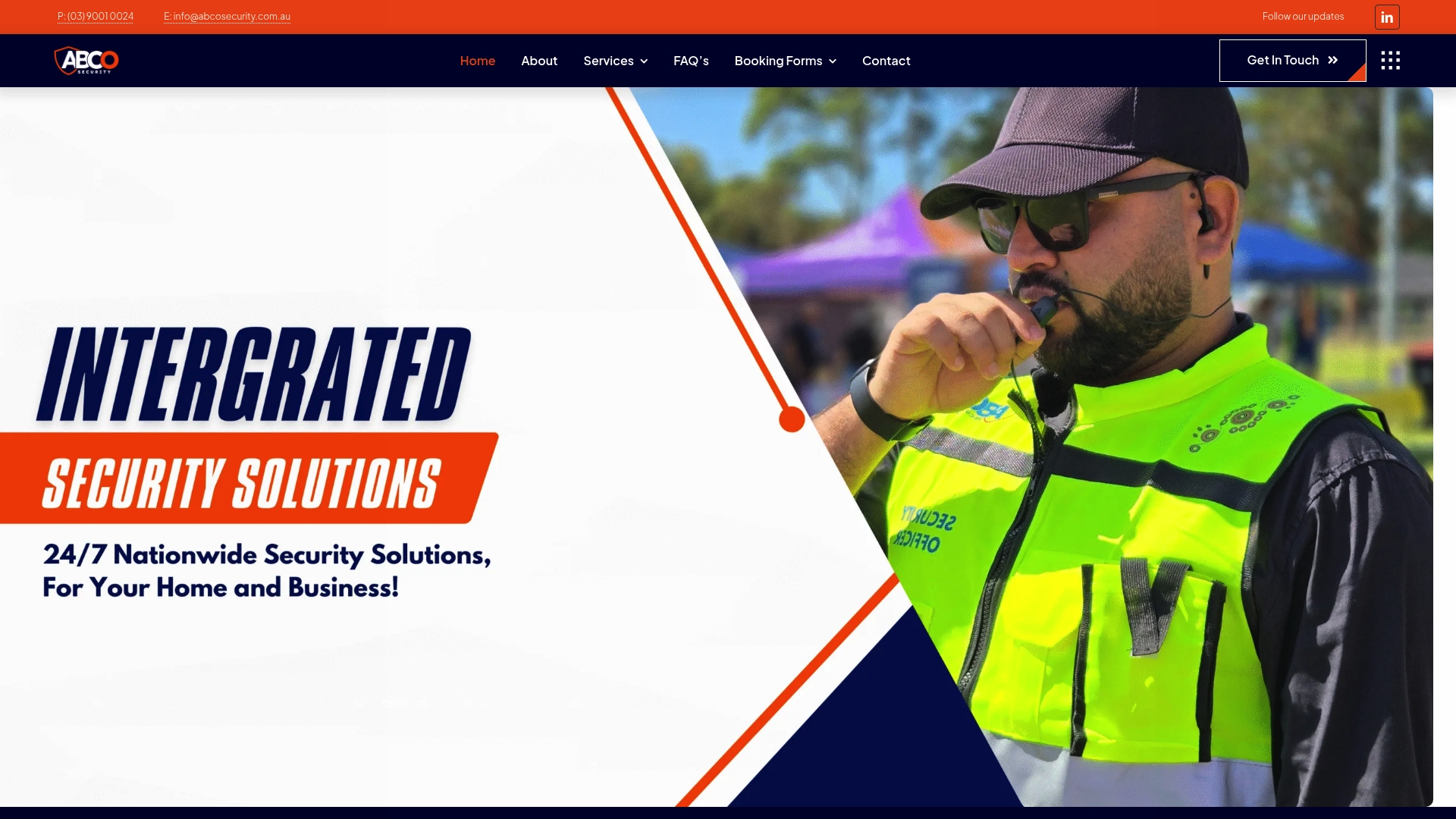
If your community is still running on a shared gate code and a logbook at reception, the fastest fix isn’t more cameras, it’s a proper access brief that ties your gate hardware, visitor workflow and governance together before you spend on anything else. Abcosecurity designs and installs access control systems, sets up gatehouse procedures and staffing models, and runs ongoing monitoring and maintenance contracts so gates, cameras and lighting actually get serviced on schedule rather than discovered broken during an incident.
That’s the practical difference for a strata committee or developer: instead of juggling separate contractors for gates, cameras and guards, you get one provider accountable for the whole access brief, from the risk assessment through to the maintenance log. Start with a security risk assessment to identify what your current setup is actually missing, then move into a full access control system design built around your community’s real traffic patterns. Book an assessment with Abcosecurity to get the access brief drafted and priced.
Standards and guidance worth keeping on file
- ISO 22341’s CPTED process for the five-step methodology behind any serious access brief.
- Victoria Police’s residential security checklist for a line-by-line perimeter, CCTV and lighting audit.
- The OAIC’s guidance on APP 11 for data-handling obligations on access logs and biometric records.
- Safer Places by Design for CPTED integration at the planning and design stage.
Sources
- What Good CPTED Looks Like | Core42
- Residential apartment security assessment for owners corporation (Victoria Police)
- Australian Privacy Principles — OAIC
FAQ
What are the disadvantages of a gated community?
Gated communities can create a false sense of complete safety, restrict emergency service access if gates fail closed, and shift crime risk to less-protected boundary points rather than eliminating it, which is why a documented risk assessment matters more than the gate itself.
Do gated communities exist in Australia?
Yes, gated and access-controlled residential estates operate across Australian states, particularly in newer master-planned developments, though they follow the same strata and privacy laws as any other residential community.
Is there a universal code to get into gated communities?
No. There’s no universal or master code for gated communities, and any system still relying on one shared code is a serious security gap that should be replaced with individual resident credentials or time-limited visitor PINs.
What does “gated community” mean?
A gated community is a residential development with controlled entry points, typically fencing or walls combined with gates, that restrict vehicle and pedestrian access to residents, authorised visitors and service providers.
Recommended
about
avada factory
Sempery ultricies nibh at dolor cras urna eleifend nec. Atiam efficitur tempor.