Run your security audit checklist across five layers: perimeter, building envelope, internal zones, high-security areas, asset level controls, checking each one against a set benchmark rather than gut feel. The single next action is to lock in scope with whoever owns the budget, then pull floor plans, access logs, and the most recent incident reports before you set foot on site. That evidence forms the baseline against which every later finding gets measured.
A proper audit does more than glance at cameras and count guards. It follows a sequence: agree scope, gather evidence against a recognised standard, test the controls, then risk-rate the gaps so leadership can act on ranked findings, not a vague impression. Before you start:
- Confirm scope: which buildings, zones, and asset classes are in play.
- Collect floor plans, access control logs, and CCTV retention records.
- Pull incident reports and maintenance logs from recent periods.
- Grab Abcosecurity’s free security risk assessment template to structure findings as you go.
Key Takeaways
A security audit checklist only earns its keep when every control is functionally tested against a measurable benchmark, not just visually inspected.
| Point | Details |
|---|---|
| Scope before you inspect | Agree which zones, assets, and standards are in scope before starting the walkaround. |
| Test, don’t just look | Run 10 lock cycles, measure credential read range, and time emergency power transfer. |
| Layer your defences | Fix perimeter, lighting, and CPTED issues before adding more cameras or access control. |
| Rate risk consistently | Score findings by likelihood multiplied by consequence using an AS ISO 31000 approach. |
| Get expert support | Abcosecurity offers a free risk assessment template and can run testing and remediation directly. |
Table of Contents
- Quick on-site checklist: a printable walkaround list
- How to test controls: repeatable functional tests and acceptance criteria
- Applying defence-in-depth and CPTED in your audit
- Documenting findings, risk‑rating gaps and reporting so action happens
- Cadence and responsibilities: who should run, review and act on audits
- Abco’s evidence and free templates to run the audit
- What the conventional advice on security audits gets wrong
- Ready to turn findings into fixed vulnerabilities?
- Sources
- FAQ
Quick on-site checklist: a printable walkaround list
A walkaround only works if you’re checking things that can actually fail. Start outside and move inward.
- Perimeter and lighting. Walk the fence line for gaps, climb points, and rust. Check gates close and latch properly, confirm signage is visible from the road, and test whether external lighting covers blind spots after dark. Note any vehicle barriers or bollards and whether they’re rated for the traffic they’re meant to stop.
- Doors, windows and egress hardware. Push every external door, check strike plates aren’t loose, and confirm emergency exit hardware releases on the first attempt. Windows near ground level need locks that actually engage, not just decorative latches.
- CCTV coverage and image quality. Stand at each camera’s edge of frame and check for blind spots. Pull a daytime and a night-time clip. Confirm footage is stored securely with role-based access rather than a shared login, and check the retention period matches your policy.
- Alarm zones and monitoring path. Trip a sample of zones and confirm the signal reaches the monitoring centre, not just the local panel. Check duress and panic buttons separately. They’re often forgotten during routine testing.
- Access control and visitor handling. Sample a handful of badge records. Look for anyone who left the organisation months ago but still has active credentials. Check whether visitors are logged, escorted where required, and signed out.
- Security staff and patrols. Review post orders against what guards are actually doing. Check patrol logs for consistency, not just presence, and ask for evidence of response times to past incidents.
Photograph everything: locks, serial numbers, cabling, damage. Attach log snippets and maintenance records to each finding rather than relying on memory later.
Pro Tip: Carry a torch even in daylight. Half the lighting failures on a site only show up when you crouch down and check the angle a camera or fitting actually throws light, not where it’s pointed.
How to test controls: repeatable functional tests and acceptance criteria
A checklist tells you what to look at. A functional test tells you whether it actually works, and that distinction is where most audits fall short.
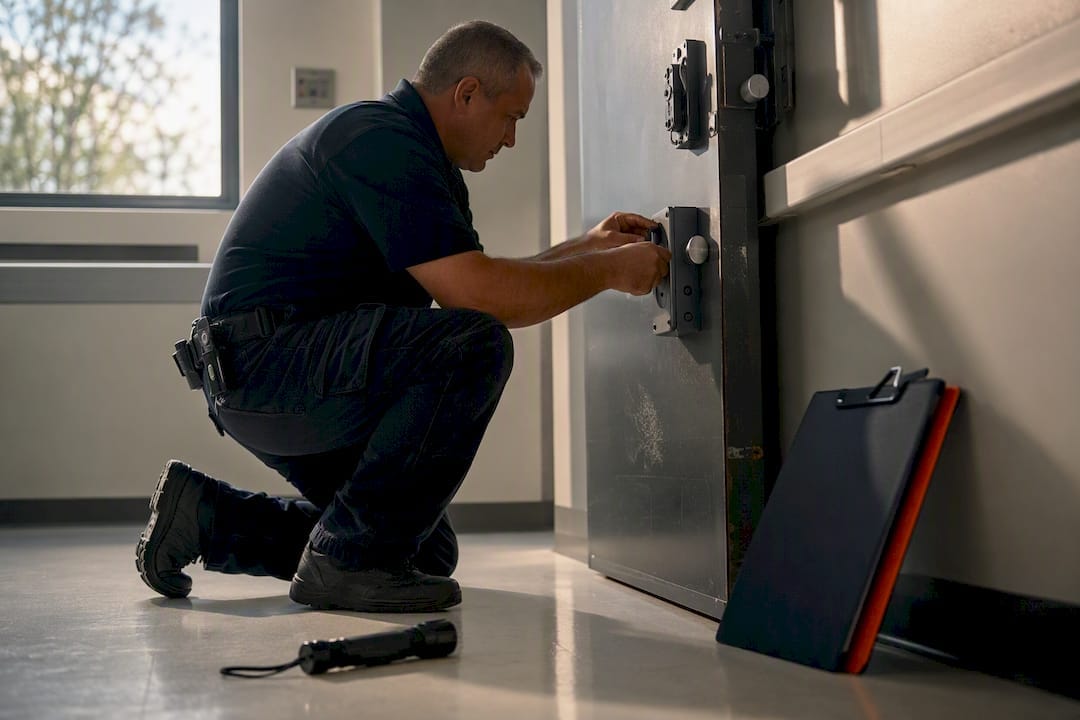
- Electrified locks: run 10 open and close cycles, logging pass or fail on each, following best practices outlined by the ACME Locksmith Franchise. Time the fail-safe transfer during a simulated power loss. Emergency power transfer should complete in under 10 seconds; anything slower needs investigating before it’s signed off.
- Credential read range: measure how far a card or fob needs to be from the reader to trigger a valid read. Most commercial readers sit between 1.5 and 3 inches. Test a revoked credential to confirm it’s actually rejected, and run through any multi-factor workflow (PIN plus card, for example) to check both factors are enforced.
- CCTV integrity: confirm coverage against the site plan, pull day and night samples, then test the export function. Check that exported footage carries an access log entry showing who pulled it and when, since that’s what makes footage usable as evidence rather than just a recording.
- Alarm zones: trip each zone individually and confirm the monitoring centre logs the correct zone ID, not just “alarm active.” Review the past six months of false-alarm history. A pattern of repeat faults on one zone usually points to a sensor or wiring issue, not user error.
- System integration: correlate timestamps between an access event, an alarm trigger, and the CCTV clip covering the same door. If the three don’t line up within a few seconds, your systems aren’t talking to each other properly, and that gap will hurt you during a real investigation.
Every test needs a paper trail: who ran it, the device ID, date and time, and what remedial action followed. Layered security methodology in healthcare and construction settings treats these same benchmarks, lock cycling, read range, and power transfer, as baseline acceptance criteria rather than optional extras.
Applying defence-in-depth and CPTED in your audit
Technology fixes should come last, not first. Map your site into concentric layers, perimeter, building envelope, internal zones, and high-security areas, then validate each one before you spend a cent on new hardware. This security zone approach scales protection to the sensitivity of what’s inside each layer rather than applying the same controls everywhere.
Crime Prevention Through Environmental Design, CPTED, sits alongside this layering and often costs nothing to implement. During the walkaround, check:
- Natural surveillance: can staff or passersby actually see the entry points, or are sightlines blocked by parked vehicles, bins, or overgrown hedges?
- Natural access control: does the layout funnel visitors past a reception point, or can someone wander in through a side entrance unnoticed?
- Territorial reinforcement: are boundaries, fencing, signage, and changes in paving, clear enough that an intruder feels observed?
- Maintenance: broken fittings and dead lighting signal nobody’s watching, which invites testing by opportunists.
Fix the cheap, structural problems first: trim the hedge, replace the light, reposition the bin. Only then look at whether you need another camera or a stronger lock.
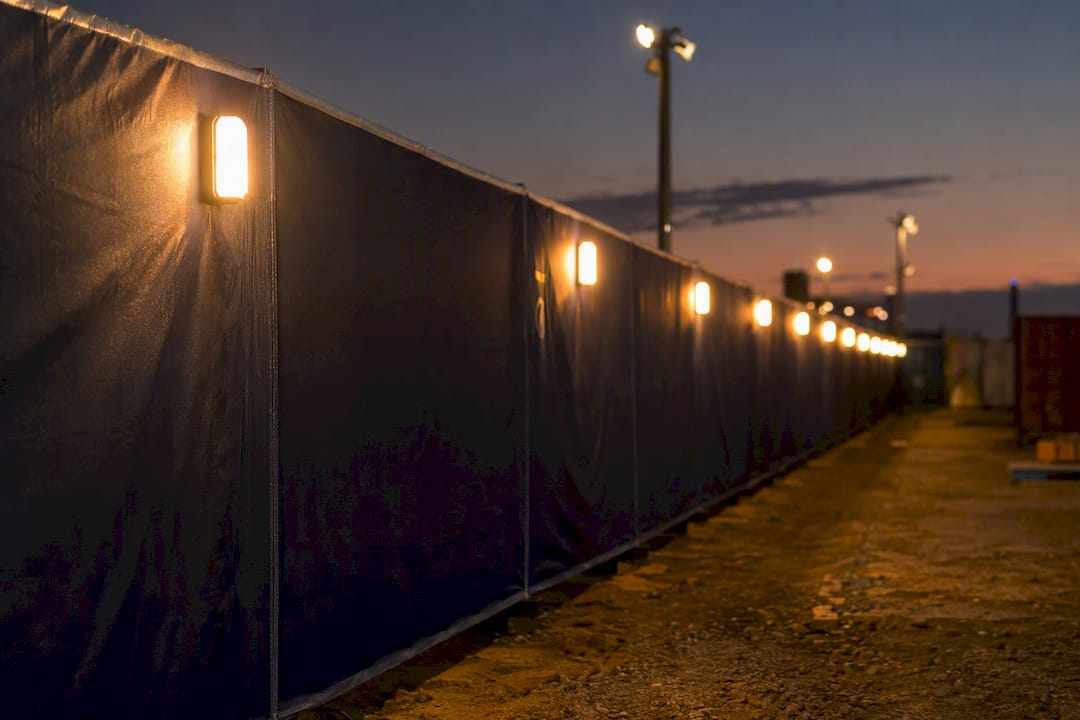
The priorities shift by sector. A construction site needs perimeter hoarding and lighting nailed down before it needs access control finesse. A hospital needs internal zoning, restricting a public corridor from a pharmacy store, more than it needs a taller fence. Corporate offices usually sit somewhere in between, with reception control mattering more than either.
Pro Tip: Ask a staff member unfamiliar with the site to walk from the car park to the front door and describe what feels exposed. Fresh eyes catch blind spots that people who work there stop noticing.
Documenting findings, risk‑rating gaps and reporting so action happens
A finding without evidence is an opinion, and opinions don’t get budget approved. Every gap you log needs something attached to it: a photo, a log extract, a test result, or a witness statement.
- Agree the benchmark before you start writing. Reference a recognised risk approach such as AS ISO 31000 so findings can be compared against a consistent standard rather than personal judgement.
- Attach evidence to every line item. Photos, serial numbers, log snippets, maintenance records, and test outputs all belong in an appendix, not scattered across separate emails.
- Rate each finding by likelihood multiplied by consequence. A propped fire door in a low-traffic storeroom rates differently to the same propped door beside a pharmacy dispensary. Set clear thresholds (low, moderate, high, critical) so two auditors would rate the same gap the same way.
- Structure the report for action, not just record-keeping. Executive summary, scope, ranked findings, recommended treatments, an owner for each item, a due date, and the criteria that will confirm the fix worked.
- Close the loop. Require the remedial owner to sign off once work is done, and schedule a re-test rather than assuming the fix held.
A standard building assessment template that pairs physical checks with a compliance appendix keeps this consistent across repeat audits, especially useful if different people run the walkaround each time.
Cadence and responsibilities: who should run, review and act on audits
Run a baseline audit before anything else, then periodic checks on sensitive zones (like server rooms, pharmacies, cash handling areas) and a full audit across the whole site approximately once a year.
- Security manager: owns the audit schedule and the final risk register.
- Facilities: verifies physical fixes like lighting, fencing, and door hardware get actioned.
- IT or technical owner: signs off on anything touching access control servers, CCTV storage, or network-connected devices.
- HR: feeds in starter and leaver data so credential deprovisioning gets checked properly.
- Contractor supervisors: confirm subcontractor access is logged and time-limited.
Bring in a specialist when the audit hits complex integrations, government security zone requirements, or forensic-grade evidence storage needs beyond what your in-house team handles day to day. Feed every audit outcome back into post orders, standard operating procedures, and staff training, otherwise the same gaps just reappear next quarter.
Abco’s evidence and free templates to run the audit
Abcosecurity has spent more than 15 years running exactly this kind of audit across construction, healthcare, and corporate sites. Its teams work to ISO 9001 and ISO 30000 alignment, staffed by licensed guards backed by 24/7 monitoring.
- Download the free security risk assessment template to structure findings against the same evidence and risk-rating approach covered above.
- Use the companion risk assessment checklist to prioritise which gaps get fixed first.
- Abco can also run the functional testing and remediation work directly, useful if your team lacks the time or equipment for lock cycling and read-range testing.
What the conventional advice on security audits gets wrong
Most checklists you’ll find online stop at “does the camera work” and “is the door locked.” That’s a surface pass, not an audit. The actual value sits in the functional testing, running the ten lock cycles, measuring the read range, timing the power transfer, because that’s where you find the gap between what’s installed and what’s actually operating to specification.
The other place conventional advice falls short is treating CPTED as an afterthought. Fixing a sightline or trimming a hedge costs almost nothing and often reduces risk faster than another camera install. Yet most checklists bury it at the bottom, if it appears at all.
If you take one thing from this: prioritise the tests that produce a pass or fail result over the ones that produce an opinion. A guard who “seems attentive” isn’t evidence. A logged response time is. Build your audit around what you can measure, then let the risk rating do the prioritising for you.
Ready to turn findings into fixed vulnerabilities?
A checklist tells you where the gaps are. Closing them is a different job, and it’s the one Abcosecurity has been doing for construction sites, hospitals, and corporate offices for more than 15 years. Rather than handing you a report and walking away, Abco’s licensed teams can run the functional tests themselves, lock cycling, credential range checks, alarm zone trips, and move straight into remediation once findings are ranked.
If your site has server rooms, pharmacies, or other high-security zones, the integrated security solutions guide covers how Abco layers guards, monitoring, and electronic systems together. Construction managers dealing with perimeter and site-access challenges can check the construction site security technology guide for options specific to active builds. Ready to move past the checklist stage? Download the free risk assessment template or request a site survey to get a quote for closing out what your audit finds.
Sources
- Cyber
- South Australian Protective Security Framework — Physical security guidelines
- Security audit procedures: a step-by-step guide — Agilient
FAQ
How Often Should I Run a Full Security Audit?
Run a baseline audit first, then quarterly checks on sensitive zones like server rooms or pharmacies, with a full site-wide audit annually.
What’s the Minimum Functional Test I Should Never Skip?
Electrified lock cycling and emergency power transfer timing catch the failures a visual check misses, aim for under 10 seconds on power transfer.
What Evidence Do Insurers and Auditors Actually Want?
Photos, serial numbers, test logs with date and device ID, maintenance records, and a risk rating for each finding, not just a narrative summary.

Can Abcosecurity Help Run the Audit, Not Just Provide the Checklist?
Yes. Abcosecurity’s licensed teams can run functional tests, risk-rate findings, and move directly into remediation and 24/7 monitored solutions.
Do I Need a Different Checklist for Construction Sites vs Offices?
The core structure stays the same, but priorities shift. Construction sites need perimeter and lighting nailed down first, while offices lean more on access control and reception zoning.
Recommended
about
avada factory
Sempery ultricies nibh at dolor cras urna eleifend nec. Atiam efficitur tempor.