You’re probably dealing with one of two pressures right now. Either you’ve inherited a site with patchy security arrangements and no clear standard, or you’re about to appoint a provider and don’t want to get locked into the wrong one.
That’s a familiar position for commercial property managers, event organisers, retail operators, and construction teams across Melbourne, Sydney, Brisbane, Perth, and nearby metro corridors. The problem isn’t finding security companies in melbourne victoria. The problem is separating firms that merely supply labour from firms that reduce risk, document performance, and stay compliant when something goes wrong.
Victoria has scale in this market. As of June 2023, the state had 29,287 licensed individual private security guards and approximately 1,250 registered security businesses, generating over $2 billion in annual revenue, according to Victoria security industry statistics. A large market gives you choice. It also gives you noise.
A good provider should make your site calmer, more predictable, and easier to manage. A poor one creates extra admin, inconsistent coverage, and liability that only becomes visible after an incident. That difference usually comes down to scope, compliance discipline, operational systems, and how well they combine people with technology.
Defining Your Security Needs in Melbourne’s Dynamic Environment
Most security failures start before the first guard arrives. They start with a vague brief.
If you ask three vendors for “a quote for security”, you’ll usually get three different interpretations. One assumes static guarding. Another prices mobile patrols. A third adds cameras and monitoring. None of those are directly comparable, and none will be well matched to your property unless you define the risk first.

Start with the site, not the service
A Melbourne CBD office tower has a very different risk profile from a logistics yard in the western suburbs, a retail tenancy in Chadstone, or a construction project in Fishermans Bend. The right question isn’t “Do I need guards?” It’s “What are people, assets, access points, and hours of exposure telling me?”
Use a simple first-pass review:
- List what needs protection. People, stock, plant, data rooms, loading docks, vacant floors, after-hours access points.
- Identify when your exposure changes. Shift change, overnight periods, public events, school holidays, contractor activity, end-of-month stock peaks.
- Separate deterrence from response. Some risks need visible presence. Others need detection, evidence, and escalation.
- Record operational constraints. Shared tenancy, heritage building access, noise restrictions, union access, concierge expectations, or public-facing customer service.
That exercise gives you a procurement brief that vendors can respond to properly.
Match the service to the real risk
The main service categories sound straightforward, but they solve different problems.
- Static Security Guarding works best where a fixed presence changes behaviour and controls access. Think a corporate lobby, gatehouse security post, or a construction entry where visitors, deliveries, and contractors need screening.
- Mobile Patrols suit larger footprints, lower occupancy periods, and sites where irregular visible presence is enough to deter trespass, check alarms, and verify perimeter integrity.
- Retail Security is about more than standing near the entrance. Good retail coverage combines customer-facing awareness, loss prevention, incident reporting, and support for store teams during disruptive behaviour.
- Event Security and crowd control need a different operating mindset. Entry screening, patron flow, escalation thresholds, and liaison with venue management matter more than basic patrol discipline.
- Concierge Security fits premium office and mixed-use environments where reception presence, access control, and service etiquette all sit together.
- Construction Security needs strong after-hours asset protection, perimeter integrity, and clear reporting because incidents often happen when the site is dark, partially open, or changing daily.
Practical rule: If your vendor can’t explain why one service model fits your site better than another, they’re probably pricing from a template.
Melbourne examples that sharpen the brief
A few common scenarios show how the wrong scope creeps in.
A commercial office in the CBD might ask for a guard because tenants have raised concerns about unauthorised visitors. But the actual issue may be weak access control after reception hours. In that case, a blended model of concierge security, controlled entry, and electronic oversight often works better than posting another person in the lobby.
A shopping centre operator may ask for shopping centre security after several anti-social incidents. That usually requires more than one roaming officer. Peak-time deployment, incident logs, camera review support, and coordination with centre management are what make the service useful.
A construction site may think one overnight guard is enough. Often it isn’t. Perimeter blind spots, temporary fencing, materials laydown areas, and inconsistent lighting can make a single static post ineffective without supporting systems. That’s why many managers review security systems for businesses alongside guarding rather than treating them as separate decisions.
Build a short decision table before seeking quotes
| Site type | Typical exposure | Usually effective | Usually ineffective |
|---|---|---|---|
| Corporate office | Visitors, unauthorised entry, after-hours access | Concierge security, access control, reporting discipline | Generic static guard with no building protocol training |
| Construction site | Theft, vandalism, perimeter breach, contractor movement | Construction security, patrol verification, camera coverage | One unmonitored guard on a large or changing site |
| Shopping centre | Retail theft, customer incidents, public disorder | Retail security, visible patrols, integrated incident reporting | Passive presence with no coordination with centre operations |
| Event venue | Entry control, crowd flow, patron behaviour | Event security, crowd control, clear escalation plan | Last-minute staffing with no event-specific briefing |
The clearer your brief, the better your quote quality. It also becomes much easier to compare security companies in melbourne victoria on substance instead of price alone.
Navigating Security Licensing and Compliance in Victoria
Security buyers often treat compliance as paperwork. That’s a mistake.
In practice, compliance determines whether your provider can legally staff the job, supervise conduct properly, document incidents credibly, and stand up to scrutiny after a complaint, injury, or serious event. If a provider is loose on licences, record keeping, or operating standards, the problem won’t stay confined to them. It will land on your site and your management team.
Licence checks aren’t optional
Start with the basics. Verify that the business is properly authorised for the work it offers, and that the personnel assigned to your contract hold the right licence category for the job.
That matters because not every licensed operative performs the same function. A crowd controller in a licensed venue or major event environment isn’t interchangeable with a guard assigned to gatehouse security, construction access control, or corporate concierge duties. The work, setting, and expected interventions differ.
If you’re comparing providers and want a practical overview of licence categories and obligations, review security licence Victoria cost as part of your due diligence, then confirm the current licence position directly before engagement.
What ISO discipline changes on the ground
Certification only matters if it shows up in operations. The value of ISO 9001 and ISO 30000 isn’t the logo on a proposal. It’s the habits those systems force into the business.
You should expect to see:
- Clear post orders that are current, site-specific, and in use.
- Documented incident pathways so guards know when to observe, intervene, escalate, or preserve evidence.
- Training records tied to role type, not generic inductions.
- Audit trails covering patrol verification, shift handover, incident reporting, and corrective action.
- Management review when service failures occur, not excuses after the fact.
The commercial impact is material. Emerging 2025-2026 data indicates that ISO 9001/30000 certified firms like ABCO deliver 28% lower incident rates and 15-20% cost efficiencies via transparent auditing, and that this matters as Victoria’s Security Industry Amendment Act, effective Jan 2026, mandates stricter tech escalation protocols, according to this Melbourne security providers comparison.
That doesn’t mean every certified provider is excellent. It does mean they’re more likely to run a controlled service rather than an improvised one.
Compliance should change daily behaviour. If it doesn’t affect rostering, supervision, records, and escalation, it’s decorative.
What non-compliant providers usually cost you
Property managers sometimes focus on the hourly rate and only later discover the hidden cost of a poor operator. The warning signs are consistent.
- Unclear supervision. You don’t know who manages the guard after hours or who reviews incidents.
- Weak paperwork. Reports are vague, late, or inconsistent, which makes dispute management difficult.
- Licence uncertainty. The company gives broad assurances but avoids specific verification.
- No real escalation path. Guards improvise decisions because there’s no usable incident matrix.
- Tech blind spots. Cameras, alarms, and access control sit outside the service model instead of being tied into response.
A provider can look inexpensive and still create expensive downstream problems. Tenant complaints, insurance friction, poor evidence after theft, and unmanaged incidents all consume management time. In regulated or higher-risk environments, they can also trigger contract and governance issues.
Check alignment with industry standards
Membership and alignment with recognised industry bodies also matter, especially for commercial buyers who need a provider with current practice standards. Review the expectations set by ASIAL and compare them with what the vendor can demonstrate operationally.
Use this short compliance screen in meetings:
| Question | Why it matters |
|---|---|
| Are all assigned staff licensed for the exact role? | Prevents role mismatch and legal exposure |
| How do you audit guard performance and reports? | Shows whether supervision is active or passive |
| What standards govern your incident escalation? | Reveals whether response is structured |
| How do you integrate electronic systems into reporting? | Tests readiness for modern compliance expectations |
The providers worth shortlisting won’t be annoyed by these questions. They’ll answer them quickly and with documents.
The Power of Integrated Tech for Proactive Threat Prevention
Traditional guarding still has value. Visible presence deters opportunistic behaviour, reassures staff, and gives you a human decision-maker on site.
But guards alone rarely give a property manager the coverage, verification, and pattern visibility needed for modern risk management. The better model is integrated. Human presence handles judgement and intervention. Technology handles detection, evidence, and early warning.

Where AI video analytics changes the result
This is the gap many buyer guides miss. They talk about Security Guarding, Mobile Patrols, or Event Security as if each sits in a silo. On active sites, they don’t.
Advanced video analytics can flag loitering near a perimeter, detect movement in restricted zones, identify unusual after-hours vehicle activity, or highlight a repeated breach pattern that a patrol officer would only see in fragments. That gives the response team context before they arrive.
The practical benefit isn’t just more alerts. It’s better alerts.
Victoria’s construction industry recorded a 15% rise in site thefts in 2025, and an ASIAL report noted that pilot programs using AI-enhanced CCTV on Melbourne industrial sites reduced false alarms by 40%, according to this industry write-up on security technology trends. That’s a useful reminder that detection quality matters as much as coverage.
What integration looks like on a real site
On a construction project, integrated protection might work like this:
- Cameras watch high-risk zones such as gates, fuel stores, plant areas, and temporary material laydown points.
- Analytics filter noise so ordinary environmental movement doesn’t trigger the same response as suspicious access behaviour.
- Monitoring staff verify the event before dispatching a patrol or escalating to site management.
- Mobile patrols attend with context, not guesswork. They know which zone activated, what the footage showed, and whether the incident appears ongoing.
That same logic applies in office buildings and retail assets. Concierge staff can manage daytime access and customer interaction, while cameras, alarms, and access control tighten coverage outside staffed hours. For higher-risk sites, an automated camera system is often the layer that turns a passive setup into an active one.
On-site guards & patrols are strongest when they aren’t used as walking sensors. Let technology do the watching so people can focus on judgement and response.
Better camera selection leads to better response
A lot of poor security performance starts with poor hardware decisions. Cameras are positioned for convenience, not line of sight. Storage is undersized. Night performance is ignored. Analytics are switched on without calibration.
If you’re reviewing your physical setup before tendering, this guide on choosing a security cameras system is a useful technical primer. It helps non-specialists ask better questions about placement, image quality, monitoring intent, and operational fit.
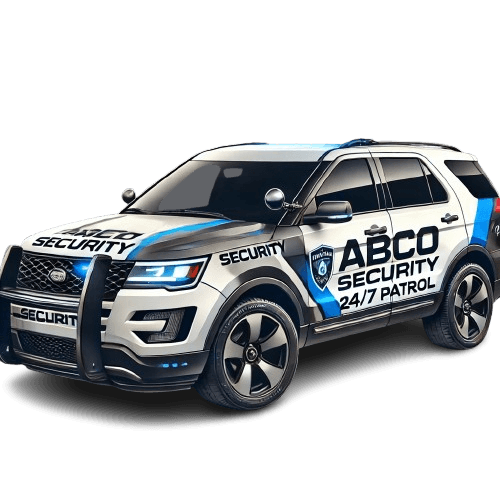
One provider option in this space is ABCO Security Services Australia, which combines guarding, patrols, CCTV and alarm monitoring, access control, video analytics, and remote viewing within a single operating model. That kind of integration suits sites where physical and electronic risks overlap, especially in retail, commercial property, and construction.
Where tech works and where it doesn’t
Integrated tech performs well when the site has clear rules, defined escalation paths, and active management review. It underperforms when buyers install devices but don’t change the operating model around them.
A quick comparison helps:
| Approach | What works | What usually fails |
|---|---|---|
| Guard-only model | Visible deterrence, reception duties, customer interaction | Blind spots, inconsistent after-hours coverage, limited evidence |
| Camera-only model | Broad coverage, reviewable footage, lower routine labour demand | No real-time intervention if nobody verifies and acts |
| Integrated model | Detection, verification, response, stronger reporting | Needs planning, calibration, and clear responsibilities |
The strongest programs don’t ask guards to replace systems, and they don’t ask systems to replace judgement. They combine both.
A Practical Framework for Vetting Security Companies
Once you’ve defined the scope, the shortlist stage becomes less about marketing and more about verification.
Most vendors sound competent in a first meeting. The useful question is whether they can run your site consistently at 2:00 am, during a tenant complaint, after an alarm, or in the middle of an event disruption. That’s where process matters.

Use a multi-stage vetting method
The easiest way to vet providers is to borrow the discipline used in technical assurance. In cybersecurity, top-tier vulnerability assessments follow a structured sequence, and CREST-accredited firms achieve 92% detection of critical vulnerabilities by combining reconnaissance, scanning, and simulated exploitation, according to this Australian penetration testing methodology review.
The same principle applies here. Don’t trust one polished presentation. Test the provider from several angles.
Reconnaissance
Review the website, service pages, leadership visibility, sectors served, and whether they explain operations clearly or rely on generic claims.Document review
Request sample incident reports, patrol reports, escalation pathways, induction materials, and site instructions.Scenario testing
Present real situations from your site and ask how they’d respond. Theft in a loading dock. Aggressive visitor at reception. Alarm activation after hours. Contractor dispute at gate access.Reference validation
Speak to current or recent clients in a similar asset class and ask about reliability, not just satisfaction.
What to inspect on the website and proposal
A provider’s public material won’t tell you everything, but it often reveals whether the operation is mature or improvised.
Look for these signals:
- Sector relevance. Do they discuss Retail Security, Construction Security, Event Security, or Concierge Security in a way that sounds operational, not generic?
- Operational transparency. Is there evidence of reporting systems, supervision, monitoring capability, or escalation design?
- Local capability. Can they credibly support Melbourne while also servicing Sydney, Brisbane, Perth, and nearby metro areas if your portfolio spans cities?
- Service detail. A useful proposal should describe posts, coverage hours, technology inputs, reporting cadence, and management oversight.
If you’re benchmarking how service providers should explain managed risk in adjacent fields, this article on choosing the right cybersecurity MSP is worth reading. The categories differ, but the buying logic is similar. You’re assessing response discipline, accountability, and the ability to support critical operations when conditions are messy.
Ask vendors to show how they manage exceptions. Normal operations are easy to describe. Exceptions reveal the real operating model.
The questions that expose real capability
These are the questions I’d put in front of any shortlisted security company Melbourne buyers are seriously considering.
Questions about people
- Who supervises the contract after hours, and how is that supervision recorded?
- How do you brief relief staff so they don’t treat the site like a generic post?
- What site-specific training do guards receive before their first shift?
Questions about operations
- What does your incident escalation process look like in writing?
- How do you verify patrol completion and handover quality?
- What happens if the assigned officer is late, replaced, or removed from the site?
Questions about technology
- How do your guards interact with alarms, CCTV, and access control?
- Can your reports include verified time stamps, site observations, and digital evidence?
- If cameras detect suspicious behaviour, who reviews it and who decides on dispatch?
Questions about fit
- Have you worked on similar assets, not just broadly similar industries?
- How do you handle front-of-house service expectations in occupied buildings?
- What would you change about our current setup based on your first review?
A strong provider answers specifically. A weak one stays broad and keeps returning to “we can tailor it”.
For service model comparison, many buyers also review the provider’s stated security guard service capabilities and then test whether those claims hold up in discussion.
Reference checks that actually help
Don’t ask references if they “would recommend” the provider. That question produces polite but useless answers.
Ask these instead:
| Reference question | What you learn |
|---|---|
| How do they perform when the regular guard is unavailable? | Depth of staffing and relief quality |
| Are incident reports usable for management follow-up? | Reporting standard |
| Do they raise issues early or only after something happens? | Proactive management |
| Have you had billing or contract surprises? | Commercial reliability |
The goal isn’t to catch providers out. It’s to uncover whether the day-to-day service is controlled, repeatable, and honest.
Decoding Pricing, Contracts, and Service Level Agreements
Security pricing gets distorted when buyers compare line items without comparing risk transfer.
One quote may look cheaper because it excludes supervision, reporting software, incident escalation, out-of-hours management, or technology support. Another may appear higher because it includes those things in the operating model. If you only compare the hourly rate, you miss the actual value of the contract.
Understand the pricing model before comparing totals
Common structures include hourly rates for guards, fixed pricing for patrol schedules, and monthly fees for monitoring or integrated electronic security. None is automatically better.
The right model depends on what you’re buying.
- Hourly guarding suits static posts, concierge security, gatehouse coverage, and event staffing where labour is the core input.
- Scheduled patrol pricing can work well where you need perimeter checks, lock-up services, alarm attendance, or after-hours presence without a permanent on-site officer.
- Bundled monthly models are often cleaner for integrated services where cameras, monitoring, reporting, and response all operate together.
The trap is buying a narrow service for a broad problem. If your site needs verified alarm response, evidence capture, and post-incident reporting, the cheapest labour quote may be the most expensive option in practice.
Read the contract for operational detail
A decent contract should make performance measurable. If it only covers commercial terms and broad descriptions, it leaves too much open to interpretation.
Scrutinise these points:
- Scope wording. Does it describe tasks clearly, or just state “security services as required”?
- Hours and coverage. Are relief arrangements, public holidays, and after-hours callouts addressed?
- Insurance and liability. Is responsibility for site instructions, incidents, and third-party claims clear?
- Variation process. How are additional hours, extra posts, or emergency changes authorised and priced?
- Termination rights. Can you exit if service quality drops, or are you locked into a poor arrangement?
Cheap security often becomes expensive when the contract is vague and the incident file is thin.
Build an SLA that reflects your site
A Service Level Agreement should do more than promise “professional service”. It should define what good performance looks like on your asset.
Useful SLA areas include:
| SLA area | What to define |
|---|---|
| Response | Alarm attendance expectations, escalation process, contact order |
| Reporting | Incident report timing, patrol logs, management review cadence |
| Staffing | Minimum training standard, relief cover process, supervisor contact |
| Technology | Monitoring responsibility, fault reporting, evidence retention process |
For occupied buildings and front-of-house environments, also include behavioural expectations. Concierge Security and corporate reception coverage involve presentation, communication, and visitor handling, not just physical presence.
When you compare providers, review the operating assumptions behind their security guard in Melbourne offering and test whether the proposed SLA is specific enough to hold them accountable. If the SLA can’t be measured, it won’t help you when standards slip.
Making Your Final Selection and Ensuring Peace of Mind
At final selection stage, the best choice usually isn’t the cheapest quote or the most polished presentation. It’s the provider that showed the clearest control over licences, site procedures, staffing continuity, reporting quality, and technology integration.
That’s the provider most likely to protect your property without creating extra management load.

Before signing, score each vendor against four criteria:
- Compliance confidence
- Operational capability
- Integrated technology readiness
- Commercial clarity
If one provider is slightly dearer but clearly stronger across those areas, that difference is often justified. Security is one of those services where buying certainty usually costs less than managing failure.
A good appointment should leave you with fewer unknowns, cleaner escalation, better records, and a team that can support your building, event, shopping centre, or construction project without constant chasing.
Frequently Asked Questions
What’s the difference between a crowd controller and a security guard in Victoria
They’re not interchangeable roles. A crowd controller’s licence is tied to managing patron behaviour, entry, and public-order issues in venues and events. A security guard licence covers broader duties such as asset protection, concierge security, patrols, and site access control. If you’re hiring for Event Security, licensed venue work, or public-facing crowd management, make sure the assigned personnel hold the correct authority for that task.
How quickly can a security company respond to an alarm or emergency
That depends on the operating model and your SLA. Electronic alarms can be detected immediately by an active monitoring centre, but physical attendance depends on patrol location, coverage design, and escalation protocols. Ask each provider what response framework applies in your suburb and whether that commitment is documented.
Can I hire security for a one-off event
Yes. Reputable providers offer one-off and multi-day Event Security for corporate functions, public events, retail activations, and licensed venues. The key is to engage early enough for risk assessment, staffing allocation, entry planning, and coordination with venue management.
If you want a provider that combines licensed personnel, electronic security, and practical risk management across Melbourne and other major Australian cities, ABCO Security Services Australia is worth reviewing. Start with your site risks, ask hard operational questions, and choose the partner that can prove how they’ll manage them.
about
avada factory
Sempery ultricies nibh at dolor cras urna eleifend nec. Atiam efficitur tempor.