Every year, Melbourne businesses lose thousands of dollars to preventable security incidents, from retail theft to after-hours break-ins. Yet many of these same businesses are either underprotected or paying for security solutions that do not actually match their real-world risks. The gap between what security companies offer and what businesses genuinely need is wider than most owners realise.
This is where understanding security guard and patrol services becomes more than just a purchasing decision. It becomes a strategic business consideration. Whether you operate a retail strip in Fitzroy, a warehouse in Dandenong, or a corporate office in the CBD, the type of security coverage you choose directly affects your liability exposure, staff safety, and bottom line.
In this analysis, we break down the core differences between static guarding and mobile patrol options, identify which business types benefit most from each model, and cut through the marketing language that often clouds smart decision-making. By the end, you will have a clearer picture of what Melbourne businesses like yours actually need, and how to secure it effectively.
The Direct Answer
Security guard and patrol services combine on-site personnel with scheduled or responsive mobile coverage to protect people, property, and assets around the clock. For Melbourne businesses, choosing between static guards, mobile patrols, or an integrated model comes down to site risk profile, operational hours, and budget, not brand name.
The global security guard and patrol service market reached USD 34.6 billion in 2025 and is projected to hit USD 45.3 billion by 2035, with Asia-Pacific identified as one of the fastest-growing regions. That trajectory matters for Melbourne operators because it signals rising service standards, greater technology integration, and more competition for qualified personnel, all of which affect what you should expect from any provider you engage.
Why Demand Is Climbing (And Why That Matters to You)
The global security guard and patrol service market hit USD 33.7 billion in 2024, climbed to USD 34.6 billion in 2025, and is forecast to reach USD 45.3 billion by 2035 according to WiseGuyReports’ Security Guard and Patrol Service Market analysis. Domestically, Australia’s security industry generates approximately $11 billion in annual revenue, supports over 7,000 registered businesses, and employs roughly 157,000 licensed operatives. That scale matters because it signals structural demand, not cyclical spending.
The budget data confirms what the market numbers suggest. Sixty percent of Australian businesses have increased their security spend since 2022. That is not a marketing claim; it is a purchasing signal driven by measurable consequences. Theft, trespass, and workplace safety incidents carry direct financial costs in stock losses, liability claims, and regulatory penalties. Businesses are not spending more because security feels important. They are spending more because the cost of not spending has become quantifiable.
Most people overlook the fact that outsourced contract security grew 50% globally over eight years, from $22 billion in 2014 to $33 billion in 2022. Businesses have already voted on in-house versus contract models, and contract won. The reasons are straightforward: lower overhead, faster deployment, built-in compliance coverage, and access to trained personnel without carrying the recruitment burden internally.
The Supply Problem Melbourne Businesses Need to Understand
Australia needs 6,200 additional licensed security guards by 2026, with 55% of those roles concentrated in metropolitan areas. Melbourne sits squarely in that pressure zone, competing for a shrinking pool of qualified personnel against other major urban operators. IBISWorld’s security services analysis identifies identical supply constraints playing out across mature markets globally, confirming this is a structural workforce problem, not a temporary gap.
I’ve found that clients routinely underestimate the operational impact of Australia’s 30% annual staff turnover rate in guarding. An unstable provider does not just deliver inconsistent service; it delivers a rotating roster of unfamiliar faces with broken site knowledge and fresh compliance exposure on every shift. Continuity of protection depends directly on the stability of the operator behind the personnel.
Pro Tip: When evaluating providers, ask directly for their average guard tenure on comparable sites. A provider who cannot answer that question with a specific figure almost certainly has a turnover problem they are not disclosing.
Static Guards vs. Mobile Patrols: Which Model Fits Your Site?
I’ve found that most Melbourne SMEs default to static guards when mobile patrols would cover 80% of their risk at a lower cost. The decision isn’t about which model is superior; it’s about matching deployment to your actual risk profile.
| Dimension | Static Security Guard | Mobile Patrol |
|---|---|---|
| Coverage type | Fixed post; single location, continuous presence | Multi-site scheduled or on-demand; roving coverage |
| Best for | High-traffic lobbies, gated entries, facilities needing constant human authority | Warehouses, construction sites, SMEs with lower 24/7 risk |
| Response time | Immediate; guard is already on-site | 15-45 minutes depending on patrol roster |
| Cost profile | Higher per-site; dedicated shift hours at one location | Lower per-site; shared patrol routes spread costs |
| Deterrence visibility | High; continuous uniformed presence signals permanent authority | Moderate; unpredictable visit times create psychological deterrence |
| Tech integration | CCTV, access control, visitor management systems | GPS tracking, digital incident reporting apps, alarm response platforms |
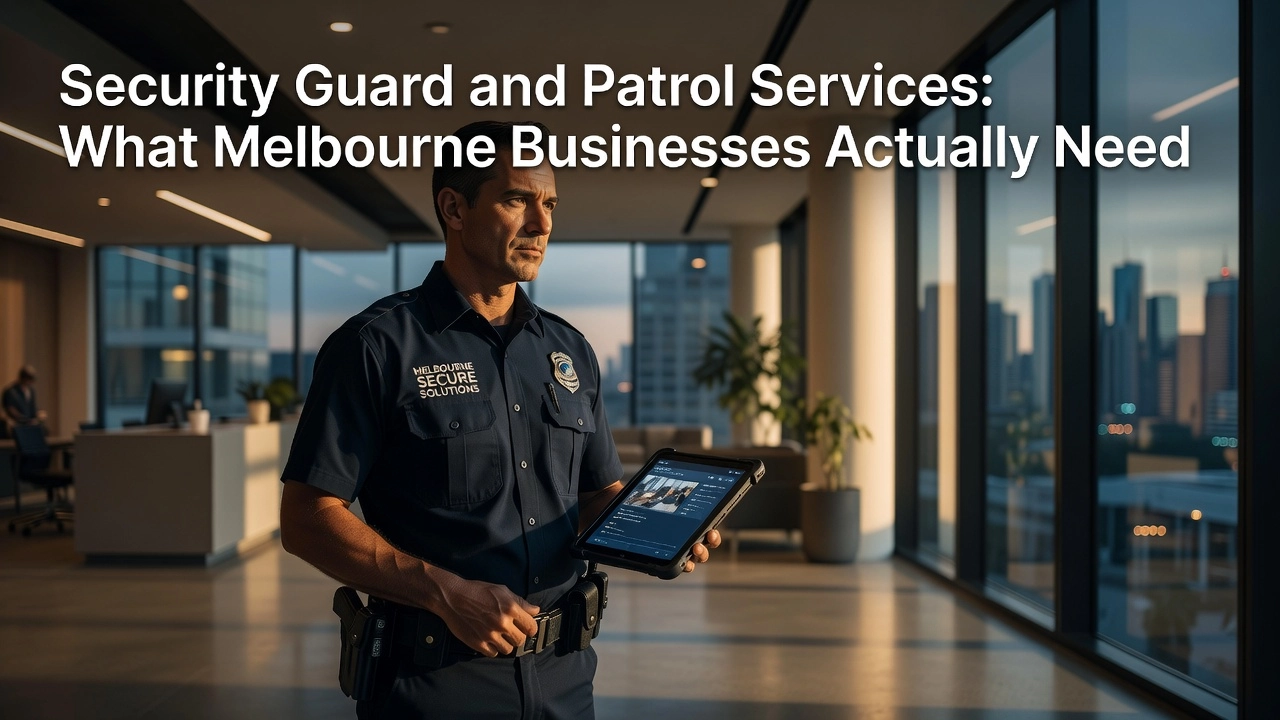
On-site security guard deployment works best when a location demands continuous human authority at a fixed point; think reception desks handling cash, pharmaceutical storage, or gated facilities where access verification cannot lapse. The cost is higher because the client pays for dedicated shift hours at a single location, but the trade-off is immediate response and a visible deterrent that operates without interruption.
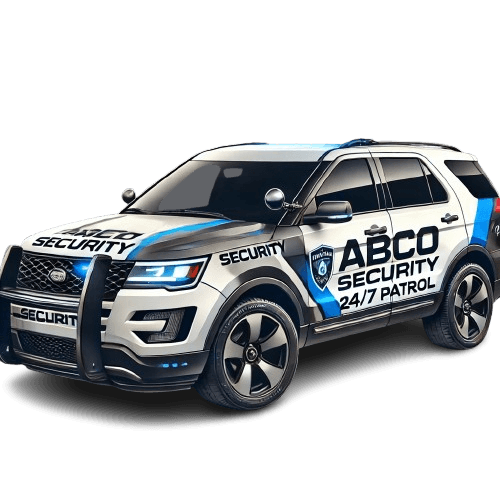
Scheduled mobile patrol coverage solves a different problem. A single mobile unit can cover multiple sites or conduct perimeter sweeps across a large property in a fraction of the time, spreading cost across the patrol route. Because visit times are unpredictable, it is harder for unauthorised individuals to identify gaps in coverage. This is precisely why mobile patrol services are gaining traction globally as a flexible, cost-accessible alternative for businesses that do not require constant stationary coverage.
The 2026 Best Practice: Integrated Deployment
The fastest-growing deployment model globally in 2026 is neither purely static nor purely mobile. It is an integrated approach that pairs on-site guard presence at high-risk points with remote monitoring and mobile patrol coverage across lower-risk zones. For a facility with a high-risk reception area but a low-risk perimeter, this layered strategy delivers continuous authority where it counts most while extending cost-efficient coverage everywhere else. Most people overlook the fact that static guard fatigue during extended shifts is a genuine operational vulnerability; rotating mobile patrol coverage into the schedule offsets this without requiring a second full-time post. If your site has a mixed risk profile, this hybrid model is the architecture worth building toward.
Pro Tip: Before committing to either model, map your site by risk zone rather than by square footage. High-interaction access points typically justify static coverage; everything else is usually a mobile patrol use case.
Where Integrated Security Is Heading in 2025-2026
The industry is moving fast, and the direction is clear. AI and IoT integration are reshaping what security guard and patrol services actually look like on the ground. Guards are no longer operating on instinct and scheduled rounds alone; they’re backed by sensor alerts, AI-powered video analytics, and predictive patrol routing derived from historical incident data. According to the SIA-ASIS security market research report, AI and cloud computing are the two technology trends with the greatest transformative impact on the global security industry through 2026. The practical result is a shift from reactive physical presence to intelligence-led deployment, where guards respond to verified, prioritised alerts rather than covering ground hoping to deter.
Remote monitoring is central to this shift. When 24/7 alarm monitoring is integrated into a guarding model, it functions as a continuous detection layer that triggers dispatch only when a confirmed threat warrants it. This reduces unnecessary patrol hours while compressing response times on genuine incidents. Cloud-based security adoption among Australian SMEs has grown significantly in recent years, which signals that technology-backed guarding is no longer reserved for enterprise clients with large infrastructure budgets.
Regulatory pressure is adding another layer of urgency. Safe Work Australia’s national WHS framework places duty-of-care obligations directly on site operators, and WorkSafe Victoria enforces site-specific safety requirements that increasingly intersect with licensed security personnel, particularly at construction sites and public events. Unlicensed or informal security arrangements are not just operationally risky in these environments; they expose businesses to real compliance liability. The practical implication is that specialised, licensed guards are becoming a baseline requirement in high-risk sectors, not an optional upgrade.
Effective integrated security in 2026 is not about choosing between a guard and a camera. A credible Melbourne provider should connect electronic security systems with physical guarding into a single operational model where each component strengthens the others. ABCO’s integrated approach reflects exactly this architecture, combining trained personnel with technology layers rather than treating them as separate service lines.
Pro Tip: When evaluating any security provider, ask specifically how their guards receive and act on alerts from monitoring systems. If the answer is a blank stare, you’re looking at a technology overlay on an unchanged reactive model, not a genuinely integrated operation.
Sector-Specific Considerations Melbourne Businesses Should Know
Not every Melbourne business faces identical security risk. I’ve found that sector-blind security planning is one of the most expensive mistakes operators make. The risk profile, compliance obligations, and operational demands vary sharply by industry.
Construction Sites
Victorian construction sites carry specific obligations under the Occupational Health and Safety Act 2004 (Vic), and WorkSafe Victoria guidance makes licensed security a compliance requirement, not an optional upgrade. Beyond compliance, active sites are documented targets for plant, tool, and material theft; overnight and weekend windows represent the highest-risk exposure periods with no staff on site to deter or report incidents. The ROI case for round-the-clock coverage is direct: one stolen excavator or stripped copper cable installation can exceed weeks of security costs. Businesses evaluating construction site security requirements should factor both compliance obligations and asset replacement costs into their budget modelling.
Events
Melbourne’s recurring major event calendar, including AFL finals, the Formula 1 Australian Grand Prix, and the Melbourne Cup Carnival, creates crowd management demands that few other Australian cities face at the same frequency. All crowd controllers operating in Victoria must hold a current licence issued under the Private Security Act 2004 (Vic) and must be deployed in accordance with Victoria Police Major Events frameworks. There is no shortcut here; deploying unlicensed personnel at a major public event exposes organisers to significant legal liability. Engaging licensed event security personnel with verified Victorian licensing removes that liability exposure from the outset.
Retail and Commercial
60% of Australian businesses have increased their security budgets since 2022, and that trend reflects deliberate risk management investment rather than reactive spending. Retail precincts and commercial towers face layered threats including organised retail theft, tailgating into access-controlled areas, and after-hours break-ins. The static-plus-patrol hybrid model, combining a fixed presence at key entry points with scheduled mobile checks across the broader precinct, addresses both deterrence and response coverage in a cost-efficient structure.
Government and Institutional
Australian government security expenditure increased 4% in the last fiscal year, driven largely by tightening regulatory procurement requirements. Institutional buyers, including local councils, health networks, and education facilities, require documented licensing credentials, SLA-backed service contracts, and auditable incident reporting before any engagement. Providers without structured compliance documentation rarely advance past initial procurement screening.
Common Pitfall to Avoid: Selecting a security provider based on price alone without verifying current Victorian licence status. An unlicensed operative on your site or event creates direct liability for your organisation, regardless of which company deployed them.
How to Evaluate a Security Provider Without Getting Burned
Choosing the wrong security provider costs more than the contract. It costs you the incident that happens because the wrong guard showed up, untrained, unfamiliar with your site.
Licensing and Training: The Non-Negotiable Floor
Start with licensing. Every guard operating in Victoria must hold a current individual security licence. Consumer Affairs Victoria maintains a publicly searchable register, and any provider who cannot supply licence numbers on request is disqualified immediately. This is not a formality; it is a legal requirement, and exposure falls on you if an unlicensed operative is involved in an incident on your property.
Training is the next filter. Ask specifically whether guards hold a CPP20218 Certificate II in Security Operations, or Certificate III for supervisory and higher-risk roles. Untrained guards do not simply underperform; they create direct liability exposure for your organisation if no defensible training record exists at the time of an incident.
Response SLAs and Technology Standards
For mobile patrol contracts, verbal response time commitments are worthless. A 45-minute maximum response written into the agreement is enforceable. A 15-minute promise over the phone is not. Per the 2026 security services RFP framework, vague scope-of-work documents consistently produce pricing confusion and operational risk. Include penalty provisions for SLA breach, not just the SLA itself.
On technology: GPS patrol tracking, incident reporting apps, and remote monitoring integration are baseline expectations in 2026, not premium add-ons. Providers without verifiable digital patrol logs are operating below the standard now expected by government buyers and sophisticated private clients alike. When reviewing electronic security integration, confirm that patrol logs sync with your monitoring infrastructure.
Turnover and Local Knowledge
Australia’s security sector runs at roughly 30% annual staff turnover. Ask directly: what is your roster stability on this specific site, and who is the named key-person responsible for continuity? High turnover means guards with no site history responding to your incidents, which compounds risk rather than reducing it.
Most people overlook local knowledge entirely in procurement. A nationally dispatched team has no contextual familiarity with a Southbank commercial precinct or a Port Melbourne industrial estate. A locally embedded operator knows access points, response routes, and site-specific risk patterns before the first shift starts.
In my experience, most procurement decisions fail not on price but on undefined response time expectations. Fix that in the contract.
Pro Tip: Map Risk Hours Before You Shortlist Providers
Before you contact a single provider, print your site’s incident log and highlight every event by time of day. Most Melbourne commercial property managers I’ve worked with are surprised to find the bulk of their incidents cluster between 10pm and 4am, well after the last staff member has left.
That single exercise changes your entire coverage brief.
A static guard through business hours paired with mobile patrol coverage overnight is consistently more cost-efficient than 24/7 static deployment, often in the range of 30 to 40%, without any meaningful reduction in deterrence or response capability. You are paying for presence where and when the actual risk sits, not where it is convenient to roster.
Once your risk hours are mapped, run every shortlisted provider against four hard criteria: a current Victorian licence verifiable through the Victoria Police public register, written SLAs with defined response times, GPS-tracked patrols with digital checkpoint logging, and demonstrated local Melbourne knowledge. If a provider cannot satisfy all four, remove them from the list regardless of price.
One pitfall I see repeatedly: facilities managers presenting global security market figures as justification for budget decisions. A Melbourne CFO will not be moved by USD 34.6 billion in global market valuation. Anchor every figure to its Australian or Victorian equivalent, or leave it out entirely.
Common Pitfall to Avoid: Signing a contract based on hourly rate alone. A cheaper static guard with no GPS verification, no written SLA, and no local site familiarity will cost you far more when an incident occurs on an unmonitored overnight shift.
Frequently Asked Questions
Q1: What is the difference between a security guard and a mobile patrol service? A static guard maintains a continuous, fixed presence at one location, ideal for high-value single sites requiring constant oversight. A mobile patrol officer covers multiple properties on scheduled or randomised runs, performing perimeter checks and site walkthroughs from a marked vehicle. Mobile patrols deliver broader coverage at a lower per-site cost; static guards provide uninterrupted deterrence at one address. The right choice depends on your site count, operating hours, and risk profile.
Q2: Are security guards in Melbourne required to be licensed? Yes, without exception. All security personnel in Victoria must hold a current individual licence, and companies supplying guards must hold a Labour Hire Authority licence under the Labour Hire Licensing Act 2018 (Vic.). Corporate penalties for using unlicensed providers can exceed $650,000. Verify licence status on the LHA public register before signing any contract.
Q3: How much do security guard and patrol services cost in Melbourne? Static security guard services are priced per hour per officer; mobile patrols are typically structured as per-visit or monthly contracts. Costs vary based on hours, risk profile, and site complexity. Always request itemised quotes from at least three providers.
Q4: Which industries need mobile patrol services most? Construction sites, industrial estates, retail precincts, car parks, and event venues consistently show the highest demand, driven by after-hours exposure and multi-site requirements.
Q5: What should I look for when choosing a Melbourne security company? Verify both individual and labour hire licensing. Confirm GPS tracking, written incident reporting, and documented response time SLAs. Ask directly about staff turnover; the Australian security sector runs at 30% annual turnover, so retention practices signal service quality. Local Melbourne operators typically offer faster site response and stronger operational familiarity than national chains.
Conclusion
Choosing the right security solution is not about spending more; it is about spending smarter. Melbourne businesses that take the time to assess their actual risk profile, understand the difference between static guarding and mobile patrols, and match their coverage to their specific environment consistently see better outcomes and lower incident rates.
The key takeaways are clear: one size does not fit all in security, your location and operating hours matter enormously, and the cheapest option rarely delivers real protection.
Do not wait for a break-in or theft incident to prompt a security review. Speak with a licensed Melbourne security provider today, request a site assessment, and ask the hard questions about what your business genuinely needs.
Your premises, your staff, and your peace of mind deserve a security strategy built around reality, not guesswork.
about
avada factory
Sempery ultricies nibh at dolor cras urna eleifend nec. Atiam efficitur tempor.