
From 31 March 2027, WorkSafe Victoria can issue infringement notices when a site fails to use a fall-risk control measure or cannot keep SWMS and regulation 46 records at the workplace, readily accessible to workers, HSRs and inspectors. If your security guard is the only person on site when an inspector arrives, access to those records and fall-risk areas must already be settled, because improvisation is not a compliance plan.
I’ve found that most sites treat SWMS paperwork as a day-shift responsibility. That assumption breaks after hours. A guard may be asked for records by an inspector, a worker, or an HSR. The guard may also need to control entry to a fall-risk area without stopping legitimate work. The sections ahead show what changes on 31 March 2027, how to settle after-hours records access, how to control fall-risk area access without halting work, and how to nominate the inspector contact chain. We also cover the briefing gap between access control and records access, the after-hours scenario most sites get wrong, the pitfalls that cost clients most, and FAQs. By the end, you will know who does what before an inspector reaches your gate.
What Actually Changes on 31 March 2027
From 31 March 2027, WorkSafe Victoria can issue infringement notices for four failures: not using a fall-from-height control, starting high-risk construction work without a SWMS, skipping a regulation 46 record where only administrative controls apply, and breaching SWMS/reg 46 recordkeeping rules. Records must be kept on site, readily accessible to employees, HSRs, anyone engaged to work there, and inspectors. Notices already exist: since 31 July 2021, maximums were $1,817.40 (corporation) and $363.48 (individual). Treat those as precedent only; 2027 amounts are unpublished. WorkSafe still sees employers missing fall-risk and SWMS duties, so paperwork alone won’t clear you. Prosecutions in late 2026: $70,000, $100,200, and $100,000. Pair this with a tested construction site security plan.
Step 1: Settle How Site Records Are Accessed After Hours
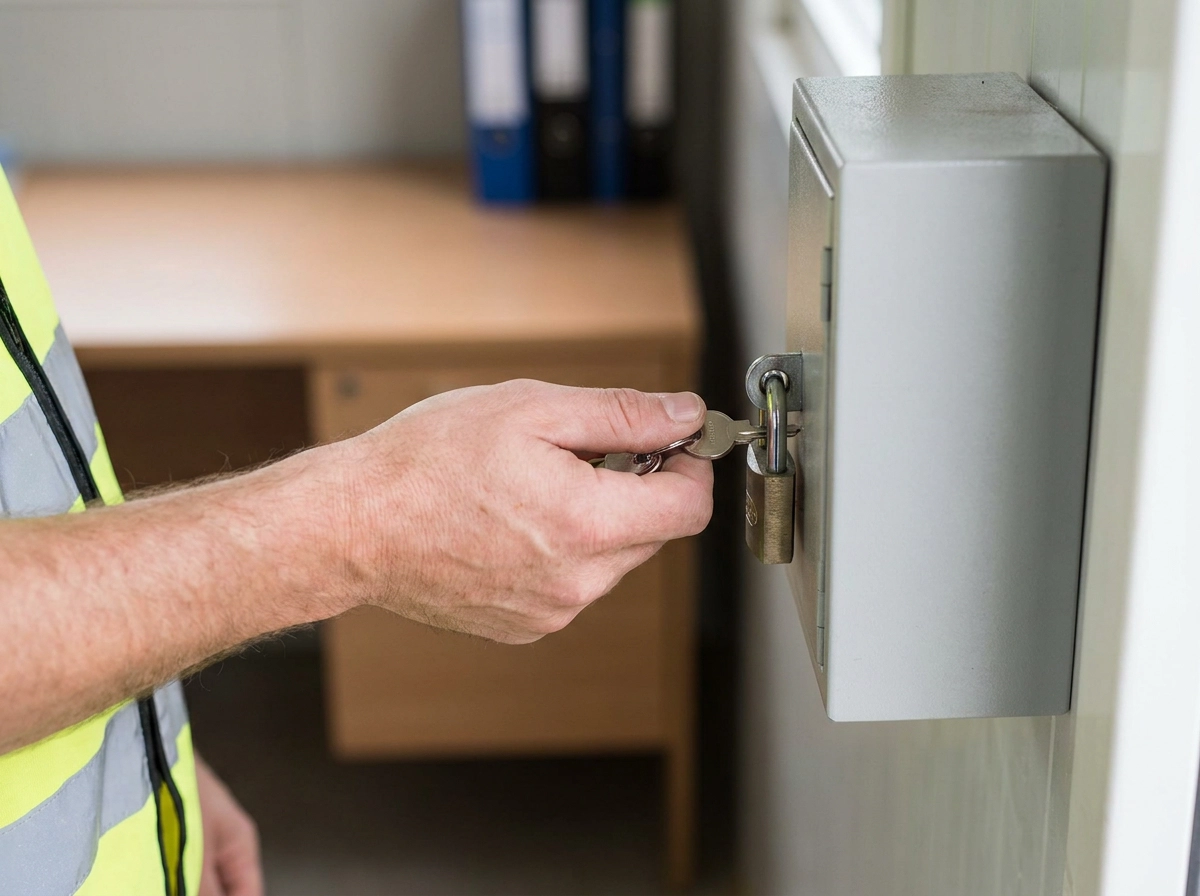
Before signing the guarding contract, confirm where the SWMS and reg 46 record physically sit (site office, locked container or cloud folder) and how a guard opens them at 2am without waking your project manager. Pick one up front: a key on the guard’s ring, a documented code, or a timed escalation path. Most clients brief guards on access control, never on where the paperwork lives. That gap is what an inspector finds.
- Does the guard’s patrol need its own SWMS? Voids, edges, penetrations and incomplete stairs are not a fence-line walk.
- Put it in site-specific post orders, not the general handbook, and reissue whenever the SWMS changes.
Frame the duty around the person conducting the business or undertaking, and verify attribution against the regulation text before a contract names principal or contractor. Construction security guards treat that as routine.
Step 2: Control Fall-Risk Area Access Without Halting Work
Map every fall-risk zone the SWMS names: voids, skylight openings, unprotected edges, incomplete stairwells. Decide what no entry after hours means physically, not on a site plan. Give the guard written authority to refuse entry, backed by a phone list when a subcontractor insists on working overnight. Align those rules with the SWMS control measures, including administrative controls that triggered a reg 46 record, so the two documents never contradict. Confirm locks, fencing, lighting and cameras match the restricted areas; paper and physical security must describe the same site. Document the day-to-night handover so rules do not drift in week one, across two shifts. Operational controls that make security stick mean nothing if guards were never briefed on the site.
Step 3: Nominate the Inspector Contact Chain
Fall-risk zones are controlled. The last link is who answers when WorkSafe arrives.
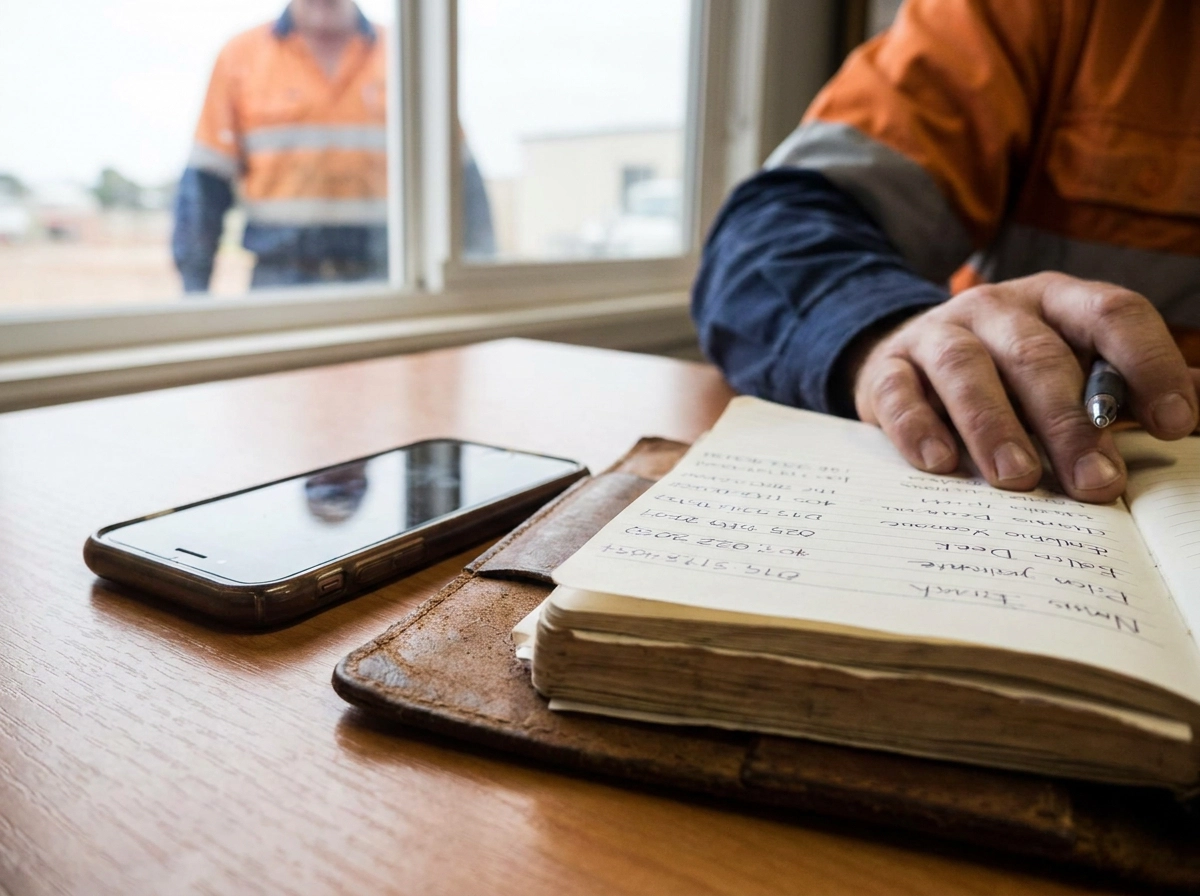
Name the guard’s first call: your site manager or the PCBU, never office reception after 5pm. Supply two named contacts with mobile numbers plus an out-of-hours backup, then test the chain with a real call before work starts. Write the escalation and external notification rules into the post orders too.
Brief guards to verify identification, stay with the inspector, and produce the requested record promptly. Nobody delays or obstructs access; a guard in the doorway turns a routine visit into a notice. Log every visit: time, inspector name, records requested, what was produced. It protects everyone if a dispute follows.

The Briefing Gap: Access Control vs Records Access
With the inspector contact chain set, close the records gap in the same sitting using this table.
| Briefed Today | Also Needs Briefing |
|---|---|
| Who enters and when they leave. | Where the SWMS folder lives and how it opens after hours. |
| Fall-risk areas marked on the site plan. | Written authority to refuse a subcontractor overnight entry. |
| Supervisor’s mobile as emergency contact. | Named inspector chain plus a tested backup number. |
| Patrol routes and alarm response in post orders. | What to do when an inspector asks for a reg 46 record at 6am. |
| Provider risk assessment covers patrol tasks. | It ignores your records, fall-risk zones and where both are held. |
A provider-led access brief makes guards accountable for both columns, not just access control. Walk every row with your provider before work starts.
The After-Hours Scenario Most Sites Get Wrong
Picture the site at 7pm. Trades and supervisor are gone; the guard is often the only person present overnight.
An inspector or night-shift worker asking for the SWMS lands entirely on the guard. If they cannot answer questions about controls they were never briefed on, that is your failure.
Readily accessible does not mean a locked office with the keyholder asleep. Someone on site must produce the record within minutes, not the next morning.
The commercial risk: an on-the-spot notice removes the cushion of fixing a gap before inspection. Paying it does not stop WorkSafe pursuing the fall-risk failure separately.
If your site is unstaffed overnight, mobile patrols and alarm monitoring can cover it, but someone still owns records access and inspector contact chain. Build that into your after-hours checklist and shutdown plan.
Pro Tip and the Pitfalls That Cost Clients Most
Nominate two named contacts for inspector arrivals, test both, and print them inside the SWMS folder cover and post orders. A number only in a shared drive is useless at 7pm.
Briefing only the guard on shift, not relief or weekend crews, is the common pitfall. Make it a standing provider instruction, reinforced through shift handover protocols.
Second pitfall: a guard holding records does not make them readily accessible to workers, HSRs and inspectors. Check the regulation text first.
Run one dry run: walk in as a stranger at 8pm, ask for the SWMS, time it. Review whenever the SWMS changes, a new trade starts or the layout shifts. A March 2027 briefing will not hold into 2028.
FAQs: SWMS Records and Fall-Risk Access
Does the guard hand over the SWMS? No. Access is limited to workers, HSRs of affected working groups, anyone engaged to work there, and inspectors.
Who does the guard call when an inspector arrives? Your nominated site manager, then the PCBU, with a tested out-of-hours backup in the post orders.
Unstaffed after hours? Mobile patrols secure it, but records access and the inspector chain still need a named owner, much like industrial warehouse security.
Are the new penalties set? No. WorkSafe has not published 2027 amounts. 2021 precedent maximums: $1,817.40 corporate, $363.48 individual.
When should we brief? Now. Post orders, records location and the contact chain need a site-specific conversation.
Conclusion
The 31 March 2027 changes reward sites that separate records access from fall-risk access. Workers, HSRs, and inspectors need a clear path to the SWMS after hours, while fall-risk areas still need controlled entry without stopping work. Name one owner for the after-hours inspector chain, including a tested backup. Brief relief and weekend crews through shift handover, not just the guard on shift. Then run the 8pm stranger test and review whenever the SWMS, trades, or layout change. Do not wait for penalties to be published. Book a site-specific briefing now and update your post orders before the deadline.
Pro Tip: Run the 8pm stranger test every quarter, time the SWMS retrieval, and close the gap before an inspector does it for you.
about
avada factory
Sempery ultricies nibh at dolor cras urna eleifend nec. Atiam efficitur tempor.