
Planning an event in Melbourne requires careful attention to detail, and nothing is more critical than the safety and security of your guests. Professional event security melbourne is not just about placing guards at doors; it’s a comprehensive strategy designed to protect attendees, assets, and your reputation. A visible, professional security presence is one of the most effective deterrents to potential issues.
Why Professional Security is Essential for Your Melbourne Event
You want your event to be memorable for its atmosphere and content, not for a security incident. Engaging a professional security company in Melbourne elevates safety from a simple checkbox to an integral part of the guest experience. It ensures experts are proactively identifying and planning for every potential risk, from minor disputes to major emergencies.
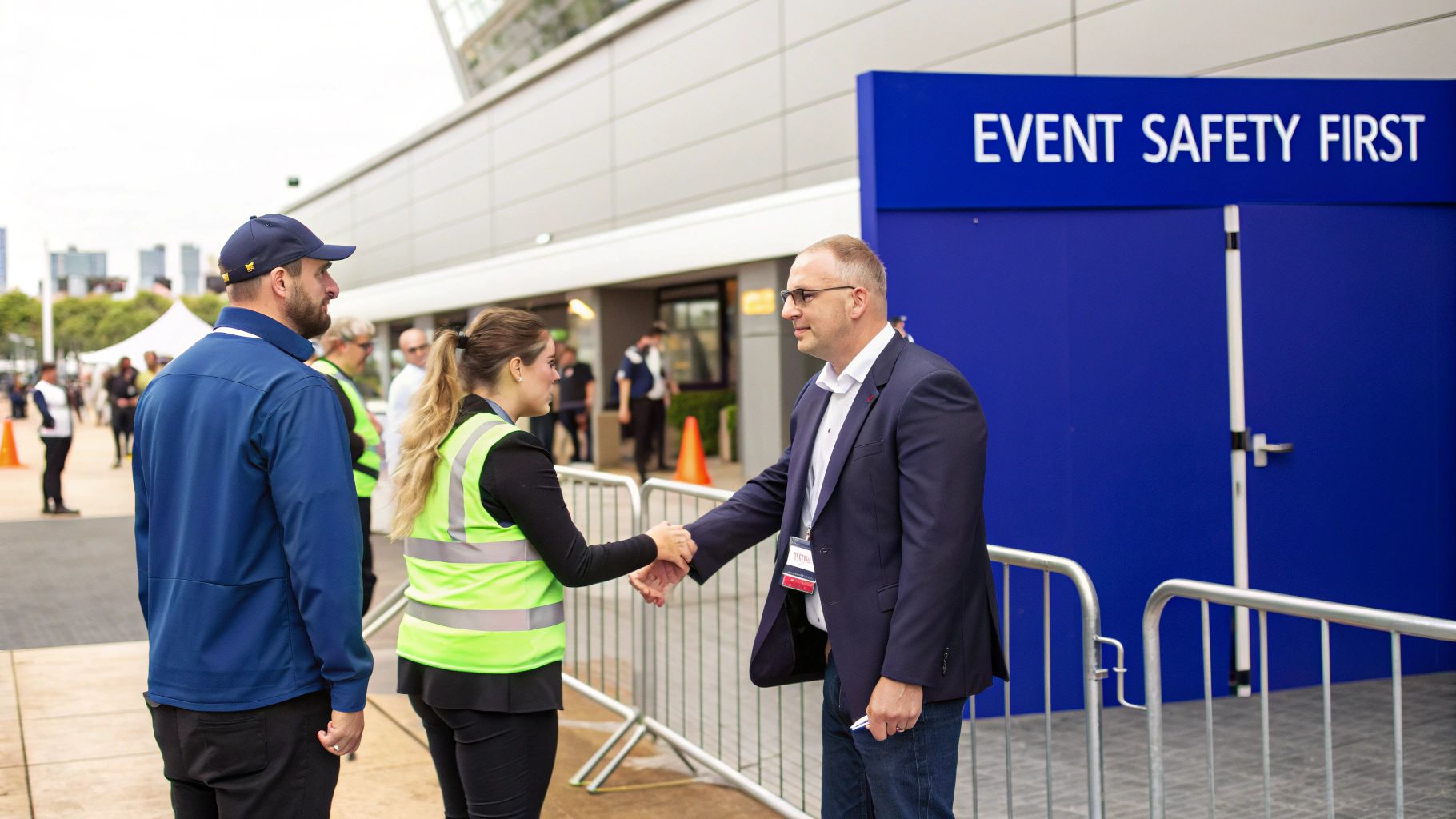
Beyond Basic Crowd Control
While managing crowds is a key function, professional event security provides a much deeper level of protection. The primary goal is to create a secure environment where your guests can relax and enjoy themselves, confident that their well-being is in capable hands.
This involves several critical functions:
- Access Control: This is your first line of defence, ensuring only ticketed or credentialed individuals enter the venue and restricted areas. It is a fundamental step in preventing unauthorised access and potential disruptions.
- Conflict De-escalation: Licensed security officers are trained in communication and negotiation. They use proven verbal techniques to resolve tense situations before they escalate, maintaining a positive and safe atmosphere.
- Emergency Response: In the event of a medical issue or fire alarm, trained guards are the immediate first responders. They are equipped to coordinate with emergency services and manage evacuations efficiently and calmly.
- Asset Protection: Your event involves valuable assets, from audiovisual equipment to vendor merchandise. Security patrols are tasked with protecting these items from theft or damage throughout the event.
Fulfilling Your Legal Duty of Care in Victoria
As an event organiser in Victoria, you have a legal “duty of care” to ensure the safety of all attendees. Failing to meet this obligation can result in severe legal and financial consequences. Hiring a licensed, insured, and compliant security provider is therefore not just advisable—it is essential for risk management.
A professional security partner ensures all operations adhere to Victorian regulations and industry best practices. Critically, this means every guard on-site holds a current, individual security licence as mandated by law.
Industry bodies like the Australian Security Industry Association Ltd (ASIAL) set the benchmark for quality and ethical conduct. Partnering with a security organisation that upholds these standards demonstrates your commitment to safety and diligence.
Ready to secure your next event? Book a consultation with Abco Security today and ensure your occasion is safe, successful, and compliant.
The First Step: A Comprehensive Risk Assessment
Before hiring security guards, a thorough risk assessment is the foundational step of any robust security plan. This process is not a mere formality; it is a strategic analysis that forms the basis for your entire approach to event security in Melbourne. It allows you to anticipate vulnerabilities and address them proactively.
The objective is to gain a clear understanding of your event’s unique risk profile. A corporate awards night in Southbank presents different challenges from a music festival at Flemington Racecourse. A detailed assessment ensures your security measures are targeted, necessary, and cost-effective.
Analysing Key Event Details for Security Planning
The initial phase involves gathering all critical information about your event. Each variable, from the crowd profile to the venue layout, directly influences the potential risks. This detailed analysis prevents the use of generic security packages that may not suit your specific needs.
Consider the following factors:
- Nature of the Event: Is it a high-profile corporate function, a public concert, or a private wedding? The event’s purpose will shape guest behaviour and potential external threats.
- Crowd Demographics: The age, interests, and expected behaviour of your audience are crucial. A family festival requires a different security posture than a university ball where alcohol is served.
- Venue Layout: A comprehensive review of the venue is essential. Examine all entry and exit points, perimeter fencing, parking areas, and proximity to public transport.
Understanding your expected attendance is also fundamental for resource planning. You might even review strategies for increasing event attendance to refine your projections.
Identifying Potential Security Vulnerabilities
With the event details established, the next step is to identify specific weak points. This involves a critical evaluation of both the physical environment and your operational plans. Engaging a professional security company Melbourne at this stage provides an expert perspective, often highlighting issues that might otherwise be overlooked.
Common vulnerabilities include:
- Unsecured Access Points: Back doors, side entrances, or service lifts can be exploited. A plan must be in place to manage guest, staff, and vendor access effectively.
- Cash Handling Areas: Ticket booths, bars, and merchandise stands are high-risk zones for theft and require dedicated monitoring.
- VIP and Backstage Zones: High-profile guests and performers require controlled, private spaces. Unmonitored green rooms or corridors pose a significant security risk.
- Perimeter Security: Poorly lit car parks or gaps in fencing can create opportunities for unauthorised access or criminal activity.
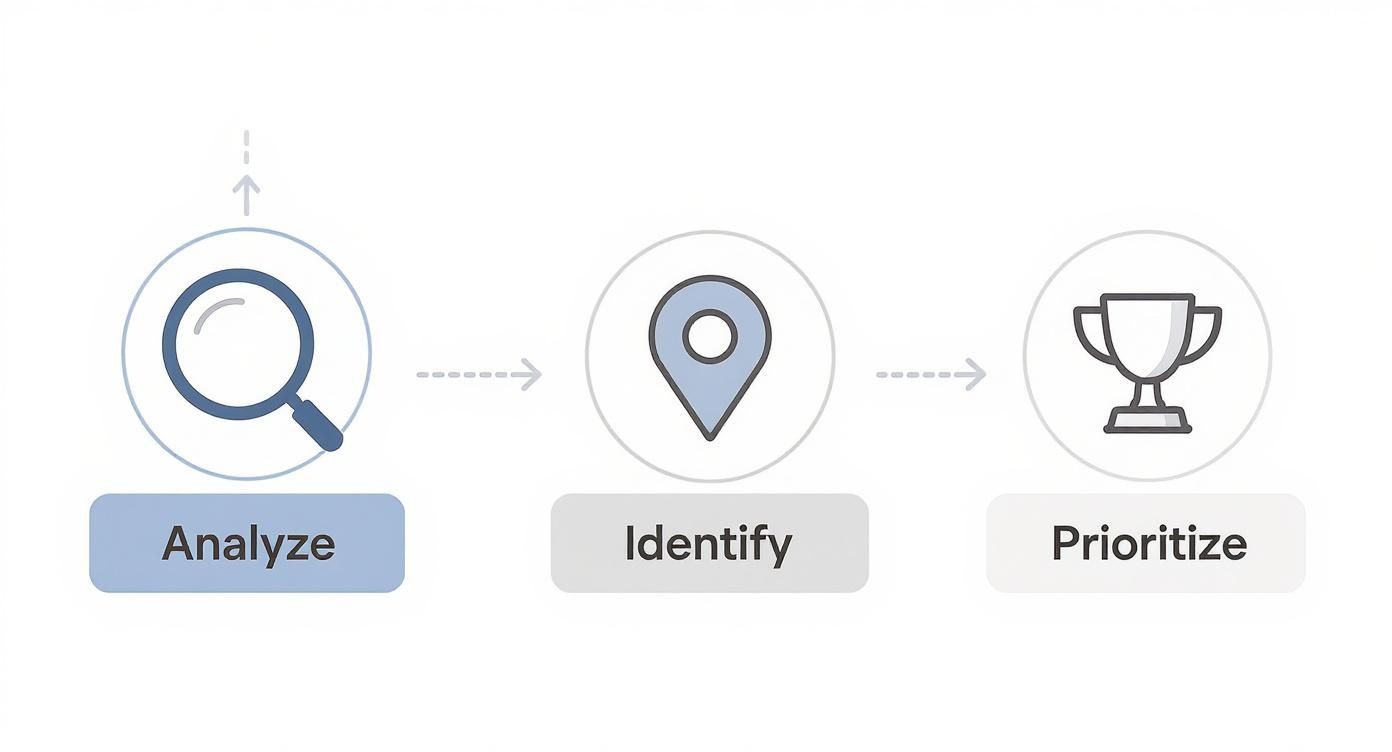
Prioritising Risks with a Security Matrix
Not all risks are equal. The final step is to prioritise the identified vulnerabilities using a risk matrix. This tool helps evaluate each risk based on its likelihood of occurring and the potential impact if it does. For example, a minor disagreement between guests may be likely but has a low impact. Conversely, a coordinated breach of a VIP area is less likely but would have a critical impact.
This systematic approach allows you to allocate your budget and personnel to the most significant threats first. To streamline this process, you can download a practical event risk assessment template. This prioritised list becomes the blueprint for an effective and efficient event security strategy.
Determining Your Security Staffing Requirements
Calculating the optimal number of security staff is a crucial balancing act. Too few guards create security gaps, while too many inflate your budget unnecessarily. Your risk assessment should be the primary driver of this decision, ensuring every deployment is justified and strategic. An effective security team works as a coordinated unit, not just a collection of individuals.
Understanding Guard-to-Guest Ratios in Melbourne
Industry standards provide a valuable starting point for determining staffing levels. In Melbourne, established norms connect the number of guards to the event’s size and risk profile.
A general guideline for public events is two security guards for the first 100 patrons, with one additional guard for every subsequent 100 people. For crowd control specifically, a ratio of one controller per 50 attendees is often recommended. This scalable model ensures adequate supervision for access control, crowd management, and emergency preparedness.
However, these are baseline figures. Your risk assessment may indicate a need for more personnel, particularly if alcohol is served or high-profile guests are present. A professional security company in Melbourne will use its experience to tailor these ratios to your unique circumstances.
Defining Key Security Roles and Responsibilities
A robust security team comprises officers with distinct, well-defined roles. Simply positioning guards at an entrance is insufficient for comprehensive protection. While managing event tickets is important, a complete plan requires several specialised functions working in concert.
Key roles to consider for your staffing plan include:
- Static Guards: Positioned at fixed points like entrances, exits, and VIP sections. Their primary duties are access control, credential checks, and providing a visible deterrent.
- Mobile Patrols: These officers cover larger areas, including perimeters, car parks, and backstage corridors. They are essential for identifying and addressing issues beyond the view of static guards.
- Crowd Controllers: Specially trained to manage the dynamics of large groups. They monitor audience behaviour, prevent overcrowding, and guide attendees during entry, exit, and emergencies.
- Supervisors/Team Leaders: For larger events, a clear chain of command is vital. A supervisor oversees the entire security operation, coordinates responses, and serves as the primary contact for you and emergency services.
Sample Security Staffing Ratios for Melbourne Events
This table offers general guidelines based on event type and risk level, helping you visualise your potential security team structure.
| Event Type | Risk Level | Guest Count | Recommended Crowd Controller Ratio | Additional Static/Patrol Guards |
|---|---|---|---|---|
| Corporate Conference | Low | 300 | 1 per 100 guests | 2-4 (entrances, keynote rooms) |
| Outdoor Music Festival | High | 5,000 | 1 per 50 guests | 15-20 (perimeter, stage, bars) |
| Private Wedding | Medium | 150 | 1 per 75 guests | 2 (entry, alcohol service area) |
| Major Sporting Event | High | 10,000 | 1 per 75 guests (seated) | 25-40 (gates, crowd control) |
| Art Gallery Opening | Low | 200 | 1 per 100 guests | 3 (artwork protection, entry) |
Note that these are estimates. Your venue’s specific layout and other risk factors will influence the final numbers.
Staffing for High-Risk Areas
Your risk assessment will have identified ‘hot spots’ that require heightened security. These are areas where incidents are more likely to occur and thus demand a stronger, more visible presence.
When finalising your staffing plan, map out these critical zones and assign dedicated personnel.
- Main Stage/Performer Areas: Require a dedicated team to ensure artist safety and prevent unauthorised backstage access.
- Bars and Alcohol Service Points: Alcohol consumption can be a catalyst for conflict. Placing crowd controllers in these areas allows for proactive de-escalation.
- Entry and Exit Gates: These can become major bottlenecks. Adequate staffing ensures smooth and safe traffic flow during peak times.
By layering these specific requirements onto your general guard-to-guest ratios, you create a security plan that is both comprehensive and tailored to your event. For more on developing these strategies, explore our guide on risk and security management.
How to Select the Right Security Company in Melbourne
Choosing a security partner is one of the most important decisions you will make as an event organiser. The right company integrates seamlessly into your team, identifying and mitigating risks proactively. This choice should be based on credentials, experience, and reliability—not just cost.
The first step is verifying compliance. In Victoria, both the security company (as a business) and its individual guards must hold valid licences. This is a non-negotiable baseline. A reputable firm will be transparent about its credentials and will likely be a member of an industry body like the Australian Security Industry Association Ltd (ASIAL).
Verifying Licences and Insurance
Before signing any contract with a security company in Melbourne, you must verify their documentation. Request a copy of their master security licence, which authorises them to operate as a security business. Additionally, confirm that every guard assigned to your event will carry their individual security licence.
Insurance is equally critical to protect you from financial and legal liability.
- Public Liability Insurance: This is mandatory. It covers costs related to injury or property damage. A minimum of $20 million is the industry standard for most events.
- Professional Indemnity Insurance: Protects against claims of negligence or failure to perform professional duties.
- WorkCover Insurance: A legal requirement that covers their employees in case of workplace injury.
Always request certificates of currency to confirm that their policies are active and provide sufficient coverage for your event’s scale.
The Importance of Relevant Experience
While a company’s years in business are notable, their specific experience with events similar to yours is what truly matters. A team adept at managing corporate conferences may not have the skills required for a large music festival. Ask for case studies or references from events that match yours in size, venue type, and crowd profile.
Understanding how experienced private security contractors in Australia adapt their strategies to different environments is key to making an informed decision.
A security provider’s willingness to provide detailed examples of past work is a strong indicator of competence and transparency. Vague answers should be considered a red flag.
A Checklist for Vetting Security Providers
To ensure a thorough comparison, use a consistent set of questions when interviewing potential security companies. This helps you evaluate their capabilities beyond the initial price quote.
Your checklist should include:
- Team Training: What ongoing training do guards receive beyond basic licensing? Look for qualifications in advanced first aid, conflict de-escalation, and emergency response.
- Emergency Planning: How will they assist in developing a tailored emergency response plan in collaboration with your team and the venue?
- Communication Systems: What equipment does their team use? Professional event security melbourne teams rely on dedicated two-way radios, not mobile phones, for reliable communication.
- On-Site Management: Will there be a designated supervisor or team leader on-site as your primary point of contact throughout the event?
- Uniforms and Presentation: How will the security team be presented? Their appearance should be professional, approachable, and easily identifiable.
Investing time in this vetting process ensures you partner with a provider that is compliant, experienced, and prepared for any contingency.
Ready to hire a security partner you can trust? Book a consultation with Abco Security to discuss your event needs.
Integrating Technology for Enhanced Event Security
Modern security strategies combine skilled personnel with advanced technology. For any significant event security Melbourne operation, technology is a force multiplier, enhancing situational awareness, efficiency, and response times. It allows your security team to shift from a reactive to a proactive posture.
When professional guards are supported by reliable systems, they can focus on what they do best: identifying potential threats and ensuring guest safety, free from the limitations of manual processes and blind spots.
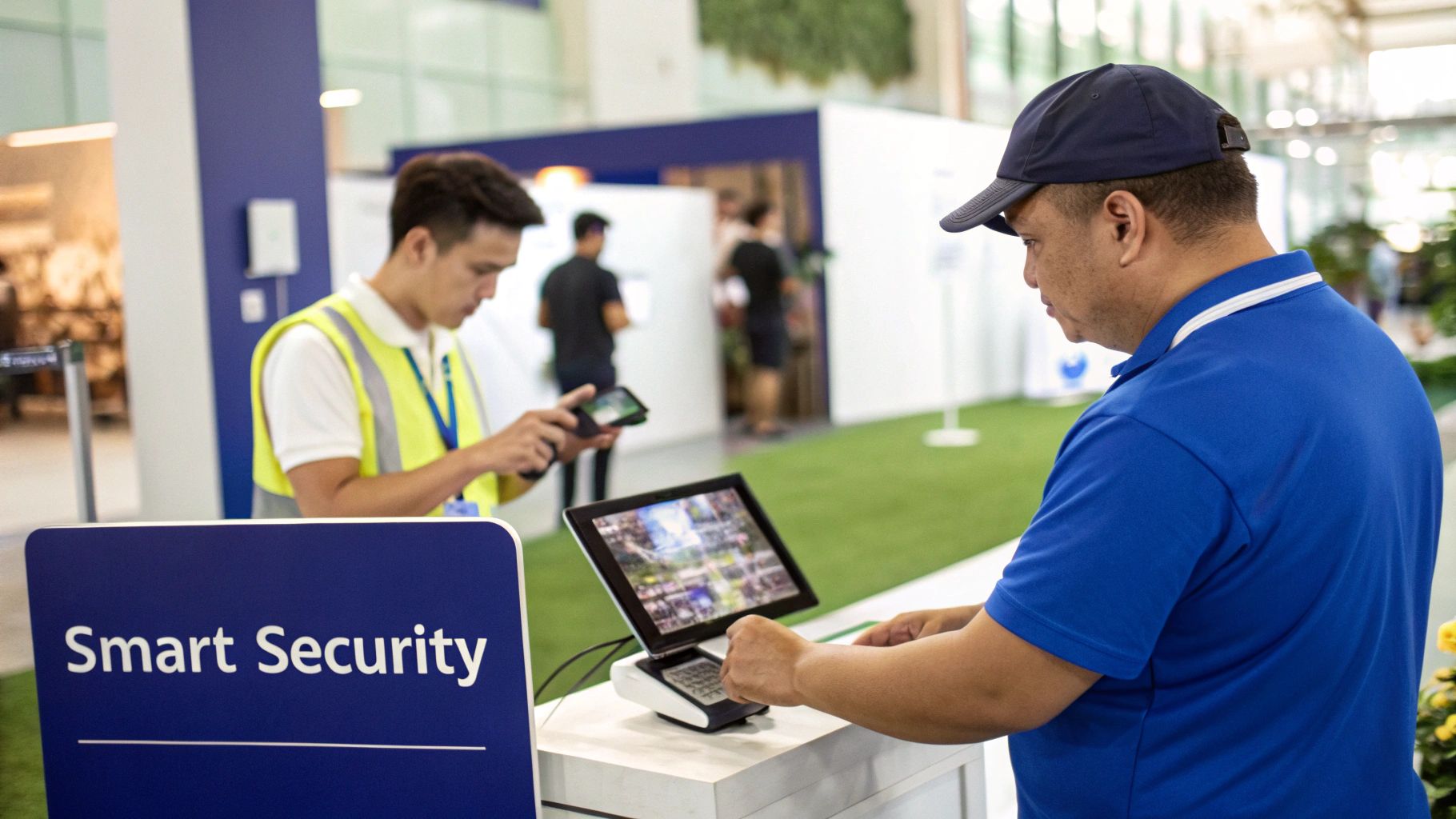
CCTV and Intelligent Monitoring
CCTV remains a cornerstone of event security. Strategic camera placement at entry points, backstage areas, and crowd hotspots provides a live overview of the entire venue.
Modern systems offer more than just recording. A professional security company Melbourne can deploy cameras with intelligent video analytics to automatically flag unusual crowd movements or unauthorised access attempts. This enables a smaller team to monitor a large area effectively. Learn more about these capabilities in our guide to professional security camera monitoring.
Reliable Communication Systems
In a security incident, clear and instant communication is paramount. Mobile phones are unreliable in crowded event environments due to signal dropouts and network congestion.
Dedicated two-way radio channels are the industry standard for this reason. They provide a private and dependable line of communication for security personnel, event managers, and emergency services, ensuring seamless coordination during any situation.
Innovations in Access Control Technology
Your first line of defence is controlling who enters the venue. Technology has transformed this process, making it faster, more secure, and more efficient.
- Digital Ticket Scanners: Validate tickets instantly, preventing fraud and providing an accurate, real-time headcount.
- RFID Wristbands: Ideal for multi-day festivals or events with tiered access. They can control entry to VIP areas and can be integrated with cashless payment systems.
These technologies improve the guest experience while giving you precise control over every entry point.
The Emerging Need for Cyber Security
Event security now extends to the digital realm. Your online ticketing platform, guest Wi-Fi network, and other digital assets are potential targets for cyber-attacks. A successful attack could disrupt operations, compromise guest data, or even disable physical security systems.
The Australian Signals Directorate reported 107 cyber supply chain incidents in 2023-2024, highlighting the real and growing nature of these digital threats. Event organisers must plan for cyber risks with the same seriousness as physical ones, as detailed in this detailed security report.
Ready to build a comprehensive security plan for your next Melbourne event? Request your service booking with Abco Security and let our experts help you integrate the right technology and personnel.
Budgeting for Your Event Security Costs
Allocating a budget for security is a critical investment in the safety and success of your event. Rather than viewing it as a mere expense, smart organisers recognise security as essential protection for their guests, assets, and reputation.
The cost of professional event security in Melbourne is not a fixed price but is influenced by several key factors. The largest component of this cost is typically the hourly rate for licensed security officers.
Understanding Security Guard Rates
The hourly rate for security personnel in Melbourne varies based on the specific risks and demands of your event. Different scenarios require different levels of skill, experience, and vigilance.
Factors influencing the rate include:
- Time of Day: Overnight shifts, weekends, and public holidays command higher rates in line with industry award conditions.
- Role and Responsibility: An officer managing VIP access requires a different skill set than one conducting perimeter patrols. Specialised roles incur higher rates.
- Risk Level: High-risk events involving large crowds, alcohol, or high-value assets demand more experienced guards, which is reflected in the cost.
In 2025, security guard rates in Melbourne typically range from AUD $37 to $105 per hour. A low-risk corporate event might fall at the lower end, while a licensed, high-energy festival will be at the upper end. For more details, review industry breakdowns of security hire costs on this industry news page.
Be cautious of unusually low quotes. They can indicate a company that is not properly insured, fails to comply with labour laws, or cuts corners on training—exposing you to significant liability.
Beyond Guard Hire: Additional Security Costs
A comprehensive security budget must account for more than just personnel. Depending on your risk assessment, you may need to factor in other equipment and services.
Consider these potential costs:
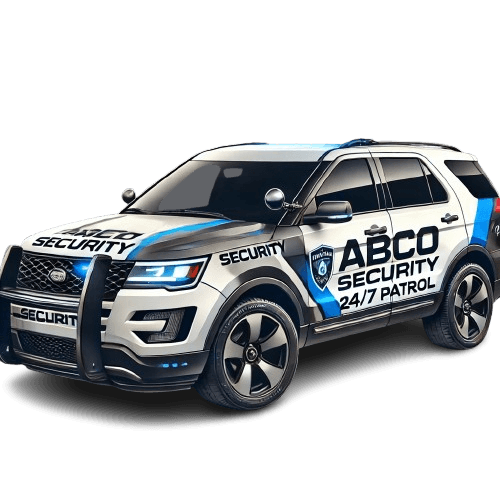
- Mobile Patrols: Large outdoor events often require dedicated vehicles for effective perimeter security, supplementing foot patrols.
- Specialised Equipment: This may include handheld metal detectors, baggage scanners, or drug detection tools for high-security checkpoints.
- Technology Integration: Temporary CCTV cameras for sensitive areas or sophisticated commercial alarm systems can provide an additional layer of protection.
The most effective way to establish a clear budget is to consult with a reputable security company in Melbourne. By providing them with your risk assessment, you can receive a detailed, transparent quote that covers all necessary components, eliminating last-minute financial surprises.
Ready to get a clear and comprehensive quote for your next event? Book your security service with Abco Security today.
Frequently Asked Questions About Event Security in Melbourne
Even with meticulous planning, questions about event security are common. Getting clear, expert answers is key to ensuring you have complete confidence in your security arrangements. Here are our responses to some of the most frequently asked questions.
How Far in Advance Should I Book Event Security?
We recommend booking your security team two to four weeks before your event. This lead time allows for a comprehensive risk assessment, the development of a tailored security plan, and the scheduling of the most suitable personnel for your specific venue and crowd.
For major events like music festivals or large corporate conferences, you should plan several months in advance. While we always strive to accommodate last-minute requests, early booking ensures access to our full range of resources and specialist guards without compromise.
What Training Do Security Guards in Victoria Receive?
Victoria maintains strict licensing requirements for the security industry. No individual can legally work in a security role without a licence issued by the Victoria Police Licensing and Regulation Division. This licence is only granted after the completion of nationally recognised training units.
This training is comprehensive, covering essential skills for effective event security, including:
- Practical conflict resolution and de-escalation techniques.
- First aid and emergency response procedures.
- A thorough understanding of legal powers and responsibilities under Victorian law.
Expert Tip: Always confirm that your chosen security company Melbourne employs only fully licensed and insured officers. Membership in a professional body like the Australian Security Industry Association Ltd (ASIAL) is another strong indicator of a provider’s commitment to high industry standards.
Can Security Guards Also Perform Guest Service Roles?
While our security professionals are trained to be approachable and can assist guests with directions or basic information, their primary responsibility is always security. Their focus must remain on risk identification, access control, and incident response.
Assigning them tasks like ticket scanning or managing information desks can create distractions that compromise their core duties. For these roles, it is best practice to use dedicated event staff who can work in coordination with the security team, allowing each to focus on their specific responsibilities.
Ready to ensure your next event is safe, successful, and professionally managed? Contact Abco Security for a detailed consultation with a team that has deep expertise in Melbourne events.
about
avada factory
Sempery ultricies nibh at dolor cras urna eleifend nec. Atiam efficitur tempor.