The delivery truck has gone, but the side gate is still propped open. Reception has closed, a former contractor's fob still works, and the car park camera records headlights rather than faces. You've paid for security equipment, yet nobody can confirm who checks these gaps before the next shift.
Site breaches can begin before an alarm sounds. A door held open for convenience bypasses the reader. An overgrown approach conceals someone from the camera. An alert sent to an unattended phone leaves the response to chance.
Effective physical security best practices connect prevention, detection, response and corrective action. They also reflect how people use a property. A construction delivery gate needs different controls from a hotel lobby, a shopping centre loading dock or a residential strata garage.
- Start with exposure: Identify where someone could reach people, equipment or restricted areas without being challenged.
- Test the response: Confirm who receives an alert and what they're authorised to do.
- Budget for operation: Include maintenance, monitoring, training and supervision, not just installation.
For managers comparing a Security Company Melbourne service with providers in Sydney, Brisbane or Perth, the important question isn't how many services appear on the proposal. It's whether the provider can explain how each control addresses your site's risks, including properties in surrounding cities within a 200km radius where travel and response arrangements need particular scrutiny.
1. Risk Assessment Aligned to ISO 31000 and WHS Duties
Commercial property failure point: purchasing equipment before defining the risk.
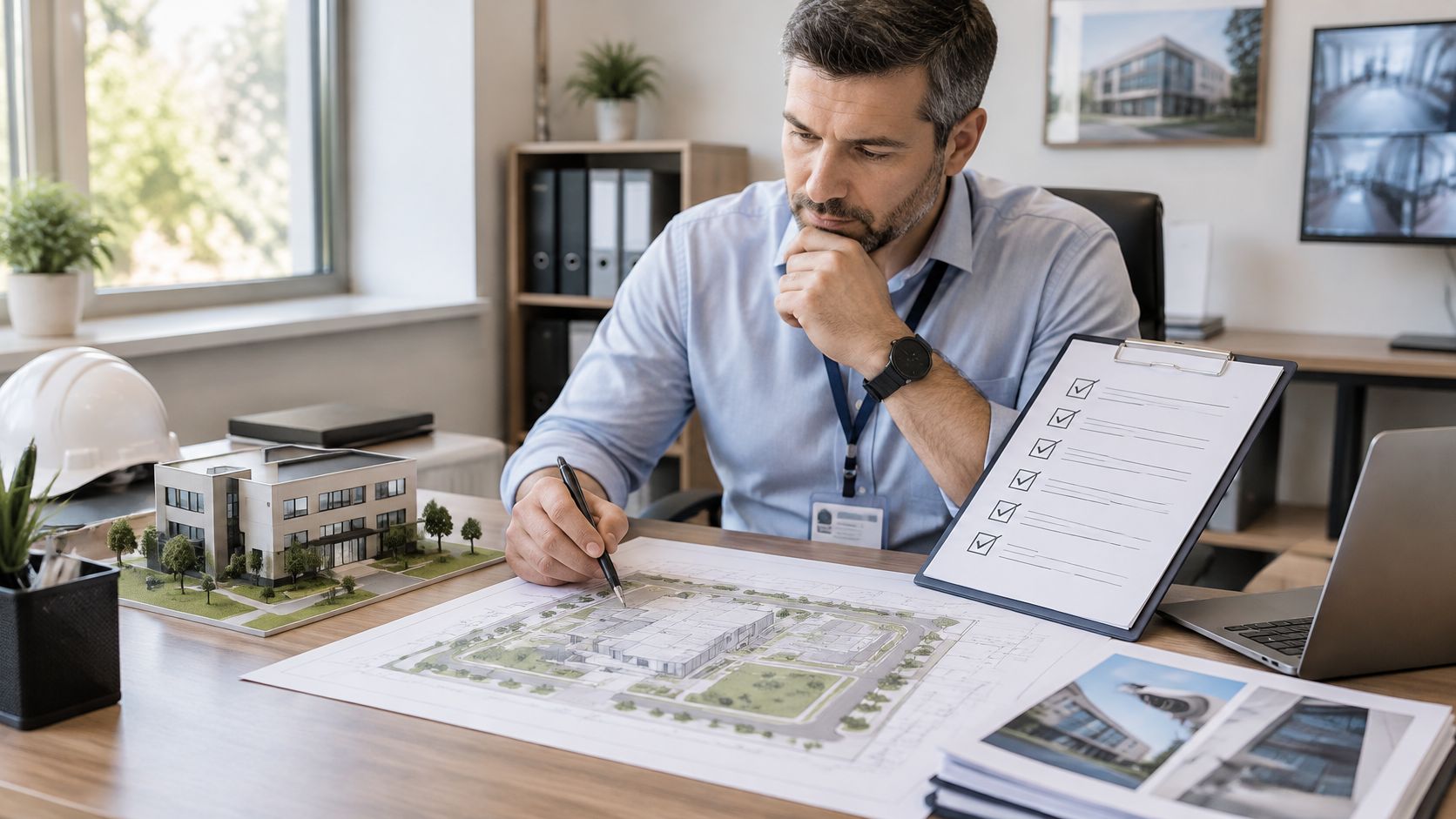
A documented assessment should identify threats, vulnerabilities and consequences, then explain why each proposed control is proportionate. Use ISO 31000 as a risk-management framework, and assess security alongside applicable WHS or occupational health and safety duties. Don't assume the same legislative arrangements apply in every state.
Local context matters. Victoria recorded 45,895 victims of unlawful entry with intent in 2024, a 25% increase from 2023, according to the Australian Bureau of Statistics recorded-crime release. Those police-recorded victims provide context, not a prediction for an individual building.
Connect Each Control to a Decision
Consider a Sydney office with after-hours lobby tailgating. Extending reception coverage might address the exposure more directly than adding cameras inside already-secured tenancy floors.
By contrast, a low-occupancy Brisbane distribution yard may suit monitored detection and Mobile Patrols, provided the response arrangements match the consequences of entry.
- Involve frontline staff: Ask cleaners, tenants, facilities teams and reception staff where procedures break down.
- Record the reasoning: Document the risk, chosen treatment, responsible person and remaining exposure.
- Review changes: Reassess after incidents, tenancy changes, altered operating hours and significant site works.
ABCO's risk assessment process provides a starting point for scoping advisory support. Compare the cost of each treatment with the exposure it addresses, rather than selecting the cheapest equipment package.
2. Layered Access Control and Credential Management
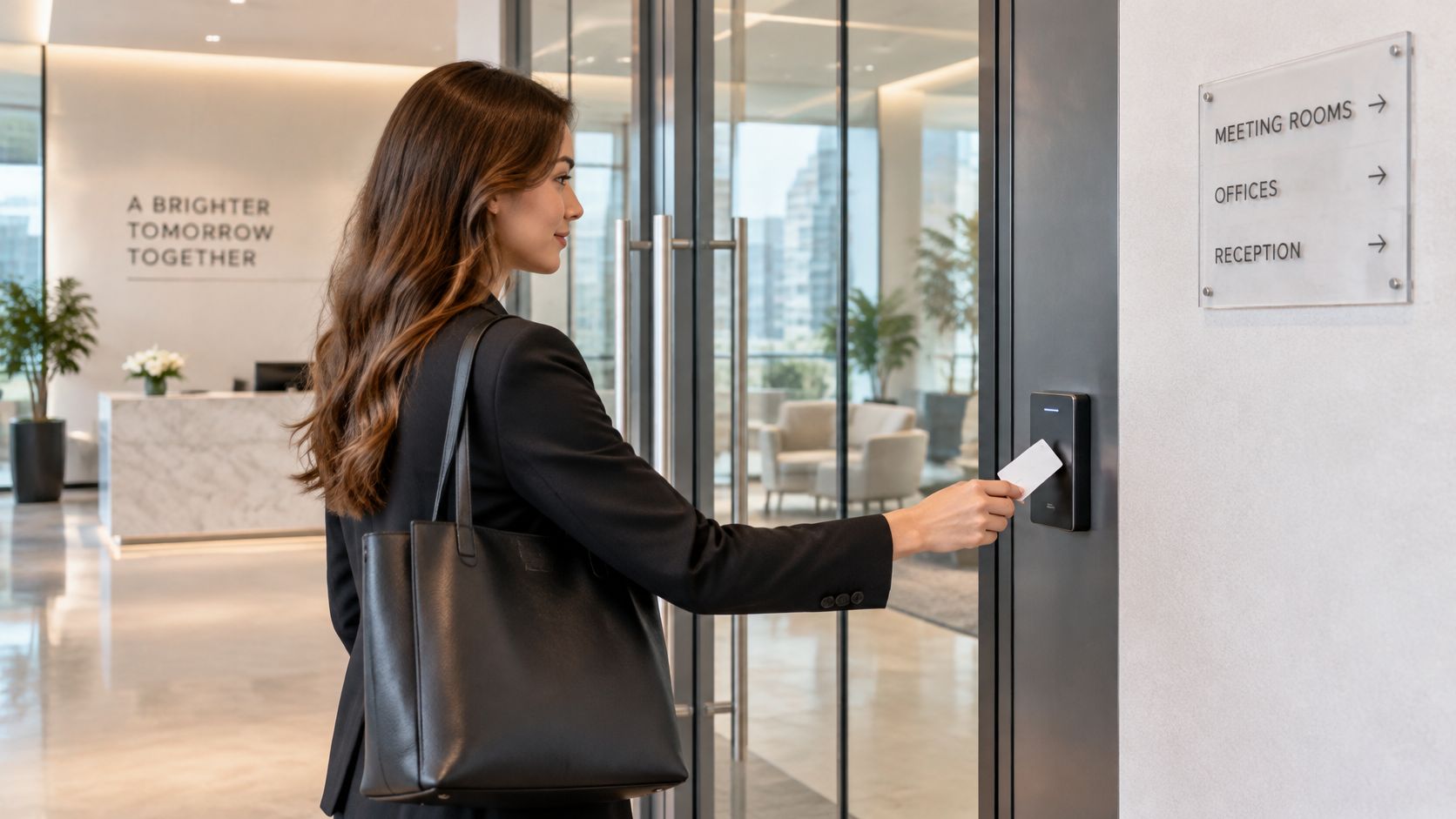
A Melbourne strata garage can have a reliable gate and still be exposed if former residents retain working fobs. Treat credential administration as part of site security, with clear ownership for issuing, changing and cancelling access.
Set permissions by area and role. A delivery driver may need the loading dock but not the plant room. A maintenance contractor may need temporary entry linked to an approved work order. The Australian Cyber Security Centre's physical-security guidance.pdf) recommends layered security zones, controlled communications-room access and protection for exposed network equipment. A secure front entrance does little if the communications cupboard is left open.
- Issue individual credentials: Avoid shared codes where access needs to be attributable to a person.
- Cancel access promptly: Include employees, contractors and residents in the departure process.
- Check reader visibility: Position cameras to show who uses the reader, not only the corridor around it.
- Test emergency egress: Confirm the locking arrangement allows required exit during an emergency.
Practical rule: If nobody owns the credential register, nobody can confidently say who still has access.
Electronic credentials bring administration and maintenance costs. Their value depends on permissions that match actual duties and records that staff can use when reviewing access. ABCO Security Services Australia's access-control systems can be scoped to cover credentials, reader placement and visitor procedures. For gate hardware terminology, the XTREME EDEALS guide to gate hardware provides background. Choose access permissions and readers around the site's operating needs.
3. Monitored CCTV and Alarm Systems with Verified Response
Industrial estate failure point: an alarm activates, but nobody knows whether it represents an intrusion or who should attend.
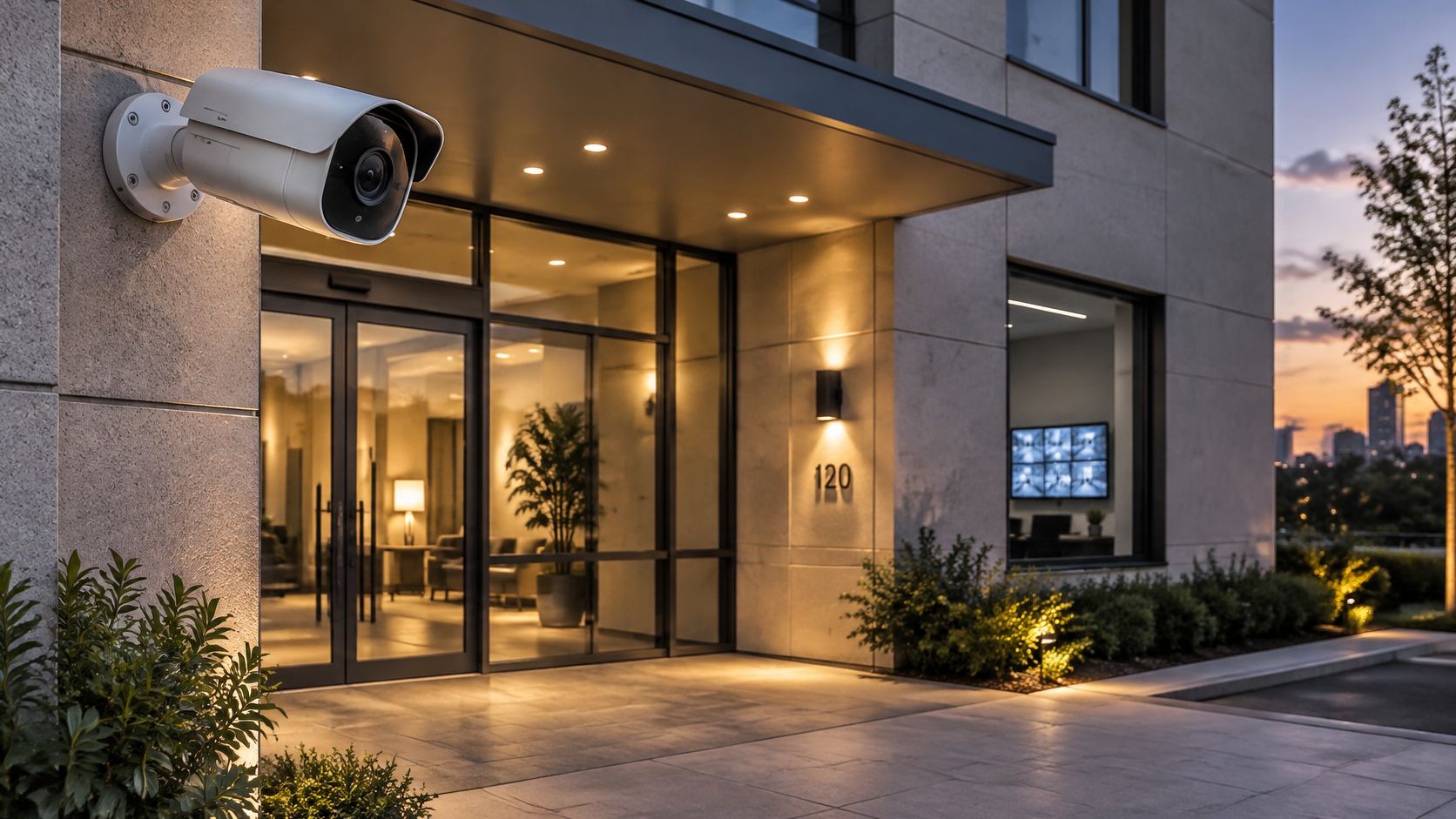
Give every camera an operational purpose. An overview camera helps an operator understand movement; a camera at an entrance should help establish who crossed the threshold. These aren't interchangeable jobs.
An Australian Institute of Criminology survey, reported by Facility Management Media, found that 57% of councils operated CCTV in 2014. That historical adoption benchmark doesn't establish effectiveness. Coverage, retrieval and response determine whether a system is useful.
Specify What Happens After Detection
For a Brisbane industrial estate, an operator could check loading-bay video when a perimeter detector activates, then dispatch a patrol with the correct gate instructions. If footage is unavailable, the procedure should specify an alternative response rather than automatically dismissing the alarm.
- Write escalation rules: Identify contacts, dispatch authority, fallback communications and emergency triggers.
- Test under site conditions: Check darkness, glare, rain, moving vegetation and delivery activity.
- Protect evidence: Synchronise clocks, control exports and confirm authorised staff can retrieve footage.
- Define acceptance requirements: Have the installer identify applicable CCTV and intruder-alarm standards, including relevant AS 4806 and AS 2201 requirements.
ABCO's CCTV monitoring service information can help frame the scope. Compare monitoring, communications, storage and maintenance costs together. A cheaper installation can create a more expensive operating problem if operators can't verify alerts.
4. Crime Prevention Through Environmental Design (CPTED)
A shopping centre car park can look clear during a daytime inspection and conceal stairwell approaches after dark. Check visibility from the driver's and pedestrian's positions, including whether landscaping blocks sightlines or lighting creates glare.
Crime Prevention Through Environmental Design uses natural surveillance, clear boundaries, managed access and maintenance to reduce opportunities for concealment. At retail sites, it complements security staff and other controls.
Test Visibility from the User's Position
At a Melbourne shopping centre, trimming shrubs near a stairwell or adjusting lighting may address poor visibility before adding another camera. At a Perth office campus, placing bicycle storage in a visible, well-used area can reduce concealment without relying on signage.
- Inspect approaches: Check pedestrian paths, bin compounds, stairwells and loading areas for concealed spots.
- Define boundaries: Make public routes clear and avoid creating unsafe dead ends.
- Maintain visibility: Include overgrown landscaping, failed lights and damaged fencing in defect reporting.
- Check patrol observations: Ask officers where sightlines to approaching people are blocked.
The following video provides context for physical security planning.
Basic maintenance may cost less than new electronics, but excavation, electrical work and accessibility changes can alter the budget. For a fencing project, how to choose local fencing contractors can help frame procurement questions. Assess the proposed fence against the site's visibility, boundaries and access needs.
5. Visitor Management and Concierge Reception
Multi-tenant office failure point: someone appears confident, names a tenant and walks past reception without host confirmation.
Concierge Security should make legitimate arrivals straightforward while preventing unverified entry. Reception staff need an approved process for visitors, couriers, tradespeople and unexpected arrivals, including what to do when a host doesn't answer.
The Australian Institute of Criminology's council CCTV report documents surveillance use across Australian public environments. For a commercial lobby, that provides useful context, but cameras still can't replace the decision to authorise a visitor.

Say a Brisbane office expects an air-conditioning contractor. Reception should confirm the work order and host, issue appropriate access and identify whether an escort is needed. A uniform and toolbox aren't sufficient authorisation.
- Pre-register expected visitors: Record the host, destination and approved attendance period.
- Close the visit: Recover passes and cancel temporary permissions.
- Protect personal information: Limit access to logs and set a justified retention process.
- Prepare for emergencies: Make visitor information available to authorised evacuation personnel without treating it as a complete occupancy count.
A welcoming reception and a controlled entrance are compatible. Staff need a polite refusal process and reliable backup.
ABCO's corporate concierge service combines reception coverage with security functions. Staffing costs should reflect arrival peaks, breaks and after-hours handovers, not just the hours the desk looks occupied.
6. Licensed Security Guarding with Clear Post Orders
A guard cannot reliably follow instructions that exist only in a property manager's memory. Security Guarding needs written post orders, current site information and supervision.
The safety implications extend beyond theft. Serious Australian workers' compensation claims for assault and exposure to workplace violence increased by 56% from 2017–18 to 2021–22, according to Safe Work Australia's workplace violence report announcement. Guarding plans should therefore address aggression, safe withdrawal and assistance, not just asset protection.
Make Instructions Usable During an Incident
Consider a Gold Coast shopping centre dealing with threatening behaviour after closing. The officer needs to know where to direct remaining patrons, when to request police assistance and whether another officer is available. An instruction to maintain security doesn't answer those questions.
- Verify authorisation: Check the appropriate state licence, permitted activities and relevant training before deployment.
- Define responsibilities: Specify patrol areas, access decisions, reporting lines and escalation authority.
- Brief each shift: Cover current hazards, failed equipment, expected contractors and unresolved incidents.
- Protect officers: Establish welfare checks, communication arrangements and limits on lone-worker intervention.
For a Melbourne construction gate, post orders should also explain vehicle checks, rejected deliveries and preservation of records following an incident.
ABCO offers guarding and Retail Security services across its operating regions. Compare proposals on supervision, relief coverage, training and reporting as well as hourly cost. A lower rate isn't a saving if inadequate staffing leaves breaks uncovered or assigns an officer incompatible tasks.
7. Mobile Patrols with Logged Checkpoints
Residential strata failure point: a patrol vehicle enters the driveway, but the officer never checks the damaged garage door or concealed pedestrian approach.
Mobile patrols cover dispersed properties without a permanent officer at each location. Their trade-off is intermittent attendance, so they cannot replace fixed access control or immediate intervention where the risk requires it.
At a Sydney strata complex, use alarm information to guide checks at garage doors, fire-access routes and known concealment points. Officers should log exceptions rather than just confirm arrival. Documented communications, incident reporting, defined responsibilities and clear access arrangements also make patrol instructions more useful at commercial and residential sites.
- Choose meaningful checkpoints: Put them at assets and hazards that need physical inspection.
- Vary attendance: Avoid unnecessarily predictable routes while maintaining the agreed coverage.
- Document defects: Record the location, observation, immediate action and person notified.
- Test response arrangements: Confirm keys, gate access, contact details and communication fallbacks.
Buying advice: Specify the inspections and escalation actions required, rather than accepting an unexplained promise of regular patrols.
ABCO's guide to mobile patrol benefits can help compare service proposals. For sites within a 200km radius of an office, confirm actual coverage, travel assumptions and dispatch arrangements before accepting response commitments.
Separate scheduled attendance from alarm response, extended incident attendance and emergency callouts in the pricing. Quotes may otherwise cover different services, making the cost comparison unreliable.
8. Construction Site Security and Asset Protection
Construction Security fails when yesterday's plan protects yesterday's site. A temporary fence moves, a new scaffold creates an approach, and delivered equipment sits outside the camera's useful view.
Start before mobilisation with perimeter arrangements, delivery controls, secure storage and an asset register. Update the plan as the build changes, including staged handovers when contractors and occupants may share access.
The ABS Crime Victimisation Survey methodology explicitly excludes crimes against commercial establishments and government agencies. Household burglary figures therefore aren't a defensible substitute for assessing a construction project's exposure.
Control Materials as Well as People
Consider a Brisbane civil project receiving deliveries through a temporary entrance. Match the booking, supplier and delivery docket before directing the driver to an unloading area. Record discrepancies while the delivery is present, rather than trying to reconstruct them after materials have moved.
- Maintain asset records: Photograph high-value equipment and record identifying details.
- Control departures: Establish authorisation for equipment and material removal.
- Reposition detection: Review camera views whenever hoardings, storage or work fronts change.
- Secure temporary technology: Lock CCTV recorders, network cabinets and access-control panels.
- Assign closing checks: Confirm gates, storage containers, lighting and emergency access.
Mobile CCTV towers can suit changing layouts, but power, connectivity and monitoring still need management. Tool marking assists identification; it doesn't prevent removal.
ABCO provides construction and asset-protection services across its operating regions. Scope guarding, electronic detection and delivery control together so the project doesn't pay separately for overlapping tasks while leaving another exposure untreated.
9. Event Security Planning and Crowd Management
An orderly entrance can become unsafe when queues obstruct an emergency route or departing patrons meet incoming crowds. Event Security starts with capacity, flow and command, not guard numbers alone.
The NSW Government event safety guide calls for emergency planning with the venue or landowner, defined command arrangements and appropriate emergency-service consultation. It also identifies crowd control as an activity requiring appropriate licensing in NSW.
For a Melbourne festival, plan how entry lanes, accessible routes and emergency access will remain usable during peak arrivals. A City of Boroondara event guide specifies at least two assembly points in safe areas away from hazards, alongside capacity, flow, communications and accessibility planning.
Brief Against the Actual Site Map
- Assign positions: Identify each controller's gate, zone, supervisor and radio channel.
- Define triggers: Specify when congestion, weather or disorder requires escalation.
- Protect access: Keep emergency lanes and evacuation routes unobstructed.
- Test communications: Check coverage and fallback methods before opening.
Perth organisers should also address the different response options identified in the City of Perth event guidance, including full, partial and phased evacuation, and invacuation or lockdown.
Don't treat interstate guidance as interchangeable legal requirements. Confirm local permits, venue conditions and licensing obligations.
ABCO designs event security and crowd-control arrangements. Budget for planning, briefings, relief and post-event dispersal as well as public opening hours. Cutting those activities can leave controllers without the information or coverage needed when conditions change.
How the nine physical security best practices compare by sector, control type and best use
Use this comparison to identify which practice fits your sector and site conditions, then weigh its control type against the problem it needs to address.
| Item | Primary Sector | Control Type | Best Suited To |
|---|---|---|---|
| Risk Assessment Aligned to ISO 31000 and WHS Duties | Cross-sector | Risk assessment and planning | Workplaces needing evidence-based security controls and WHS alignment |
| Layered Access Control and Credential Management | Commercial property | Electronic and physical access control | Sites with restricted areas, staff credentials, and visitor access |
| Monitored CCTV and Alarm Systems with Verified Response | Commercial and industrial | Electronic surveillance and alarm monitoring | Multi-site properties and locations needing verified incident response |
| Crime Prevention Through Environmental Design (CPTED) | Retail and mixed-use property | Environmental design and passive security | Shopping centres, car parks, and shared public spaces |
| Visitor Management and Concierge Reception | Corporate and government | Reception, identity checks, and visitor logging | Offices and multi-tenant buildings with regular visitor traffic |
| Licensed Security Guarding with Clear Post Orders | Cross-sector | Manned guarding and site procedures | Sites needing visible deterrence, human response, or crowd support |
| Mobile Patrols with Logged Checkpoints | Industrial, retail, and residential | Mobile patrol and checkpoint logging | Large, dispersed, or out-of-hours properties |
| Construction Site Security and Asset Protection | Construction | Perimeter security and asset protection | Changing sites with valuable equipment, materials, and contractor traffic |
| Event Security Planning and Crowd Management | Events and venues | Crowd control and emergency planning | Festivals, stadiums, and events with concentrated crowds |
Turning Nine Practices Into a Working Security Program
Start with a documented risk assessment, then rank the remaining practices by the risks it identifies. Repair an uncontrolled entrance before buying another dashboard. Address a missing response procedure before expanding a system that already generates unattended alerts.
Give every control a named owner. Facilities may own door repairs, HR may trigger credential cancellation, tenants may approve visitors, and the security provider may manage patrol reporting. The property manager should confirm that these responsibilities connect rather than assuming another party handles the gap.
Build a Review Routine People Can Maintain
Schedule quarterly access and camera audits, supported by operational checks between formal reviews. Review post orders after every significant incident and check whether the change reaches relief officers as well as the regular team.
- Access review: Confirm active credentials still match current roles, contracts and tenancy arrangements.
- Camera review: Check coverage, image quality, recording availability and authorised retrieval.
- Response exercise: Test an alert through to acknowledgement, dispatch and site access.
- Corrective-action review: Close defects with evidence, not merely a completed status field.
Measure warning signs as well as completed offences. Propped doors, repeated rejected credentials, missed visitor sign-outs, unavailable cameras and unanswered escalation calls can expose weaknesses before a major loss.
For residential and strata managers, post-incident action deserves particular attention. Twenty-one per cent of Australian households that experienced a break-in during 2023–24 reported multiple incidents, according to the ABS Crime Victimisation release. That household finding supports prompt corrective review in residential settings; it shouldn't be presented as a commercial-property repeat-offence rate.
Compare the Full Operating Cost
Ask providers to separate installation, monitoring, staffing, maintenance, response attendance and reporting. Confirm who supplies replacement equipment, manages software access and attends when communications fail. A clear scope makes quotes comparable and reduces disagreements during an incident.
For portfolios across Melbourne, Sydney, Brisbane, Perth and surrounding cities, maintain consistent reporting without imposing identical controls on every property. A staffed corporate lobby, an isolated manufacturing yard and a hospitality venue need different operating arrangements.
ABCO Security Services Australia is an option for coordinating personnel, patrols and electronic security within a site-specific plan. Bring the current risk register, site map, incident records and existing contracts to an assessment so recommendations address actual gaps rather than duplicate services.
ABCO Security Services Australia offers risk assessments, Security Guarding, Mobile Patrols, access control and monitored electronic security to support a coordinated site security program. Visit ABCO Security Services Australia to discuss your property's operating hours, vulnerable areas and response requirements, and request a customized scope for your location.
about
avada factory
Sempery ultricies nibh at dolor cras urna eleifend nec. Atiam efficitur tempor.