TL;DR:
- Choosing a licensed security provider in Australia ensures proper installation, monitoring, and maintenance of your system. It is crucial to verify licences, assess monitoring arrangements, and review detailed quotes before committing. A professional service offers integrated solutions with documented plans, reducing risks and enhancing protection.
For a licensed, monitored, and professionally supported security system in Australia, Abcosecurity is the recommended integrated provider. They hold a state-issued Master Licence, operate with 24/7 accredited monitoring, and back every installation with written maintenance and warranty agreements. Before you sign anything with any provider, run three quick checks:
- Verify the Master Licence via your state registry (NSW Police SLED, Consumer Affairs Victoria, or the equivalent in your state).
- Confirm A1-grade monitoring — ask whether the monitoring centre is in-house or subcontracted, and request the accreditation details.
- Request a written maintenance and warranty agreement before installation begins.
Pro Tip: Ask any provider for their licence number on the first call. A reputable company will give it without hesitation. If they stall or deflect, that tells you everything you need to know.
Unlicensed installation is illegal in every Australian jurisdiction and can void your property insurance outright. Start with a licence check, not a price comparison.
Table of Contents
- What do reputable Australian security companies actually provide?
- How do you choose the right security company in Australia?
- What does professional 24/7 monitoring actually mean?
- What should a professional installation and maintenance plan include?
- Why Abcosecurity meets the criteria
- Key takeaways
- The part most buyers get wrong
- Abcosecurity offers licensed installs and monitored protection across Australia
- Useful sources for licence and accreditation checks
- FAQ
What do reputable Australian security companies actually provide?
The best home security services and commercial security providers offer more than a box of hardware and a handshake. A full-service provider covers the following:
- Site risk assessment — a physical inspection to identify vulnerabilities before any equipment is specified.
- Custom alarm systems — intrusion detection configured to your building’s layout, not a one-size-fits-all kit.
- CCTV and security cameras — camera placement and specification tailored to coverage gaps identified in the site assessment.
- Access control — electronic locks, key-card readers, or biometric entry management for controlled areas.
- 24/7 professional monitoring — trained operators in an accredited centre watch for alarm signals around the clock and dispatch responders when needed. This is distinct from self-monitoring, where you receive an app alert and decide what to do yourself.
- Mobile patrols and security guards — physical presence on site, either scheduled or as a rapid response to an alarm event.
- Smart-home and business system integration — connecting alarms, cameras, and access control into a single platform you manage from one interface.
Licensed technicians are required for alarm installation, CCTV wiring, and access control in most Australian states. Security guarding and patrol services require individual guard licences. ASIAL membership is a further signal that a provider follows recognised industry training and standards — ask to see proof.
How do you choose the right security company in Australia?
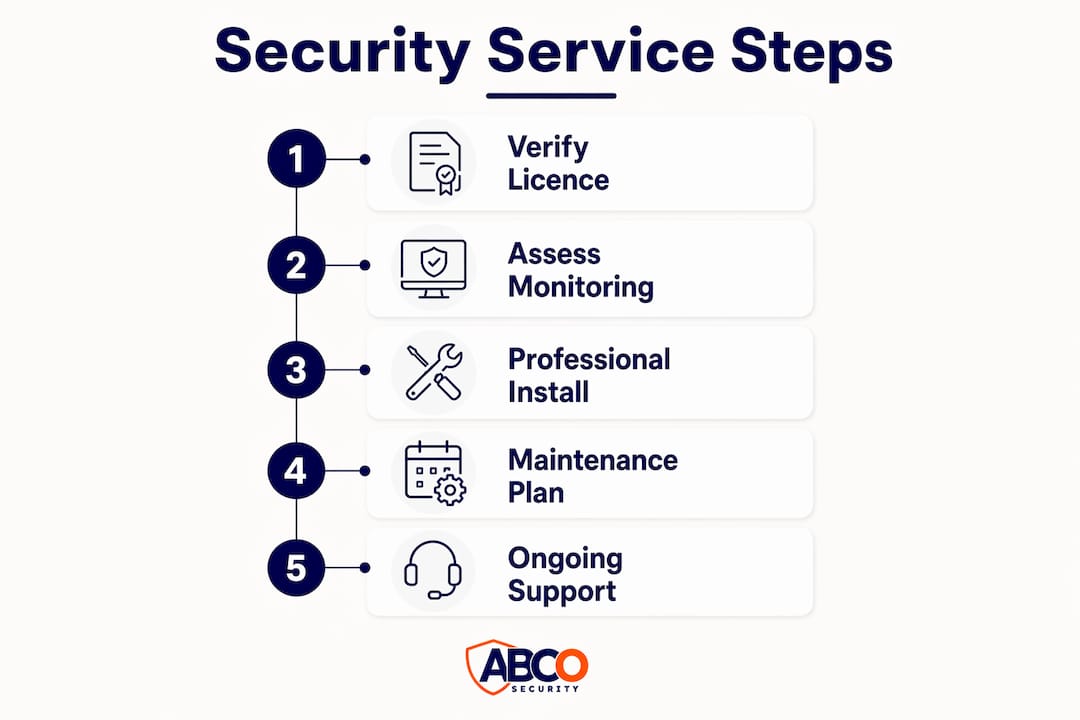
1. Verify licences before anything else
State-issued licences are mandatory for security companies and individual technicians across Australia. Check the company’s Master Licence and each technician’s individual registration through:
- NSW: NSW Police Force Security Licensing & Enforcement Directorate (SLED)
- Victoria: Consumer Affairs Victoria
- Queensland: Office of Fair Trading
- WA, SA, ACT, NT, TAS: each state and territory has an equivalent licensing body
You can learn more about how security licences work before you start calling providers.
2. Assess the monitoring arrangement
Ask directly: does the company operate its own accredited monitoring centre, or does it subcontract? Reputable firms disclose this upfront. Subcontracting is not automatically a problem, but it changes who is accountable when something goes wrong at 2 AM.

3. Scrutinise the quote and contract
Itemised written quotes should separate equipment costs, installation fees, activation charges, and ongoing monthly monitoring. Watch for:
- Vague line items like “system package” with no breakdown
- Lock-in periods longer than 24 months with no exit clause
- Monitoring fees that increase after an introductory period
4. Ask these questions on the first call
- What is your Master Licence number, and which state issued it?
- Is your monitoring centre in-house or subcontracted? What is its accreditation grade?
- What is your average response time after alarm verification?
- Can you show examples of similar installs in my sector or suburb?
- What does your warranty cover, and for how long?
- What happens to my monitoring if your company is acquired or closes?
5. Red flags to walk away from
- High-pressure tactics or a request to sign on the spot
- Inability or refusal to provide a licence number or photo ID
- Unusually low prices with no explanation of what is excluded
- No written warranty or service agreement offered
- Vague pricing or verbal-only quotes
Pro Tip: At handover, request full user account credentials, a walkthrough of the system, and a documented maintenance schedule. Providers who skip this step are setting you up for a support call six months later when no one remembers the admin password.
What does professional 24/7 monitoring actually mean?
Professional monitoring means trained operators in an accredited centre watch your alarm signals around the clock. When a signal triggers, they do not simply forward it to police. A typical verification workflow looks like this:
- Signal received — the monitoring centre receives an alarm event from your system.
- Verification — the operator checks available camera feeds, listens to audio (where equipped), or calls the property owner or a nominated contact.
- Dispatch decision — if the threat is confirmed or uncontactable, the operator dispatches police, a guard patrol, or both.
- Incident logging — the event is documented for insurance and review purposes.
This verification step matters because it reduces false alarms and improves the appropriateness of the response. Police services in most Australian states deprioritise unverified alarm calls, so a monitoring centre that skips verification is effectively reducing your protection.
A1-grade accreditation is widely cited as a reliability indicator for monitoring centres. When evaluating providers, ask for the monitoring centre’s accreditation grade and confirm it independently. Whether the monitoring is in-house or subcontracted changes accountability — specifically, who you escalate to if the centre misses an event or fails to dispatch.
What should a professional installation and maintenance plan include?
The installation checklist
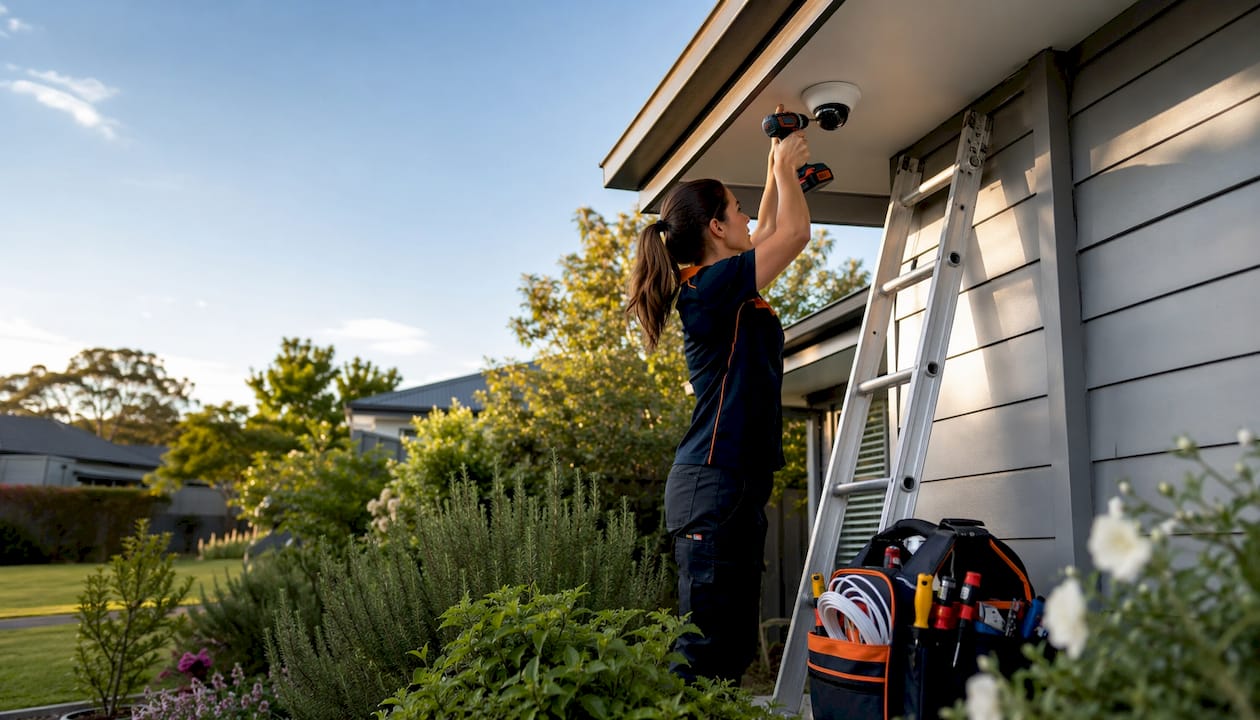
A professional install is not just mounting cameras and running cable. Before sign-off, confirm the technician has:
- Conducted a full site scan and documented device placement rationale
- Secured all wiring against tampering and weather exposure
- Configured all devices, zones, and user accounts
- Tested every sensor, camera, and communication path end-to-end
- Provided a handover walkthrough with all users who will operate the system
For CCTV specifics, the guide to installing security cameras at home covers placement considerations and regulatory notes relevant to Australian properties.
Integration and future-proofing
If you are connecting alarms and cameras to an existing smart-home or building management platform, confirm the provider supports your specific protocol before hardware is ordered. Ask about firmware update schedules and whether spare parts for your chosen devices will be available in five years. Local providers with a long-term footprint tend to handle this better than national resellers with no local service team.
What a maintenance plan should cover
Security systems are not set-and-forget. Good providers include a documented maintenance plan covering:
- Scheduled battery checks (typically every 12 months)
- Firmware and software updates as they are released
- Annual physical inspection of sensors, cameras, and wiring
- Response SLAs for equipment faults (e.g., next business day or 4-hour emergency response)
- Clear process if monitoring changes hands or the provider is acquired
Request this in writing before installation. A warranty that covers parts but not labour — or that expires before the first scheduled inspection — is not worth much.
Why Abcosecurity meets the criteria
Abcosecurity has operated for many years across Australia, covering construction sites, healthcare facilities, corporate offices, retail businesses, educational institutions, and residential communities. Their credentials against the selection criteria above:
- Licensed technicians with verified individual registrations and a state-issued Master Licence
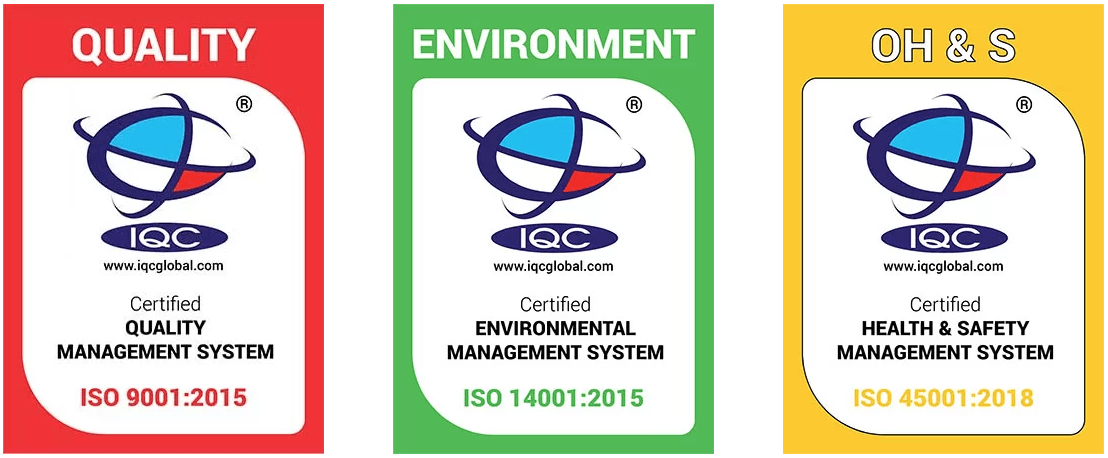
- ISO 9001 and ISO 30000 certifications — quality management and security management standards that go beyond the minimum licensing requirement
- 24/7 monitoring through an accredited monitoring centre, with documented verification protocols
- Integrated service model — installation, monitoring, and maintenance under one agreement, which removes the accountability gap that appears when you use separate providers for each
- Written maintenance plans and warranty agreements provided at handover as standard
[Case study and testimonial placeholders: insert first-hand client case studies, sector-specific incident-reduction data, and verified client testimonials here before publication.]
Abcosecurity’s approach to site assessments covers risk identification, system design, and a clear proposal before any commitment is required. For business owners evaluating integrated security solutions, the site assessment is the logical starting point.
Pro Tip: When you contact Abcosecurity for a site assessment, bring a floor plan or site map if you have one. It shortens the assessment and leads to a more accurate quote.
Key takeaways
Choosing a security provider in Australia comes down to one non-negotiable: licensed, accredited, and documented from day one.
| Point | Details |
|---|---|
| Verify licences first | Check the Master Licence and individual technician licences via your state registry before any other step. |
| Confirm A1-grade monitoring | Ask whether monitoring is in-house or subcontracted, and request the accreditation grade in writing. |
| Demand an itemised quote | Separate equipment, installation, activation, and monthly monitoring costs before you compare providers. |
| Get maintenance and warranty in writing | A maintenance plan covering battery checks, firmware updates, and fault response SLAs protects you long-term. |
| Abcosecurity | Holds ISO 9001 and ISO 30000 certifications, extensive experience, and offers integrated installation, monitoring, and maintenance across Australia. |
The part most buyers get wrong
The most common mistake Australian homeowners and business owners make is treating security as a product purchase rather than a service relationship. They compare upfront hardware costs, pick the cheapest quote, and discover six months later that the monitoring is subcontracted to a centre with no local knowledge, the warranty excludes labour, and the technician who did the install is unreachable.
The providers worth hiring are the ones who push back a little during the assessment — who tell you a camera placement will not work because of a lighting issue, or who recommend against a particular device because spare parts are scarce. That friction is the sign of someone managing your risk, not just closing a sale.
Integrated service matters for a specific reason: when installation, monitoring, and maintenance sit with separate companies, the accountability gap between them is where failures hide. The monitoring centre blames the installer. The installer blames the monitoring configuration. You are left with a system that triggered three false alarms last week and missed a real event on Tuesday. Keeping all three under one agreement does not guarantee perfection, but it does mean there is one number to call and one party responsible for the outcome.
Abcosecurity offers licensed installs and monitored protection across Australia
Abcosecurity delivers integrated security solutions for homes and businesses across Australia: licensed installation, accredited 24/7 monitoring, and documented maintenance plans under a single agreement. Whether you are securing a construction site, a healthcare facility, or a family home, the process starts with a no-obligation site assessment that maps your risks before any hardware is specified.
Contact Abcosecurity to arrange a site assessment and receive an itemised quote. Before you sign with any provider, verify their Master Licence through your state registry and confirm the monitoring accreditation grade in writing.
Useful sources for licence and accreditation checks
Use these official registries to independently verify any security company or technician before hiring:
- NSW: NSW Police Force SLED — search Master Licence and individual technician registrations
- Victoria: Consumer Affairs Victoria — verify security business and individual licences
- Queensland: Office of Fair Trading — security industry licence search
- WA: Department of Justice — security agent licence register
- SA: Consumer and Business Services — security and investigation industry licences
- ACT: Access Canberra — security industry licensing
- NT and TAS: Respective licensing authorities; contact details available through each territory’s consumer affairs office
For industry standards and monitoring accreditation, the Australian Security Industry Association Limited (ASIAL) publishes guidance on monitoring centre grades and member verification. Ask any provider to confirm their ASIAL membership number and cross-check it on the ASIAL member directory. When using a state registry, search by licence number (if provided) and by company name. A result showing “current” or “active” status with a matching name and ABN is the confirmation you need.
Physical lock integrity is also part of a complete security plan. For context on how locksmith services fit into an overall security strategy, general resources are available, though Australian-specific licensing requirements for locksmiths differ by state.
FAQ
What is the best security system company in Australia?
The best provider is one with a verified state-issued Master Licence, A1-grade accredited 24/7 monitoring, and a written maintenance agreement. Abcosecurity meets all three criteria and has operated across Australia for many years.
How much does a monitored security system cost in Australia?
Costs vary by system size and monitoring model. As a general guide, professional installation for a residential system typically ranges from a few hundred to several thousand dollars, with ongoing monthly monitoring fees on top. Always request an itemised quote that separates hardware, installation, and monitoring charges.
What security system do burglars avoid most?
Monitored alarm systems with visible CCTV cameras and professional response are the strongest deterrent. The combination of a verified alarm signal and a rapid dispatch response removes the window of opportunity that unmonitored systems leave open.
How do I verify a security company’s licence in Australia?
Search the company’s Master Licence number through your state registry — NSW Police SLED, Consumer Affairs Victoria, or the equivalent body in your state. Ask the provider for their licence number on the first call; a reputable company provides it immediately.
What questions should I ask before signing a security contract?
Ask for the Master Licence number, monitoring centre accreditation grade, whether monitoring is in-house or subcontracted, the contract length and cancellation terms, and a written maintenance and warranty schedule. Any provider who cannot answer these clearly is not worth hiring.
Recommended
about
avada factory
Sempery ultricies nibh at dolor cras urna eleifend nec. Atiam efficitur tempor.