
Planning an event involves countless details, but none are more critical than the safety of your guests. A professional event security service is the cornerstone of a successful gathering, moving far beyond simply placing guards at doors. It is a comprehensive strategy of risk management, expert personnel, and proactive measures designed to ensure any event, from a corporate function to a major festival, runs smoothly and safely.
This guide explains the essential elements of a professional security plan, highlighting the importance of compliance, local expertise, and reliability in the Australian security industry.
What is an Event Security Service?
An event security service provides a protective framework for your gathering. It is a specialised safety net, built on meticulous planning and executed by licensed professionals, designed to mitigate risks and manage any potential incidents. Without this structure, even the best-organised events are vulnerable to disruptions.
A professional security provider acts proactively, not reactively. The process begins long before the event with a detailed risk assessment of the venue, anticipated crowd behaviour, and potential threats. This initial analysis is crucial for developing a security plan tailored specifically to your event’s unique challenges.
Core Responsibilities of Event Security
The primary goal of an event security service is to create a controlled, safe, and enjoyable atmosphere for everyone. This involves a range of coordinated activities performed by trained security guards.
Key responsibilities typically include:
- Access Control: Managing entry and exit points by checking tickets, verifying guest lists, and securing restricted areas like backstage or VIP lounges.
- Crowd Management: Directing guest flow to prevent overcrowding, monitoring crowd dynamics, and de-escalating potential conflicts before they arise.
- Emergency Response: Acting as first responders in case of a medical issue, fire, or security threat, including managing evacuations and liaising with emergency services.
- Visible Deterrence: The professional presence of uniformed security personnel helps deter misconduct, prevent theft, and reassure guests.
An effective security strategy enables enjoyment, it doesn’t restrict it. By managing risks behind the scenes, professional security allows organisers and guests to focus on the event itself.
Why Professional Expertise is Non-Negotiable
Engaging a licensed and experienced security company in Melbourne is essential for meeting Australia’s strict industry standards. Organisations like the Australian Security Industry Association Ltd (ASIAL) set the benchmark for compliance, ensuring all security personnel hold the correct state-based licence and maintain up-to-date training.
This compliance is your guarantee that the team protecting your event understands local laws, is skilled in conflict resolution, and can execute an emergency plan flawlessly. You can learn more about our tailored event security solutions.
The Blueprint for a Secure Event
Effective event security is not an afterthought; it is a detailed blueprint developed well in advance. This custom strategy is built from the ground up to align with your specific venue, audience, and objectives, forming the foundation for a safe and successful event.
The entire process starts with a thorough risk assessment. This is a deep analysis of every potential threat, from common issues like overcrowding to more serious concerns like medical emergencies. This assessment becomes the cornerstone of your security plan.
Understanding Venue Vulnerabilities
Every venue has a unique layout with specific access points and potential blind spots. A key part of the planning phase is a comprehensive site analysis. An experienced security team will walk the grounds to identify all entries and exits, perimeter weaknesses, and areas where crowds might gather.
For example, a large outdoor festival presents different challenges to an indoor convention centre. The security plan must account for factors like terrain, lighting, and proximity to public transport. This detailed analysis ensures personnel are deployed strategically. You can begin building your strategy with our event risk assessment template.
Strategic Deployment of Security Personnel
With a clear understanding of the risks and venue, the next step is strategic deployment. This involves placing trained professionals in roles where their skills are most effective.
Smart deployment typically includes:
- Access Control Teams: Stationed at entrances to manage guest lists, check tickets, and conduct bag searches if required.
- Crowd Management Specialists: Positioned in high-traffic areas to maintain smooth crowd flow and monitor behaviour.
- Mobile Security Patrols: Moving around the perimeter and through quieter zones to provide a visible deterrent and rapid response.
- Static Guards: Located at critical points such as VIP areas, backstage, or near valuable equipment to ensure these zones remain secure.
For high-risk events, the plan might incorporate advanced measures like anti-terrorism automatic bollards to control vehicle access.
This infographic breaks down the core functions that form a solid event security plan, from who gets in to how emergencies are handled.
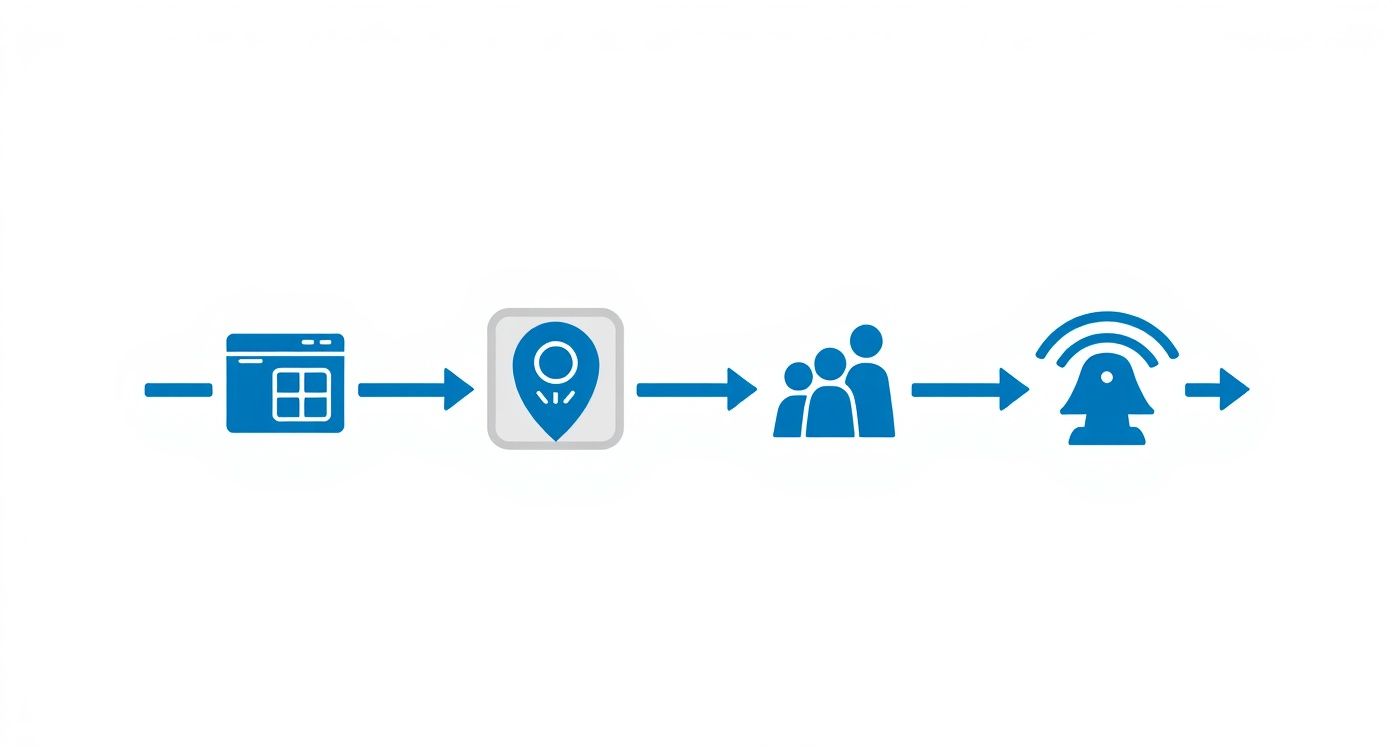
Each element—Access Control, Crowd Management, and Emergency Response—works together to create a complete safety system.
Communication and Emergency Protocols
A security plan is only effective with a solid communication network. The blueprint must establish clear lines of communication between all security staff, the event management team, and local emergency services to enable a coordinated response.
The difference between a minor disruption and a major crisis often comes down to seconds. A well-defined communication protocol ensures information is shared instantly, allowing for swift action.
Before the event, the security team leader will liaise with local police, fire, and ambulance services. This ensures first responders are familiar with the venue and security plan, saving critical time in an emergency.
What Do Event Security Guards Actually Do?
It is a common misconception that event security guards simply stand at a post. In reality, these licensed professionals are the active agents of your event’s safety plan. They are the eyes and ears on the ground, responsible for implementing the strategy and ensuring every guest feels secure.
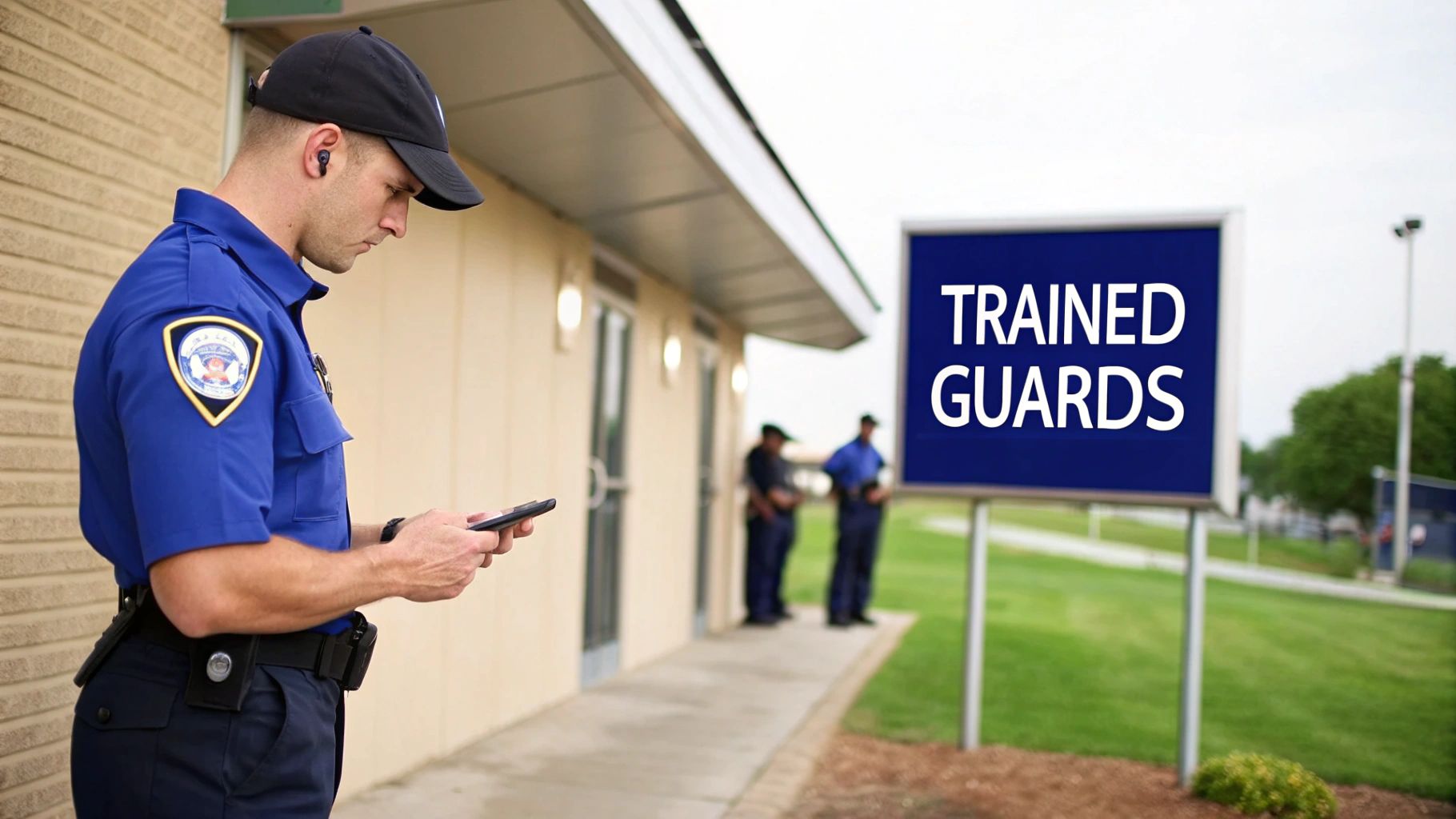
A guard’s primary function is to be a visible, professional deterrent. Their presence alone can discourage troublemakers and prevent minor issues from escalating. However, their duties extend far beyond this, covering a range of proactive and reactive tasks.
On-Site Duties of a Security Guard
A well-trained guard continuously observes, assesses, and acts. Their role demands adaptability, transitioning from customer service to emergency response in an instant.
Key on-site duties include:
- Controlling Access: Managing entry points by checking credentials, performing bag searches, and ensuring only authorised personnel enter restricted areas.
- Monitoring the Crowd: Scanning for signs of tension, distress, or conflict, allowing for early intervention and de-escalation.
- Responding to Incidents: Acting as the first responder for medical issues or fire alarms, and serving as the point of contact for emergency services.
- Providing Assistance: Offering directions, answering questions, and assisting guests to foster a positive and welcoming atmosphere.
A professional security guard is an ambassador for safety. Their skill lies in knowing when to be a helpful guide and when to be a firm authority. This adaptability is the hallmark of an exceptional event security service.
Specialised Roles Within a Security Team
For larger or more complex events, a security provider will assign staff to specialised roles. Each team member has a specific function, working together to ensure comprehensive venue security.
Here’s a look at some common event security roles and what they focus on.
Event Security Personnel Roles and Primary Functions
| Security Role | Primary Responsibility | Key Functions |
|---|---|---|
| Access Control Officer | Manage entry and exit points. | Check tickets/credentials, conduct bag searches, enforce entry policies. |
| Perimeter Patrol | Secure the event’s outer boundaries. | Monitor fences/barriers, deter unauthorised entry, watch over car parks. |
| Static Guard | Maintain a fixed post in a key area. | Provide a visible presence at entrances, VIP zones, or merchandise stands. |
| Crowd Control Specialist | Monitor crowd behaviour and dynamics. | Identify and pre-empt potential conflicts, manage crowd flow in congested areas. |
| Conflict Resolution Team | De-escalate and manage disturbances. | Intervene with agitated guests, peacefully remove disruptive individuals. |
| First Aid Responder | Provide immediate medical assistance. | Attend to injuries or medical emergencies, coordinate with paramedics. |
Each of these roles is a crucial piece of the puzzle, ensuring that every angle of your event’s safety is covered by a specialist.
Why Licensing and Training Are Non-Negotiable
In Australia, it is a legal requirement for every person working in security to hold a valid licence. This is your assurance that they have met strict government standards and passed all necessary background checks. A licence confirms the guard has a clean criminal history and has completed accredited training.
This mandatory training for trained guards covers essential skills, from first aid and conflict resolution to emergency response protocols. If you’re interested in the requirements, you can learn more about how to get a security licence. This commitment to compliance guarantees your event is in professional hands.
Why Event Security is More Important Than Ever in Australia
Australia’s vibrant culture thrives on bringing people together at major sporting finals, local festivals, and corporate conferences. As these events grow in scale and complexity, so does the responsibility to ensure public safety.
Professional event security is no longer an optional extra; it is a fundamental component of successful event planning. With heightened public safety awareness, a secure environment is non-negotiable for protecting your guests and your reputation.
A Market Driven by Safety and Scale
The demand for skilled security teams is a reflection of a growing industry. As events become more ambitious, they require specialised expertise to manage large crowds and control access.
The Australian Investigation and Security Services industry, which includes the critical event security service sector, is on track to pull in $13.9 billion in revenue by 2025. With over 6,700 businesses in this field, the industry’s growth shows just how vital security has become. You can dig deeper into the numbers with this IBISWorld analysis.
What’s Fuelling the Demand?
Several key trends are making the event landscape more complex, turning professional security into an absolute necessity.
The main drivers include:
- Larger, More Complex Events: World-class sporting events and multi-day music festivals can draw crowds in the tens of thousands, requiring sophisticated crowd management.
- Higher Public Safety Expectations: Attendees expect to see a professional security team on-site, and a visible presence helps everyone feel safe.
- Stricter Regulations and Insurance: Many venues, councils, and insurers now mandate the use of a licensed and accredited security provider to ensure compliance with industry best practices.
- Advanced Technology: Modern security incorporates CCTV and digital access control, requiring trained staff who can leverage these systems to prevent incidents.
Partnering with a professional security company in Melbourne or any other major Australian city is a proactive measure to protect your guests, assets, and brand from a range of potential risks.
The New Reality of Event Safety
The growing need for event security reflects a shift in how we approach public gatherings. The focus is now on proactive prevention and rapid response.
From the initial risk assessment to the deployment of highly trained guards, a professional security partner is fundamental to any modern event’s success. This frees organisers to focus on creating a memorable experience, knowing their attendees are in safe hands.
Ready to make your next event your safest one yet? Book a consultation with our security experts today.
How to Choose the Right Security Provider
Selecting the right security partner is one of the most critical decisions an event organiser can make. The chosen team is directly responsible for guest safety, asset protection, and your event’s reputation. A truly professional provider delivers peace of mind, not just personnel.
This decision requires careful consideration to ensure the company you hire meets Australian industry standards and understands the unique requirements of your event.
Verify Licences and Insurance
Before discussing details, you must confirm that any event security service in Australia is fully licensed and insured. Each state has specific licensing requirements for security companies and their guards. Ask for a copy of their master security licence and public liability insurance certificate.
This is a legal necessity, not just a formality. A valid licence confirms the company operates legally and its guards have passed required background checks and training. Proper insurance protects you from liability in case of an incident.
A professional security provider will readily share their documentation. Any hesitation to provide proof of licensing or insurance is a significant red flag.
The private security industry in Australia is a serious business. It’s a sector that generates over $11 billion annually and employs more than 180,000 people—with 153,000 of them being licenced personnel. You can read more on these industry trends and projections from ASIAL.
Assess Their Risk Assessment Process
A top-tier security provider will never offer a generic plan. Instead, they will insist on conducting a detailed risk assessment tailored to your event, venue, and anticipated crowd.
Ask them to explain their process. A thorough assessment should analyse:
- The Venue Layout: Entry and exit points, potential choke points, and blind spots.
- Audience Demographics: Expected numbers, age groups, and whether alcohol will be served.
- Event Type: The different risks associated with a corporate conference versus a music festival.
- Specific Threats: Any known issues related to the venue, performers, or high-profile guests.
When a potential provider asks these detailed questions, it demonstrates a focus on proactive prevention.
Check References and Industry Reputation
Do not rely solely on a sales pitch. Ask for references from clients who have organised similar events. A confident company will have no issue connecting you with satisfied customers.
Look for industry credentials, such as membership with a respected body like the Australian Security Industry Association Ltd (ASIAL), which indicates a commitment to professional standards. Following solid vendor management best practices is crucial for ensuring transparency and accountability.
The calibre of their security personnel is equally important. A reputable company invests in continuous training. To understand what a well-rounded team provides, see our security guard service offerings.
Ready to secure your event with a trusted partner? Book a consultation with ABCO Security today.
The Value of Specialised Crowd Management
Crowd management is a sophisticated science, blending an understanding of human psychology with logistical planning and proactive security. It is about guiding the natural flow and energy of a large group to ensure they can gather, enjoy an event, and depart safely.
This skill is the absolute backbone of any professional event security service.
In Australia, this specialisation has become critical as our events grow larger, from music festivals drawing international crowds to major sporting fixtures. Effective crowd management is not just about preventing problems; it is about creating a safe and positive atmosphere for everyone.
Why Crowd Management is a Booming Field
Several factors are driving this demand. The public is more safety-conscious, expecting to see a capable and visible security team. Additionally, technology like smart CCTV allows for monitoring large groups more effectively than ever before.
The numbers support this trend. In Australia, the event security and crowd management market is set to be worth around USD 120 million by 2025. This growth reflects the need for increasingly sophisticated and specialised security operations.
The secret to crowd management is not about suppressing a crowd’s energy—it’s about channelling it. Understanding crowd dynamics allows a team to prevent dangerous situations like crushes or panic before they occur.
A professional security company in Melbourne, or anywhere in Australia, invests heavily in training staff for these unique challenges. To learn how we manage large-scale gatherings, see our dedicated security for events in Australia.
What Modern Crowd Management Actually Involves
A robust crowd management plan is a multi-layered strategy that begins with meticulous planning long before the event.
Core components include:
- Smart Entry and Exit Plans: Designing smooth entry and exit points to eliminate bottlenecks and reduce safety risks.
- Monitoring Crowd Density: Using a combination of on-the-ground personnel and technology to monitor crowd density in real-time and redirect flow as needed.
- Clear Communication: Using effective signage and well-briefed staff to guide attendees and provide critical information, especially during an emergency.
- De-escalation and Conflict Resolution: Training personnel to identify signs of conflict and intervene peacefully to maintain a calm environment.
Investing in specialised crowd management protects your event’s success and reputation, ensuring legal compliance and enhancing the attendee experience.
Your Top Event Security Questions, Answered
When planning an event, it is natural to have questions about security. Getting clear, practical answers is the first step toward building a solid security plan and feeling confident on the day. Here are some of the most common queries from event organisers.
How Many Security Guards Do I Actually Need?
There is no simple formula, such as one guard per 100 guests. The right number depends on your event’s specific characteristics, including venue size, expected attendance, and whether alcohol will be served. A corporate conference requires a different security plan than an outdoor music festival.
A reputable provider, like a professional Security Company in Melbourne, will conduct a thorough risk assessment to identify potential vulnerabilities. This process determines the exact staffing levels required for complete coverage, ensuring you are not paying for unnecessary personnel. We also follow Australian industry best practices and local council guidelines.
Are Your Security Staff Properly Licenced and Trained?
Absolutely. In Australia, it is illegal for anyone to work in security without a valid state or territory licence. Every member of our team is fully licensed, but we view this as the minimum standard.
Our guards undergo continuous, demanding training that covers:
- Advanced crowd management techniques.
- Verbal de-escalation and conflict resolution.
- Emergency response coordination and first aid.
- Procedures specific to different event types.
We adhere to the highest professional standards, as championed by organisations like the Australian Security Industry Association Ltd (ASIAL). This dedication ensures our trained guards deliver a service you can trust.
What Goes into the Cost of Event Security?
The price of an event security service is calculated based on your event’s specific needs. The final quote is shaped by key factors like the number of guards required, the total hours of service (including setup and pack-down), and the overall risk profile.
Specialised services, such as dedicated security patrols for a large area or close personal protection for VIPs, also influence the cost. We believe in complete transparency. Following our initial consultation and risk assessment, you will receive a detailed proposal that breaks down every cost, so you know exactly what you are paying for.
Ready to make sure your next event is safe, secure, and a massive success? Let the expert team at ABCO Security Services Australia build a security plan that’s right for you.
about
avada factory
Sempery ultricies nibh at dolor cras urna eleifend nec. Atiam efficitur tempor.